
Sheila Rowbotham
Author of Women, Resistance, and Revolution: A History of Women and Revolution in the Modern World
About the Author
Sheila Rowbotham was one of the leading figures behind the Women's Liberation Movement in Britain, and is an Honorary Fellow at Manchester University. She is also a Fellow of the Royal Society of Arts. Her many books include Dreamers of a New Day; Women, Resistance and Revolution; and the Lambda show more Literary Award-winning Edward Carpenter. show less
Image credit: Photograph: Martin Godwin
Works by Sheila Rowbotham
Women, Resistance, and Revolution: A History of Women and Revolution in the Modern World (1972) 286 copies
Hidden From History: Rediscovering Women in History From the 17th Century to the Present (1973) 209 copies
A Century of Women: The History of Women in Britain and the United States in the Twentieth Century (1997) 181 copies
Rebel Crossings: New Women, Free Lovers, and Radicals in Britain and the United States (2016) 41 copies
Associated Works
A Vindication of the Rights of Woman (1792) — Introduction, some editions — 4,702 copies, 37 reviews
The Hard Way Up: The Autobiography of Hannah Mitchell, Suffragette and Rebel (1968) — Preface, some editions — 42 copies
Sylvia Pankhurst: Sexual Politics and Political Activism (1996) — Foreword, some editions — 37 copies
Feminist Radical Thinkers: A Sampler — Contributor — 8 copies
Tagged
Common Knowledge
- Canonical name
- Rowbotham, Sheila
- Birthdate
- 1943-02-27
- Gender
- female
- Education
- St Hilda's College, Oxford University (BA)
University of London (Ph.D) - Occupations
- feminist writer
biographer
social historian
professor
political activist - Organizations
- University of Manchester
- Awards and honors
- Royal Society of Arts (Fellow, 2004)
- Nationality
- UK
- Birthplace
- Leeds, Yorkshire, England, UK
- Places of residence
- Bristol, Gloucestershire, England, UK
- Map Location
- England, UK
Members
Reviews

Historian Sheila Rowbotham was 17 at the start of the sixties, 27 at the end of the decade, and in between those dates she was a student in Paris and Oxford, an F.E. lecturer, a member of innumerable leftist splinter groups, on the board of radical periodicals of various flavours, an Agit Prop theatre group, and much else. She marched against Vietnam and the Bomb, she was in at the start of the Women’s Liberation movement, and E.P. Thompson baked her a birthday cake whilst Jean-Luc Godard show more wanted to film her walking downstairs naked reading a feminist essay. She ran a communal living experiment in East London, and hung out with poets, hippies, trade unionists and revolutionaries, many of them future rock stars or New Labour ministers. In short, she could hardly have been better qualified to write about Britain in the sixties.
This is a lively, personal and very thoughtful distillation of her experiences from the perspective of thirty years on. She looks at the optimism of the period, with its new sense that everything was possible, but also at the self-destructive elements in the highly fissile revolutionary groups with their tendency to waste their energy on internal conflicts. And she analyses her own experiences to illustrate how women of her time managed to recognise the workings of male hegemony in the deep-seated notion that a woman could either do serious work or take pleasure in her sexuality, but not both.
A very enjoyable book to read, and one that does a very good job of making sense of a confusing period whose echoes were still present when I was a student. show less
This is a lively, personal and very thoughtful distillation of her experiences from the perspective of thirty years on. She looks at the optimism of the period, with its new sense that everything was possible, but also at the self-destructive elements in the highly fissile revolutionary groups with their tendency to waste their energy on internal conflicts. And she analyses her own experiences to illustrate how women of her time managed to recognise the workings of male hegemony in the deep-seated notion that a woman could either do serious work or take pleasure in her sexuality, but not both.
A very enjoyable book to read, and one that does a very good job of making sense of a confusing period whose echoes were still present when I was a student. show less
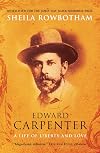
Rowbotham presents us with a biography of a man she thinks is more important for the interpersonal connections in his life than for his actual ideas, which she finds -- let's say rambly. Carpenter was so concerned with inter-relatedness that he never quite settled on anything definitive. I've mostly been aware of Carpenter through his inter-connections, so I was willing to go along with the thesis.
It does, however, make for a book that sometimes reads like those visitors' books you see at show more tourist locations where people sign their name and write things like, "Great view." I'm sure her efforts to document the hundreds of important people Carpenter influenced during his 80+ years will be of immense use to other biographers, but it was more than I wanted to know.
From the point-of-view of good reading, the book is best in the period from 1860 to 1890 when Carpenter was part of the socialist movement in England and was involved with important events of labor and socialist history.
The book has two other strengths. One is the story woven throughout of how Carpenter was able to remain a fairly open homosexual even after the trial of Oscar Wilde. Rowbotham hypothesizes that some of the vagueness in Carpenter's writing is due to his inability to speak directly about the things that mattered to him most.
The other strength is Rowbotham's eye for the stories of the people who have no voice: the wives of Carpenter's lovers who kept house for him, the lesbians who were attached to him but who he was not attached to in turn, his lower class lovers who weren't always well-regarded by Carpenter's middle-class friends. I particularly appreciated how Rowbotham was able to make Carpenter's flaws and blind-spots clear while still making him a very sympathetic character.
If you are interested in the history of gay men before Stonewall, socialism, neo-paganism, simple living, or the influence of Eastern thought on Western ideas, you're going to run into Edward Carpenter eventually. You will find dipping into this book in the areas that interest you to be worthwhile and eye-opening. show less
It does, however, make for a book that sometimes reads like those visitors' books you see at show more tourist locations where people sign their name and write things like, "Great view." I'm sure her efforts to document the hundreds of important people Carpenter influenced during his 80+ years will be of immense use to other biographers, but it was more than I wanted to know.
From the point-of-view of good reading, the book is best in the period from 1860 to 1890 when Carpenter was part of the socialist movement in England and was involved with important events of labor and socialist history.
The book has two other strengths. One is the story woven throughout of how Carpenter was able to remain a fairly open homosexual even after the trial of Oscar Wilde. Rowbotham hypothesizes that some of the vagueness in Carpenter's writing is due to his inability to speak directly about the things that mattered to him most.
The other strength is Rowbotham's eye for the stories of the people who have no voice: the wives of Carpenter's lovers who kept house for him, the lesbians who were attached to him but who he was not attached to in turn, his lower class lovers who weren't always well-regarded by Carpenter's middle-class friends. I particularly appreciated how Rowbotham was able to make Carpenter's flaws and blind-spots clear while still making him a very sympathetic character.
If you are interested in the history of gay men before Stonewall, socialism, neo-paganism, simple living, or the influence of Eastern thought on Western ideas, you're going to run into Edward Carpenter eventually. You will find dipping into this book in the areas that interest you to be worthwhile and eye-opening. show less
Edward Carpenter is a fascinating figure, and historically important - in the history of British labor movements, in the history of "new age" thought and most of all in the history of gay rights. So it's great that at last we have a big, detailed biography that does some justice to the many different ways in which he influenced his time and ours. On the whole, Rowbotham has to be applauded for doing massive research and organizing it all into a pretty comprehensive account.
On the other hand, show more the prose is clumsy, the punctuation erratic, and at times the point of view lacks imagination -- it's sometimes like reading a stack of index cards, each of which contains one factual datum. So I wonder how many people are going to read this book cover to cover, which is a shame, because Carpenter really deserves a biographer like the one Wilde received in Richard Ellmann. But that might be hoping for too much. I'm grateful for this bio, but just wish it had been a little more elegant and readable. show less
On the other hand, show more the prose is clumsy, the punctuation erratic, and at times the point of view lacks imagination -- it's sometimes like reading a stack of index cards, each of which contains one factual datum. So I wonder how many people are going to read this book cover to cover, which is a shame, because Carpenter really deserves a biographer like the one Wilde received in Richard Ellmann. But that might be hoping for too much. I'm grateful for this bio, but just wish it had been a little more elegant and readable. show less
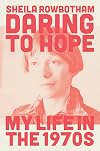
A lively account of her life as a femininist and socialist activist in 1970's London. Her actions and enthusiasm give me a warm feeling of nostalgia for the early days of "Womens Liberation" as it was known back then, and pride in the work that was done and the gains that were made.
Lists
Awards


You May Also Like


Associated Authors
Statistics
- Works
- 26
- Also by
- 10
- Members
- 1,614
- Popularity
- #15,966
- Rating
- 3.9
- Reviews
- 5
- ISBNs
- 99
- Languages
- 9
- Favorited
- 2