The antic muse : American writers in parody ; a collection of parody, satire and literary burlesque of American writers past and present by Robert P. Falk

A very funny anthology of parodies of American writers in chronological order by the original writer. A treat to have on you desk when doing a survey course in American literature.
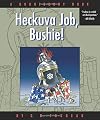
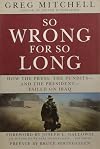
Not much about Katrina per se, but Bush's general lack of competence. Also the continuing struggles of the greater Doonesberry family, especially B.D.'s struggles with PSTD.

A verry interesting alternate history where World War II never happened and a black physicist in Germany is trying to change the outcome of the US Civil War.
Cold War spies reminisce at a Soviet base on Mars. Okay with a surprise ending.
A Persian archaeologist looks for the facts behind Xerxes defeat of Athens. Interesting alternative color and politics.
Thurber's dogs; a collection of the master's dogs, written and drawn, real and imaginary, living and long ago by James Thurber

I love this collection which moves among essays, short stories, fable and cartoons. Great book if you love Thurber's dogs or are just meeting them for the first time.

This tale was a bit didactic and simplistic for my current age, but I think i might have enjoyed it as a child.
The story of a sea gull on a quest to rescue his friends with a short lecture about the evils of slavery in the middle. Not one of Alcott's best

Mixed stories, non-fiction and poetry for children from famous authors and people who are now unknown. I find I'm loosing my taste for a lot of children's literature, but I found some items worth reading and suspect a child would do better.
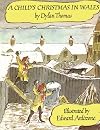
This is the edition edited by Edward Andizzone. I grew up hearing this read by Dylan Thomas on a phonograph record, so I'm not fond of illustrated editions. This one is water colors.
Interesting group of memoirs written by a the members of a cancer support group. Not all of them have to do with cancer. I know one of the authors and was just going to read her contributions, but got sucked into reading most of the book.
I'm not sure how I felt about the Holmesian parts of this but it was a good story about displacement.
Unless you're very interested in Cockney rhyming slang, I'd give this tale of Sherlock Holmes and a computerized dog a miss.
Seemed more like a standard horror story than anything Holmesian to me, but maybe I'm missing something.

An interesting mix of stories. Some feel the need whether because of the copyright laws or respect to not use Doyle's names or settings, though generally it's obvious who is being referred to. In this case there were a bunch of dog stories, most of which I didn't find endearing.
Many of the other stories were more like Doyle especially in their Victorian and Edwardian view of science. I found these mostly engaging.
However, my favorite story was one of Poul Anderson and Gordon R. Dickson's Hoka stories.
Many of the other stories were more like Doyle especially in their Victorian and Edwardian view of science. I found these mostly engaging.
However, my favorite story was one of Poul Anderson and Gordon R. Dickson's Hoka stories.
Sherlock Holmes as a cyborg German police dog, retired from the force. A kidnapped artist and his lovely wife make up the mystery. I found the dog a tad annoying.
This is one of those "League of Extraordinary Gentlemen" type tales where I get lost because I haven't read many comic books. I gave up.
More like Joseph Conrad than A.C. Doyle. Certainly an interesting take on the Giant Rat of Sumatra.
I found the premise too dopey to go very far with this story, though it started out fun.
A mishap involving time travel leads to an astonishing surprise end.
Nice complicated story about a Holmes in his dotage searching for extra-terrestrials in London. Surprise ending.

I enjoyed the first story. The second I enjoyed the evocation of nature in the Catskills, but didn't really follow the entire thing. The third story looked interesting so I skipped it.
The social travails of the 17-year locust are discussed. Amusing.
Fellow Creatures: The Neighbors; The Japanese; The Northerners; The King of Kings {poetry sequence} by Ogden Nash
Nash's view of the nations during the tensions leading up to World War II.

There is much to be said for dismissing this poem as too racist to read. However, if you can get through that, it has one redeeming feature which is the use of African American and jazz rhythms and tunes as an underlying score for the poem. There is a recording of Lindsay reading it, so we know exactly how he intended to it to be read.
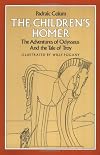
I finally realized I was never going to read The Iliad, so I decided to read this adaptation instead. I felt it was very satisfactory and wished I thought of it before.