
Germaine Greer
Author of The Female Eunuch
About the Author
Germaine Greer is an author and noted Feminist. She is the author of The Female Eunuch, Daddy, We Hardly Knew You, The Change: Women, Ageing and the Menopause, The Beautiful Boy, Shakespeare's Wife and White Beech: The Rainforest Years, among others (Bowker Author Biography)
Image credit: Photo by walnut whippet
Works by Germaine Greer
Ab 40 2 copies
Tulsa Studies in Women's Literature: Volume 1, Number 1 — Editor — 1 copy
The Getting of Wisdom 1 copy
Vidrohi Stri 1 copy
Book of the Century 1 copy
Associated Works
William Shakespeare: The Complete Works (1623) — Contributor, some editions — 35,660 copies, 177 reviews
The autobiography of a sexually emancipated Communist woman (1926) — Foreword, some editions — 134 copies
The Pleasure of Reading: 43 Writers on the Discovery of Reading and the Books That Inspired Them (2015) — Contributor — 104 copies, 2 reviews
Living with Shakespeare: Essays by Writers, Actors, and Directors (2013) — Contributor — 95 copies, 4 reviews
About Women: An Anthology of Contemporary Fiction, Poetry, and Essays (1973) — Contributor — 25 copies
A Genius For Letters: Booksellers And Bookselling From The 16th To the 20th Century (1995) — Contributor — 15 copies
Artistic Relations: Literature and the Visual Arts in Nineteenth-Century France (1994) — Contributor — 13 copies
twen 1971, No. 3 — Contributor — 2 copies
Tagged
Common Knowledge
- Other names
- Blight, Rose (pen name)
- Birthdate
- 1939-01-29
- Gender
- female
- Education
- University of Melbourne (B.A.) (English and French language and literature) (1959)
University of Sydney (M.A.) (romantic poetry) (1963)
University of Cambridge (Newnham College) (Ph.D.) (1969) - Occupations
- Professor of English and Comparative Studies
magazine columnist
author
publisher - Organizations
- University of Warwick
University of Tulsa
Cambridge Footlights - Awards and honors
- Australian Living Treasure
Fellow of Newnham College, Cambridge - Agent
- Gillon Aitken Associates Ltd
- Relationships
- Roxon, Lilian (friend and rival)
- Nationality
- Australia (birth)
- Birthplace
- Melbourne, Victoria, Australia
- Places of residence
- Sandringham, Victoria, Australia
Sydney, New South Wales, Australia
Leamington Spa, Warwickshire, England, UK
Italy
USA
Essex, England, UK - Associated Place (for map)
- Australia
Members
Reviews

I think Greer had a lot of fun writing this book - and I had a lot of fun reading it.
I was attracted to the book by a quote from a reviewer who said something along the lines of - Greer has been as unprovocative as she could be, but the old men of academia still reacted with outrage and venom.
Well, if there were to be sides - I'd be on Greer's team.
The study of Shakespeare's life and times suffers from the lack of documentary evidence. Too many academics backfill the gap with commentary show more inmformed by later lives and times. Greer goes back to the basics, and gives the reader a great picture of what life was like in Stratford, and for women in particular. Life was different, but the reader comes away with a sense of what life may have been likely for Ann Hathaway.
The other interesting aspect of the book, for me, was the picture of the aging Shakespeare who retired back to Avon as a man of some wealth. There's a hint here of some sort of serious decline in abilities - dementia? It's only an aside in this book, but I would love to see if others have considered the issue. Just because he was a genius at his prime doesn't mean he waasn't mortally fragile as he aged. show less
I was attracted to the book by a quote from a reviewer who said something along the lines of - Greer has been as unprovocative as she could be, but the old men of academia still reacted with outrage and venom.
Well, if there were to be sides - I'd be on Greer's team.
The study of Shakespeare's life and times suffers from the lack of documentary evidence. Too many academics backfill the gap with commentary show more inmformed by later lives and times. Greer goes back to the basics, and gives the reader a great picture of what life was like in Stratford, and for women in particular. Life was different, but the reader comes away with a sense of what life may have been likely for Ann Hathaway.
The other interesting aspect of the book, for me, was the picture of the aging Shakespeare who retired back to Avon as a man of some wealth. There's a hint here of some sort of serious decline in abilities - dementia? It's only an aside in this book, but I would love to see if others have considered the issue. Just because he was a genius at his prime doesn't mean he waasn't mortally fragile as he aged. show less

No stone is left unturned. Greer found something to say about the medicalization of menopause that was not in other books. What is considered state of the art in Britain, France, Australia, and the United States is somewhat different from country to country. Drugs and treatments available in one country are unavailable in others. The pet drug in each country is one produced by a drug company headquartered in that country. The United States, of course, comes out as champion in the show more medicalization of menopause. Greer did not hesitate to put forth her pet theories in the midst of statistics and reports of double-blind studies. She is very much present in her writing, and the book greatly benefits. Greer believes the second half of life is about becoming spiritual, and the second half of her book is her testimonial of her midlife passage, liberally sprinkled with testimonials from diaries and novels dating back to the 1700s. The reader experiences her passage, from the first chapters with her feminism in full view as she lambasts the medicalization of menopause to the final chapters when she describes her joy on being on the other side of fifty: "Before, I felt less on greater provocation; I lay in the arms of young men who loved me and felt less bliss than I do now. What I felt then was hope, fear, jealousy, desire, passion, a mixture of real pain, and real and fake pleasure, a mash of conflicting feelings, anything but this deep still joy. I needed my lovers too much to experience much joy in our travailed relationships. I was too much at their mercy to feel much in the way of tenderness; I can feel as much in a tiny compass now when I see a butterfly still damp and crinkled from the chrysalis taking a first flutter among the brambles." For those among us who approach our climacteric "alone," Greer makes clear that the relationship with the self can be the most joyous and satisfying of all relationships. (December 1994) show less

Opening with a famous proclamation that still goes to the heart of our social and sexual lives (“Women have very little idea of how much men hate them”), this book is a depth charge in the pits of misogyny: liberating, energizing, mind-bending, hilarious. As well as dark and difficult. The product of a brilliant and eccentric mind, it demands dialogue and brooks no complete agreement. Endowed with deep funds of love, language, and learning, it is also a swashbuckling work of show more scholarship-as-payback, rich in science and statistic but also in a vitriol which Greer directs like a cool assassin. (Though not always at deserving targets: beware an unabashed homophobia not uncharacteristic of second wave feminism, and predictive of Greer’s eventual career as a TERF.) show less
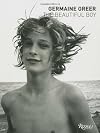
I enjoyed this book. It's a very easy read, both because the text is quite short and because Greer's prose is clear and well-structured. The illustrations are almost all beautiful pieces of art in their own right, and so worthy of taking the time to look at.
I found the ideas most compelling when they related specifically to art history and cultural studies. When Greer veered into anthropology or history, I had much less confidence in the points she was making. I don't know much about the show more content, but even I picked up a couple of errors and a couple of tendentious interpretations of artworks that made me wonder what other misrepresentations or mistakes I was missing. As a result, this is a book that stimulated thought for me but certainly wouldn't change my mind, except in the broadest terms.
The main point, in my view, is that boys are beautiful and that as a society we lose something by failing to enjoy that fact. This raises interesting questions about the the lines between beauty and attractiveness, and about the relationships between different kinds of attractiveness. A puppy can be attractive, in the sense of "pleasing or appealing to the senses", but there is no thought of sexual desire. A person can also be attractive without arousing sexual desire (for instance a gay man might find a woman attractive but not wish to have sex with her), but then they may also arouse sexual desire. Where does that leave us with boys, who at their youngest are not sexually attractive but at their oldest may be reasonably be sexually attractive to some? For instance, in an interview after the book was published, the fifteen year old boy pictured on the cover of this book expressed his discomfort at being ogled by adult men when the photo was taken (in the 70s, while he was acting in the film of [b:Death in Venice|53061|Death in Venice|Thomas Mann|https://i.gr-assets.com/images/S/compressed.photo.goodreads.com/books/1627232919l/53061._SY75_.jpg|17413130]), but if the attention had come from fourteen year old girls he may have felt differently.
Of course the gender of the gaze matters, and rather than getting bogged down in the complexities of men and power, Greer's default position is that of the female gaze. This makes the discussion clearer, cleaner and lighter but it also means that Greer skirts the ethical issues of attractiveness rather than delving into them. As a consequence, this book is an entertaining, though-provoking piece of popular cultural studies, rather than a serious inquiry into aesthetics or representation in art. show less
I found the ideas most compelling when they related specifically to art history and cultural studies. When Greer veered into anthropology or history, I had much less confidence in the points she was making. I don't know much about the show more content, but even I picked up a couple of errors and a couple of tendentious interpretations of artworks that made me wonder what other misrepresentations or mistakes I was missing. As a result, this is a book that stimulated thought for me but certainly wouldn't change my mind, except in the broadest terms.
The main point, in my view, is that boys are beautiful and that as a society we lose something by failing to enjoy that fact. This raises interesting questions about the the lines between beauty and attractiveness, and about the relationships between different kinds of attractiveness. A puppy can be attractive, in the sense of "pleasing or appealing to the senses", but there is no thought of sexual desire. A person can also be attractive without arousing sexual desire (for instance a gay man might find a woman attractive but not wish to have sex with her), but then they may also arouse sexual desire. Where does that leave us with boys, who at their youngest are not sexually attractive but at their oldest may be reasonably be sexually attractive to some? For instance, in an interview after the book was published, the fifteen year old boy pictured on the cover of this book expressed his discomfort at being ogled by adult men when the photo was taken (in the 70s, while he was acting in the film of [b:Death in Venice|53061|Death in Venice|Thomas Mann|https://i.gr-assets.com/images/S/compressed.photo.goodreads.com/books/1627232919l/53061._SY75_.jpg|17413130]), but if the attention had come from fourteen year old girls he may have felt differently.
Of course the gender of the gaze matters, and rather than getting bogged down in the complexities of men and power, Greer's default position is that of the female gaze. This makes the discussion clearer, cleaner and lighter but it also means that Greer skirts the ethical issues of attractiveness rather than delving into them. As a consequence, this book is an entertaining, though-provoking piece of popular cultural studies, rather than a serious inquiry into aesthetics or representation in art. show less
Lists
Awards


You May Also Like


Associated Authors
Statistics
- Works
- 33
- Also by
- 25
- Members
- 6,213
- Popularity
- #3,946
- Rating
- 4.4
- Reviews
- 75
- ISBNs
- 223
- Languages
- 17
- Favorited
- 11