
Andrew Pettegree
Author of The Library: A Fragile History
About the Author
Andrew Pettegree is Professor of Modern History and Founding Director of the Reformation Studies Institute at the University of St Andrews
Series
Works by Andrew Pettegree
The Bookshop of the World: Making and Trading Books in the Dutch Golden Age (2019) 200 copies, 2 reviews
The Book at War: How Reading Shaped Conflict and Conflict Shaped Reading (2023) 138 copies, 1 review
French books III & IV books published in France before 1601 in Latin and languages other than French (2011) 6 copies
The Reformation of the Parishes: The Ministry and the Reformation in Town and Country (1993) 4 copies
Associated Works
Tagged
Common Knowledge
- Canonical name
- Pettegree, Andrew
- Legal name
- Pettegree, Andrew David Mark
- Birthdate
- 1957
- Gender
- male
- Education
- Merton College, University of Oxford (BA|MA|D.Phil)
- Occupations
- historian
author
professor - Organizations
- University of St Andrews
- Awards and honors
- Order of the British Empire (Commander, 2024)
British Academy (Fellow, 2021)
Royal Historical Society (Fellow, 2000)
Goldsmith Prize (2015) - Agent
- Catherine Clarke (Felicity Bryan Associates)
- Short biography
- Teaching and Research Interests
I began my career working on aspects of the European Reformation. My first book was a study of religious refugee communities in the sixteenth century, and since then I have published on the Dutch Revolt, and on the Reformation in Germany, France and England, as well as a general survey history of the sixteenth century. In the last years the focus of my research has shifted towards an interest in the history of communication, and especially the history of the book. I run a research group that in 2011 completed a survey of all books published before1601: the Universal Short Title Catalogue. This work will continue, in 2012-2016, with work to incorporate new discoveries and continue the survey into the seventeenth century. In 2010 I published an award-winning study of The Book in the Renaissance, and early in 2014 I will publish The Invention of News: a study of the birth of a commercial culture of news publication in the four centuries between 1400 and 1800. I will return to the Reformation for a study of Luther’s writings for the Reformation anniversary of 2017
http://www.st-andrews.ac.uk/history/s...Andrew Pettegree is Professor of Modern History at the University of St Andrews. He is the author of several books on aspects of the European Reformation, as well as a general history of sixteenth-century Europe. More recently he has turned his attention to the history of the book. The Book in the Renaissance, published by Yale University Press in 2010, was a New York Times notable book of the year, and won the Phyllis Goodhart Gordan Prize of the Renaissance Society of America. In 2014 he will publish, also with Yale, his study of the first four centuries of a commercial news culture, The Invention of News. He is also director of the Universal Short Title Catalogue, an online database of books published throughout Europe before 1601. Between now and 2016 the USTC will extend its coverage to 1650.
http://royalhistsoc.org/person/andrew... - Nationality
- UK
- Places of residence
- St Andrews, Scotland, UK
Hamburg, Germany
Cambridge, Cambridgeshire, England, UK
Oxford, Oxfordshire, England, UK - Associated Place (for map)
- UK
Members
Discussions
Was War Good for the Book Trade? in Book talk (April 30)
Reviews

An encyclopedic, engaging but occasionally enervating history of libraries, from Alexandria to Alexa and the future of the printed word. I admit to struggling with the early accounts of proto libraries - monks creating and collecting religious scripts on parchment (incunabula, a great word!), the printing press and private collections - but enjoyed the 'modern history' from the subscription/circulating libraries of the eighteenth century to the horrendous destruction of books during World show more War Two.
'Large works, those that not everyone can buy, should be bought [for university libraries]; the little books anyone can collect as they wish' - Zacharias von Uffenbach
I worked in a large city library for ten years, in the reference department, and was sad to witness the downscaling and closure of the original purpose-built 1960s six storey building in favour of 'future proofing' the service with popular titles and more computers. Reading about the creation, expansion, culmination, decline and repeated resurrection of libraries gives me hope, however!
I do have to disagree with the authors and say that I don't believe that e-readers are either a threat to books or on the way out, but simply a more affordable and accessible version of the printed word. I have a 'library' of nearly seven hundred books on my Kindle (or on Amazon, if I need to download a copy again), but I read this title in hardback and still borrow books from the library too. People need to stop sneering at e-books - in the same way that early printed books were rejected by antiquarians in favour of manuscripts, and fiction was hidden in the stacks and 'improving' titles pushed on readers, snobbishly refusing to acknowledge the way in which digital books save money and space for modern readers will not stop the future from happening.
And I have to finish with the best quote in the book:
'Good God, what did I find there? Nothing but dust, cobwebs, bookworms, moths, in short filth and destitution. I did find some books, but I should not willingly have paid threepence for them' - John Leland show less
'Large works, those that not everyone can buy, should be bought [for university libraries]; the little books anyone can collect as they wish' - Zacharias von Uffenbach
I worked in a large city library for ten years, in the reference department, and was sad to witness the downscaling and closure of the original purpose-built 1960s six storey building in favour of 'future proofing' the service with popular titles and more computers. Reading about the creation, expansion, culmination, decline and repeated resurrection of libraries gives me hope, however!
I do have to disagree with the authors and say that I don't believe that e-readers are either a threat to books or on the way out, but simply a more affordable and accessible version of the printed word. I have a 'library' of nearly seven hundred books on my Kindle (or on Amazon, if I need to download a copy again), but I read this title in hardback and still borrow books from the library too. People need to stop sneering at e-books - in the same way that early printed books were rejected by antiquarians in favour of manuscripts, and fiction was hidden in the stacks and 'improving' titles pushed on readers, snobbishly refusing to acknowledge the way in which digital books save money and space for modern readers will not stop the future from happening.
And I have to finish with the best quote in the book:
'Good God, what did I find there? Nothing but dust, cobwebs, bookworms, moths, in short filth and destitution. I did find some books, but I should not willingly have paid threepence for them' - John Leland show less
Brand Luther: How an Unheralded Monk Turned His Small Town into a Center of Publishing, Made Himself the Most Famous Man in Europe--and Started the Protestant Reformation by Andrew Pettegree
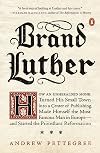
This is the best thing on the Reformation I've read for some time. In the past, for those who might only read one thing on Luther, I've recommended Oberman's "Luther: Man between God and the Devil". But now, I'd have to offer them a choice between Oberman and this book of Pettegree's.
It's Luther chiefly through the eyes of the print, the medium that made the Reformation. And equally, it's the (primarily German) print industry that this reformed monk made. Alert to Luther's strengths and show more weakness (sometimes the very same things), the book traces the career and impact of Luther with wonderful insights both historical and technical. show less
It's Luther chiefly through the eyes of the print, the medium that made the Reformation. And equally, it's the (primarily German) print industry that this reformed monk made. Alert to Luther's strengths and show more weakness (sometimes the very same things), the book traces the career and impact of Luther with wonderful insights both historical and technical. show less
This book was something of a mixed bag for me. However, the parts I liked I found very interesting and well done and the parts I didn’t care for weren’t too onerous.
My main complaint was that this book focused almost exclusively on European, and then later on English and American libraries. There were brief mentions of library history and innovations in other countries but these were comparatively terse and confined to a few throwaway sentences. Someone reading this with no prior show more background at all would come away thinking libraries were largely a phenomenon confined to the global north and the nebulous and increasingly tenuous “West”. The libraries of ancient and medieval China, or of the early Islamic Caliphs merit scarcely a mention. A genuinely global survey of the history of libraries may well be beyond the scope of this or any single book, but in that case a more fitting title may have been in order. This omission is all the more glaring for the relatively large swathes of ink the author spills on other subjects. Most notably the chapters dealing with the private libraries of Renaissance nobles and Dutch merchants seem to go on in extreme length and detail.
I did really appreciate the author’s thesis statement, that most library destruction is a result of neglect, obviated usefulness, or not meeting the needs of the new generation that inherits them. Library histories tend to focus on the spectacular and purposeful destruction of libraries rather than this more common, if less flashy, cause of library death.
The sections closer to modern times dealing with what we would recognizably see as “public libraries” was fascinating and well done. The author adroitly and convincingly showed the lineage of subscription and circulation libraries through to the modern incarnation of tax payer funded libraries open to all. I wish there had been more time devoted to this historical period and far less spent on an exhaustive cataloging of the book collecting habits of Renaissance.
P.S.
The author did give a shout out to Better World Books and mentions how he uses it to buy weeded library books at discount rates. This is something I also do! It's a really neat service for both customers and libraries and more people should use it. show less
My main complaint was that this book focused almost exclusively on European, and then later on English and American libraries. There were brief mentions of library history and innovations in other countries but these were comparatively terse and confined to a few throwaway sentences. Someone reading this with no prior show more background at all would come away thinking libraries were largely a phenomenon confined to the global north and the nebulous and increasingly tenuous “West”. The libraries of ancient and medieval China, or of the early Islamic Caliphs merit scarcely a mention. A genuinely global survey of the history of libraries may well be beyond the scope of this or any single book, but in that case a more fitting title may have been in order. This omission is all the more glaring for the relatively large swathes of ink the author spills on other subjects. Most notably the chapters dealing with the private libraries of Renaissance nobles and Dutch merchants seem to go on in extreme length and detail.
I did really appreciate the author’s thesis statement, that most library destruction is a result of neglect, obviated usefulness, or not meeting the needs of the new generation that inherits them. Library histories tend to focus on the spectacular and purposeful destruction of libraries rather than this more common, if less flashy, cause of library death.
The sections closer to modern times dealing with what we would recognizably see as “public libraries” was fascinating and well done. The author adroitly and convincingly showed the lineage of subscription and circulation libraries through to the modern incarnation of tax payer funded libraries open to all. I wish there had been more time devoted to this historical period and far less spent on an exhaustive cataloging of the book collecting habits of Renaissance.
P.S.
The author did give a shout out to Better World Books and mentions how he uses it to buy weeded library books at discount rates. This is something I also do! It's a really neat service for both customers and libraries and more people should use it. show less
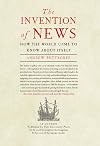
These days we take the news for granted. The mix of factual reporting about things that happened recently, editorial commentary, and subscriptions advertising for financial support, seems obvious and permanent, whether it's in legacy print media, 24/7 cable, or radio supported by listeners like you. But of course, this wasn't always the case. There was a time when news itself was novel.
Russkaja - Here Is The News
Pettegree walks through the technological and social revolution that created show more news as we know it, from the 14th century to the 18th century. This revolution relied on two key bits of technology. The first was the printing press, and mechanical reproduction of text. The second was the postal service, as the ad hoc communication systems of the Middle Ages were converted to reliable and rapid courier routes that blended imperial political authority with commercial needs.
The social revolution is more diffuse, but roughly tracks with the rise of the bourgeois. Initially, the class of people who had to be informed of events was the relatively small political elite of the aristocracy, their religious counterparts in the leading figures of the Catholic Church, and a handful of international merchants. But through the early modern period, this grew to encompass the rising urban bourgeois, as well as those who saw themselves ideologically linked with the new conflicts of the Protestant Reformation.
The mature newspaper appears only at the end of this period, but Pettegree traces several intermediates. The first are printed pamphlets, a common and profitable venue for print shops which had filled out local demand for bibles and Greek and Latin classics. Pamphlets covered a single topic in detail, which could be news-like, such as significant recent battle, but often were astonishing and monstrous occurrences (fire in the sky, animals born of women, etc), and lurid accounts of murder that could be reprinted for decades after the actual event.
Another format was the avvisi, a hand-written account of significant events dispatched to a distant place. Avvisi's were born in Italy, and were narrow insider accounts of political maneuverings, private intelligent subscribed at great cost for an elite audience. But the information of the avvisi penetrated into the public sphere of oral accounts and rumors, passing from the great and influential to the small and often drunk. "What news?" became a greeting on the strength of reliable and distant truths in avvisis.
The newspaper, a serial, subscribed, and printed account of news only emerged in the late 17th century. Newspapers rapidly fell into two camps. One was anodyne official gazettes which collected foreign news and avoided domestic reporting aside from pro-government propaganda, whatever that domestic government might be. A second form was the journal, an opinionated, specialist periodical, whether for men of philosophy, fashionable gentlemen, or those engaged in a particular branch of commerce. Journals were often one-man shows, and lasted until the writer-editor-publisher-circulation agent burnt out under the constant need for new content. Journals also pioneered the combination of advertising and reporting which is the devil's bargain of news. Much like the posts, which relied on government subsidy and commercial access to enable reliable transmission of letters, ordinary people are unwilling to fund the peacetime infrastructure to get the facts they need in moments of crisis.
The book ends just as it gets interesting, with newspapers playing a key political role in the democratic revolutions in America and France that ended the 18th century. I think there's a really sharp 100 page monograph in here, which is covered over with interesting, but vaguely irrelevant details. For me, this book answered a question which had been raised in Anderson's Imagined Communities about the role of newspapers in creating nationalism, by showing how newspapers created themselves and their readership. show less
Russkaja - Here Is The News
Pettegree walks through the technological and social revolution that created show more news as we know it, from the 14th century to the 18th century. This revolution relied on two key bits of technology. The first was the printing press, and mechanical reproduction of text. The second was the postal service, as the ad hoc communication systems of the Middle Ages were converted to reliable and rapid courier routes that blended imperial political authority with commercial needs.
The social revolution is more diffuse, but roughly tracks with the rise of the bourgeois. Initially, the class of people who had to be informed of events was the relatively small political elite of the aristocracy, their religious counterparts in the leading figures of the Catholic Church, and a handful of international merchants. But through the early modern period, this grew to encompass the rising urban bourgeois, as well as those who saw themselves ideologically linked with the new conflicts of the Protestant Reformation.
The mature newspaper appears only at the end of this period, but Pettegree traces several intermediates. The first are printed pamphlets, a common and profitable venue for print shops which had filled out local demand for bibles and Greek and Latin classics. Pamphlets covered a single topic in detail, which could be news-like, such as significant recent battle, but often were astonishing and monstrous occurrences (fire in the sky, animals born of women, etc), and lurid accounts of murder that could be reprinted for decades after the actual event.
Another format was the avvisi, a hand-written account of significant events dispatched to a distant place. Avvisi's were born in Italy, and were narrow insider accounts of political maneuverings, private intelligent subscribed at great cost for an elite audience. But the information of the avvisi penetrated into the public sphere of oral accounts and rumors, passing from the great and influential to the small and often drunk. "What news?" became a greeting on the strength of reliable and distant truths in avvisis.
The newspaper, a serial, subscribed, and printed account of news only emerged in the late 17th century. Newspapers rapidly fell into two camps. One was anodyne official gazettes which collected foreign news and avoided domestic reporting aside from pro-government propaganda, whatever that domestic government might be. A second form was the journal, an opinionated, specialist periodical, whether for men of philosophy, fashionable gentlemen, or those engaged in a particular branch of commerce. Journals were often one-man shows, and lasted until the writer-editor-publisher-circulation agent burnt out under the constant need for new content. Journals also pioneered the combination of advertising and reporting which is the devil's bargain of news. Much like the posts, which relied on government subsidy and commercial access to enable reliable transmission of letters, ordinary people are unwilling to fund the peacetime infrastructure to get the facts they need in moments of crisis.
The book ends just as it gets interesting, with newspapers playing a key political role in the democratic revolutions in America and France that ended the 18th century. I think there's a really sharp 100 page monograph in here, which is covered over with interesting, but vaguely irrelevant details. For me, this book answered a question which had been raised in Anderson's Imagined Communities about the role of newspapers in creating nationalism, by showing how newspapers created themselves and their readership. show less
Lists
Awards


You May Also Like


Associated Authors
Statistics
- Works
- 29
- Also by
- 4
- Members
- 2,978
- Popularity
- #8,564
- Rating
- 4.0
- Reviews
- 42
- ISBNs
- 94
- Languages
- 7
- Favorited
- 3
