
Alister E. McGrath
Author of Christian Theology: An Introduction
About the Author
Alister McGrath is currently professor of theology at Oxford and principal of Wycliffe Hall. He is a consulting editor, general editor and author of several books. He lives in Oxford, England.
Image credit: Photo by Matthias Asgeirsson / Flickr
Series
Works by Alister E. McGrath
In the Beginning: The Story of the King James Bible and How It Changed a Nation, a Language, and a Culture (2001) 1,165 copies, 13 reviews
Historical Theology: An Introduction to the History of Christian Thought (1998) 912 copies, 3 reviews
Christianity's Dangerous Idea: The Protestant Revolution--A History from the Sixteenth Century to the Twenty-First (2007) 656 copies, 4 reviews
The Twilight of Atheism: The Rise and Fall of Disbelief in the Modern World (2004) 500 copies, 8 reviews
If I Had Lunch with C. S. Lewis: Exploring the Ideas of C. S. Lewis on the Meaning of Life (2014) 268 copies, 6 reviews
Roman Catholicism: Evangelical Protestants Analyze What Divides and Unites Us (1994) 260 copies, 1 review
The Passionate Intellect: Christian Faith and the Discipleship of the Mind (2010) 220 copies, 1 review
Luther's Theology of the Cross: Martin Luther's Theological Breakthrough (1985) 191 copies, 1 review
The Genesis of Doctrine: A Study in the Foundation of Doctrinal Criticism (1990) 174 copies, 1 review
The History of Apologetics: A Biographical and Methodological Introduction (2020) — Editor — 100 copies
A Fine-Tuned Universe: The Quest for God in Science and Theology (Gifford Lectures) (2009) 98 copies
The Reenchantment of Nature: The Denial of Religion and the Ecological Crisis (2002) — Author — 90 copies, 1 review
Narrative Apologetics: Sharing the Relevance, Joy, and Wonder of the Christian Faith (2019) 88 copies, 2 reviews
Inventing the Universe: Why we can't stop talking about science, faith and God (2015) 63 copies, 1 review
A Theory of Everything (That Matters): A Brief Guide to Einstein, Relativity, and His Surprising Thoughts on God (2019) 55 copies
Iustitia Dei: Volume 1, A History of the Christian Doctrine of Justification: From the Beginnings to 1550 v. 1 (1986) 52 copies
Enriching Our Vision of Reality: Theology and the Natural Sciences in Dialogue (2016) 38 copies, 1 review
Born to Wonder: Exploring Our Deepest Questions--Why Are We Here and Why Does It Matter? (2020) 30 copies
The Territories of Human Reason: Science and Theology in an Age of Multiple Rationalities (2019) 17 copies
The Living God: A Guide for Study and Devotion (The Heart of Christian Faith) (2014) 10 copies, 1 review
Teologia Natural 8 copies
Passion for the Gospel: Hugh Latimer (1485-1555) Then and Now. A Commemorative Lecture to Mark the 450th Anniversary of His Martyrdom in Oxford (2005) 7 copies
The Christian Life and Hope: A Guide for Study and Devotion (The Heart of Christian Faith) (2016) 5 copies
Arcic II and justification: An evangelical Anglican assessment of 'Salvation and the Church' (1987) 4 copies
La grande domanda. Perché non si può fare a meno di parlare di scienza, di fede e di Dio (2016) 4 copies
Surpreendido Pelo Sentido. Ciência, Fé e Como Conseguimos que as Coisas Façam Sentido (2015) 4 copies
O Ajuste Fino do Universo 3 copies
Deus não vai embora 3 copies
Coming to Faith Through Dawkins: 12 Essays on the Pathway from New Atheism to Christianity (2023) 3 copies
New Wine - Summer Conference : Introducing Apologetics: Connecting with our culture - Teaching CD 2 copies
Science and Religion in the Imagination of C. S. Lewis: The Quest for the Best Mental Model of the Universe (2026) 2 copies
Teologia para amadores 2 copies
Deus Vivo, O 1 copy
Scientific Theology: Volume 1: Nature, Volume 2: Reality, Volume 3: Theory 3 VOLUME SET (2001) 1 copy
Alister Edgar McGrath 1 copy
History of Theology, The 1 copy
Psalms Chapters 90-150 1 copy
A Life of John Calvin 1 copy
Has Science Killed God? 1 copy
Ranghugmynd Richards Dawkins 1 copy
Nepoznati Bog 1 copy
Je doute donc je crois 1 copy
Cross, Theology of the 1 copy
La autoestima y la cruz 1 copy
Criação 1 copy
C S Lewis' vision of Christianity: how he helps us make sense of our faith an exlpain it to others. (Clear Voices 2014: Festival of Theology.) Talk 44 1 copy, 1 review
Doubts and Good Friday 1 copy
Associated Works
Dictionary for Theological Interpretation of the Bible (2005) — Contributor, some editions — 602 copies, 5 reviews
Jesus and the Restoration of Israel: A Critical Assessment of N.T. Wright's Jesus and the Victory of God (1999) — Contributor — 217 copies
How to Live a Good Life: A Guide to Choosing Your Personal Philosophy (2020) — Contributor — 160 copies, 2 reviews
The Nature of Confession: Evangelicals & Postliberals in Conversation (1996) — Contributor — 100 copies
Karl Barth and Evangelical Theology: Convergences and Divergences (2006) — Contributor — 94 copies, 1 review
Imaginative Apologetics: Theology, Philosophy and the Catholic Tradition (2011) — Contributor — 71 copies, 1 review
Paul's "Works of the Law" in the Perspective of Second-Century Reception (2018) — Foreword, some editions — 44 copies
Tagged
Common Knowledge
- Canonical name
- McGrath, Alister E.
- Legal name
- McGrath, Alister Edgar
- Other names
- 麥格夫
麥葛福
麥葛福.艾利斯特
阿利斯特.麥格拉思 - Birthdate
- 1953-01-23
- Gender
- male
- Education
- Wadham College, University of Oxford (BA, first class honours|Chemistry|1975)
Linacre College, University of Oxford (D.Phil|Molecular Biophysics|1977)
Merton College, University of Oxford (D.Phil, first class honours|Theology|1978)
University of Oxford (BD|1983)
University of Oxford (DD|2001)
University of Oxford (D.Litt|Division of Humanities|2013) - Occupations
- Anglican priest (ordained 1981)
theologian
priest
university professor
intellectural historian
scientist (show all 7)
Christian apologist - Organizations
- Church of England
Oxford University
King's College, London
Drew University
Gresham College - Awards and honors
- Royal Society of Arts (Fellow)
- Relationships
- Collicutt, Joanna (spouse)
- Nationality
- UK
- Birthplace
- Belfast, County Antrim, Northern Ireland, UK
- Places of residence
- Belfast, County Antrim, Northern Ireland, UK
Oxford, Oxfordshire, England, UK
Cambridge, Cambridgeshire, England, UK - Map Location
- Northern Ireland
Members
Discussions
McGrath or Lane as primary historical theology book? in Christianity (February 2013)
Reviews
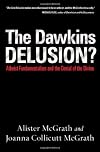
The best thing that can be said for "The Dawkins Delusion?" is that at under 100 pages, it didn't waste too much of my time. To save you from wasting any of yours, let me summarize (and paraphrase): "Dawkins makes hateful baseless claims and ignores evidence that cuts against his position." If you're hoping for this book to say more, you'll be sorely disappointed (though perhaps appreciative of the irony).I think perhaps I just need a break from this genre, for it has gotten to feel like a show more horribly juvenile case of "he said, she said." Here are some of my major critiques of this particular installment:As I already implied, the authors mirror many of the things they criticize about Dawkins. For instance, they chastise his use of religious extremists examples as being representative of the faithful as a whole. Which is fair, until they respond in kind: "Atheism must indeed be in a sorry state if its leading contemporary defender has to depend so heavily--and so obviously--on the improbable and the false to bolster his case." I'm not sure who on either side would consider Dawkins to be representative of atheists as a whole, making the authors, at best, hypocritical (at worst - dare I say - deluded).Other parts of the book are merely irrelevant: "I subsequently found myself persuaded that Christianity was a much more interesting and intellectually exciting worldview than atheism." Perhaps law school has gotten the best of me, but I am desperately waiting for the "And therefore..." Who cares about what is interesting or exciting? I thought this was a discussion about what is "right," or at the least, what is well argued.Finally, the "I was a believer-turned-atheist" or "I was an atheist-turned believer" claim is 1) completely overdone, and 2) entirely unpersuasive. I'll stop there because this is a review, not a rebuttal, but hopefully these observations underpin at least some of the weaknesses I saw in this book. show less
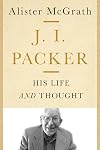
Summary: An account of the theologian’s faith, life, and theological engagement.
J. I. Packer was one of my personal theological heroes. His impact on my life came primarily through the book Knowing God, which I read during my student days. As a young Christian, I discovered that the chief end of our lives as well as the work of theology is that we know, love, and glorify God, and not just know about him. The first time through, I read a few pages at a time, stopped, reflected, and prayed show more in wonder at the greatness, majesty, holiness, and love of God. It is one of those books I’ve re-read several times. I only heard Packer speak once, giving a series of lectures on revival in Ann Arbor, contrasting Jonathan Edwards and Charles Finney, along with an exposition of Psalm 85 as a prayer for revival. The talks were marked by precision of thought and warmth of devotion.
Reading this account of the life and thought of Packer by Alister McGrath, I came to understand that the qualities I appreciated in his lectures and his books reflected his central passion for theological education and catechesis for the good of the church. McGrath traces this thread through his books and thought and his career first in Bristol, then Oxford, then briefly again at Bristol, and finally at Regent in Canada. In fact, McGrath alternates chapters on his life with ones on aspects of his theological work.
He recounts Packer’s early life, his spiritual awakening and early embrace of the theology of the fathers and their ancient wisdom. He describes the relationship with D. Martyn Lloyd Jones and the development of the Puritan Studies Conferences, and their later falling out. At Tyndale Hall in Bristol, Packer comes into his own as a “theological educationalist.” This period marked Packer’s early efforts in publishing, centered around the editorial work on the first edition of The New Bible Dictionary and his first book on Fundamentalism and the Word of God. McGrath includes marvelous material here on how Packer’s devotional life fed both his pastoral and theological work.
Packer’s return to Oxford in the 1960’s as Warden of Latimer House came at a time of ferment within Anglican evangelicalism. McGrath features Packer’s marvelous reply to Bishop Robinson’s Honest to God, the crisis in 1966 with Lloyd Jones leading to the cooling of their relationship and the Keele conference of 1967 defining an evangelical presence within Anglicanism. A key focus in Packer’s thought is theology for the life of the church. After this conference, Packer became convinced that it was time to move on from Latimer. He returned to take up the leadership of Tyndale Hall in a time of crisis leading to a merger creating Trinity College, with him no longer as principal. Time for writing led to a series of articles that became Knowing God.
One of the personal highlights of McGrath’s account was reading about James Sire’s visit with Packer and offer to acquire the U.S. rights of the book for InterVarsity Press, through which the book came into the hands of this young college student and many others becoming one of IVP’s all-time best selling works. By the 1977 Nottingham Conference, however, it became apparent that Packer was increasingly out of step with the younger evangelicals in England. This opened the door to Canada, and Regent College, and the opportunities for Packer to more fully pursue his ideas of theological education for the church, which he did as faculty and in retirement until his death in 2020.
One of the fascinating aspects developed by McGrath is Packer’s conservatism with an irenic streak. Packer was committed to the idea “test everything; hold onto the good.” He believe the good traditions of the past could deliver us from the idiosyncrasies of the present, all under the authority of the Bible. Hence his emphasis on the Reformers and Puritan studies. This put him at variance with others, particularly at two points: the ministry of women and his views of eternal punishment. Yet he also join the Evangelicals and Catholics Together initiative, finding the places of common ground while delineating theological difference with clarity. It strikes me you needed someone like Packer to do this to avoid making a theological hash of the whole affair.
McGrath has given us a wonderful summary of the life and thought of Packer. Indeed, we see how what Packer thought shaped how he lived. Packer believed in theological education as not merely an academic exercise but as existing for the strengthening of the church in the knowledge of God. McGrath helps us see how the whole trajectory of Packer’s life was shaped by these commitments. It also leaves me two questions to ponder. One is, amid a changing world, what must be conserved? The second is, amid the powerful and competing influences of our culture, how might we carry forward Packer’s commitment to catechesis, the formation of Christians in thought, word, and deed?
____________________________
Disclosure of Material Connection: I received a complimentary review copy of this book from the publisher in exchange for an honest review. The opinions I have expressed are my own. show less
J. I. Packer was one of my personal theological heroes. His impact on my life came primarily through the book Knowing God, which I read during my student days. As a young Christian, I discovered that the chief end of our lives as well as the work of theology is that we know, love, and glorify God, and not just know about him. The first time through, I read a few pages at a time, stopped, reflected, and prayed show more in wonder at the greatness, majesty, holiness, and love of God. It is one of those books I’ve re-read several times. I only heard Packer speak once, giving a series of lectures on revival in Ann Arbor, contrasting Jonathan Edwards and Charles Finney, along with an exposition of Psalm 85 as a prayer for revival. The talks were marked by precision of thought and warmth of devotion.
Reading this account of the life and thought of Packer by Alister McGrath, I came to understand that the qualities I appreciated in his lectures and his books reflected his central passion for theological education and catechesis for the good of the church. McGrath traces this thread through his books and thought and his career first in Bristol, then Oxford, then briefly again at Bristol, and finally at Regent in Canada. In fact, McGrath alternates chapters on his life with ones on aspects of his theological work.
He recounts Packer’s early life, his spiritual awakening and early embrace of the theology of the fathers and their ancient wisdom. He describes the relationship with D. Martyn Lloyd Jones and the development of the Puritan Studies Conferences, and their later falling out. At Tyndale Hall in Bristol, Packer comes into his own as a “theological educationalist.” This period marked Packer’s early efforts in publishing, centered around the editorial work on the first edition of The New Bible Dictionary and his first book on Fundamentalism and the Word of God. McGrath includes marvelous material here on how Packer’s devotional life fed both his pastoral and theological work.
Packer’s return to Oxford in the 1960’s as Warden of Latimer House came at a time of ferment within Anglican evangelicalism. McGrath features Packer’s marvelous reply to Bishop Robinson’s Honest to God, the crisis in 1966 with Lloyd Jones leading to the cooling of their relationship and the Keele conference of 1967 defining an evangelical presence within Anglicanism. A key focus in Packer’s thought is theology for the life of the church. After this conference, Packer became convinced that it was time to move on from Latimer. He returned to take up the leadership of Tyndale Hall in a time of crisis leading to a merger creating Trinity College, with him no longer as principal. Time for writing led to a series of articles that became Knowing God.
One of the personal highlights of McGrath’s account was reading about James Sire’s visit with Packer and offer to acquire the U.S. rights of the book for InterVarsity Press, through which the book came into the hands of this young college student and many others becoming one of IVP’s all-time best selling works. By the 1977 Nottingham Conference, however, it became apparent that Packer was increasingly out of step with the younger evangelicals in England. This opened the door to Canada, and Regent College, and the opportunities for Packer to more fully pursue his ideas of theological education for the church, which he did as faculty and in retirement until his death in 2020.
One of the fascinating aspects developed by McGrath is Packer’s conservatism with an irenic streak. Packer was committed to the idea “test everything; hold onto the good.” He believe the good traditions of the past could deliver us from the idiosyncrasies of the present, all under the authority of the Bible. Hence his emphasis on the Reformers and Puritan studies. This put him at variance with others, particularly at two points: the ministry of women and his views of eternal punishment. Yet he also join the Evangelicals and Catholics Together initiative, finding the places of common ground while delineating theological difference with clarity. It strikes me you needed someone like Packer to do this to avoid making a theological hash of the whole affair.
McGrath has given us a wonderful summary of the life and thought of Packer. Indeed, we see how what Packer thought shaped how he lived. Packer believed in theological education as not merely an academic exercise but as existing for the strengthening of the church in the knowledge of God. McGrath helps us see how the whole trajectory of Packer’s life was shaped by these commitments. It also leaves me two questions to ponder. One is, amid a changing world, what must be conserved? The second is, amid the powerful and competing influences of our culture, how might we carry forward Packer’s commitment to catechesis, the formation of Christians in thought, word, and deed?
____________________________
Disclosure of Material Connection: I received a complimentary review copy of this book from the publisher in exchange for an honest review. The opinions I have expressed are my own. show less
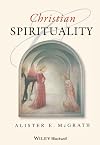
A good basic introduction to spirituality, more concerned with 'mapping the territory' than a guide on how to develop spiritually. For that I'd recommend either [b:Spiritual Theology|46223294|Spiritual Theology|Jordan Aumann|https://i.gr-assets.com/images/S/compressed.photo.goodreads.com/books/1565754951l/46223294._SX50_.jpg|1204013] or [b:The Three Ages Of The Interior Life: Prelude of Eternal Life|880507|The Three Ages Of The Interior Life Prelude of Eternal Life|Réginald show more Garrigou-Lagrange|https://i.gr-assets.com/images/S/compressed.photo.goodreads.com/books/1387717338l/880507._SY75_.jpg|865801].
Wide ranging in its survey, this book looks at types of Christian spirituality, theological foundations, biblical images and spirituality, and visualisation and spatialisation in spirituality, before concluding with some practical exercises in textual interpretation.
If you are looking at Christian spirituality for the first time, I would highly recommend this book, with the disclaimer that it is very intellectual and structured in its approach and lacks the more practical and emotional aspects of spiritual development. In other words, it's all head stuff - no more than you'd expect from an Oxford academic!
But even for those well versed in Christian spirituality, the book has a new perspective to offer and helps to provide a framework within which spirituality can be better explored. show less
Wide ranging in its survey, this book looks at types of Christian spirituality, theological foundations, biblical images and spirituality, and visualisation and spatialisation in spirituality, before concluding with some practical exercises in textual interpretation.
If you are looking at Christian spirituality for the first time, I would highly recommend this book, with the disclaimer that it is very intellectual and structured in its approach and lacks the more practical and emotional aspects of spiritual development. In other words, it's all head stuff - no more than you'd expect from an Oxford academic!
But even for those well versed in Christian spirituality, the book has a new perspective to offer and helps to provide a framework within which spirituality can be better explored. show less
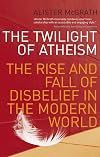
I learned quite a lot from this book. It is good to see that even the evangelical wing of the Church of England can produce someone who can give such a clear-eyed assessment of the failings of Protestantism. He also takes seriously the religious views of figures such as Marx and Nietzsche, who most evangelical writers would, I think, simply write off as godless and irrelevant to the faithful, and grapples intelligently with the issues they raise.
Where the book didn't quite grab me was in its show more focus on positive, militant atheism. The book does not really set out to be an apologetic in favour of theism, but it has little to say about (or for) those who simply lose their grip on belief, rather than those who actively reject it. But I expect to read more McGrath, since although I don't share his fairly traditional approach to Christian faith, he is a much more sophisticated thinker than many on the orthodox side of the Church, and runs rings around Richard Dawkins's frankly naive views on religion.
MB 28-ix-2010 show less
Where the book didn't quite grab me was in its show more focus on positive, militant atheism. The book does not really set out to be an apologetic in favour of theism, but it has little to say about (or for) those who simply lose their grip on belief, rather than those who actively reject it. But I expect to read more McGrath, since although I don't share his fairly traditional approach to Christian faith, he is a much more sophisticated thinker than many on the orthodox side of the Church, and runs rings around Richard Dawkins's frankly naive views on religion.
MB 28-ix-2010 show less
Lists
Sonlight Books (1)
Awards


You May Also Like


Associated Authors
Statistics
- Works
- 237
- Also by
- 22
- Members
- 23,911
- Popularity
- #878
- Rating
- 3.9
- Reviews
- 181
- ISBNs
- 688
- Languages
- 19
- Favorited
- 20
