
Jaroslav Pelikan (1923–2006)
Author of Jesus through the Centuries: His Place in the History of Culture
About the Author
Jaroslav Pelikan (1923-2006) was Sterling Professor of History Emeritus at Yale University. He authored many books, including Whose Bible Is It? A History of the Scriptures through the Ages and Credo: Historical and Theological Guide to Creeds and Confessions of Faith in the Christian Tradition.
Image credit: By Martycap at English Wikipedia - Transferred from en.wikipedia to Commons., Public Domain, https://commons.wikimedia.org/w/index.php?curid=3669778
Series
Works by Jaroslav Pelikan
The Christian Tradition: A History of the Development of Doctrine, Volume 1: The Emergence of the Catholic Tradition (100-600) (1971) 1,581 copies, 8 reviews
The Christian Tradition: A History of the Development of Doctrine, Vol. 2: The Spirit of Eastern Christendom (600-1700) (Volume 2) (1974) 1,055 copies, 3 reviews
The Christian Tradition: A History of the Development of Doctrine, Vol. 3: The Growth of Medieval Theology (600-1300) (1978) 1,039 copies, 1 review
The Christian Tradition: A History of the Development of Doctrine, Vol. 4: Reformation of Church and Dogma (1300-1700) (1984) 897 copies, 4 reviews
The Christian Tradition: A History of the Development of Doctrine, Volume 5: Christian Doctrine and Modern Culture (since 1700) (1989) 735 copies, 2 reviews
Credo: Historical and Theological Guide to Creeds and Confessions of Faith in the Christian Tradition (2003) 322 copies
Christianity and Classical Culture: The Metamorphosis of Natural Theology in the Christian Encounter with Hellenism (1993) 315 copies
The Vindication of Tradition: The 1983 Jefferson Lecture in the Humanities (1984) 232 copies, 1 review
Luther's Works, Volume 02: Lectures on Genesis, Chapters 6-14 (1960) — Editor — 192 copies, 2 reviews
The excellent empire: The fall of Rome and the triumph of the church (The Rauschenbusch lectures) (1987) 173 copies
On Searching the Scriptures -- Your Own or Someone Else's: A Reader's Guide to Sacred Writings and Methods of Studying Them (1992) 159 copies, 1 review
Luther's Works, Companion Volume: Luther the Expositor: Introduction to the Reformer's Exegetical Writings (1959) 147 copies, 3 reviews
Divine Rhetoric: The Sermon on the Mount As Message and As Model in Augustine, Chrysostom, and Luther (2000) 109 copies
Obedient rebels; Catholic substance and Protestant principle in Luther's Reformation (1964) 95 copies
The Mystery of Continuity: Time and History, Memory and Eternity in the Thought of Saint Augustine (Richard Lectures for 1984-85) (1986) 64 copies
Twentieth Century Theology in the Making: The Theological Dialogue: Issues and Resources (1970) 36 copies
The Finality of Jesus Christ in an age of universal history: A dilemma of the third century (Ecumenical studies in history) (1965) 26 copies
Luther's works: Genesis 1-5 7 copies
Comparative work ethics: Judeo-Christian, Islamic, and Eastern (Occasional papers of the Council of Scholars) (1985) 5 copies
Scholarship and Its Survival: Questions on the Idea of Graduate Education (A Carnegie Foundation essay) (1983) 3 copies
The Westminster Tanner - McMurrin Lectures on the History and Philosophy of Religion at Westminster College (1991) 2 copies
Accents in Luther's Theology 1 copy
The Preaching of Augustine 1 copy
Luther's Works: Zechariah 1 copy
Solitude 1 copy
Luther's Works on CD-ROM 1 copy
Luther's Works Volume 12 1 copy
Pelikan, Jaroslav — Author — 1 copy
Associated Works
The Jefferson Bible: The Life and Morals of Jesus of Nazareth (1989) — Afterword, some editions — 2,013 copies, 35 reviews
Christus Victor: An Historical Study of the Three Main Types of the Idea of the Atonement (1931) — Introduction, some editions — 798 copies, 5 reviews
Luther's Works, Volume 23: Sermons on the Gospel of St. John, Chapters 6-8 (1958) — Editor — 157 copies
Life, Liberty, and the Pursuit of Happiness: Ten Years of the Claremont Review of Books (2012) — Contributor — 17 copies
Tagged
Common Knowledge
- Canonical name
- Pelikan, Jaroslav
- Legal name
- Pelikan, Jaroslav Jan, Jr.
- Other names
- 帕利坎
- Birthdate
- 1923-12-17
- Date of death
- 2006-05-13
- Gender
- male
- Education
- University of Chicago (Ph.D | 1946)
Concordia Theological Seminary (B.Div | 1946)
Concordia College (BA | 1942) - Occupations
- historian of Christian doctrine
university professor
pastor - Organizations
- Yale University
Valparaiso University
Concordia Seminary
University of Chicago
Trinity Slovak Lutheran Church - Awards and honors
- Haskins Medal (1985)
American Philosophical Society (1978)
Medieval Academy of America (Fellow, 1972)
American Academy of Arts and Sciences (1966)
Jefferson Lecture (1983)
Wilbur Cross Medal (1979) (show all 7)
Kluge Prize (2004) - Cause of death
- lung cancer
- Nationality
- USA
- Birthplace
- Akron, Ohio, USA
- Places of residence
- Hamden, Connecticut, USA
- Place of death
- Hamden, Connecticut, USA
- Burial location
- Grove Street Cemetery, New Haven, Connecticut, USA
- Map Location
- Ohio, USA
Members
Reviews
The Christian Tradition: A History of the Development of Doctrine, Volume 4: Reformation of Church and Dogma (1300-1700) by Jaroslav Pelikan
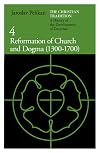
Pelikan's History of the Development of Doctrine is a magisterial five volume labour of love, and this, volume four, is no exception. Intricately woven narratives tracing, it must always be remembered, the development of doctrine, not politics or sociology or, in the narrowest sense of the word, church history. Do not read this book to discover what Johannes Œcolampadius had for breakfast or to sus out Zwingli's school record. Don't read it either if you want a light brouse through the show more period: this is demanding, as all these volumes of Pelikan are. Ideally it should be read with pen and paper: so many notes to take, questions to answer of - and have answered by - the text. Again Pelikan generates a sort of spiral across doctrines and across time, so the book has, effectively (as the series title indicates) two axes: doctrine and time. Early developments in Reformation eucharistic theology for example, come, go, and reappear a century or half a century later attached to new names, new refinements of argument. Don't expect much mention of' 'followers' - this is a story of the theological cutting edge, leaving little room for mention, for example, of the tardy English Reformers or Anglicanism itself, piggy-backing as they did on the European intellectual maelstrom.
I have read this book twice now (it seems I am a slower reader now than I was 15 years ago, though perhaps I can claim I am busier!). It stretched me, pummelled me tormented me - yet each time I feel I barely scratched the surface. My own impression, each time, has been that the Reformation was a tragic accident - that the Catholic Reformers, rather than the Protestant ones, nailed the issues only to be brushed aside for 200 years by the bigger, brasher (and politically more belligerent) figures such as Calvin and Luther. More is the pity. Figures like Jean Charlier de Gerson or the later Girolamo Seripando emerge, for me, as the heroes of this torrid intellectual tale. Since Pelikan was a Lutheran (until the last few years of his life, when he became Orthodox) and I am an Anglican this subtle facet of Pelikan's writing stands as tribute to his intellectual genius and authorial integrity - no bias to his pen! show less
I have read this book twice now (it seems I am a slower reader now than I was 15 years ago, though perhaps I can claim I am busier!). It stretched me, pummelled me tormented me - yet each time I feel I barely scratched the surface. My own impression, each time, has been that the Reformation was a tragic accident - that the Catholic Reformers, rather than the Protestant ones, nailed the issues only to be brushed aside for 200 years by the bigger, brasher (and politically more belligerent) figures such as Calvin and Luther. More is the pity. Figures like Jean Charlier de Gerson or the later Girolamo Seripando emerge, for me, as the heroes of this torrid intellectual tale. Since Pelikan was a Lutheran (until the last few years of his life, when he became Orthodox) and I am an Anglican this subtle facet of Pelikan's writing stands as tribute to his intellectual genius and authorial integrity - no bias to his pen! show less

It’s been maybe a year since I read this book, but I recently dug it out again for a bit of research. I was looking into the Comma Johanneum, that controversial little verse in the first epistle of John that got a facelift in the Middle Ages: http://www.dubiousdisciple.com/2011/03/1-john-57-8-comma-johanneum.html .
In this book, Pelikan discusses how the Bible came to be, how it was interpreted through the ages, and how Christianity built its own message atop the Tanakh (the Torah, the show more prophets, and the Writings). But the Bible didn’t stop growing 2,000 years ago; it continues to be interpreted, modified, translated through the ages.
Did Christianity steal the Bible from the Jews? Pelikan has a way of uniting Christian and Jew even while recognizing an impenetrable rift. His writing is wonderfully readable and occasionally funny, as he points out how contradictory religions can read the same words and be inspired in different ways. He sees diversity as something to be appreciated, not condemned.
One cannot help but appreciate the Bible more as a living, growing, entity after reading this. The Word is alive! And ultimately, in the search for who owns the Bible, we must conclude as Pelikan does: To speak of possessing the Bible or even to ask “Whose Bible is it?” is … not only presumptuous but blasphemous. show less
In this book, Pelikan discusses how the Bible came to be, how it was interpreted through the ages, and how Christianity built its own message atop the Tanakh (the Torah, the show more prophets, and the Writings). But the Bible didn’t stop growing 2,000 years ago; it continues to be interpreted, modified, translated through the ages.
Did Christianity steal the Bible from the Jews? Pelikan has a way of uniting Christian and Jew even while recognizing an impenetrable rift. His writing is wonderfully readable and occasionally funny, as he points out how contradictory religions can read the same words and be inspired in different ways. He sees diversity as something to be appreciated, not condemned.
One cannot help but appreciate the Bible more as a living, growing, entity after reading this. The Word is alive! And ultimately, in the search for who owns the Bible, we must conclude as Pelikan does: To speak of possessing the Bible or even to ask “Whose Bible is it?” is … not only presumptuous but blasphemous. show less
The Christian Tradition: A History of the Development of Doctrine, Vol. 2: The Spirit of Eastern Christendom (600-1700) (Volume 2) by Jaroslav Pelikan
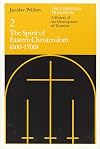
If, as Bacon said, "Some books are to be tasted, others to be swallowed, and some few to be chewed and digested," then volume 2 of Pelikan's history of Christian doctrine -- like the other volumes in the series -- defines the latter appellation. This is a book that should occupy a place in every Christian's library; combined with the other volumes, one could spend a lifetime alone going over the hundreds of primary and secondary sources that each volume references.
It is is a humbling show more undertaking to write a review, or even a synopsis, of any of Pelikan's books: what more possibly could be said? One has the feeling of sacrilege, as if trying to add a book to the Bible. Volume 2 addresses the growing importance the church placed on tradition; iconography; the Filioque controversy; the Trinity; the rise of Islam; and "the final break with Western doctrine," amongst other topics. Like volume 1, there is a density of prose that somehow seems necessary given the prolix subject matter -- perhaps akin to the necessity of force-feeding geese for foie gras (minus any of the negative connotations).
There are authors whom one simply must read when presented with one of their books, and Pelikan is one of them. While the firehose of information is not what one would call "easy reading," continued chewing and digestion will reward the reader for years to come. show less
It is is a humbling show more undertaking to write a review, or even a synopsis, of any of Pelikan's books: what more possibly could be said? One has the feeling of sacrilege, as if trying to add a book to the Bible. Volume 2 addresses the growing importance the church placed on tradition; iconography; the Filioque controversy; the Trinity; the rise of Islam; and "the final break with Western doctrine," amongst other topics. Like volume 1, there is a density of prose that somehow seems necessary given the prolix subject matter -- perhaps akin to the necessity of force-feeding geese for foie gras (minus any of the negative connotations).
There are authors whom one simply must read when presented with one of their books, and Pelikan is one of them. While the firehose of information is not what one would call "easy reading," continued chewing and digestion will reward the reader for years to come. show less
The Christian Tradition 4: A History of the Development of Doctrine: Reformation of Church & Dogma 1300-1700 by Jaroslav Pelikan
Pelikan's 4th volume in his 5-volume Christian Tradition focuses on perhaps the most familiar topic of historical Christianity (at least after the life of Jesus and the Resurrection): The Reformation. And scholar that he is, Pelikan has a nine-page "Preface" of sorts titled "Reformation Defined" -- as if the 400-plus pages that follow weren't enough. Pelikan is nothing if not thorough.
For Pelikan -- one can reasonably substitute "truth" for his exhaustive research -- the Reformation is much show more more than Luther's rabble-rousing. He traces a "pregnant plurality of fourteenth-century thought" that predated Luther by a century and a half, including names both familiar and unfamiliar. If one can critique Pelikan's work to this point, it would ironically be the lack of it: corners actually had to be cut to get the text down to the 400-plus pages in volume 4. The reader is invariably left wanting more information; but of course, Pelikan's expansive bibliography and notes offer more than enough opportunity for further research.
What higher praise can I offer than this: I will be learning from these volumes for the rest of my life. They will be among the most important books in my library. But it is not easy reading; what good has been accomplished without significant effort? And now off to begin volume 5! show less
For Pelikan -- one can reasonably substitute "truth" for his exhaustive research -- the Reformation is much show more more than Luther's rabble-rousing. He traces a "pregnant plurality of fourteenth-century thought" that predated Luther by a century and a half, including names both familiar and unfamiliar. If one can critique Pelikan's work to this point, it would ironically be the lack of it: corners actually had to be cut to get the text down to the 400-plus pages in volume 4. The reader is invariably left wanting more information; but of course, Pelikan's expansive bibliography and notes offer more than enough opportunity for further research.
What higher praise can I offer than this: I will be learning from these volumes for the rest of my life. They will be among the most important books in my library. But it is not easy reading; what good has been accomplished without significant effort? And now off to begin volume 5! show less
Lists
Awards


You May Also Like


Associated Authors
Statistics
- Works
- 107
- Also by
- 12
- Members
- 15,914
- Popularity
- #1,423
- Rating
- 4.0
- Reviews
- 73
- ISBNs
- 192
- Languages
- 14
- Favorited
- 26