

Peter R. L. Brown
Author of Augustine of Hippo: A Biography
About the Author
Image credit: Peter Brown at the Balzan Prize Ceremony, 2011 By International Balzan Foundation - International Balzan Foundation, CC BY-SA 3.0, https://commons.wikimedia.org/w/index.php?curid=36618815
Works by Peter R. L. Brown
Through the Eye of a Needle: Wealth, the Fall of Rome, and the Making of Christianity in the West, 350-550 AD (2012) 668 copies, 7 reviews
Authority and the Sacred: Aspects of the Christianisation of the Roman World (Canto original series) (1995) 250 copies, 3 reviews
Interpreting Late Antiquity: Essays on the Postclassical World (2001) — Editor — 62 copies, 1 review
Pagans and christians in the Roman empire: the breaking of a dialogue: (4.-6. century A. D.): proceedings of the International conference at the Monastery of Bose (october 2008) (2011) — Editor — 3 copies
La formazione dell'Europa cristiana 2 copies
Associated Works
A History of Private Life, Volume 1: From Pagan Rome to Byzantium (1985) — Contributor — 1,785 copies, 15 reviews
The Cambridge Ancient History, Vol. 13: The Late Empire, A.D. 337–425 (1998) — Contributor — 82 copies
The Religious History of the Roman Empire: Pagans, Jews, and Christians (2011) — Contributor — 17 copies
Empires and Exchanges in Eurasian Late Antiquity: Rome, China, Iran, and the Steppe, ca. 250–750 (2018) — Contributor — 13 copies
Dionysus since 69: Greek Tragedy at the Dawn of the Third Millennium (2004) — Contributor — 10 copies
Reconfiguring the Silk Road: New Research on East-West Exchange in Antiquity (2014) — Contributor — 5 copies
Characterization in Ancient Greek Literature : Studies in Ancient Greek Narrative, Vol. 4 (2017) — Contributor — 4 copies
East and West, Modes of Communication: Proceedings of the First Plenary Conference at Merida (1999) — Contributor — 3 copies
East & West: Papers in Ancient History Presented to Glen W. Bowersock (2009) — Contributor — 3 copies
Arethusa (vol 33 no 3): Elites in Late Antiquity — Contributor — 1 copy
Tagged
Common Knowledge
- Canonical name
- Brown, Peter R. L.
- Legal name
- Brown, Peter Robert Lamont
- Birthdate
- 1935-07-26
- Gender
- male
- Education
- New College, Oxford University (BA|1956)
- Occupations
- historian
university professor - Organizations
- Princeton University
University of California, Berkeley
Royal Holloway College, University of London
Oxford University - Awards and honors
- British Academy (Fellow, 1971)
American Academy of Arts & Sciences (Fellow, 1979)
Medieval Academy of America (Fellow, 1988)
American Philosophical Society (Member, 1995)
Accademia Nazionale dei Lincei (Foreign Member, 2015)
Royal Academy of Letters in Barcelona (Corresponding Member, 1997) (show all 24)
Royal Netherlands Academy of Arts and Sciences (Foreign Member, 1991)
MacArthur Fellowship (1982)
Royal Irish Academy (Honorary Member, 2010)
Ecclesiastical History Society (Fellow, 2016)
Chevalier de l'Ordre des Arts et des Lettres (1996)
Italian Association for the Study of Sanctity, Cults and Hagiography (Honorary Fellow)
Dan David Prize (2015)
Balzan Prize (2011)
Kluge Prize (2008)
Premio Anaxilao (1999)
Ausonius Prize for Ancient History (1999)
Heineken Prize for History (1994)
Arts Council of Great Britain Prize
Harold D. Vursell Memorial Award (1990)
Ralph Waldo Emerson Award
Jacques Barzun Prize (2012)
Philip Schaff Prize
R.R. Hawkins Award - Nationality
- Ireland
- Birthplace
- Dublin, Ireland
- Associated Place (for map)
- Dublin, Ireland
Members
Reviews
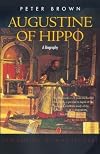
I am neither a Christian nor a religious person of any stripe, and I could NOT put this book down. Intellectual biography of the highest caliber.
The Epilogue adds precious new insights, and Peter Brown's humble reflections upon his 1960s original (printed here unchanged).
The Epilogue adds precious new insights, and Peter Brown's humble reflections upon his 1960s original (printed here unchanged).
Power and Persuasion in Late Antiquity: Towards a Christian Empire (Curti Lecture Series) by Peter Brown
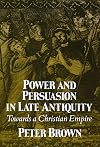
I enjoyed Brown’s dense prose, and this is both engagingly written as well as packed with interesting information and references. The main focus of this book is on the continuation of paideia among the aristocratic elite, and the transference of the practice of parrhésia from the philosophers to the bishops as the Roman Empire became Christianized – the book deals mainly with the eastern provinces however. While Brown makes repeated references and comparisons with the decorum found in show more connection with the autocracy of 17th century France, there’s only little mention of, or comparisons made, with the paideia of the early Greek city states, or the Graeco-Roman world in general, in the centuries leading up to the period of late antiquity discussed in this book – except, indirectly, when briefly discussing (the image of) earlier philosophers in the subchapter about parrhésia. Brown also mentions only as an aside that parrhésia was never simply the exclusive domain of philosophers, without getting much further into that. Also, the way Brown presents it, you could easily get the impression that the Christian bishops were the first to ever give any attention to the existence of the noncitizen, and, as well, that this had never been used as a political argument before. However, he does show how increased immigration and urbanization lead to an upsurge of the noncitizen class in the East Roman cities, making it a more pressing social issue, along with that of underemployment, and how the bishops became "Controllers of the Crowds" (p. 103) and developed this argument (on behalf of the masses of noncitizens and abject poor; noncitizens were not necessarily poor) into a stance of moral authority, as representatives of the general populace, because "before the emperor, as before God, all subjects were poor" (p. 154).– Make no mistake about it; perhaps complementing the title of his book, Brown aims to persuade, and he generally manages well with that within the narrow focus of this study – yet, just because of its narrowness, it appears to some degree incomplete. Still, within its own limit, this is a noteworthy and compelling analysis.
This work is licensed under a Creative Commons Attribution-NonCommercial-ShareAlike 3.0 Unported License. show less
This work is licensed under a Creative Commons Attribution-NonCommercial-ShareAlike 3.0 Unported License. show less
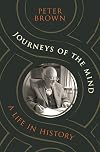
An intellectual autobiography, at the same time a historiographical survey, covering the field of late antiquity, a field that Brown helped shape. One of the emphases of Brown’s scholarly work, dating back to his first book, the acclaimed biography of Augustine of Hippo, is that history as practiced when he began allowed little room for anything other than external events, ignoring the inner life. This autobiography mirrors that theme: Beneath the externalities of life is a complex inner show more world and connection to a common breath of life.
Nor are the journeys purely mental. He traveled to Iran, Egypt, Turkey, and other places important for shaping the late antique world, picking up languages—ancient and modern—as he went. He is also sensitive to how the institutional setting in which a scholar works—whether Oxford, London, Rome, Berkeley, or Princeton— shapes his research and writing. Brown calls this the social aspect of scholarship. Through generous mentions of the work of other scholars whose work inspired and challenged him, Brown demonstrates the importance of this social aspect.
Given that Brown had such a long and productive career and published many groundbreaking studies, it was heartening to read repeatedly how his views on this or that topic had changed based on further research, whether his own or that of others. Brown writes clearly; this book should be accessible for any interested layperson (such as his two aunts—“folk of few books”—he had in mind as he wrote). The book is long and sometimes wanders in the telling, yet it more than repaid the time I invested in reading it. show less
Nor are the journeys purely mental. He traveled to Iran, Egypt, Turkey, and other places important for shaping the late antique world, picking up languages—ancient and modern—as he went. He is also sensitive to how the institutional setting in which a scholar works—whether Oxford, London, Rome, Berkeley, or Princeton— shapes his research and writing. Brown calls this the social aspect of scholarship. Through generous mentions of the work of other scholars whose work inspired and challenged him, Brown demonstrates the importance of this social aspect.
Given that Brown had such a long and productive career and published many groundbreaking studies, it was heartening to read repeatedly how his views on this or that topic had changed based on further research, whether his own or that of others. Brown writes clearly; this book should be accessible for any interested layperson (such as his two aunts—“folk of few books”—he had in mind as he wrote). The book is long and sometimes wanders in the telling, yet it more than repaid the time I invested in reading it. show less
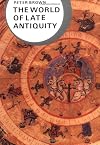
Peter Brown set out to describe how many changes converged to produce a very distinctive period of European civilization from about 200 C.E. to about 700 C.E.; how it differed from the classic period of Greek and Roman dominance; and how it helped shaped the Europe of the Middle Ages. Ancient institutions simply disappeared: the Roman Empire had vanished from western Europe by 476 and the Persian Empire had vanished by 655. Europe became Christian and the Near East became Muslim.
One of the show more main problems of the period was how to maintain a style of life and culture based on the slender coastline of the Mediterranean studded with classical city-states. It was a world always on the brink of starvation. It cost less to transport a cargo of grain from one end of the Mediterranean to the other than to carry it another 75 miles inland. Cultured men of any part of the empire felt more in common with others of their class than to their neighbors, an underdeveloped peasantry. The center of gravity of the empire gradually shifted from Rome eastward to Constantinople.
Even after the sack of Rome by Goths in 410, the western provinces remained a recognizably “sub-Roman” civilization for centuries. But when Islam overran the eastern provinces after 640, they took on an oriental flavor.
Between 240 and 300, the empire faced barbarian invasions and political instability. For many years prior, the area close to the Mediterranean was quite safe and peaceful. But after Persia rose in 224, the Goths in 248, and other war bands along the Rhine after 260, all frontiers of the empire collapsed. The empire was saved by a military revolution. The dead wood of the upper classes was excluded, and men of talent like Diocletian came to the fore.
After the conversion of Constantine to Christianity, most of the civil service was Christian. Notably, they instituted solid money, the solidus.
Christianity, the author posits, extended its appeal after 200 by helping to assuage the anxieties and uncertainties from increasing cosmopolitanism and social change that came with the Roman Empire. Most of all people felt a lack of belonging, and Christianity stepped aggressively into that gap. It filled the need for society so successfully that Christianity expanded exponentially rather than gradually. Christianity offered an exclusive cult, a sense of belonging, and a prescription for living. It offered steady relationships that were - at least professedly - egalitarian. It offered answers and stability where there were none, took on important social roles (such as food supplies for the needy and burial of the dead) and provided an assurance of loving kindness both on earth and for eternal life as a reward for faith. Importantly, Christianity also offered an enemy to explain the problem of evil and to provide a way to overcome it: i.e., the devil and his demon minions. The devil, as Christianity explained it, was “an all-embracing agent of evil in he human race; but he had been defeated by Christ and could be held in check by Christ’s human agents.” Thus, as the author asserts:
“However many sound social and cultural reasons the historian may find for the expansion of the Christian Church, the fact remains that in all Christian literature from the New Testament onwards, the Christian missionaries advanced principally by revealing the bankruptcy of men’s invisible enemies, the demons, through exorcisms and miracles of healing.” (p 55)
From 170 to 312 there was an active debate about religion. Christians were attacked because they neglected the rites of the old paganism. The new mood appealed to the concept of one God rather than to an array of lesser gods. Conversion was intimately connected to revelation. Revelation allowed the uneducated to “know” truths. Philosophers like Plotinus thought that bad because it skipped over serious education and allowed for second-rate counterfeit of traditional academic philosophy.
The 4th century was a time of revival. It is important to note that Christianity grew even more during prosperous times than catastrophic ones. More people participated in the empire in the East than in the West, so enthusiasm for the emperor was firmer.
Paganism survived much later in the East than in the West. The Hellenes in Athens and Alexandria “created the classical language of philosophy in the early Middle Ages, of which Christian, Jewish, and Islamic thought, up to the twelfth century, are but derivative vernaculars.”
Evaluation: This succinct and lucid account of social and cultural change in the Late Antique World maintains interest throughout. He is careful to explain that he cannot commit to “cause and effect” but only seeks to describe how “certain changes coincided in such a way that the one cannot be understood without reference to the other.” The book includes 130 illustrations.
(JAB) show less
One of the show more main problems of the period was how to maintain a style of life and culture based on the slender coastline of the Mediterranean studded with classical city-states. It was a world always on the brink of starvation. It cost less to transport a cargo of grain from one end of the Mediterranean to the other than to carry it another 75 miles inland. Cultured men of any part of the empire felt more in common with others of their class than to their neighbors, an underdeveloped peasantry. The center of gravity of the empire gradually shifted from Rome eastward to Constantinople.
Even after the sack of Rome by Goths in 410, the western provinces remained a recognizably “sub-Roman” civilization for centuries. But when Islam overran the eastern provinces after 640, they took on an oriental flavor.
Between 240 and 300, the empire faced barbarian invasions and political instability. For many years prior, the area close to the Mediterranean was quite safe and peaceful. But after Persia rose in 224, the Goths in 248, and other war bands along the Rhine after 260, all frontiers of the empire collapsed. The empire was saved by a military revolution. The dead wood of the upper classes was excluded, and men of talent like Diocletian came to the fore.
After the conversion of Constantine to Christianity, most of the civil service was Christian. Notably, they instituted solid money, the solidus.
Christianity, the author posits, extended its appeal after 200 by helping to assuage the anxieties and uncertainties from increasing cosmopolitanism and social change that came with the Roman Empire. Most of all people felt a lack of belonging, and Christianity stepped aggressively into that gap. It filled the need for society so successfully that Christianity expanded exponentially rather than gradually. Christianity offered an exclusive cult, a sense of belonging, and a prescription for living. It offered steady relationships that were - at least professedly - egalitarian. It offered answers and stability where there were none, took on important social roles (such as food supplies for the needy and burial of the dead) and provided an assurance of loving kindness both on earth and for eternal life as a reward for faith. Importantly, Christianity also offered an enemy to explain the problem of evil and to provide a way to overcome it: i.e., the devil and his demon minions. The devil, as Christianity explained it, was “an all-embracing agent of evil in he human race; but he had been defeated by Christ and could be held in check by Christ’s human agents.” Thus, as the author asserts:
“However many sound social and cultural reasons the historian may find for the expansion of the Christian Church, the fact remains that in all Christian literature from the New Testament onwards, the Christian missionaries advanced principally by revealing the bankruptcy of men’s invisible enemies, the demons, through exorcisms and miracles of healing.” (p 55)
From 170 to 312 there was an active debate about religion. Christians were attacked because they neglected the rites of the old paganism. The new mood appealed to the concept of one God rather than to an array of lesser gods. Conversion was intimately connected to revelation. Revelation allowed the uneducated to “know” truths. Philosophers like Plotinus thought that bad because it skipped over serious education and allowed for second-rate counterfeit of traditional academic philosophy.
The 4th century was a time of revival. It is important to note that Christianity grew even more during prosperous times than catastrophic ones. More people participated in the empire in the East than in the West, so enthusiasm for the emperor was firmer.
Paganism survived much later in the East than in the West. The Hellenes in Athens and Alexandria “created the classical language of philosophy in the early Middle Ages, of which Christian, Jewish, and Islamic thought, up to the twelfth century, are but derivative vernaculars.”
Evaluation: This succinct and lucid account of social and cultural change in the Late Antique World maintains interest throughout. He is careful to explain that he cannot commit to “cause and effect” but only seeks to describe how “certain changes coincided in such a way that the one cannot be understood without reference to the other.” The book includes 130 illustrations.
(JAB) show less
Lists
Reading list (1)
Antigua Roma (1)
Awards


The Ransom of the Soul: Afterlife and Wealth in Early Western Christianity (Honorable Mention – Theology & Religious Studies – 2016)
Through the Eye of a Needle: Wealth, the Fall of Rome, and the Making of Christianity in the West, 350-550 AD (R. R. Hawkins Award – Excellence in Humanities – 2012)
You May Also Like


Associated Authors
Statistics
- Works
- 37
- Also by
- 14
- Members
- 8,919
- Popularity
- #2,694
- Rating
- 4.0
- Reviews
- 68
- ISBNs
- 172
- Languages
- 12