
Henry Chadwick (1) (1920–2008)
Author of The Early Church
For other authors named Henry Chadwick, see the disambiguation page.
About the Author
Henry Chadwick is Emeritus Regius Professor of Divinity, University of Cambridge.
Works by Henry Chadwick
Early Christian Thought and the Classical Tradition (Academic Paperback) (1966) 108 copies, 3 reviews
East and West: The Making of a Rift in the Church: From Apostolic Times until the Council of Florence (2003) 71 copies, 1 review
Priscillian of Avila: Occult and the Charismatic in the Early Church (Oxford University Press academic monograph reprints) (1976) 36 copies, 2 reviews
Associated Works
Lessing's Theological Writings: Selections in Translation (Library of Modern Religious Thought) (1957) — Editor, some editions — 101 copies
The Cambridge Ancient History, Vol. 13: The Late Empire, A.D. 337–425 (1998) — Contributor — 82 copies
Interpreting Late Antiquity: Essays on the Postclassical World (2001) — Contributor — 62 copies, 1 review
Scripture, Tradition and Reason: A Study in the Criteria of Christian Doctrine (1988) — Contributor — 34 copies
Tagged
Common Knowledge
- Canonical name
- Chadwick, Henry
- Birthdate
- 1920-06-23
- Date of death
- 2008-06-17
- Gender
- male
- Education
- Magdalene College, University of Cambridge (Mus.B. | 1941|DD|1955)
Christ Church College, University of Oxford (DD|1959) - Occupations
- Dean of Christ Church Cathedral, Oxford
theologian
professor
priest - Organizations
- Church of England (Deacon|1943|Priest|1944)
Cambridge University
Oxford University - Awards and honors
- Order of the British Empire (Knight Commander, 1989)
British Academy (Fellow, 1960)
American Philosophical Society (International Member, 1982)
American Academy of Arts & Sciences (International Honorary Member, 1970) - Relationships
- Chadwick, Owen (brother)
Chadwick, John (brother) - Nationality
- UK
- Birthplace
- Bromley, Kent, England, UK
- Place of death
- Oxford, Oxfordshire, England, UK
- Associated Place (for map)
- England, UK
Members
Reviews
Early Christian Thought and the Classical Tradition; Studies in Justin, Clement, and Origen by Henry Chadwick

Henry Chadwick was one of the great teachers of early Christianity in the 20th century. This book is a product of the best tradition of British scholarship, profound learning conveyed with a light touch and a judicious dose of wit. It is based on a set of four lectures Chadwick gave more than a half-century ago when visiting the U.S. As such, they are relatively accessible for the reader hoping to bootstrap his way into the field of patristics, the study of the Church “Fathers” (the show more writings so classified seem to all have been written by men). As the full title implies, these lectures focus on three authors notable for their engagement with the prevailing intellectual tradition of their time, Greek philosophy. It’s interesting to read his depiction of how these three early Christian thinkers strove to be both intelligent and orthodox. On the surface, it seems as if they took over the popular eclecticism of their time: Stoic ethics, Platonic metaphysics, Aristotelian logic. But Chadwick shows how, from the basis of Christian faith, they also engaged each critically. Theirs is clearly a project that has Chadwick’s sympathies.
Yet is was a project not without controversy among fellow-believers at the time, many of whom felt no need for this engagement. What Chadwick writes of Clement’s persistence in the face of opposition is true to some degree of Justin and Origen as well: “To deny that philosophy is God’s gift is to deny providence and the image of God in creation” (p. 43).
While many of their contemporary believers would have preferred to ignore questions raised by philosophy, those Christians of a more intellectual cast of mind were drawn to Gnostic systems, described by Chadwick as: “that somber and repellent theosophy in which Christian redemption is fused with a pessimistic interpretation of Plato, a dualism drawn from a hellenised version of Zoroastrianism, important elements from heterodox Judaism, the whole being mingled with astrology and with magic as the principal technique for overcoming the powers of fate” (p. 7). So here was a challenge of another sort, and each of the three writers discussed navigated between these two extremes.
Of these three, the one whose name might be most familiar to today’s readers might be that of Origen, who famously stirred up controversy by expressing the opinion during a debate with a Gnostic opponent that he didn’t even feel the devil was beyond redemption. Chadwick devotes the fourth lecture to a balanced, sensitive discussion of whether Origen can be defended from the 6th century dismissal of him as a heretic. He shows that the charge of heresy is in part because of theological definitions formulated after Origen’s death. Another point is that Origen lived in a tradition shaped by Plato and Philo; some of what was subsequently viewed as suspect in his thinking had simply been taken over from them. In other cases, some of the charges are based on a position Origen reports, but never identifies as his own; indeed, in some cases even argues against. Nevertheless, Chadwick does not simply exonerate Origen on these grounds. Instead, he ends with the observation that, in “assessing whether or not he is orthodox,” we find “we are continually driven back to the prior question: what is the essence of orthodoxy?” (p. 123).
While some of the controversies discussed in these pages belong to a long-bygone era, others remain surprising contemporary, such as the discussion of universalism. Some are a little of both, for example, the question of the difference between man and other animals: is it the difference between rational and non-rational, or are there degrees of rationality? The terms of the debate then and the examples used seem nonsense to us now, but the question abides.
It was also interesting to see how many of the criticisms of Christian faith that show up repeatedly on my Facebook feed go back to that far-distant time. We know this because Origen writes of his controversy with the most vocal critic, Celsus, and does so in such a way that inspires confidence that Origen has listened carefully and taken the views of his opponent seriously, yet also offered reasoned answers that would serve equally-well today.
When I rate a book by assigning stars, I normally reserve five stars for books that are not only great, but could be read with profit by anyone, no matter what their personal interests. Books for a more limited audience receive four as the highest from me. I went back and forth on my rating of this one. In the end, because of the one-sided, simple-minded memes lobbed back and forth in Facebook and other forums both by those who attack Christianity as well as those who defend it, I’ve decided to recommend this unreservedly. show less
Yet is was a project not without controversy among fellow-believers at the time, many of whom felt no need for this engagement. What Chadwick writes of Clement’s persistence in the face of opposition is true to some degree of Justin and Origen as well: “To deny that philosophy is God’s gift is to deny providence and the image of God in creation” (p. 43).
While many of their contemporary believers would have preferred to ignore questions raised by philosophy, those Christians of a more intellectual cast of mind were drawn to Gnostic systems, described by Chadwick as: “that somber and repellent theosophy in which Christian redemption is fused with a pessimistic interpretation of Plato, a dualism drawn from a hellenised version of Zoroastrianism, important elements from heterodox Judaism, the whole being mingled with astrology and with magic as the principal technique for overcoming the powers of fate” (p. 7). So here was a challenge of another sort, and each of the three writers discussed navigated between these two extremes.
Of these three, the one whose name might be most familiar to today’s readers might be that of Origen, who famously stirred up controversy by expressing the opinion during a debate with a Gnostic opponent that he didn’t even feel the devil was beyond redemption. Chadwick devotes the fourth lecture to a balanced, sensitive discussion of whether Origen can be defended from the 6th century dismissal of him as a heretic. He shows that the charge of heresy is in part because of theological definitions formulated after Origen’s death. Another point is that Origen lived in a tradition shaped by Plato and Philo; some of what was subsequently viewed as suspect in his thinking had simply been taken over from them. In other cases, some of the charges are based on a position Origen reports, but never identifies as his own; indeed, in some cases even argues against. Nevertheless, Chadwick does not simply exonerate Origen on these grounds. Instead, he ends with the observation that, in “assessing whether or not he is orthodox,” we find “we are continually driven back to the prior question: what is the essence of orthodoxy?” (p. 123).
While some of the controversies discussed in these pages belong to a long-bygone era, others remain surprising contemporary, such as the discussion of universalism. Some are a little of both, for example, the question of the difference between man and other animals: is it the difference between rational and non-rational, or are there degrees of rationality? The terms of the debate then and the examples used seem nonsense to us now, but the question abides.
It was also interesting to see how many of the criticisms of Christian faith that show up repeatedly on my Facebook feed go back to that far-distant time. We know this because Origen writes of his controversy with the most vocal critic, Celsus, and does so in such a way that inspires confidence that Origen has listened carefully and taken the views of his opponent seriously, yet also offered reasoned answers that would serve equally-well today.
When I rate a book by assigning stars, I normally reserve five stars for books that are not only great, but could be read with profit by anyone, no matter what their personal interests. Books for a more limited audience receive four as the highest from me. I went back and forth on my rating of this one. In the end, because of the one-sided, simple-minded memes lobbed back and forth in Facebook and other forums both by those who attack Christianity as well as those who defend it, I’ve decided to recommend this unreservedly. show less
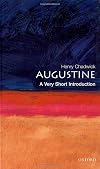
I found the style of Chadwick’s writing in this introduction to the philosophy of Saint Augustine easy to understand. (Readability is incredibly important to me, especially when reading an aide to a text that’s innately hard to understand.) His structure never became fully clear to me, but the chapters nevertheless avoided rambling. In tracing the classical and non-Christian influences of Augustine, Chadwick details the tenets of the movements (namely Manichaeism and Neo-Platonism, among show more others) and their short-term and long-term effects on Augustine. He also studies with clarity how he came to internalize and reconcile them in one succinct system of faith. Chadwick does not over-glorify Augustine; even toward the end of the book when relating Augustine’s responses to various controversies, Chadwick doesn’t emphasize that those very works of Augustine’s later years become THE principal writings that shape the formal Christian religion of medieval times. Chadwick balances detailed theology and dense philosophy with more tangible historical events; thus, the reader learns how Augustine developed his thoughts and why he wrote them with such passion. show less
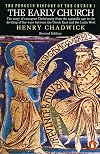
This book should be required reading for every serious Christian. So much of what we are taught as "Eternal Truth" in church, and church schools, is based on politics and contemporary ways of thinking in the early church. Reading this book allowed me to think about the church in exciting new ways. It helped me start to separate out what is valuable, worthy of our reverence, and what is fallible, limited human thinking. It sounds rebellious, but it also supports what I consider to be "true" show more Christianity, by showing the context in which the fallible human additions came to be. Who am I to judge someone trying to make sense of Jesus in first century Palestine? Instead of wasting my time on anger, I can focus on figuring out what I believe, and what helps me live a better life. show less
Truly concise; short yet comprehensive. Makes clear the influences on Augustine's thought, from Manicheanism to Neo-Platonism, as well as his personal hang-ups. Good balance of biography, philosophy, and theology. Perhaps a mite too kind to the old "Doctor Gratiae".
Lists
You May Also Like


Associated Authors
Statistics
- Works
- 29
- Also by
- 15
- Members
- 4,713
- Popularity
- #5,345
- Rating
- 3.9
- Reviews
- 36
- ISBNs
- 104
- Languages
- 9
- Favorited
- 3