

G. W. Bowersock
Author of Late Antiquity: A Guide to the Postclassical World
About the Author
G. W. Bowersock is professor emeritus of ancient history at the Institute for Advanced Study, Princeton. His most recent book is From Gibbon to Auden: Essays on the Classical Tradition.
Works by G. W. Bowersock
Interpreting Late Antiquity: Essays on the Postclassical World (2001) — Editor — 62 copies, 1 review
Daedalus, Summer 1976: Edward Gibbon and the Decline and Fall of the Roman Empire (1977) — Editor — 20 copies
Pseudo-Xenophon 1 copy
Associated Works
Blaming the Victims: Spurious Scholarship and the Palestinian Question (1988) — Contributor — 238 copies, 2 reviews
Philo and Paul Among the Sophists: Alexandrian and Corinthian Responses to a Julio-Claudian Movement (1997) — Foreword — 66 copies
The Cambridge History of Classical Literature: I - Greek Literature (1985) — Contributor, some editions — 62 copies
Between Republic and Empire: Interpretations of Augustus and His Principate (1990) — Contributor — 49 copies
Greek Biography and Panegyric in Late Antiquity (The Transformation of the Classical Heritage) (2000) — Contributor — 16 copies
Aelius Aristides between Greece, Rome, and the Gods (Columbia Studies in the Classical Tradition) (2008) — Contributor — 5 copies
The Sculptural Environment of the Roman Near East: Reflections on Culture, Ideology, and Power (Interdisciplinary Studies in Ancient Culture and Religion) (2008) — Contributor — 4 copies
Philosophy and Power in the Graeco-Roman World: Essays in Honour of Miriam Griffin (2002) — Contributor — 3 copies
The Petra Church (American Center of Oriental Research publications) (2001) — Contributor — 3 copies
Transactions of American Philological Association (Transactions of American Philological Association, 127) (1997) — Contributor — 2 copies
Tagged
Common Knowledge
- Canonical name
- Bowersock, G. W.
- Legal name
- Bowersock, Glen Warren
- Other names
- Bowersock, Glen W.
- Birthdate
- 1936-01-12
- Gender
- male
- Education
- Harvard University (AB|1957)
Balliol College, Oxford University (BA|1959)
Balliol College, Oxford University (D.Phil|1962) - Occupations
- classicist
historian
professor - Organizations
- Institute for Advanced Study (1980-2006)
Harvard University - Awards and honors
- American Philosophical Society (1989)
American Academy of Arts & Sciences (1977)
Ordre des Arts et des Lettres (Chevalier, 2007)
Légion d'Honneur (Chevalier, 2004)
Académie Royale de Belgique (2009)
Deutsches Archäologisches Institut (show all 13)
Accademia Nazionale dei Lincei (Foreign Member, 2003)
Académie des Inscriptions et Belles-Lettres (Associé étranger, 1996)
Russian Academy of Sciences (Foreign Member)
American Numismatic Society (Honorary Life Fellow, 2017)
Prix Albert Bernard (2015)
James Henry Breasted Prize (1992)
Rhodes Scholar(1957) - Nationality
- USA
- Birthplace
- Providence, Rhode Island, USA
- Places of residence
- Oxford, Oxfordshire, England, UK
Cambridge, Massachusetts, USA - Associated Place (for map)
- USA
Members
Reviews
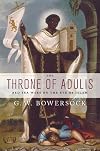
Oxford University Press as publisher was already a good hint that this wouldn't be an easy read, but I love to learn completely random facts about the world that are thoroughly reviewed and that I'll never need again, so I'm fine with that.
The topic itself is pretty obscure: A pre-islamic conflict between jewish Arabs in the territory of today's Yemen and christian Ethiopians at the other side of the Red Sea that is in the end not much more than a proxy war between the Byzantine and the show more Persian empires.
Bowerstock analyses and explains meticulously the body of source material, the power structure in the region, the influence of outside and historical powers like the Roman, Meroitic and Egyptian empires and the development of the conflict.
The lessons? Propaganda is everything, it's not about religion, and every aggressor always has good reasons. show less
The topic itself is pretty obscure: A pre-islamic conflict between jewish Arabs in the territory of today's Yemen and christian Ethiopians at the other side of the Red Sea that is in the end not much more than a proxy war between the Byzantine and the show more Persian empires.
Bowerstock analyses and explains meticulously the body of source material, the power structure in the region, the influence of outside and historical powers like the Roman, Meroitic and Egyptian empires and the development of the conflict.
The lessons? Propaganda is everything, it's not about religion, and every aggressor always has good reasons. show less

The book is set out more or less as a chronological biography from Julian's birth to his accession to the throne as sole Augustus in 361. From there, it takes on a more thematic aspect as it describes his policies and movements throughout his time in Naissus, Constantinople and then on to Antioch, where the narrative picks up again and swiftly carries the emperor to his greatest triumph - against the Sassanid Persians at their own capital of Ctesiphon - and his final end on the return show more journey.
The major downside to this work is Bowersock's clear, at times vitriolic disdain for the Emperor Julian and many of his policies. In the early part of the book, he writes seemingly as an apologist for Constantius II, portraying him in a far more favourable light than most other historians of the period. He castes Julian in the mold of a zealot and a bigot, and eventually as a persecutor of Christians, something which most historians stop short of. This is not the book one should read first on Julian, as I can imagine it would colour one's views irrevocably against the man.
Despite this, however, Bowersock's writing is clear, his style engaging, and his research clearly meticulous. If one is able to see beyond the surface layer of strongly opinionated commentary, an incredible amount of knowledge in a short run of pages (only 119 for the main section) is revealed. For that reason, this is a must-read for anyone with a solid background knowledge of Julian, looking to learn more. show less
The major downside to this work is Bowersock's clear, at times vitriolic disdain for the Emperor Julian and many of his policies. In the early part of the book, he writes seemingly as an apologist for Constantius II, portraying him in a far more favourable light than most other historians of the period. He castes Julian in the mold of a zealot and a bigot, and eventually as a persecutor of Christians, something which most historians stop short of. This is not the book one should read first on Julian, as I can imagine it would colour one's views irrevocably against the man.
Despite this, however, Bowersock's writing is clear, his style engaging, and his research clearly meticulous. If one is able to see beyond the surface layer of strongly opinionated commentary, an incredible amount of knowledge in a short run of pages (only 119 for the main section) is revealed. For that reason, this is a must-read for anyone with a solid background knowledge of Julian, looking to learn more. show less
The Throne of Adulis centres around the eponymous, now lost, artefact: a white marble throne and accompanying black basalt stele which stood in an African port city during the sixth century. Transcriptions made of the throne's inscriptions during the sixth century allow G.W. Bowersock to reconstruct something of the history of the regions bordering the Red Sea during the Hellenistic period, the Roman Empire, and Late Antiquity. In particular, he focuses on the conflict between Christian show more Ethiopians and Jewish Arabs, which was something of a proxy war between the Christian Byzantine Empire and the Zoroastrian Sasanian Persian Empire. Bowersock argues that this environment of religious instabilty and political conflict is a key piece of context that helps to explain the rapid rise of Islam in subsequent years. Bowersock's work is an example of the kinds of insight which can be gleaned from even the sparsest evidence through the meticulous use of palaeography, epigraphy, archaeology, etc, though the methodology employed here means that this likely won't be the most accessible book for the neophyte. show less
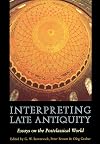
OF interest largely to history buffs and specialists in the era. The essays about the actual role of barbarian incursions, including the idea that these were not tribes so much as temporary alliances around a successful war leader, contributes to that 'everything you know is wrong' feeling often induced by academic rather than popular history books.
Lists
Awards


You May Also Like


Associated Authors
Statistics
- Works
- 29
- Also by
- 24
- Members
- 1,195
- Popularity
- #21,506
- Rating
- 3.9
- Reviews
- 17
- ISBNs
- 56
- Languages
- 5
- Favorited
- 1