
John Julius Norwich (1929–2018)
Author of A Short History of Byzantium
About the Author
John Julius Norwich was born in the United Kingdom on September 15, 1929. He served in the Royal Navy before receiving a degree in French and Russian at New College, Oxford. After graduation, he joined the H. M. Foreign Service and served in Belgrade, Beirut, and as a member of British delegation show more to the Disarmament Conference in Geneva. In 1954, he inherited the title of Viscount Norwich. In 1964, he resigned from the Foreign Service to become a writer. He was a historian, travel writer, and television personality. His books included The Normans in the South, A History of Venice, The Italian World, Venice: A Traveller's Companion, 50 Years of Glyndebourne: An Illustrated History, A Short History of Byzantium, Absolute Monarchs: A History of the Papacy, Sicily: An Island at the Crossroads of History, and A History of France. He and H. C. Robbins Landon wrote Five Centuries of Music in Venice. Norwich was the host of the BBC radio panel game My Word! from 1978 to 1982. He wrote and presented more than 30 television documentaries including Maestro, The Fall of Constantinople, Napoleon's Hundred Days, Cortés and Montezuma, Maximilian of Mexico, The Knights of Malta, The Treasure Houses of Britain, and The Death of the Prince Imperial in the Zulu War. In 1993, he was appointed CVO for having curated an exhibition at the Victoria and Albert Museum to mark the 40th anniversary of the Queen's accession to the throne. In 2015, he was awarded the Biographers' Club award for his lifetime service to biography. He died on June 1, 2018 at the age of 88. (Bowker Author Biography) show less
Image credit: John Julius Norwich
Series
Works by John Julius Norwich
Shakespeare's Kings: The Great Plays and the History of England in the Middle Ages: 1337-1485 (1999) 609 copies, 4 reviews
Four Princes: Henry VIII, Francis I, Charles V, Suleiman the Magnificent and the Obsessions that Forged Modern Europe (2016) 451 copies, 13 reviews
The Normans in Sicily: The Normans in the South 1016-1130 and the Kingdom in the Sun 1130-1194 (1992) 206 copies, 4 reviews
Darling Monster: The Letters of Lady Diana Cooper to her Son John Julius Norwich 1939-1952 (2013) — Editor — 109 copies, 3 reviews
Chronicle: Essays from Ten Years of Television Archaeology (1978) — Contributor — 14 copies, 1 review
BISANZIO 1 copy
The Great Cities In History 1 copy
Histoire De La Méditerannée 1 copy
A Christmas Cracker 2001 1 copy
A Christmas Cracker (1990) 1 copy
A Christmas Cracker 1985 1 copy
A Christmas Cracker 2002 1 copy
A Christmas Cracker 1987 1 copy
A Christmas Cracker 1988 1 copy
A Christmas Cracker 1983 1 copy
Vizantija opadanje i propast 1 copy
Associated Works
The Condé Nast Traveler Book of Unforgettable Journeys: Great Writers on Great Places (2007) — Contributor — 280 copies, 5 reviews
The Embassy to Constantinople and Other Works (Everyman Paperback (0971) — Editor, some editions — 40 copies
World Monuments: 50 Irreplaceable Sites to Discover, Explore, and Champion (2015) — Contributor. — 20 copies
James Plumptre's Britain: The Journals of a Tourist in the 1790's (1992) — Preface, some editions — 5 copies
Tagged
Common Knowledge
- Legal name
- Cooper, John Julius (birth)
- Other names
- Norwich, John Julius Cooper, 2nd Viscount
- Birthdate
- 1929-09-15
- Date of death
- 2018-06-01
- Gender
- male
- Education
- New College, Oxford (BA)
University of Strasbourg
Eton College
Upper Canada College - Occupations
- broadcaster
historian
editor
diplomat
travel writer - Organizations
- British Foreign Service
Venice In Peril Fund
Civic Trust
National Trust
Royal Navy - Awards and honors
- Royal Victorian Order (Commander ∙ 1992)
hereditary peerage
Biographers' Club award (2015) - Agent
- Felicity Bryan
Clive Conway
Knight Ayton Management
The Nelson Agency
Spellbound Talks - Relationships
- Cooper, Duff (father)
Cooper, Lady Diana (mother)
Cooper, Artemis (daughter)
Huston, Allegra (daughter)
Patten, William (brother) - Cause of death
- heart failure
- Nationality
- UK
- Birthplace
- London, Middlesex, England, UK
- Places of residence
- England, UK
Canada
France - Place of death
- London, Middlesex, England, UK
- Burial location
- St. Mary's Paddington Green Churchyard, City of Westminster, Greater London, Middlesex, England, UK
- Map Location
- England, UK
Members
Discussions
Folio Archives 326: A History of Venice by John Julius Norwich 2007 in Folio Society Devotees (June 2023)
John Julius Norwich? in History at 30,000 feet: The Big Picture (June 2015)
Reviews
The Normans in Sicily: The Normans in the South 1016-1130 and the Kingdom in the Sun 1130-1194 by John Julius Norwich
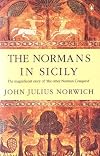
This massive tome is an absurd object, projecting a dry scholarly air and suggesting to all passersby that they dare not disturb you, an obvious intellectual. In fact, this book is the product of one man's obsessive curiosity with an unlikely and little known period of history during which the Normans of all people rose to the level of royalty in Southern Italy.
This is a rollicking and irreverent history set in a time of frequent assassinations, poisonings, plots, crusades, and pontifical show more schisms. The author's voice is confident, entertaining and with a strong sense of purpose. Let him be your tour guide through a couple hundred years of medieval history. He'll tell you all the best gossip and point out picturesque landmarks along the way.
I thoroughly enjoyed this read and it satisfied my curiosity after reading The Mistress of the Art of Death, set in this same period. show less
This is a rollicking and irreverent history set in a time of frequent assassinations, poisonings, plots, crusades, and pontifical show more schisms. The author's voice is confident, entertaining and with a strong sense of purpose. Let him be your tour guide through a couple hundred years of medieval history. He'll tell you all the best gossip and point out picturesque landmarks along the way.
I thoroughly enjoyed this read and it satisfied my curiosity after reading The Mistress of the Art of Death, set in this same period. show less
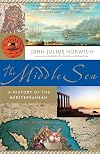
I remember loving John Julius Norwich's books about Byzantium as a teenager: big, sweeping epic histories with lots of drama and adventure and some slyly funny asides. Reading The Middle Sea told me that I can never go back and re-read them because I would find them far more tarnished works than they are in my memory. Now, with many more years and training behind me, I can see how shallow are the foundations on which Norwich builds his narrative: the assumptions and generalisations (often show more gendered, almost always racialised), the thin bibliography, the Eurocentrism, and on and on. Norwich's prose is still pleasurable and there is something of the raconteur here that's appealing. But to the old saw about how you should never meet your heroes should perhaps be added one about never going back to re-read their work, either. show less
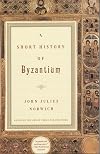
As the title suggests, this is a short version of the history of the Byzantium Empire, based on the trilogy on 1200 pages by the same author. In the preface the author excuses himself that he had to omit so many anecdotes and jokes in this short story. But after reading this book, I actually can’t stop wondering how the original three volumes are, considering this one proved to be extremely entertaining 380 pages that made me laugh out loudly more than ones.
According to Norwich, the show more eastern empire with Constantinople as the capital of the empire wasn’t an offshoot of the Roman Empire. It was the natural successor, since the eastern Mediterranean had become both the economical and the intellectual hub of the empire. At the same time it was the part under most eminent external threat, and needed the constant attention of a present emperor. Therefore the fall of West Rome can be seen as the natural shrinking of the whole Roman Empire, losing the less important parts during a severely chaotic era. The Byzantine Empire was actually the guardian of most of the European culture, history, and science, during dark times when the Western Europe, couldn’t give it any shelter. The Empire wasn’t just a corrupt, internal striving, military weak, cruel and bizarre freak (but the author provides us with ample examples of that too) that was constantly shrinking. It fought back several times under successful emperors, beating many fearful opponents, growing in size, and having occasional Golden ages. Today Byzantium is mostly seen as an example of how Christian world was fighting, several Muslim invasions during The Middle Ages. That is partly true, but an important factor in the destruction of Byzantium, was the constant state of war the Empire found itself in with more or less Christian neighbor states in the Balkans, city-states of Italy, and western catholic kingdoms with the backing of the Pope. The ever-lasting fuel for many of these disputes was the internal strive in the Christian church, between the Latin pope and the Orthodox Greeks. All the crusades were also utterly catastrophic for the Christian Byzantine Empire, the worst being the morally deplorable forth crusade that never even reached Palestine, but instead ended up in Constantinople sacking the city and installing a Latin king there. After this treatment of fellow Christians, the orthodox Byzantines in the last 100 years of the existence of the Empire didn’t have much stamina left to fight of the Ottomans, who actually at the time proved to be far more lenient masters. The small, corrupt, plundered and bankrupt remnants of the Empire at last succumbed to the Ottoman tide, without much help from the West. In the end only the city of Constantinople held out in the epic, heroic but sad siege against the Turks, that ended with the fall of the city and the total destruction of the Empire 1453 (also described by Roger Crowley in his book 1453).
The book can best be described as a rather orthodox form of history literature, focusing on emperors, their wars and opponents, and less so on economics, social issues etc. But Norwich has done this with amazing distinction, spiced with some anecdotes and a amazing language. At times it’s hard to keep the names of all Emperors, generals, Empresses apart, but with about 100 emperors in a book of 380 pages, it is certainly a normal phenomenon that the author can’t be blamed for. The story telling of the book is somewhat anecdotal, but the author is clear enough pointing out when that is the case. One of the most entertaining history books I have ever read. A five out of five, and maybe I will go for the trilogy…. show less
According to Norwich, the show more eastern empire with Constantinople as the capital of the empire wasn’t an offshoot of the Roman Empire. It was the natural successor, since the eastern Mediterranean had become both the economical and the intellectual hub of the empire. At the same time it was the part under most eminent external threat, and needed the constant attention of a present emperor. Therefore the fall of West Rome can be seen as the natural shrinking of the whole Roman Empire, losing the less important parts during a severely chaotic era. The Byzantine Empire was actually the guardian of most of the European culture, history, and science, during dark times when the Western Europe, couldn’t give it any shelter. The Empire wasn’t just a corrupt, internal striving, military weak, cruel and bizarre freak (but the author provides us with ample examples of that too) that was constantly shrinking. It fought back several times under successful emperors, beating many fearful opponents, growing in size, and having occasional Golden ages. Today Byzantium is mostly seen as an example of how Christian world was fighting, several Muslim invasions during The Middle Ages. That is partly true, but an important factor in the destruction of Byzantium, was the constant state of war the Empire found itself in with more or less Christian neighbor states in the Balkans, city-states of Italy, and western catholic kingdoms with the backing of the Pope. The ever-lasting fuel for many of these disputes was the internal strive in the Christian church, between the Latin pope and the Orthodox Greeks. All the crusades were also utterly catastrophic for the Christian Byzantine Empire, the worst being the morally deplorable forth crusade that never even reached Palestine, but instead ended up in Constantinople sacking the city and installing a Latin king there. After this treatment of fellow Christians, the orthodox Byzantines in the last 100 years of the existence of the Empire didn’t have much stamina left to fight of the Ottomans, who actually at the time proved to be far more lenient masters. The small, corrupt, plundered and bankrupt remnants of the Empire at last succumbed to the Ottoman tide, without much help from the West. In the end only the city of Constantinople held out in the epic, heroic but sad siege against the Turks, that ended with the fall of the city and the total destruction of the Empire 1453 (also described by Roger Crowley in his book 1453).
The book can best be described as a rather orthodox form of history literature, focusing on emperors, their wars and opponents, and less so on economics, social issues etc. But Norwich has done this with amazing distinction, spiced with some anecdotes and a amazing language. At times it’s hard to keep the names of all Emperors, generals, Empresses apart, but with about 100 emperors in a book of 380 pages, it is certainly a normal phenomenon that the author can’t be blamed for. The story telling of the book is somewhat anecdotal, but the author is clear enough pointing out when that is the case. One of the most entertaining history books I have ever read. A five out of five, and maybe I will go for the trilogy…. show less
Four Princes: Henry VIII, Francis I, Charles V, Suleiman the Magnificent and the Obsessions that Forged Modern Europe by John Julius Norwich
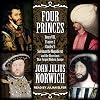
Started this almost by accident when sheer indecision about what to listen to next caused me to pick the one to which lowest down my list of to be read, and what an unexpectedly entertaining listen it turned out to be. Norwich examines the first half of the century through the lives of the four rulers who shaped and influenced it, their friendships, rivalries and bitter enmities. It's so packed with historical incident - sieges, diplomacy, schisms, reformations, dynastic marriages, show more invasions, assasinations, executions, pagaentry - that it flies along, and the personalities of all involved are outsized and utterly fascinating. show less
Lists
Awards


You May Also Like


Associated Authors
Statistics
- Works
- 100
- Also by
- 18
- Members
- 12,653
- Popularity
- #1,850
- Rating
- 3.9
- Reviews
- 183
- ISBNs
- 324
- Languages
- 17
- Favorited
- 28

