
Steven Runciman (1903–2000)
Author of A History of the Crusades, Volume I: The First Crusade and the Foundation of the Kingdom of Jerusalem
About the Author
Sir Steven Runciman was one of the most acclaimed historians of the Byzantine ear and the author of many influential works, including the three-volume History of the Crusades.
Image credit: Courtesy of British Graduates Society
www.bgs.gr/main.php
Series
Works by Steven Runciman
A History of the Crusades, Volume I: The First Crusade and the Foundation of the Kingdom of Jerusalem (1951) — Author — 1,213 copies, 11 reviews
A History of the Crusades. Volume II. The Kingdom of Jerusalem and the Frankish East, 1100-1187 (1952) — Author — 763 copies, 6 reviews
A History of the Crusades, Volume III: The Kingdom of Acre and the Later Crusades (1954) — Author — 680 copies, 4 reviews
The Sicilian Vespers, a history of the Mediterranean world in the later 13th century (1958) 512 copies, 10 reviews
The Medieval Manichee: A Study of the Christian Dualist Heresy (1949) — Author — 187 copies, 5 reviews
The Great Church in captivity. A study of the Patriarchate of Constantinople from the eve of the Turkish conquest to the Greek war of independence (1968) — Author — 180 copies, 2 reviews
The Eastern Schism: A Study of the Papacy and the Eastern Churches During the Xith and Xiith Centuries (1955) — Author; Author — 121 copies, 1 review
The Age of Illumination. 3 volume set. Art and Civilisation - Byzantine, Early Medieval and Gothic (2006) — Contributor — 89 copies, 1 review
The Emperor Romanus Lecapenus and his reign, a study of tenth-century Byzantium (1929) — Author — 63 copies, 1 review
The Families of Outremer. The feudal nobility of the Crusader Kingdom of Jerusalem, 1099-1291 (1960) — Author — 4 copies
Kindlers Kulturgeschichte Europas, v.8: Byzanz — Author — 1 copy
Bridge to the East 1 copy
La sagrada Biblia 1 copy
Byzantine Art and Civilisation — Author — 1 copy
Associated Works
Tagged
Common Knowledge
- Legal name
- Runciman, James Cochran Stevenson
- Birthdate
- 1903-07-07
- Date of death
- 2000-11-01
- Gender
- male
- Education
- Eton College
Trinity College, Cambridge - Awards and honors
- British Academy (1957)
Knight Bachelor (1958)
American Philosophical Society (1965)
Companion of Honour (1984)
Royal Society of Literature (Companion of Literature) - Relationships
- Orwell, George (friend)
Huxley, Aldous (French teacher) - Nationality
- UK
- Birthplace
- Northumberland, England, UK
- Place of death
- Radway, Warwickshire, England, UK
- Map Location
- England, UK
Members
Reviews

The style is there. What about the substance?
Let there be no mistake: Steven Runciman's work on the crusades is brilliantly written. Stylistically, it is one of the great works of the historian's art. If you want a good general history of the Crusades, you can hardly hope for better.
But... is it reliable?
This seems a horrid question to ask about a work that is a genuine tour de force. But Runciman's footnotes are, to be honest, rather thin on the ground. And one of the sad facts about the show more Crusades is that just about everyone who wrote at the time had an axe to grind -- usually to blame Somebody Else (Christians, Moslems, That Other King) for everything that had gone wrong. To avoid an endless list of "He said... She said..." controversies, Runciman often takes what seems to him most reasonable, and runs with it. His assumptions are (probably) usually right, and always reasonable -- he really was a brilliant scholar who knew the era well. But they aren't certain.
This really doesn't matter much to the casual reader. And there is no question: I enjoy reading Runciman, far more than any other history of the Crusades, short or long. It is a work of art. But it is now badly out of date, and it is full of hypotheses that can too easily be confused with fact. Read it, love it, treasure it -- but verify it. show less
Let there be no mistake: Steven Runciman's work on the crusades is brilliantly written. Stylistically, it is one of the great works of the historian's art. If you want a good general history of the Crusades, you can hardly hope for better.
But... is it reliable?
This seems a horrid question to ask about a work that is a genuine tour de force. But Runciman's footnotes are, to be honest, rather thin on the ground. And one of the sad facts about the show more Crusades is that just about everyone who wrote at the time had an axe to grind -- usually to blame Somebody Else (Christians, Moslems, That Other King) for everything that had gone wrong. To avoid an endless list of "He said... She said..." controversies, Runciman often takes what seems to him most reasonable, and runs with it. His assumptions are (probably) usually right, and always reasonable -- he really was a brilliant scholar who knew the era well. But they aren't certain.
This really doesn't matter much to the casual reader. And there is no question: I enjoy reading Runciman, far more than any other history of the Crusades, short or long. It is a work of art. But it is now badly out of date, and it is full of hypotheses that can too easily be confused with fact. Read it, love it, treasure it -- but verify it. show less
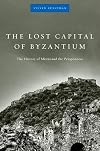
Mistra is an obscure ruin located on a hill near the fragmentary remains of Sparta. It obviously charmed Steven Runciman, the historian of Byzantium and the Crusades, who writes that in Mistra "one reaches a world...peopled by fragments of the imagination. But, for those to whom history is not just a matter of dry and dusty records, the imagination offers a splendid choice, whether it be of warriors or artists, of gracious ladies or learned philosophers, of the Villehardouin lords revelling show more in the loveliness of the countryside, or the dark-bearded Despots in their ceremonial robes discussing with their architects and artists how to add to the city's glories, or to the great philosopher Plethon himself talking to his pupils, while the Lady Cheope leaned in from her litter as she passed."
The record of Mistra is as piecemeal as its ruins, but Runciman does a fine job outlining the vicissitudes of Mistra's dynastic scions, the second sons of greater rulers reigning in Constantinople, Venice and Napoli. At times the labyrinthine succession of names can be overwhelming, but Runciman is a master of narrative and his love for Mistra and the Peloponnese shines through the occasionally confusing passages.
Mistra was never more than a provincial capital, but this love-letter to its storied past shines grandeur on its weathered stones. show less
The record of Mistra is as piecemeal as its ruins, but Runciman does a fine job outlining the vicissitudes of Mistra's dynastic scions, the second sons of greater rulers reigning in Constantinople, Venice and Napoli. At times the labyrinthine succession of names can be overwhelming, but Runciman is a master of narrative and his love for Mistra and the Peloponnese shines through the occasionally confusing passages.
Mistra was never more than a provincial capital, but this love-letter to its storied past shines grandeur on its weathered stones. show less
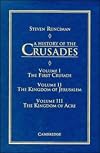
This three-volume set is an exemplary history, full of the incident and hundreds (thousands) of persons (all carefully indexed) who comprise the events of two and half centuries. Sir Steven is not a "thesis" historian, although he does not hesitate to make final conclusions of great insight and soundness. His strength lies in his meticulous detail and objectivity, recounting the errors and virtues of all the players, on all sides, with great wisdom and impartiality. He shows that the show more Crusades were, to use his word, an epic fiasco, that set out to secure the safety of Eastern Christendom, and ended up destroying it; yet he also shows how the Crusades were an initiator of the Italian Renaissance, by driving out the humanists and scholars who could not thrive in an Islamic world whose rigid intolerance was amplified by the Crusading movement. Without ever being vitriolic, he spares no one: While the Crusaders were stubborn bigots who refused to learn from past strategic errors, the Moslems were riven by internecine power-contests that nearly sunk them, and the Mongols efficiently, ruthlessely built an empire based on Genghis Khan's organizational brilliance and policy of implacable massacre. Stylistically, the books are a remarkable crossroads of popular appeal, engaging writing and mind-bogglingly comprehensive scholarship, detailed research and narrative account. show less
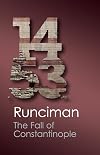
It all started with a question from a dear friend: He wanted to know about a musical piece that I recommended to him many years ago. The piece was titled "Everytime the City Falls", and had been recorded by Audiofact, a group of jazz musicians from Turkey and USA [1]. It was an interesting and dynamic interpretation of a very old composition: A piece titled "Lamentatio sanctae matris ecclesiae Constantinopolitanae" by a Franco-Flemish composer, Guillaume Du Fay, written about 560 years ago, show more lamenting the fall of Constantinople [2].
Having spent the first 32 years of my life in the modern city of Istanbul, and now living barely a few kilometers away from where composer Guillaume Du Fay was born (who is also mentioned in the book), I decided to read "The Fall of Constantinople, 1453". I don't regret the decision.
If you have even a modicum of interest in history, be prepared for a lot of reading pleasure. The author, even though he did his homework, and went through many original sources, is not here to give you a dry account of chronological facts. Rather, the whole story, together with its grand context, is presented in a living, breathing narrative. In a few hundred pages that simply flow, you will not only learn about the state of the Byzantine Empire in its last few decades, as well as main events happening on the other side of the wall, that is, Turkish people getting closer and closer every day, but you will also appreciate how the twists and turns of events shaped the history of Constantinople and Istanbul as we know it.
If you, like me, read the book around the anniversary of the event, you'll also realize how politicized the whole thing is, after more than 560 years. A cursory glance at mainstream media and social media will reveal that some people worship the event as the Ottoman genius conquering the most prized city and civilization, and some others still feeling the pity because some 'barbarians' broke the walls and put a sudden end to the pinnacle of civilization. The truth is, as any avid student of history knows, never that black and white. There's no glory in absolute terms, no 100% villains and heroes. Instead there's always the tragedy and the drama. There's always the bitter rivalries and tragic competition even among the 'friends'. And as this exquisite book shows clearly, there's always the problem of money and human short-sightedness.
Some parts of the book might disturb readers who regard Mehmed the Conqueror (Memhmed II) not only as the young and fierce military genius, but also the supreme ruler carrying the sword of Islam, because the book does not refrain from talking about his appreciation of wine, as well as his lust for young and handsome boys.
Apart from interesting personal details, the book portrays how fragmented the city was, as well as how fragmented the European powers, who were supposed to help the Byzantine Empire, were. This, and of course, the religious power struggle between Catholics and Orthodox churches. What makes it more interesting is the rivalry between the Venetian and Genoese people living in Constantinople, and how their governments made cold-blooded calculations to keep their commerce intact to the extent possible. The rulers change, the religious authorities change, the names come and go, but of course, keeping the flow of money is the most important thing to focus on, the rest are diplomatic and political details to be negotiated whoever declares himself to be the supreme ruler.
One thing for sure, having read the book, it is impossible for me to walk the old streets of Istanbul the same way I did before. Every step I take, I'll remember the ancient stories, and how they shaped the city I grew up. As the modern city is crumbling under the weight of its current population of 15 million people, I will keep on wondering whether it will fall again, and if its rulers will ever be as wise and well-educated as former ones such as Byzantine emperors and Mehmed the Conqueror.
1- http://www.allmusic.com/song/everytime-the-city-falls-mt0018681703
2- https://en.wikipedia.org/wiki/Lamentatio_sanctae_matris_ecclesiae_Constantinopol... show less
Having spent the first 32 years of my life in the modern city of Istanbul, and now living barely a few kilometers away from where composer Guillaume Du Fay was born (who is also mentioned in the book), I decided to read "The Fall of Constantinople, 1453". I don't regret the decision.
If you have even a modicum of interest in history, be prepared for a lot of reading pleasure. The author, even though he did his homework, and went through many original sources, is not here to give you a dry account of chronological facts. Rather, the whole story, together with its grand context, is presented in a living, breathing narrative. In a few hundred pages that simply flow, you will not only learn about the state of the Byzantine Empire in its last few decades, as well as main events happening on the other side of the wall, that is, Turkish people getting closer and closer every day, but you will also appreciate how the twists and turns of events shaped the history of Constantinople and Istanbul as we know it.
If you, like me, read the book around the anniversary of the event, you'll also realize how politicized the whole thing is, after more than 560 years. A cursory glance at mainstream media and social media will reveal that some people worship the event as the Ottoman genius conquering the most prized city and civilization, and some others still feeling the pity because some 'barbarians' broke the walls and put a sudden end to the pinnacle of civilization. The truth is, as any avid student of history knows, never that black and white. There's no glory in absolute terms, no 100% villains and heroes. Instead there's always the tragedy and the drama. There's always the bitter rivalries and tragic competition even among the 'friends'. And as this exquisite book shows clearly, there's always the problem of money and human short-sightedness.
Some parts of the book might disturb readers who regard Mehmed the Conqueror (Memhmed II) not only as the young and fierce military genius, but also the supreme ruler carrying the sword of Islam, because the book does not refrain from talking about his appreciation of wine, as well as his lust for young and handsome boys.
Apart from interesting personal details, the book portrays how fragmented the city was, as well as how fragmented the European powers, who were supposed to help the Byzantine Empire, were. This, and of course, the religious power struggle between Catholics and Orthodox churches. What makes it more interesting is the rivalry between the Venetian and Genoese people living in Constantinople, and how their governments made cold-blooded calculations to keep their commerce intact to the extent possible. The rulers change, the religious authorities change, the names come and go, but of course, keeping the flow of money is the most important thing to focus on, the rest are diplomatic and political details to be negotiated whoever declares himself to be the supreme ruler.
One thing for sure, having read the book, it is impossible for me to walk the old streets of Istanbul the same way I did before. Every step I take, I'll remember the ancient stories, and how they shaped the city I grew up. As the modern city is crumbling under the weight of its current population of 15 million people, I will keep on wondering whether it will fall again, and if its rulers will ever be as wise and well-educated as former ones such as Byzantine emperors and Mehmed the Conqueror.
1- http://www.allmusic.com/song/everytime-the-city-falls-mt0018681703
2- https://en.wikipedia.org/wiki/Lamentatio_sanctae_matris_ecclesiae_Constantinopol... show less
Lists
Awards


You May Also Like


Associated Authors
Statistics
- Works
- 35
- Also by
- 2
- Members
- 6,316
- Popularity
- #3,889
- Rating
- 4.2
- Reviews
- 79
- ISBNs
- 172
- Languages
- 15
- Favorited
- 23
