
Tom Holland (1) (1968–)
Author of Rubicon: The Last Years of the Roman Republic
For other authors named Tom Holland, see the disambiguation page.
Series
Works by Tom Holland
In the Shadow of the Sword: The Birth of Islam and the Rise of the Global Arab Empire (2012) 1,137 copies, 20 reviews
Æthelflæd: A Ladybird Expert Book: England’s Forgotten Founder (The Ladybird Expert Series) (2019) 28 copies
Troy 1 copy
Brexit 1 copy
Stephen Fry and Troy 1 copy
Tom Holland Collection 5 Books Set (In The Shadow Of The Sword, Rubicon, Dynasty, Millennium, Persian Fire) (2018) 1 copy
The Shadow of The Sward 1 copy
Associated Works
The Twelve Caesars (0120) — Introduction, some editions; Translator, some editions — 7,513 copies, 84 reviews
Tagged
Common Knowledge
- Canonical name
- Holland, Tom
- Legal name
- Holland, Thomas
- Birthdate
- 1968-01-05
- Gender
- male
- Education
- Queens' College, University of Cambridge (BA)
Canford School
Chafyn Grove School - Occupations
- historian
novelist
translator - Organizations
- Society of Authors
Classical Association - Awards and honors
- Royal Society of Literature (Fellow, 2016)
Runciman Award (2006)
Hessell-Tiltman Prize (2004) - Relationships
- Holland, James (brother)
- Nationality
- UK
- Birthplace
- Oxford, Oxfordshire, England, UK
- Places of residence
- London, Middlesex, England, UK
Broad Chalke, Wiltshire, England, UK - Map Location
- England, UK
Members
Discussions
The Birth of Islam, has Holland got it right? in History: On learning from and writing history (September 2015)
New Herodotus in Ancient History (November 2013)
Tom Holland's In the Shadow of the Sword in Ancient History (July 2012)
"The Persian Way of War": A new essay by Tom Holland in Ancient History (June 2012)
Rubicon by Tom Holland in Ancient History (December 2009)
Reviews
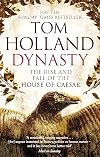
This is an excellent account of the rise and fall of one of the most famous dynasties in world history, the ruling family of the Julio-Claudians that gave Rome its first five emperors who are almost all household names even now two millennia later: Augustus; Tiberius; Caligula; Claudius; and Nero. As well as being the story of a dynasty, it is of course also the story of Rome itself over the period of some 130 years from Julius Caesar's first triumvirate with Pompey and Crassus in 60 BC, to show more the suicide of the last male member of the dynasty Nero in 68 AD. This was not in its structure a traditional ruling house or dynasty, as succession was often by adoption and/or marriage, and never actually by direct father to son transfer. And the fratricidal and bloody nature of so many of the relationships kept the supply of available successors often very limited. Violence, killing, exile, starvation, and suicide punctuate this story at regular intervals, along with incest, matricide, and all manner of other activities seen then, and often (but not always) now as perversions. This of course makes for colourful, though sometimes distasteful, reading. These personalities shine brightly across two millennia, whereas so many later Roman and Medieval historical figures have been forgotten, or in some cases, never known about: "each in his own way, had succeeded in fashioning out of his rule of the world a legend that would for ever afterwards mark the House of Caesar as something eerie and more than mortal. Painted in blood and gold, its record would never cease to haunt the Roman people as a thing of mingled wonder and horror." Tom Holland is one of my favourite contemporary historians and I love the Rest is History podcast he does with Dominic Sandbrook. A great book. show less
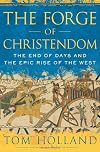
At this time there was only one Church. The Millennium weighed heavily on the collective conscience of every member of society. The Book of Revelations had foretold the coming of the Antichrist but in what form and from where no one knew. I had no idea of the extent to which the oncoming Millennium spurred and shaped an entire continent.
To rule in God's name meant defending Christians from the "demonic" Northmen, "barbaric" Germanic tribes, or the "blasphemous" Saracens. Laying waste to show more pagan villages or smiting a heretic was a holy act, but not without moral consequences. Conquering the lands of fellow Christians was permitted but required penance. But a new church, a pilgrimage, or a sizable donation was no guarantee of forgiveness and salvation. Even as these cultures began to coalesce, assimilate, or form trade relations, this history will seem rife with racist paranoia and sanctimoniousness, and that's the point.
As Holland follows the fractious Frankish Empire, the papacy, the Holy Roman Empire, shining Cordoba and a coalesced England - Christian warlords became venerated. New crowns were dispersed, all wanting a piece of Christendom. Gradually, a new social structure emerged. Castles grew from the landscape and the peasantry were forced to sacrifice their freedom for the protection of walled villages.
For those not familiar with even the bare facts of this era, this might not be a great book to start. There's a lot of ground to cover and across several kingdoms, including the papacy. However, Holland doesn't burden the reader with every battle, succession or boundary change. Instead the book captures the "spirit" of the times with key figures and larger events. It is dense though! I doubt I would've finished it if not for Holland's well-ordered narrative, clear timeline and smooth transitions. show less
To rule in God's name meant defending Christians from the "demonic" Northmen, "barbaric" Germanic tribes, or the "blasphemous" Saracens. Laying waste to show more pagan villages or smiting a heretic was a holy act, but not without moral consequences. Conquering the lands of fellow Christians was permitted but required penance. But a new church, a pilgrimage, or a sizable donation was no guarantee of forgiveness and salvation. Even as these cultures began to coalesce, assimilate, or form trade relations, this history will seem rife with racist paranoia and sanctimoniousness, and that's the point.
As Holland follows the fractious Frankish Empire, the papacy, the Holy Roman Empire, shining Cordoba and a coalesced England - Christian warlords became venerated. New crowns were dispersed, all wanting a piece of Christendom. Gradually, a new social structure emerged. Castles grew from the landscape and the peasantry were forced to sacrifice their freedom for the protection of walled villages.
For those not familiar with even the bare facts of this era, this might not be a great book to start. There's a lot of ground to cover and across several kingdoms, including the papacy. However, Holland doesn't burden the reader with every battle, succession or boundary change. Instead the book captures the "spirit" of the times with key figures and larger events. It is dense though! I doubt I would've finished it if not for Holland's well-ordered narrative, clear timeline and smooth transitions. show less
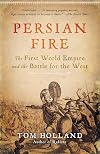
If you love a good history story, well-written and compelling, then this is for you. Perhaps a bit too in-depth even, especially when it comes to the endless disputes and power shifts within the Greek cities. But Tom Holland is a master of his craft, I won't deny that.
Only, if you want to know what really happened 2,500 years ago in the struggle between the Greeks and the Persians, no, this is definitely not for you. What Holland does is essentially retell, cobble together, and even show more embellish the stories that circulated about the Greek Persian Wars. Granted, he certainly cites his sources, and there's a touch of criticism here and there. But this isn't history, far from it. But Holland is certainly a skilled storyteller.
More in my History Account on Goodreads: https://www.goodreads.com/review/show/8327779606 show less
Only, if you want to know what really happened 2,500 years ago in the struggle between the Greeks and the Persians, no, this is definitely not for you. What Holland does is essentially retell, cobble together, and even show more embellish the stories that circulated about the Greek Persian Wars. Granted, he certainly cites his sources, and there's a touch of criticism here and there. But this isn't history, far from it. But Holland is certainly a skilled storyteller.
More in my History Account on Goodreads: https://www.goodreads.com/review/show/8327779606 show less
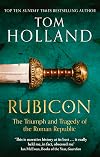
The fall of the Republic and the rise of the Empire, not that Rome wasn't already an Empire when the Republic fell. Built on slavery, it celebrated liberty, but how could you appreciate liberty without lots of slaves deprived of their liberty to contrast with your? Such was the mindset of the Romans, according to this immensely readable book, and it is one of a number of paradoxes that fueled the Roman's drive to take over the world, usually with thinly justified pre-emptive strikes against show more anyone who was even vaguely threatening or disrespectful, then robbing and enslaving and squeezing the survivors unmercifully, creating enormous wealth and opportunities for corruption. Which was, to the Roman mind, as it should be.
I admit my sense of the history of Rome is vague and spotty, filled with cinematic and televisual pageantry rather than a solid conception of its general shape. Still, so much of this is familiar, so many names echoing out of the past, and it's nice to have it brought more sharply into focus. Extraordinary men rise and do extraordinary things to great praise and adulation, then the extraordinary men are brought low, because Rome loves extraordinary men, it just doesn't like them. A swirling vortex of rising and falling leads almost inevitably to chaos and anarchy and a brutal and deadly struggle. The story is often garish and lurid and unimaginably brutal and violent. It's also fascinating and compelling. Holland creates a driving narrative, and while one is automatically suspicious of narratives imposed on history, still it grabs the attention and does not let go. show less
I admit my sense of the history of Rome is vague and spotty, filled with cinematic and televisual pageantry rather than a solid conception of its general shape. Still, so much of this is familiar, so many names echoing out of the past, and it's nice to have it brought more sharply into focus. Extraordinary men rise and do extraordinary things to great praise and adulation, then the extraordinary men are brought low, because Rome loves extraordinary men, it just doesn't like them. A swirling vortex of rising and falling leads almost inevitably to chaos and anarchy and a brutal and deadly struggle. The story is often garish and lurid and unimaginably brutal and violent. It's also fascinating and compelling. Holland creates a driving narrative, and while one is automatically suspicious of narratives imposed on history, still it grabs the attention and does not let go. show less
Lists
Awards


You May Also Like


Associated Authors
Statistics
- Works
- 29
- Also by
- 11
- Members
- 14,495
- Popularity
- #1,581
- Rating
- 4.0
- Reviews
- 260
- ISBNs
- 372
- Languages
- 19
- Favorited
- 21