
Tacitus (0056–0117)
Author of The Annals of Tacitus
About the Author
Tacitus was a Roman senator who survived the terror launched among the Roman aristocracy by the emperor Domitian to rise to prominence and become first suffect consul and later proconsul of Asia. His historical works, which originally covered the first century of the empire from the accession of show more Tiberius to the assassination of Domitian, are an indictment of the emperors and of the senatorial aristocracy under imperial autocracy. They remain the fundamental sources of imperial history in this period. The embarrasing paradox of Tacitus's success under a "bad" emperor appears to have had an effect on his works, whose tone may have struck contemporaries as a defense of his prominence under a despot. Tacitus is thus often thought to have nursed a nostalgia for the Republic and the free nobility of its senatorial order. However, his attitude is less genuinely backward-looking than occupied with the contemporary moral and political problems of aristocratic honor. In The Annals, which survives only in part, he examines palace politics under the Julio-Claudians. The unspoken questions that occupy this examination are those of the possibilities of uncompromised and dignified service under despotism, and the opportunities therein to mitigate its evil. These themes emerge into daylight in The Agricola, his laudatory biography of his father-in-law, the Roman general who conquered Britain. The work portrays Agricola as a straightforward military man who preserved his integrity and the admiration of his contemporaries under the emperor Domitian, even though his greatest achievements went unrewarded. Tacitus was a trained advocate, and fundamental to his outlook is his prosecutorial purpose. He states the case against the emperors and others who attract his unfavorable judgment. This bias can be difficult for the reader to overcome. But Tacitus also played by the rules of advocacy. He appears to bring to light facts unfavorable to his case in order to interpret them according to the necessities of his argument. His lawyerly honesty thereby allows the historian to dissect the facts from their matrix in order to use them in reconstructing a historical account of the first century of the empire which is more balanced, if inevitably less committed, than that of Tacitus. (Bowker Author Biography) show less
Disambiguation Notice:
full name either Publius Cornelius Tacitus or Gaius Cornelius Tacitus.
(dut) De klassieke Romein, niet de striptekenaar Franck Tacito (toewijzing 2)
(ger) Vollständiger Name entweder Publius Cornelius Tacitus oder Gaius Cornelius Tacitus.
Image credit: Statue of Tacitus in front of the Austrian Parliament in Vienna.
Works by Tacitus
The Annals of Tacitus: Volume 2, Annals 1.55-81 and Annals 2 (Cambridge Classical Texts and Commentaries) (1981) 22 copies
Historical Works: Vol 2 The History, Germania and Agricola. Translated by Arthur Murphy. (1908) 20 copies
Tacitus 17 copies
The Annals of Tacitus: Volume 1, Annals 1.1-54 (Cambridge Classical Texts and Commentaries) (1972) 17 copies
The Complete Tacitus Anthology: The Histories, The Annals, Germania, Agricola, A Dialogue on Oratory (Illustrated) (Texts From Ancient Rome) (2012) 16 copies, 1 review
Strategy Six Pack 4 - Hannibal, The Reign of Tiberius, The Defeat of the Spanish Armada, Remember the Alamo, Waterloo and The Theory of War (Illustrated) (2015) 13 copies
The Reign of Tiberius, Out of the First Six Annals of Tacitus; With His Account of Germany, and Life of Agricola (2019) 7 copies
Empire and Emperors: Selections from Tacitus' Annals (Translations from Greek and Roman Authors) (1983) 7 copies
Cornelii Taciti Annalivm ab excessv 6 copies
Cornelii Taciti: Historiarum Libri 6 copies
Historiae (Latin) 5 copies
Tacitus: Selections from Annals II-III: Germanicus and Piso (Cambridge Latin Texts) (Bks. 2-3) (1980) 5 copies
Antologia tacitiana 5 copies
Germania & Britannia: Antik Çağ Dizisi (Germenlerin Kökeni ve Durumu Hakkında) (Turkish Edition) (2006) 4 copies
Cornelii Taciti libri qui supersunt (ed.) Halm: Tomus posterior: Historias et libros minores continens (1897) 4 copies
C. Cornelii Tactiti Opera 4 copies
Annali: libro 16 4 copies
Oeuvres de Tacite 3 copies
Cornelii Taciti libri quae supersunt — Author — 3 copies
Annales 1-3 3 copies
Tacite avec des notes politiques et historiques: avec des notes politiques ... Volume 2 (2015) 3 copies
同時代史 (ちくま学芸文庫) 3 copies
Arte de la biografía — Contributor — 3 copies
Maktspelet i Rom : historiae 3 copies
Annals: Bks.11-16 3 copies
Die Germania des Tacitus, und die Wichtigsten antiken Schriftstellen über Deutschland. Lateinisch und Deutsch herausgegeben von Herbert Ronge (2014) 3 copies
Opera Tacitus Cornelius 3 copies
Libri qvi svpersvnt I 2 copies
The annals of Tacitus. Book IV 2 copies
Tacitus: Historical Works 2 copies
Libri ab excessu divi Augusti XI–XVI 2 copies
Historiarium Libri 2 copies
Tacitus Histories I : a selection : Chapters 4-7, 12-14, 17-23, 26, 27-36, 39-44, 49 (2018) 2 copies
Tacitus: Germania, Agricola, And First Book Of The Annals, With Notes And Botticher's Remarks On The Style Of Tacitus (1855) (2008) 2 copies
Die Germania (German Edition) 2 copies
Uitgelezen teksten 2 copies
Scriptorum Classicorum Bibliotheca Oxoniensis -- Cornelii Taciti -- Historiarum Libri (1982) 2 copies
Tacitus on Britain and Germany: A New Translation by H. Mattingly — Author — 2 copies
Annali (Italian Edition) 2 copies
Annals, vol. II (llibres III-IV) 2 copies
Annals, vol. VI i últim (llibre XVI) 2 copies
Historien : Kommentar 2 copies
Annals, vol. 1 2 copies
Roman conquest of Britain : a fourth form reading book adapted from the text of Tacitus 2 copies, 1 review
The annals of Tacitus 2 copies
Annals / Histories 2 copies
Cornelii Taciti de Vita Agricolae 2 copies
The Germany And Agricola Of Tacitus, Construed Literally By Dr. [j.a.] Giles... (Latin Edition) (2023) 1 copy
Szemelvények P. Cornelius Tacitus Annaleséből a gimnáziumok és leánygimnáziumok 8. osztálya számára 1 copy
Histoires 1 copy
Annali. [2] Volume secondo 1 copy
Annali. [1] Volume primo 1 copy
Tacitus összes művei 1 copy
Kaia Korneliusza Tacyta Dziela wszystkie, przekladania Adama Stanislawa Naruszewicza S. J. T. 1-2 1 copy
Històries, II 1 copy
Històries, I 1 copy
Tacitus zijn visie op individu en massa : een bloemlezing uit Agricola, Germania, Annales en Historiae (1979) 1 copy
Z dějin císařského Říma 1 copy
Letopisy 1 copy
Tacitus III. The Histories. The Annals. Annals, Books IV-VI, XI-XII. Loeb Classical Library. (of four volumes) (1956) 1 copy
Szemelvények P. Cornelius Tacitus Annaleséből a gimnáziumok és leánygimnáziumok 8. osztálya számára 1 copy
Le Storie. Libro secondo 1 copy
Тацит в изложение Б.В. Донна 1 copy
Històries, vol. 1 1 copy
Gli annali. Libro Primo 1 copy
Històries, vol. 2 1 copy
Los anales, Tomo II 1 copy
Històries, vol. 3 1 copy
Extraits 1 copy
Històries, III 1 copy
Obres menors 1 copy
Annali. Libro 1. 1 copy
Annals, vol. 2 1 copy
Annals, vol. 4 1 copy
Buch 1 - 3 1 copy
Annals, vol. 5 1 copy
Annals, vol. 6 1 copy
Obres menors 1 copy
Anales II: libros XI-XVI 1 copy
Pensieri 1 copy
Tacite. Histoires : . Texte établi et traduit par Henri Goelzer,... Tome 2d. Livres 4-5. 3e édition 1 copy
De vita et moribus Iulii Agricolae; De origine et situ Germanorum / La vita di Agricola; La Germania 1 copy
HISTOIRES - TOME PREMIER (I-III) / texte etabli et traduit par Henri GOELZER. / 3eme EDITION. (1959) 1 copy
Tacitus in Comics : La Vie d’Agricola de Tacite, BD en latin dans le texte original de Tacite (2025) 1 copy
Historias. Libro I. 1 copy
Agrippine et Néron — Author — 1 copy
Libri qvi svepersvnt II-2 1 copy
Annales, Tome II - Livre V (Latin, Fragments) — Author — 1 copy
La Germania 1 copy
Libri Qui Supersunt, tom. II, fasc. 4: Dialogus de Oratoribus (Bibliotheca scriptorum Graecorum et Romanorum Teubneriana) (1998) 1 copy
塔西佗(編年史) 1 copy
Das Gespräch über die Redner 1 copy
LES ANNALES DE TACITE. 1 copy
Histoires, Tome Second 1 copy
Annales - Tome premier 1 copy
Los anales, Tomo I 1 copy
Annales, livre I-III 1 copy
Histoire 1 copy
Histoires tome I, II 1 copy
Pas de poison pour Agrippine (Extraits des Annales de Tacite et des Vies des douze Césarsde Suétone) 1 copy
Nowele Rzymskie — Contributor — 1 copy
Anales II 1 copy
Historires 1 copy
Annales XIII-XVI 1 copy
Annales IV-XII 1 copy
Annales I-III 1 copy
Annals / I (llibres I - II) 1 copy
Obras Menores 1 copy
Caii Cornelii Taciti opera 1 copy
2.1: Historiarum libri 1 copy
The Annals of Imperial Rome (Penguin Classics) Revised edition by Tacitus (1956) Paperback (1707) 1 copy
Annals I-VI 1 copy
Dialogue on Oratory 1 copy
Tacite : Vie d'Agricola. 1 copy
Tacite : Histoires. 3e éd. 1 copy
Annaler [1] I-VI 1 copy
The Annals (Kindle) 1 copy
The Annals of Imperial Roma 1 copy
Cornelii Taciti Historiarum liber III. Edited with introduction, notes and index by W. C. Summers 1 copy
Tacite, nouvelle traduction 1 copy
The Annals, Books I and II 1 copy
Tacite, Annales I-III 1 copy
Anale 1 copy
Istorii 1 copy
Tacitus: Annals Book IV 1 copy
On Britain and Grmany 1 copy
C. Cornelii Taciti Opera quae supersunt. Ex editione Jacobi Gronovii fideliter expressa 1 copy, 1 review
Selections from Tacitus : embracing the more striking portions of his different works 1 copy, 1 review
Volumes I and II 1 copy
P. Cornelii Taciti Opera Quae Supersunt. recensit Ioannes Müller, Volumen II. Historias et opera minora continens (1920) 1 copy
Tacite 1 copy
Annalen, Buch 14-16 1 copy
Annals Book 14 1 copy
Tacito Annali 1 copy
Opera minora 1 copy
Annali. Volume 3 1 copy
Annali. Vol 2 1 copy
Agricola Germánia 1 copy
Annali : libro XIII 1 copy
Opera minora 1 copy
La Germanie 1 copy
Dialogus de oratoribus 1 copy
HISTORIAS III-V TACITO 1 copy
A tirania de Nero 1 copy
Le storie Volume II 1 copy
La Germania con traduttore 1 copy
Annali 3 volumi 1 copy
Annali. Vol. I 1 copy
Il principato neroniano 1 copy
Antologia tacitiana 1 copy
Antologia tacitiana: [dai libri 1., 2., 4., 6., 11. degli Annali e dal 4. delle Storie] (2009) 1 copy
Histories, books I & II 1 copy
Annalen in Auswahl 1 copy
Sifre ha-shanim 1 copy
Libri Annalium 1 copy
Libri Historiarum 1 copy
Històries, vol. 4 1 copy
Associated Works
Choice Cuts: A Savory Selection of Food Writing from Around the World and Throughout History (2002) — Contributor — 369 copies, 2 reviews
The Dedalus Book of Roman Decadence: Emperors of Debauchery (Decadence from Dedalus) (1994) — Contributor — 53 copies
Readings and Exercises in Latin Prose Composition: From Antiquity to the Renaissance (2005) — Contributor — 48 copies
Women in Power: Classical Myths and Stories, from the Amazons to Cleopatra (2024) — Contributor — 34 copies
Masters of Roman prose from Cato to Apuleius : interpretative studies (1983) — Contributor — 26 copies
Latijnse geschiedschrijvers : bloemlezing uit de werken van Sallustius, Caesar, Livius en Tacitus (1952) — Contributor — 4 copies
Tacitus Annals 14: A Companion to the Penguin Translation (Classics Companions) (1987) — Author — 3 copies
Achilles Tatius: Aeschines; Appian: Roman History 1-4; Apuleius; boethius; Caesar: Civil War; Ciero: Letters to Atticus 1 and 3; De Finibus: Clement of Alexandria; Daphnis and… — Contributor — 1 copy
MHQ: The Quarterly Journal of Military History — Spring 2023 (2023) — Author "Classic Dispatches: Rome's Revenge on the Rhine" — 1 copy
Traité de la politique privée, tiré de Tacite et de divers auteurs — Author — 1 copy
Tagged
Common Knowledge
- Legal name
- Tacitus, Publius Cornelius (or Gaius)
- Birthdate
- AD 56 (circa)
- Date of death
- AD 120 (circa)
- Gender
- male
- Occupations
- public official
orator
historian - Organizations
- Equestrian Order
Roman Senate
SPQR - Relationships
- Pliny the Younger (friend)
- Nationality
- Roman Empire
- Birthplace
- Galla Narboniensis, Roman Empire (now France)
- Places of residence
- Gallia Narbonensis, Roman Empire (birth, now SE France)
- Map Location
- Italy
France - Disambiguation notice
- full name either Publius Cornelius Tacitus or Gaius Cornelius Tacitus.
Members
Discussions
Tacitus Annals and History in Ancient History (February 2023)
How did Tacitus really feel? in Ancient History (July 2009)
Reviews
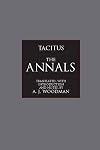
The Annals of Tacitus covers the years 14–68 CE. Why these dates? Well, Augustus, a colossal figure in Roman history, died in 14 CE, and this is when Tiberius began his rule. 68 CE marks the year of the death of Nero, which would lead to the year of four rival emperors. Here, we see the end of the Julio-Claudian line.
Unfortunately there are gaps in this chronology. As one can imagine, not all books of the complete Annals survived the passage of time. Several books are missing and some show more others are incomplete. While it is disappointing that the entire reign of Caligula is missing there is much that is interesting in what remains.
The status of this book as a classic cannot be denied. But what is it that makes that true? Tacitus covers a time in Roman history when, as the result of the consolidation and planning of Augustus (originally Octavian) the beginnings of the Roman empire take shape. More significantly, what he started in 14 CE suggests that he wanted to show two pictures of the empire. On the one hand, he does not question the need for an emperor. Augustus established peace, which was desperately needed, in light of many civil wars and civil conflicts following the death of Tiberius Gracchus in 133 BCE. On the other hand, there is a dark side to all empires. Tacitus portrays this point, especially in the life of Tiberius. He paints a picture of tyranny. We read, for example, of Tiberius’s reign of terror, and we can say the same for Nero.
Some of the most fascinating aspects for this reader included the machinations and politics of the day which were both personal and brutal. In spite of the wealth of the Emperors and their immediate families, the plans of some, starting with Augustus, for an orderly succession were derailed, often by accidents and illness that, due to the primitive state of medicine, led to unexpected deaths. That, of course, was in addition to the deaths plotted by such angels as Tiberius and Nero's mother Agrippina. Tacitus narrates the rise of potential rulers like Sejanus alongside the unlikely rise to power of Claudius. There are many fascinating and exciting moments in this narrative including the infamous fire that devastated Rome during Nero's reign.
Earlier in the narrative, during the reign of Tiberius, Tacitus comments in an aside about his project:
"That much of what I have recorded, and of what I shall record, seems perhaps insignificant and trivial to recall I am not unaware; but no one should compare my annals with the writing of those who compiled the affairs of the Roman people of old." He notes that mighty events had occurred in centuries past, while "my work, on the other hand, is confined and inglorious: peace was immovable or only modestly challenged, affairs in the City were sorrowful, and the princeps indifferent to extending the empire." (4.32)
Here we read instead about villains, such as Sejanus, and darlings of the people, such as Germanicus, and so much more. Ultimately the history was one that was filled with brutality and death that seemed unending leading Tacitus to rail about the "anger of the divinities against Roman affairs" near the end of the book (16.6). In spite of this the remnants of his original tome still make a fascinating and exciting read - truly a great book. show less
Unfortunately there are gaps in this chronology. As one can imagine, not all books of the complete Annals survived the passage of time. Several books are missing and some show more others are incomplete. While it is disappointing that the entire reign of Caligula is missing there is much that is interesting in what remains.
The status of this book as a classic cannot be denied. But what is it that makes that true? Tacitus covers a time in Roman history when, as the result of the consolidation and planning of Augustus (originally Octavian) the beginnings of the Roman empire take shape. More significantly, what he started in 14 CE suggests that he wanted to show two pictures of the empire. On the one hand, he does not question the need for an emperor. Augustus established peace, which was desperately needed, in light of many civil wars and civil conflicts following the death of Tiberius Gracchus in 133 BCE. On the other hand, there is a dark side to all empires. Tacitus portrays this point, especially in the life of Tiberius. He paints a picture of tyranny. We read, for example, of Tiberius’s reign of terror, and we can say the same for Nero.
Some of the most fascinating aspects for this reader included the machinations and politics of the day which were both personal and brutal. In spite of the wealth of the Emperors and their immediate families, the plans of some, starting with Augustus, for an orderly succession were derailed, often by accidents and illness that, due to the primitive state of medicine, led to unexpected deaths. That, of course, was in addition to the deaths plotted by such angels as Tiberius and Nero's mother Agrippina. Tacitus narrates the rise of potential rulers like Sejanus alongside the unlikely rise to power of Claudius. There are many fascinating and exciting moments in this narrative including the infamous fire that devastated Rome during Nero's reign.
Earlier in the narrative, during the reign of Tiberius, Tacitus comments in an aside about his project:
"That much of what I have recorded, and of what I shall record, seems perhaps insignificant and trivial to recall I am not unaware; but no one should compare my annals with the writing of those who compiled the affairs of the Roman people of old." He notes that mighty events had occurred in centuries past, while "my work, on the other hand, is confined and inglorious: peace was immovable or only modestly challenged, affairs in the City were sorrowful, and the princeps indifferent to extending the empire." (4.32)
Here we read instead about villains, such as Sejanus, and darlings of the people, such as Germanicus, and so much more. Ultimately the history was one that was filled with brutality and death that seemed unending leading Tacitus to rail about the "anger of the divinities against Roman affairs" near the end of the book (16.6). In spite of this the remnants of his original tome still make a fascinating and exciting read - truly a great book. show less
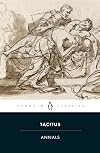
In 27 BC, Julius Caesar’s adopted great-nephew killed the Roman Republic. Taking the title of Augustus, he emerged from a series of civil wars to assume sole control of Rome under cover of preserving liberty. When he died forty years later, he left an autocracy. This is what happened next.
The Roman politician and historian Tacitus, near the end of his life, wrote his annals of the Julio-Claudian Dynasty. This dynasty had fallen with Nero’s suicide when Tacitus himself was a teenager. He show more lived through the entire arc of the succeeding Flavians, right through to its end in Domitian’s assassination. I don’t wonder that he spent his final years trying to document and explain the violence to which he bore a survivor’s witness.
The “Annals” are on the one hand intended to be an accurate and dispassionate record of the Julio-Claudians. As Tacitus writes, “Hence my purpose is to relate a few facts about Augustus — more particularly his last acts, then the reign of Tiberius, and all which follows, without either bitterness or partiality, from any motives to which I am far removed.”
To an extent, he achieves his goal. He refers frequently to the numerous records and historians he consulted. He works hard to account for sources he knows to be as unreliable as humans: “So obscure are the greatest events, as some take for granted any hearsay, whatever its source, others turn truth into falsehood, and both errors find encouragement with posterity.”
On the other hand, Tacitus writes both to understand his own time and to place it in a moral context, which colors his interpretations. He’s as depressed as any reader by a drab succession of spurious prosecutions, state-sponsored informers, suicides, banishments, poisonings, executions, adulteries, murders, and steady declines of state and public virtue under debauched and paranoid emperors. He longs for the lost Republic, though he’s clear-eyed enough to admit it had decayed enough in its own right to invite the attention of a despot.
This longing is demonstrated in his admiration of Germanicus, grandson of Augustus through marriage. Tacitus records the people’s hopes that Germanicus would inherit the Empire and restore the Republic, leans into the theory that he died by poison, and traces the fate of his wife and children with sympathy. Tacitus seems to believe Germanicus was the last chance to reverse tyranny, and that Tiberius killed that chance as thoroughly as his stepfather Augustus killed the Republic.
In the end, Tacitus is resigned to the vagaries of fate. Despite the Empire, he’s still a patriot, referring to long-ago campaigns as “our” battles conducted by “our” soldiers in “our” provinces. He compares Rome’s tattered freedoms favorably against Parthian (Persian) monarchy. Though he may regret the grim fortunes of his beloved city, history provides him with perspective: “For my part, the wider the scope of my reflection on the present and the past, the more am I impressed by their mockery of human plans in every transaction.”
Two thousand years later, it’s hard to disagree. show less
The Roman politician and historian Tacitus, near the end of his life, wrote his annals of the Julio-Claudian Dynasty. This dynasty had fallen with Nero’s suicide when Tacitus himself was a teenager. He show more lived through the entire arc of the succeeding Flavians, right through to its end in Domitian’s assassination. I don’t wonder that he spent his final years trying to document and explain the violence to which he bore a survivor’s witness.
The “Annals” are on the one hand intended to be an accurate and dispassionate record of the Julio-Claudians. As Tacitus writes, “Hence my purpose is to relate a few facts about Augustus — more particularly his last acts, then the reign of Tiberius, and all which follows, without either bitterness or partiality, from any motives to which I am far removed.”
To an extent, he achieves his goal. He refers frequently to the numerous records and historians he consulted. He works hard to account for sources he knows to be as unreliable as humans: “So obscure are the greatest events, as some take for granted any hearsay, whatever its source, others turn truth into falsehood, and both errors find encouragement with posterity.”
On the other hand, Tacitus writes both to understand his own time and to place it in a moral context, which colors his interpretations. He’s as depressed as any reader by a drab succession of spurious prosecutions, state-sponsored informers, suicides, banishments, poisonings, executions, adulteries, murders, and steady declines of state and public virtue under debauched and paranoid emperors. He longs for the lost Republic, though he’s clear-eyed enough to admit it had decayed enough in its own right to invite the attention of a despot.
This longing is demonstrated in his admiration of Germanicus, grandson of Augustus through marriage. Tacitus records the people’s hopes that Germanicus would inherit the Empire and restore the Republic, leans into the theory that he died by poison, and traces the fate of his wife and children with sympathy. Tacitus seems to believe Germanicus was the last chance to reverse tyranny, and that Tiberius killed that chance as thoroughly as his stepfather Augustus killed the Republic.
In the end, Tacitus is resigned to the vagaries of fate. Despite the Empire, he’s still a patriot, referring to long-ago campaigns as “our” battles conducted by “our” soldiers in “our” provinces. He compares Rome’s tattered freedoms favorably against Parthian (Persian) monarchy. Though he may regret the grim fortunes of his beloved city, history provides him with perspective: “For my part, the wider the scope of my reflection on the present and the past, the more am I impressed by their mockery of human plans in every transaction.”
Two thousand years later, it’s hard to disagree. show less
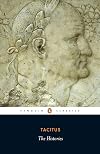
Imagine that an American historian documented the years 1861 to 1885, the quarter century during which the Republican Party controlled the presidency and enjoyed nearly unbroken control of Congress. Now imagine this work was lost except for the part covering 1861, including the election of Lincoln, the formation of the Confederacy, and the first battles of the Civil War.
This is Tacitus’s “Histories.” In its full form, it covered the 27-year reign of the Flavian Dynasty, from its rise show more in the shambles of Nero’s suicide to its collapse with Domitian’s assassination. The only books which survive are those covering the Year of the Four Emperors — and what a year it was.
What makes this especially valuable is that Tacitus has two advantages: the eye of a critical historian and the fact that the Flavians are dead. The former allows him to sift conflicting sources from an era of civil war and rival agendas, and the latter allows him to write without fear that a sitting emperor might take offense and banish him to the tender embrace of Pluto.
That’s not to say Tacitus writes without bias. He’s no friend of the late dynasty; and is an aristocrat of a traditionalist bent, equally contemptuous of undisciplined soldiers, scheming generals, and slimy politicians. As far as he’s concerned, everything went wrong when Rome’s greatness dissolved the ancient republican virtues that gave it greatness:
“The old ingrained human passion for power matured and burst into prominence with the growth of the empire. With straiter resources equality was easily preserved. But when once we had brought the world to our feet and exterminated every rival state or king, we were left free to covet power without fear of interruption.”
This sort of irony is red meat to Tacitus, and he piles it high as rival generals from the picket lines of Germania and the war zone of Judea converge on Rome, and as barbarian tribes erupt from the receding tide of Roman distraction. Tacitus loves jarring contrasts and competing opposites. No one appreciates the sardonic twists of Fate’s knife quite as much as he does.
This picturesque chronicle of imperial chaos leaves me regretful that we don’t have the rest of the “Histories,” but what we do have is invaluable. Tacitus offers a salutary reminder that the blessings of civil peace are not small. When a great nation turns on itself, vicious men prosper over virtuous, and brave soldiers die the death of cowards. Irony is fun to read about, but much less fun to live through. show less
This is Tacitus’s “Histories.” In its full form, it covered the 27-year reign of the Flavian Dynasty, from its rise show more in the shambles of Nero’s suicide to its collapse with Domitian’s assassination. The only books which survive are those covering the Year of the Four Emperors — and what a year it was.
What makes this especially valuable is that Tacitus has two advantages: the eye of a critical historian and the fact that the Flavians are dead. The former allows him to sift conflicting sources from an era of civil war and rival agendas, and the latter allows him to write without fear that a sitting emperor might take offense and banish him to the tender embrace of Pluto.
That’s not to say Tacitus writes without bias. He’s no friend of the late dynasty; and is an aristocrat of a traditionalist bent, equally contemptuous of undisciplined soldiers, scheming generals, and slimy politicians. As far as he’s concerned, everything went wrong when Rome’s greatness dissolved the ancient republican virtues that gave it greatness:
“The old ingrained human passion for power matured and burst into prominence with the growth of the empire. With straiter resources equality was easily preserved. But when once we had brought the world to our feet and exterminated every rival state or king, we were left free to covet power without fear of interruption.”
This sort of irony is red meat to Tacitus, and he piles it high as rival generals from the picket lines of Germania and the war zone of Judea converge on Rome, and as barbarian tribes erupt from the receding tide of Roman distraction. Tacitus loves jarring contrasts and competing opposites. No one appreciates the sardonic twists of Fate’s knife quite as much as he does.
This picturesque chronicle of imperial chaos leaves me regretful that we don’t have the rest of the “Histories,” but what we do have is invaluable. Tacitus offers a salutary reminder that the blessings of civil peace are not small. When a great nation turns on itself, vicious men prosper over virtuous, and brave soldiers die the death of cowards. Irony is fun to read about, but much less fun to live through. show less
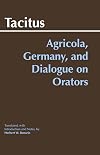
In 2023, a viral TikTok trend encouraged women to ask how often their men think about the Roman Empire. To the shock of many women, it turns out many men think quite a lot about the imperial eagle. I can’t dispute this, because I myself think about it several times a month, if not more. In the words of historian Tom Holland, Rome is like a Tyrannosaurus Rex — exciting because it’s “safely extinct.”
Rome was no less fascinating to its own citizens. Few were more determined to show more understand it than Tacitus, the Roman politician, orator, and historian famed for his “Histories” and “Annals” of the first emperors. As a survivor of the civil wars following Nero’s suicide, the establishment of the Flavian dynasty, and its end in Domitian’s reign of terror, Tacitus had opinions about power and virtue.
Apart from his two magna opera, only three of his minor works survive: a biography of his father-in-law Agricola, an ethnography of the Germanic tribes, and a set-piece dialogue on the subject of orators. Though not essential reading, each demonstrates the yearning Tacitus felt for a virtuous but lost past.
The dialogue on rhetoric, for instance, preserves an evergreen generational complaint: “The true causes [of modern oratorical decay] are, the dissipation of our young men, the inattention of parents, the ignorance of those who pretend to give instruction, and the total neglect of ancient discipline.” Though you could dismiss this as a typical old man’s lament, it blends with the portrait in his major works of a Rome which, in its imperial glory, had abandoned the virtues that made it glorious.
Likewise, Tacitus surveys the Germans partly by weighing their practices against traditional Roman values. He approves barbarian customs of marriage and family which encourage “a state of chastity well secured; corrupted by no seducing shows and public diversions, by no irritations from banqueting.” This compares unfavorably with Roman parents who, in the dialogue on orators, “are the first to give their children the worst examples of vice and luxury” with their “passion for horses, players, and gladiators.”
You’ll find no better example of Tactitus’s ideal virtuous Roman than in the biography of his father-in-law Agricola, the military governor of Britain who completed its conquest and pushed the victories of Roman arms deep into modern-day Scotland. In Agricola, Tacitus finds the perfect blend of severity toward the corrupt, lenience toward the repentant, selfless devotion to duty, and a prudent modesty that secures an empire’s interests without attracting the violent attentions of jealous emperors.
Tacitus here reveals that he has not lost all hope for the persistence of virtuous men in vicious days. Those who keep a righteous light burning in the night prove that it can be done, and their memory must and shall be preserved: “Over many indeed, of those who have gone before, as over the inglorious and ignoble, the waves of oblivion will roll; Agricola, made known to posterity by history and tradition, will live for ever.” And so he has, thanks to a son-in-law who found in him a reason to believe that, even in the worst of times, the best of humanity is never truly lost. show less
Rome was no less fascinating to its own citizens. Few were more determined to show more understand it than Tacitus, the Roman politician, orator, and historian famed for his “Histories” and “Annals” of the first emperors. As a survivor of the civil wars following Nero’s suicide, the establishment of the Flavian dynasty, and its end in Domitian’s reign of terror, Tacitus had opinions about power and virtue.
Apart from his two magna opera, only three of his minor works survive: a biography of his father-in-law Agricola, an ethnography of the Germanic tribes, and a set-piece dialogue on the subject of orators. Though not essential reading, each demonstrates the yearning Tacitus felt for a virtuous but lost past.
The dialogue on rhetoric, for instance, preserves an evergreen generational complaint: “The true causes [of modern oratorical decay] are, the dissipation of our young men, the inattention of parents, the ignorance of those who pretend to give instruction, and the total neglect of ancient discipline.” Though you could dismiss this as a typical old man’s lament, it blends with the portrait in his major works of a Rome which, in its imperial glory, had abandoned the virtues that made it glorious.
Likewise, Tacitus surveys the Germans partly by weighing their practices against traditional Roman values. He approves barbarian customs of marriage and family which encourage “a state of chastity well secured; corrupted by no seducing shows and public diversions, by no irritations from banqueting.” This compares unfavorably with Roman parents who, in the dialogue on orators, “are the first to give their children the worst examples of vice and luxury” with their “passion for horses, players, and gladiators.”
You’ll find no better example of Tactitus’s ideal virtuous Roman than in the biography of his father-in-law Agricola, the military governor of Britain who completed its conquest and pushed the victories of Roman arms deep into modern-day Scotland. In Agricola, Tacitus finds the perfect blend of severity toward the corrupt, lenience toward the repentant, selfless devotion to duty, and a prudent modesty that secures an empire’s interests without attracting the violent attentions of jealous emperors.
Tacitus here reveals that he has not lost all hope for the persistence of virtuous men in vicious days. Those who keep a righteous light burning in the night prove that it can be done, and their memory must and shall be preserved: “Over many indeed, of those who have gone before, as over the inglorious and ignoble, the waves of oblivion will roll; Agricola, made known to posterity by history and tradition, will live for ever.” And so he has, thanks to a son-in-law who found in him a reason to believe that, even in the worst of times, the best of humanity is never truly lost. show less
Lists
Awards


You May Also Like


Associated Authors
Statistics
- Works
- 544
- Also by
- 17
- Members
- 14,190
- Popularity
- #1,621
- Rating
- 3.8
- Reviews
- 125
- ISBNs
- 628
- Languages
- 27
- Favorited
- 26

