
Caroline Walker Bynum
Author of Holy Feast and Holy Fast
About the Author
Caroline Walker Bynum is Professor of Medieval History at the Institute for Advanced Study in Princeton, New Jersey
Works by Caroline Walker Bynum
Fragmentation and Redemption: Essays on Gender and the Human Body in Medieval Religion (1991) 260 copies, 1 review
Associated Works
The Redemption: An Interdisciplinary Symposium on Christ as Redeemer (2004) — Contributor — 39 copies
Tagged
Common Knowledge
- Canonical name
- Bynum, Caroline Walker
- Other names
- BYNUM, Caroline Walker
- Birthdate
- 1941-05-10
- Gender
- female
- Education
- University of Michigan (BA|1962)
Harvard University (PhD|1969) - Occupations
- historian
university professor emerita - Organizations
- Princeton University
Columbia University
University of Washington
Harvard University - Awards and honors
- British Academy (Corresponding Fellow, 2017)
Berkshire Prize (1985)
Governor's Writers Day Award (1988)
Philip Schaff Prize (1989)
Trilling Prize (1992)
Jacques Barzun Prize (1996) (show all 15)
Grundler Prize (2009)
Haskins Medal (2011)
American Ecclesiastical Society (Fellow, 2016)
MacArthur Fellowship (1986)
Orden Pour le Mérite für Wissenschaften und Künste (2012)
Grosses Verdienstkreuz mit Stern (2013)
Medieval Academy of America (Fellow, 1989)
American Academy of Arts and Sciences (1993)
American Philosophical Society (1995) - Relationships
- Roth, Guenther (spouse)
- Nationality
- USA
- Birthplace
- Atlanta, Georgia, USA
- Places of residence
- Atlanta, Georgia, USA
Ann Arbor, Michigan, USA
Cambridge, Massachusetts, USA
Princeton, New Jersey, USA - Associated Place (for map)
- USA
Members
Reviews
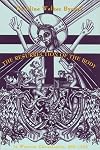
I should state at the outset that I do not have the mind of a philosopher or theologian. I am never going to be able to expound on Tertullian or Origen, or debate Aristotelian thought or neoPlatonism. However, Bynum's writing is lucid enough that while I'm reading her, I mostly feel as if I do understand a theological argument—in the case of this book, the metaphors of bodily resurrection used in both the early Christian church and again in Western Christianity in the 12th and 13th show more centuries. She examines how theologians and mystics at the time understood identity, resurrection, the body, consciousness and change. Some of their preoccupations seem quite odd to a contemporary mindset—an awful lot of ink was spilled over how a cannibal who'd only ever eaten embryos could be resurrected, for example—but their underlying concern, that of the continuity of self, still resonates. Not a book to skim through, but still very interesting, and extremely well footnoted (though I wish there had been a proper bibliography!). show less
I read Caroline Walker Bynum's *Metamorphosis and Identity* as part of my research for a paper I'm about to give on identity in the medieval poem *Sir Orfeo*, so I read it with double perspective: first, for its usefulness for my research (yes, I'm willing to use a book and then just set it aside), and second, for its enjoyability. *M&I* was a joy on both counts. Bynum's discussions of identity and werewolves (*Buffy the Vampire Slayer* even gets a mention) provided me with new insights and show more approaches to take regarding my topic and even gave me the inspiration I needed for my title. Bynum manages a style that is both erudite and easy to read, and her scholarship is of course phenomenal.
Over the course of the text, Bynum uses werewolf tales to show how Medieval culture perceived the issue of identity, that identity was considered to persist through changes (such as becoming a werewolf) from hybridity and metamorphosis. She calls on Dante, Ovid, Marie de France, and Gerald of Wales to illustrate her argument, and concludes that
"Our concern with how we can change yet be the same thing — our fascination with the question of identity in all its varieties — is inherited from traditions. The identity we carry with us questions — and by questioning conforms — itself. In this sense, we are all Narcissus, as we are all also the werewolf, a constantly new thing that is nonetheless the same" (p. 189).
What surprized me about the book is that it comprises four lectures Bynum gave on various occasions and that those lectures are presented with no attempt to blend them into more cohesive book chapters. I'm not sure whether this omission matters, but it did recall for me an on-going discussion about expectations in the humanities about how books ought to be presented and whether the requirements for dissertations should be changed to allow collections of essays to make it more possible for students to complete their doctoral degrees. show less
Over the course of the text, Bynum uses werewolf tales to show how Medieval culture perceived the issue of identity, that identity was considered to persist through changes (such as becoming a werewolf) from hybridity and metamorphosis. She calls on Dante, Ovid, Marie de France, and Gerald of Wales to illustrate her argument, and concludes that
"Our concern with how we can change yet be the same thing — our fascination with the question of identity in all its varieties — is inherited from traditions. The identity we carry with us questions — and by questioning conforms — itself. In this sense, we are all Narcissus, as we are all also the werewolf, a constantly new thing that is nonetheless the same" (p. 189).
What surprized me about the book is that it comprises four lectures Bynum gave on various occasions and that those lectures are presented with no attempt to blend them into more cohesive book chapters. I'm not sure whether this omission matters, but it did recall for me an on-going discussion about expectations in the humanities about how books ought to be presented and whether the requirements for dissertations should be changed to allow collections of essays to make it more possible for students to complete their doctoral degrees. show less
Holy Feast and Holy Fast: The Religious Significance of Food to Medieval Women (The New Historicism: Studies in Cultural Poetics) by Caroline Walker Bynum
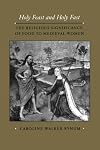
An extremely interesting and absorbing look at female religiosity and food in medieval western Europe from three angles: the religious meaning of food for women; the forms of medieval asceticism for them; and the significance of gender roles within religious experience. I agree with a lot of her conclusions, though not perhaps how she reaches them. I don't quite buy her final conclusion on male vs female use of symbolism, which seems too universalising for me, and her discussion of anorexia show more nervosa as we understand it has dated badly in the twenty years since the book was first published. Overall, though, I thought her point about viewing asceticism not as a flight out of the body, but further into it, was well made, particularly with regards to how we as moderns view medieval expressions/denial of sexuality. Scholarship in the field has built a lot on this since it was first written, but it is still worth the read to see what its origins are—though perhaps not if you have an aversion to tales of saints drinking pus or eating lice. show less
Fragmentation and Redemption: Essays on Gender and the Human Body in Mediaeval Religion by Caroline Walker Bynum
While it has been built on in a number of significant ways since its publication, Fragmentation and Redemption is still a stimulating and subtle look at the interplay of gender, religion and conceptions of the human body in medieval Europe. Bynum's main themes are the asymmetry of gendered power relationships, and how that created more fluidity/subtlety of gender construction than moderns tend to attribute to the Middle Ages; the forms of women's creativity and religious expression; and the show more medieval conception of how we inhabit our bodies. I really like her rejection of the simple binary, and her attempt to write history in the 'comic' mode, which are both approaches I hope to bring to my own work.
As a collection of essays, Fragmentation and Redemption mostly holds together well. The last five are neatly linked thematically; the first two, however, suffer a little from addressing 'specific' questions and feel a little limited by that. show less
As a collection of essays, Fragmentation and Redemption mostly holds together well. The last five are neatly linked thematically; the first two, however, suffer a little from addressing 'specific' questions and feel a little limited by that. show less
Lists
Awards


You May Also Like


Associated Authors
Statistics
- Works
- 11
- Also by
- 5
- Members
- 1,802
- Popularity
- #14,282
- Rating
- 3.8
- Reviews
- 17
- ISBNs
- 35
- Languages
- 3
- Favorited
- 4