

Miri Rubin
Author of The Hollow Crown: A History of Britain in the Late Middle Ages
About the Author
Miri Rubin is professor of history, Queen Mary University of London.
Works by Miri Rubin
The Cambridge History of Christianity: Volume 4, Christianity in Western Europe, c.1100-c.1500 (v. 4) (2009) 59 copies
Cities of Strangers: Making Lives in Medieval Europe (The Wiles Lectures) (2020) 22 copies, 1 review
Charity and Community in Medieval Cambridge (Cambridge Studies in Medieval Life and Thought: Fourth Series) (1987) 6 copies
Associated Works
Catholicism and Catholicity: Eucharistic Communities in Historical and Contemporary Perspectives (1999) — Contributor — 13 copies
The Politics of Gesture: Historical Perspectives (Past & Present, Supplement 4, 2009) (2009) — Contributor — 8 copies
Thirteenth Century England IV: Proceedings of the Newcastle upon Tyne Conference 1991 (1992) — Contributor — 7 copies
Tagged
Common Knowledge
- Canonical name
- Rubin, Miri
- Birthdate
- 1956-01-28
- Gender
- female
- Education
- Hebrew University of Jerusalem (BA|MA|1980)
University of Cambridge (Ph.D | 1984) - Occupations
- medieval historian
professor - Organizations
- Queen Mary, University of London
- Awards and honors
- Medieval Academy of America (Corresponding Fellow, 2007)
- Nationality
- USA
- Birthplace
- Chicago, Illinois, USA
- Places of residence
- England, UK
Israel - Associated Place (for map)
- Chicago, Illinois, USA
Members
Reviews
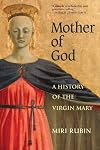
This is a hefty, wide-ranging overview of interpretations of Mary, mother of Jesus, from the origins of Christianity until the end of the sixteenth century, with a brief overview of later interpretations of Mary in a concluding chapter. As an overview of primary sources about Mary, this will be invaluable to students working on the topic. So too will be the discussion of views of Mary in medieval Islam (after all, Mary/Maryam figures more in the Qur'an than she does in the New Testament), show more and of the long-standing association between Mary and anti-Semitism. However, this really is an encyclopaedic text rather than a narrative one, and there is no overarching thesis. There are points where the array of materials cited—Miri Rubin makes use of literary texts, documentary evidence, art historical materials, and more—becomes somewhat dizzying. I'm not sure how truly accessible, or at least readable, this book therefore is for the general reader, but it will remain invaluable for the specialist. show less
Thanks to this book, I now have a more solid understanding of how tightly veneration of Mary and antisemitism were linked in Europe. Representations of violence against Jews describe the acts in almost approving terms. Assertions of violence by Jews are never described as the slanders the historical record often proves them to be. Apparently this is required to maintain the respectful tone toward Mary that the book establishes.
I kept wanting this book to be "Alone of All Her Sex" by Marina show more Warner, but it kept on not being that book, but rather being the inferior book that it was. You should read that book instead. show less
I kept wanting this book to be "Alone of All Her Sex" by Marina show more Warner, but it kept on not being that book, but rather being the inferior book that it was. You should read that book instead. show less
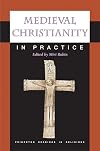
Medieval Christianity in Practice contains more than 40 medieval primary sources in modern English translation, each with an accompanying commentary by various scholars. Despite the title, it focuses just on Western Europe (so no coverage of Orthodox or Eastern Churches), from about 600 to 1500. It's a little bit of a grab bag, uneven in its coverage, and the comprehensiveness and length of the accompanying commentaries varies. However, it makes available for classroom use many kinds of show more sources that are often not available in translation—saint's lives like that of Stephen of Obazine (chapter 38) are more readily sourced than charms against infectious disease in sheep (chapter 9), although the latter kind of prayer probably played a more prominent role in the life of the average medieval peasant. Useful to pull selections from when teaching, but I wouldn't build a course around it as a main textbook. show less
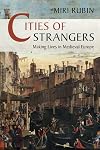
Cities of Strangers is a short (about half of the 200 pages are endnotes) study of strangers, interconnections, and belonging in urban spaces in later medieval Europe. Miri Rubin synthesises a broad array of readings on western, central, and eastern European towns and cities to provide a very readable introduction to the history of urbanisation and the complex nature of lived environments in the Middle Ages. I’m not sure I was entirely convinced by Rubin’s inclusion of “women” under show more the rubric of “strangers”, and there are a couple of weird errors (e.g. the Nuremberg Chronicle doesn’t have 2000 woodcuts of medieval cities; it doesn’t have 2000 woodcuts in total), but those reservations aside, this is a brisk, accessible introduction to the topic. show less
Lists
Awards

You May Also Like


Associated Authors
Statistics
- Works
- 15
- Also by
- 6
- Members
- 1,064
- Popularity
- #24,196
- Rating
- 3.3
- Reviews
- 10
- ISBNs
- 44
- Languages
- 1