
Thomas B. Costain (1885–1965)
Author of The Silver Chalice
About the Author
Image credit: Courtesy of the NYPL Digital Gallery (image use requires permission from the New York Public Library)
Series
Works by Thomas B. Costain
The silver chalice, etc 2 copies
For My Great Folly (abridged) — Author — 1 copy
Mrs. Beneker 1 copy
Come Ride With Me 1 copy
The Amateur Diplomat 1 copy
The Magnificent Century a History of the Plantagenets; The Three Edwards; The Last Plantangenets (1962) — Author — 1 copy
Associated Works
Century of conflict;: The struggle between the French and British in colonial America (Canadian history series) (1900) — Editor — 93 copies, 2 reviews
The path of destiny : Canada from the British conquest to home rule, 1763-1850 (1957) — Editor — 86 copies, 4 reviews
Cavalcade of the North: An Entertaining Collection of Distinguished Writing by Canadian Authors (1958) — Introduction; Introduction Contributor — 70 copies, 1 review
Best-in-Books The Silver Chalice; A King's Story; A Man Called Peter; The Day Chist Died; Kids Say the Darndest Things; A Stillness at Appomattox; High Adventure; Return to… (1960) — Contributor — 8 copies
Our Man in Havana, And a Right Good Crew (Nelson Doubleday Best in Books, Volume 33) (1959) 3 copies
Best-in-Books: The Royal Box / Our National Parks / Jamaica Inn / That Reminds Me / The White and the Gold / Rube Goldberg's Guide to Europe / The Voyage of the Hérétique (1955) — Author — 2 copies, 1 review
Tagged
Common Knowledge
- Legal name
- Costain, Thomas Bertram
- Birthdate
- 1885-05-08
- Date of death
- 1965-10-08
- Gender
- male
- Education
- Brantford Collegiate Institute
- Occupations
- newspaper editor
historian
university professor
historical novelist
journalist - Organizations
- Maclean's
The Saturday Evening Post - Awards and honors
- Doctor of Letters, University of Western Ontario
Gold medallion, Canadian Club of New York - Relationships
- Haycraft, Molly Costain (daughter)
- Short biography
- Thomas B. Costain
was born
in Brantford, Ontario, Canada, and attended high school at the Brantford Collegiate Institute. Before graduating from high school, he had already written four novels, none of which were accepted for publication.
In 1902, he had his first literary success when the Brantford Courier published a mystery story of his, and he became a reporter at the paper at age 17. He later was an editor at the Guelph Daily Mercury and the Maclean Publishing Group. In 1914, he became a staff writer for, and later editor of, Maclean's Magazine. His work there brought him to the attention of The Saturday Evening Post in Philadelphia, Pennsylvania, where he served as fiction editor for 14 years.
In 1920, he became a naturalized U.S. citizen. He worked for Doubleday Books as an editor from 1939 to 1946. He also was the head of 20th Century Fox’s story development department from 1934 to 1942. Costain was 57 years old when he published his first historical novel, For My Great Folly (1942), about the 17th-century rivalry between England and Spain. It was an immediate bestseller, and Costain was soon able to retire from Doubleday to become a full-time writer. In the years that followed, he published books almost annually, and his vivid and carefully researched stories continued to be hits with the public. The best-known of his works are The Black Rose (1945), which was adapted into a film starring Tyrone Power, and The Silver Chalice (1952), also made into a film. In addition, Costain utilized his outstanding abilities to make history compelling to produce well-received nonfiction histories, including a four-volume series on the English Plantagenet dynasty, The Conquering Family (1949), The Magnificent Century (1951), The Three Edwards (1958), and The Last Plantagenets (1962). Costain married Ida Randolph Spragge in 1910, and the couple had two children, one of whom was Molly Costain Haycraft, who also became an historical novelist. - Cause of death
- heart attack
- Nationality
- Canada (birth)
USA (naturalized) - Birthplace
- Brantford, Ontario, Canada
- Places of residence
- Brantford, Ontario, Canada
New York, New York, USA
Philadelphia, Pennsylvania, USA - Place of death
- New York, New York, USA
- Burial location
- Farringdon Cemetery, Brantford, Ontario, Canada
- Associated Place (for map)
- USA
Members
Reviews

I really enjoyed this read. I've long been fascinated with the complex monarchical history of England, but have been intimidated by it as a reader. Costain's series was popular for a reason: they're accessible, readable, and interesting. I picked up The Three Edwards, the third in the series, because, strangely enough, the rest of Costain's Plantagenet series remains hard to find in the Hennepin County Library System. But I didn't feel lost. This book looks at Edward I, Edward II, and Edward show more III, with side trips to meet William Wallace, Robert the Bruce, Phillip the Bad, and several knights whom, Costain theorizes, served as inspiration to Cervantes as he wrote Quixote. Because of its accessibility, the prose was engaging and the narrative mostly swift (though it slowed down dramatically at the end in the lengthy discussions of "non-Edward" topics, such as the initial stirrings of the Reformation, a couple of towering paladins, etc). The drama of the Scottish wars, of Isabella's machinations to get her feckless husband off the throne, of the Black Prince's heroics, were well-relayed.
I will say that the book lacks a certain rigor of scholarship. A popular history, of course, doesn't require the same depth and meticulous attention to sourcing that a more academic history requires. But Costain makes many assumptions, takes some literary liberties that, while entertaining, made me feel suspicious, and drew some conclusions that I didn't feel were well supported. I'm torn because, as a reader, some of these same sections were among my favorite to read. Anyway, I will be reading the rest of the Plantagenet series, and am grateful to have this easy way to enter into the intricate history of England's monarchy. show less
I will say that the book lacks a certain rigor of scholarship. A popular history, of course, doesn't require the same depth and meticulous attention to sourcing that a more academic history requires. But Costain makes many assumptions, takes some literary liberties that, while entertaining, made me feel suspicious, and drew some conclusions that I didn't feel were well supported. I'm torn because, as a reader, some of these same sections were among my favorite to read. Anyway, I will be reading the rest of the Plantagenet series, and am grateful to have this easy way to enter into the intricate history of England's monarchy. show less
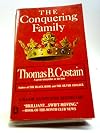
If you know little to nothing about the Plantagenets this is an easy intro to that complex family.
Five stars here for Costain’s narrative drive, which makes this old popular history of the first Plantagenets a very easy read.
Four stars for the author’s occasional snark of ordinal sources.
Two stars for the author’s obvious biases, the lack of documentation, and authorial inventions of the moods and even appearance of the characters. Two stars also for Costain’s cherry picking which show more of the original sources he chooses to rate as credible.
Only for beginners or inveterate Costain fans. show less
Five stars here for Costain’s narrative drive, which makes this old popular history of the first Plantagenets a very easy read.
Four stars for the author’s occasional snark of ordinal sources.
Two stars for the author’s obvious biases, the lack of documentation, and authorial inventions of the moods and even appearance of the characters. Two stars also for Costain’s cherry picking which show more of the original sources he chooses to rate as credible.
Only for beginners or inveterate Costain fans. show less

The kind of history I most like to read. Costain covers the Plantagenets from Henry I to “soft-sword John” in a very entertaining, story-telling way that most historians would probably disdain, but which makes these people come alive. I’d had only the vaguest idea of who these early Plantaganets were, but Costain draws them in vivid and memorable strokes: beautiful Eleanor of Aquitaine and her determined Henry, their viperous brood of sons; Stephen and Maude and the misery they show more inflicted on England as they battled for the throne . . . not to mention a whole host of secondary characters. Lovely – a great place to start and perfect for the more casual reader of history. show less

It’s the Napoleonic Wars, and Francis Ellery, owner of The Tablet newspaper, is trying to convince the British public that the government needs to do more to fight off a prospective invasion. He faces the disapproval of his family and even prison time for criticizing the government’s actions, and eventually makes his way to the Peninsular campaign to serve as a war correspondent for Robert “Riding Bobby” Wilson. In between, he meets and falls in love with a French exile named show more Gabrielle de Salle.
This is a somewhat romantic historical novel, written during the Second World War, so the writing style may be a little bit heavier than modern readers might be used to. That said, it does move along pretty well, mainly when there are exciting personal-level plots like breaking people out of jail, rather than talking about the battles and campaigns. Wellington makes several appearances, and I definitely pictured him as Hugh Fraser because of the Sharpe series. I cringed somewhat at Francis’s love for Gabrielle because it was a very possessive love (saying she “belonged” to him), but she certainly holds her own. As for other female characters, Francis’s aunt Francilea was my favourite, because she brooked no nonsense and supported her nephew in his work.
I’m not sure if I would re-read this, but I would certainly read other books by Costain (which is good, because I have two more of his books on my shelf). show less
This is a somewhat romantic historical novel, written during the Second World War, so the writing style may be a little bit heavier than modern readers might be used to. That said, it does move along pretty well, mainly when there are exciting personal-level plots like breaking people out of jail, rather than talking about the battles and campaigns. Wellington makes several appearances, and I definitely pictured him as Hugh Fraser because of the Sharpe series. I cringed somewhat at Francis’s love for Gabrielle because it was a very possessive love (saying she “belonged” to him), but she certainly holds her own. As for other female characters, Francis’s aunt Francilea was my favourite, because she brooked no nonsense and supported her nephew in his work.
I’m not sure if I would re-read this, but I would certainly read other books by Costain (which is good, because I have two more of his books on my shelf). show less
Lists
Awards


You May Also Like


Associated Authors
Statistics
- Works
- 55
- Also by
- 15
- Members
- 9,026
- Popularity
- #2,664
- Rating
- 3.8
- Reviews
- 115
- ISBNs
- 139
- Languages
- 8
- Favorited
- 15
