
Lloyd C. Douglas (1877–1951)
Author of The Robe
About the Author
Disambiguation Notice:
1. CK above wrote The Robe. 2. Lloyd G. Douglas (children's writer) wrote The Liberty Bell.
Image credit: public domain
Series
Works by Lloyd C. Douglas
Lloyd Douglas Collection (Disputed Passage; Doctor Hudson's Secret Journal; Green Light; Invitation to Live; White Banne (1939) 4 copies
The Robe (2/2) 1 copy
The Robe (1/2) 1 copy
Six Volume Set 1 copy
Τό ὑπέροχο μυστικό 1 copy
Ruhe Laufband 1 copy
The Inn-Keeper 1 copy
SUBLIME OBSESSÃO 1 copy
Associated Works
The Best from Cosmopolitan — Contributor — 4 copies
Twelve Great Modern Stories, A New Collection — Contributor — 1 copy
Tagged
Common Knowledge
- Legal name
- Douglas, Lloyd Cassel
Douglas, Doya Cassel (born) - Birthdate
- 1877-08-27
- Date of death
- 1951-02-13
- Gender
- male
- Education
- Wittenberg College
- Occupations
- minister
- Relationships
- Dawson, Virginia Douglas (daughter)
Wilson, Betty Douglas (daughter) - Nationality
- USA
- Birthplace
- Columbia City, Indiana, USA
- Places of residence
- Monroeville, Indiana, USA
Florence, Kentucky, USA
Montreal, Quebec, Canada - Place of death
- Los Angeles, California, USA
- Burial location
- Forest Lawn Memorial Park Cemetery, Glendale, California
- Disambiguation notice
- 1. CK above wrote The Robe. 2. Lloyd G. Douglas (children's writer) wrote The Liberty Bell.
- Associated Place (for map)
- USA
Members
Reviews
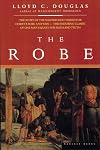
Lloyd C. Douglas wrote this book in 1943. It is timeless in its message and in its story. This is a story of Jesus, and it begins just before the crucifixion on the grassy knoll at Golgotha. It ends about 2 years after that in a Roman forum. Lloyd C. Douglas has created a masterpiece here, and it has some of the the most beautiful language and prose I have ever read. Yes, the story is familiar to us as Christians, but Douglas has created a wonderful meld of fiction and history in this book. show more We learn to love and care for the main characters as we hear about Jesus's life story. Marcellus, Demetrias and Diana were as real to me as people that I may meet on the street corner any day of the week. The amount of work that went into this novel is astounding, and the skill in which it was created is beyond belief. Marcellus was present at the time of the crucifixion of Christ, and his presence at this momentous occasion forever changed his life. We see how a cocky, young Roman Centurion becomes a humble citizen whose main goal in life is to educate the people about Jesus Christ and his promised Kingdom. This is not a book to begin lightly. It is a very weighty tome that will probably cause readers to re-evaluate and re-discover their life lessons It is a book that will hit you in the solar plexus. This very real entry into the first century A.D. will knock your socks off and rock your world if you let it When Lloyd Douglas's housekeeper asked the innocent question about the crucifixion, "What happened to his robe sir?" this was the beginning of Lloyd Douglas's magnum opus. He has done a masterful job of combining fiction, folklore and history in this book. It is a book that should be read in every Christian's lifetime. I had read it before when I was much younger, and did not really grasp the scope of it until I picked it up now. As difficult as it was to read this story, I do not regret a minute of it. show less
The crime of all crimes.
Wrongfully accused -
Unjustly tried -
Iniquitously put to death.
The story of Jesus.
What you have before you - A possibly life-altering reading experience that makes you realize the grammatical superfluity of the comparative for “beautiful”.
If you are an agnostic like me, or even an atheist, this is perhaps the closest we may ever get to understanding that perhaps, just perhaps there could have been a man or at some point in the future will be again a man/woman show more that was or will be ever so much more.
Jesus may not be the main character in The Robe 👘 but he is in the thoughts and minds of the main characters, most of all of the protagonists Marcus gallius and Dimitrius and does both control their actions and steer along the plot.
This is about Jesus, and that’s a dicey business.
Writing about Jesus one of the two might happen . The theme itself may have the reader love a merely average work, or hate even the most eloquent effort. After all, Jesus is virtually inseparable from religion and as such a topic of the utmost sensitivity. But that is exactly what the writer managed, to spin a story with historicity in mind yet love for the subject in his heart, separate from religious orthodoxy.
A novel about Jesus that I believe even a religious hardliner might appreciate, especially since for better or worse it is based on the books of the four evangelists with all the discrepancies and inconsistencies. show less
Wrongfully accused -
Unjustly tried -
Iniquitously put to death.
The story of Jesus.
What you have before you - A possibly life-altering reading experience that makes you realize the grammatical superfluity of the comparative for “beautiful”.
If you are an agnostic like me, or even an atheist, this is perhaps the closest we may ever get to understanding that perhaps, just perhaps there could have been a man or at some point in the future will be again a man/woman show more that was or will be ever so much more.
Jesus may not be the main character in The Robe 👘 but he is in the thoughts and minds of the main characters, most of all of the protagonists Marcus gallius and Dimitrius and does both control their actions and steer along the plot.
This is about Jesus, and that’s a dicey business.
Writing about Jesus one of the two might happen . The theme itself may have the reader love a merely average work, or hate even the most eloquent effort. After all, Jesus is virtually inseparable from religion and as such a topic of the utmost sensitivity. But that is exactly what the writer managed, to spin a story with historicity in mind yet love for the subject in his heart, separate from religious orthodoxy.
A novel about Jesus that I believe even a religious hardliner might appreciate, especially since for better or worse it is based on the books of the four evangelists with all the discrepancies and inconsistencies. show less

This book provides an insightful perspective on the crucifixion and resurrection of Jesus and the effect on Judaism and the Roman Empire. It approaches the subject by telling a story about the Roman soldier in charge of the execution. It's a little slow in spots, but the ending is powerful. The--excessive--use--of--dashes--is--entirely--unnecessary--!!!--!!

I was impressed by the skill and conviction which could make of an inevitably didactic novel a stirring story of the growth of a much-wronged and very bitter young man, Dinny Brumm, and his ties with his mother (who died giving him birth) and his father (who was deceitfully denied contact with him by the pious but venal relatives who reared him). Douglas demonstrates a thorough understanding of the cynicism fashionable in America after World War I as well as of the doctrines, practices and show more prejudices of both Catholic and Protestant believers of that time. Dinny's chaste romances with four well-drawn and likeable women add considerably to the interest of this carefully crafted work. show less
Lists
Awards


You May Also Like


Associated Authors
Statistics
- Works
- 38
- Also by
- 4
- Members
- 5,778
- Popularity
- #4,265
- Rating
- 4.0
- Reviews
- 79
- ISBNs
- 168
- Languages
- 9
- Favorited
- 8