
Sinclair Lewis (1885–1951)
Author of Babbitt
About the Author
Harry Sinclair Lewis was born on February 7, 1885 in Minnesota. He was an American novelist, short-story writer, and playwright. In 1930, he became the first writer from the United States to receive the Nobel Prize in Literature. A lonely child, Lewis immersed himself in reading and diary writing. show more While studying at Yale University and living in writer Upton Sinclair's communal house, he wrote for Yale Literary Magazine and helped to build the Panama Canal. After graduating from Yale in 1908, Lewis began writing fiction, publishing 22 novels by the end of his career. His early works, while often praised by literary critics, did not reach popularity but with Main Street (1920), Babbitt (1922), Arrowsmith (1925), Elmer Gantry (1927), and Dodsworth (1929), Sinclair Lewis achieved fame as a writer. His style of choice was satire; he explored American small-town life, conformity, hypocrisy, and materialism. Sinclair Lewis was married and divorced twice. As his career wound down, he spent his later life in Europe and died in Rome on January 10, 1951. (Bowker Author Biography) show less
Works by Sinclair Lewis
The Man From Main Street: A Sinclair Lewis Reader Selected Essays, 1904-1950 (1953) 40 copies, 1 review
The Three Readers: Clifton Fadiman, Sinclair Lewis, Carl Van Doren (2017) — Editor; Contributor — 8 copies
Sinclair Lewis Premium Collection (Our Mr. Wrenn / The Trail of the Hawk / The Job / The Innocents / Free Air / Main Street / Babbit) (2009) 6 copies
Babbitt / Moths in the Arc Light / The Willow Walk / It Can't Happen Here / The Queen's Letter (1979) 5 copies
Selected Short Stories 2 copies
The American village in a global setting selected papers from an interdisciplinary conference in honour of Sinclair Lewis and Ida K. Compton (2007) 2 copies
Opere 2 copies
“Speed” 1 copy
Der Gottsucher 1 copy
La trampa humana 1 copy
Letters from Jack London, Containing an Unpublished Correspondence between London and Sinclair Lewis (1966) 1 copy
Pyjamas 1 copy
Los padres prodigos 1 copy
FUEGO OTOÑAL 1 copy
Babbitt / Arrowsmith 1 copy
Roman 1 copy
Virga Vay & Allan Cedar 1 copy
Arrowsmith, Volume 2 1 copy
Dodsworth. Fuego otoñal 1 copy
The Watcher Across the Road 1 copy
You Know How Women Are 1 copy
Lewis Sinclair 1 copy
2018 1 copy
Complete Novels 1 copy
PS3523.E94 Falkenflug 1 copy
[no title] 1 copy
Associated Works
The 50 Funniest American Writers: An Anthology of Humor from Mark Twain to The Onion (2011) — Contributor — 287 copies, 3 reviews
The Penguin Book of Gaslight Crime: Con Artists, Burglars, Rogues, and Scoundrels from the Time of Sherlock Holmes (2009) — Contributor — 197 copies, 6 reviews
Gentlemen, Scholars and Scoundrels: A Treasury of the Best of Harper's Magazine from 1850 to the Present (1972) — Contributor — 62 copies
The lucifer society;: Macabre tales by great modern writers (1972) — Contributor — 52 copies, 1 review
The Good Old Days: A History of American Morals and Manners as Seen Through the Sears, Roebuck Catalogs (1940) — Introduction — 33 copies, 1 review
The Best Short Stories of 1918 and the Yearbook of the American Short Story (1918) — Contributor — 14 copies
Oogst Der Tijden. keur uit de werken van schrijvers en dichters aller volken en eeuwen (1940) — Contributor — 12 copies
Jurgen and the censor. Report of the Emergency committee organized to protest against the suppression of James Branch Cabell's Jurgen (1920) — Contributor — 10 copies
Best-in-Books Volume 48: Dodsworth; The Battler; Rain; Bernice Bobs Her Hair; The Great Impersonation; We; The Man Nobody Knows; The Royal Road to Romance; Life of Christ; The… (1961) — Contributor — 5 copies
A reader for writers — Contributor — 2 copies
Dystopia Boxed Set: 18 Dystopian Classics in One Edition — Contributor — 1 copy
Los premios Nobel de literatura. Los padres prodigos / Voces secretas / La senhorita Smith-Tellefsen — Contributor — 1 copy
Nobelpreisträger für Literatur: 1929, 1930 - Thomas Mann: Buddenbrooks - Sinclair Lewis: Babbitt (1985) — Contributor — 1 copy
7 Novel Dystopian Collection — Contributor — 1 copy
The Ethnic Image in Modern American Literature, 1900-1950, Volumes 1-2 (1984) — Contributor — 1 copy
Twelve Great Modern Stories, A New Collection — Contributor — 1 copy
Tagged
Common Knowledge
- Canonical name
- Lewis, Sinclair
- Legal name
- Lewis, Harry Sinclair
- Other names
- Lewis, Red
Graham, Tom - Birthdate
- 1885-02-07
- Date of death
- 1951-01-10
- Gender
- male
- Education
- Oberlin Academy
Yale University (AB|1908) - Occupations
- novelist
short story writer
playwright
sold fiction plots to novelist Jack London
ghostwriter
editor (show all 12)
reporter
advertising manager
actor
secretary
janitor
columnist - Organizations
- American Academy of Arts and Letters (Literature ∙ 1935)
National Institute of Arts and Letters (vice president)
Helicon Home Colony, Englewood, New Jersey
Carmel-by-the-Sea, California writers' colony
Transatlantic Tales, New York, New York (assistant editor)
Daily Courier, Waterloo, Iowa (reporter) (show all 14)
Associated Press, San Francisco (staff writer)
Volta Review, Washington, D.C. (staff member)
Frederick A. Stokes (publisher), New York, New York (manuscript reader)
Adventure, New York, New York (assistant editor)
Publisher's Newspaper Syndicate, New York, NY (editor)
George H. Doran (publisher), New York, NY (editorial assistant, advertising manager, and full-time writer)
Newsweek (columnist)
Esquire (columnist) - Awards and honors
- Nobel Prize (Literature ∙ 1930)
First American to receive the Nobel Prize in Literature
National Institute of Arts and Letters (vice president)
American Academy of Arts and Letters (1935)
Litt.D., Yale University
U.S. Postal Service stamp - Agent
- Edith Haggard
- Relationships
- Thompson, Dorothy (wife|divorced)
Lewis, Grace Hegger (wife|divorced)
Lewis, J. P. Sinclair (grandson)
Wharton, Edith (friend)
Acheson, Dean (friend)
Shirer, William L. (friend) (show all 8)
Kruif, Paul de (friend)
Jordan, Elizabeth Garver (editor) - Cause of death
- alcoholism
- Nationality
- USA
- Birthplace
- Sauk Centre, Minnesota, USA
- Places of residence
- Sauk Centre, Minnesota, USA
Helicon Home Colony, Englewood, New Jersey, USA
Carmel, California, USA
Washington, D.C., USA
New York, New York, USA
Rome, Italy (show all 9)
Austen Riggs Center, Stockbridge, Massachusetts, USA
Thorvale Farm, Williamstown, Massachusetts, USA
Barnard, Vermont, USA - Place of death
- Rome, Italy
- Burial location
- Greenwood Cemetery, Sauk Centre, Minnesota, USA
- Map Location
- USA
Members
Reviews

"But can't we talk of pleasanter subjects? "
No we can't.
This was one of the most unpleasant books that I've ever read. Yet I was both addicted to it and had to force myself to stick with it. That's because this book predicted with astounding crystal clarity the year 2025. It was written in 1935. Thankfully, I'm done with the novel, but none of us are done with manifest reality.
During the first part of the book, I was startled on every page by some exact fictional parallel with the horrid show more non-fiction American reality of today. I can't tell you how many times I thought that surely the writers of Project 2025, the string-pullers of the "Chief" used this novel as a User's Guide of step-by-step for converting America into totalitarianism. It was too remarkably easy—in the novel and what we are seeing happening now.
The second part of the book was less compelling, but also necessary, putting the whole repugnant vision of a brutal dictatorship on American soil, in case our imaginations can't quite go that far.
How incredibly prescient is this novel? To illustrate, I'll leave blank the fictional character's name to recap just a few of the fictional incidents. Ask yourself what name you could fill in that blank in America today:
And like our own 2024 election, Windrip clearly wins the election. He convinced followers who have no mental acuity to identify a mumbo jumbo con, followers who have axes to grind, and followers of the wannabe powerful or wannabe rich(er) who think they know the game and believe they are wily enough to come out on top.
That amount of followers makes up a large part of the population.
Once he wins, he immediately busies himself on the fascistic and anti-democratic promises, but is much less interested in his economic promises (the rich, of course, get richer). Regular people with modestly good intentions become filled with fear and quickly and hopefully painlessly acquiesce against a system that in a very short time overwhelms their middling resources. Others who were always more flexible in their morals mold to the changes quickly and prosper.
The new unstated national motto (in the novel, and in the present) has clearly become "government of the profits, by the profits, for the profits."
No opposition is tolerated. Many politicians, judges, journalists, and even religious leaders are forcefully silenced or jailed in one of the many new internment camps. Long standing national allies are sidelined, Canada at first gladly accept American refugees, then, like the fate of all refugees, finds them to be an irritant and drain on their empathy. Later, Mexico is attacked when it hosts the resistance.
This America has become a vicious dog-eat-dog world with millions of ordinary lives literally at risk for a single misstep. Habeas Corpus be damned. And, like we see now, it is a tsunami of chaos, regression, aggression, lawlessness, violence, ever shifting alliances, splintering factions, fear, fear, and more fear. Resistance grows but also must become more dangerous.
No one, no matter how powerful, how rich, or how well connected in this kind of destructive world is safe from an overthrow.
Not even the President.
As was |Buzz Windrip|. show less
No we can't.
This was one of the most unpleasant books that I've ever read. Yet I was both addicted to it and had to force myself to stick with it. That's because this book predicted with astounding crystal clarity the year 2025. It was written in 1935. Thankfully, I'm done with the novel, but none of us are done with manifest reality.
During the first part of the book, I was startled on every page by some exact fictional parallel with the horrid show more non-fiction American reality of today. I can't tell you how many times I thought that surely the writers of Project 2025, the string-pullers of the "Chief" used this novel as a User's Guide of step-by-step for converting America into totalitarianism. It was too remarkably easy—in the novel and what we are seeing happening now.
The second part of the book was less compelling, but also necessary, putting the whole repugnant vision of a brutal dictatorship on American soil, in case our imaginations can't quite go that far.
How incredibly prescient is this novel? To illustrate, I'll leave blank the fictional character's name to recap just a few of the fictional incidents. Ask yourself what name you could fill in that blank in America today:
|_____| wrote a popular autobiography full of self-aggrandizements.The fictional character who became an American dictator was Buzz Windrip, but this easily could be filled in with a current U.S. President's name.
|_____| held rallies that espoused no real policies, filled with aggrievements that targeted the simple-minded voter, a voter who wanted a government grift for themselves, would blame the Jew and the Rich, and for enacting laws that would enforce a clear class system where they are on top.
|_____| spoke like an "every man" but had close, villainous brains behind him, pushing him forward with plots and manipulation.
|_____| admired the dictatorships in Italy, Germany, Hungary, Poland, Japan, and China, and while admiring, also touted that he would, of course, get the upper hand on them.
|_____| first targeted Jews, the Blacks, and Immigrants. Then the lazy, the godless, the perverted, university professors, the elite, crooked judges, crooked attorneys, crooked adversaries. Considered that women should be treated with special deference as mothers and homemakers.
|_____| wouldn't tout the old wounded soldiers, instead attract the strong, easily radicalized young men in droves.
|_____| enacted his plan to empower the Presidency to the level of despotic monarchy, and disempower the other two branches, "...that Congress shall serve only in an advisory capacity, calling to the attention of the President and his aides and Cabinet any needed legislation, but not acting upon same until authorized by the President so to act; and (c), that the Supreme Court shall immediately have removed from its jurisdiction the power to negate, by ruling them to be unconstitutional or by any other judicial action, any or all acts of the President, his duly appointed aides, or Congress."
|_____|spoke of being Against Intolerance--but it was double-speak, he promised vehemently no tolerance for those Americans that he considered destroyers of America.
|_____|'s intolerance and plans grew and grew more clear once elected president. It required allegiance to one person's vision and of course required the usual mass sacrifices for the greater good as defined by the president, while he suffers none of the rules or deprivations himself.
And like our own 2024 election, Windrip clearly wins the election. He convinced followers who have no mental acuity to identify a mumbo jumbo con, followers who have axes to grind, and followers of the wannabe powerful or wannabe rich(er) who think they know the game and believe they are wily enough to come out on top.
That amount of followers makes up a large part of the population.
Once he wins, he immediately busies himself on the fascistic and anti-democratic promises, but is much less interested in his economic promises (the rich, of course, get richer). Regular people with modestly good intentions become filled with fear and quickly and hopefully painlessly acquiesce against a system that in a very short time overwhelms their middling resources. Others who were always more flexible in their morals mold to the changes quickly and prosper.
The new unstated national motto (in the novel, and in the present) has clearly become "government of the profits, by the profits, for the profits."
No opposition is tolerated. Many politicians, judges, journalists, and even religious leaders are forcefully silenced or jailed in one of the many new internment camps. Long standing national allies are sidelined, Canada at first gladly accept American refugees, then, like the fate of all refugees, finds them to be an irritant and drain on their empathy. Later, Mexico is attacked when it hosts the resistance.
This America has become a vicious dog-eat-dog world with millions of ordinary lives literally at risk for a single misstep. Habeas Corpus be damned. And, like we see now, it is a tsunami of chaos, regression, aggression, lawlessness, violence, ever shifting alliances, splintering factions, fear, fear, and more fear. Resistance grows but also must become more dangerous.
No one, no matter how powerful, how rich, or how well connected in this kind of destructive world is safe from an overthrow.
Not even the President.
As was |Buzz Windrip|. show less
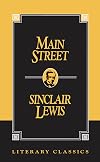
Scathing.
Carol is a university student in St. Paul, Minnesota in the early 1900s. She doesn't want to just settle for getting married to some boring guy who won't understand her desire to do something, to make a mark. (She reminded me a bit of George Bailey from It's a Wonderful Life here in the beginning.) She meets Dr. Will Kennicott, and they seem to have a meeting of the minds. He lives in Gopher Prairie, a small town, but surely being a doctor's wife will be fulfilling? All that show more prestige and excitement, and then their good conversations at home?
Gopher Prairie could have been any town in the US at the time the book was written - towns with a railroad station and sturdy unimaginative buildings, filled with sturdy and unimaginative people. It could still be many towns across the country today, and a lot larger ones these days, as they have become interchangeable plots of mini-malls that blend into each other along the highway. Is this the chain coffee shop/grocery store/sandwich shop complex in my city, or yours? Some aspects of the issues that Carol faces are dated, but I thought that far too many of them were just as relevant now, unfortunately. If you live in a small enough town, people still notice where you go, who you talk to, and they gossip about it when you fail to meet some standard of town behavior - those aspects of human nature will probably never change. Carol's attempts to convince the townspeople, to rebel against them, to ignore them, to make nice, all have a sort of futility that anyone can understand who's ever been in a difficult situation where every effort to create a sustainable change in either your environment or your own attitude about it seems to fail.
In many ways, I felt like what made this a difficult read was the feeling that all of this was new when Lewis was writing about it, and now we are just that much further down the path. Not only has not much changed, most of it has only intensified.
Recommended for: people from small towns, square pegs.
Quote: "The universal similarity - that is the physical expression of the philosophy of dull safety. Nine-tenths of the American towns are so alike that it is the completest boredom to wander from one to another. Always, west of Pittsburgh, and often, east of it, there is the same lumber yard, the same railroad station, the same Ford garage, the same creamery, the same box-like houses and two-story shops. The new, more conscious houses are alike in their very attempts at diversity: the same bungalows, the same square houses of stucco or tapestry brick. The shops show the same standardized, nationally advertised wares; the newspapers of sections three thousand miles apart have the same "syndicated features"; the boy in Arkansas displays just such a flamboyant ready-made suit as is found on just such a boy in Delaware, both of them iterate the same slang phrases from the same sporting-pages, and if one of them is in college and the other is a barber, no one may surmise which is which." show less
Carol is a university student in St. Paul, Minnesota in the early 1900s. She doesn't want to just settle for getting married to some boring guy who won't understand her desire to do something, to make a mark. (She reminded me a bit of George Bailey from It's a Wonderful Life here in the beginning.) She meets Dr. Will Kennicott, and they seem to have a meeting of the minds. He lives in Gopher Prairie, a small town, but surely being a doctor's wife will be fulfilling? All that show more prestige and excitement, and then their good conversations at home?
Gopher Prairie could have been any town in the US at the time the book was written - towns with a railroad station and sturdy unimaginative buildings, filled with sturdy and unimaginative people. It could still be many towns across the country today, and a lot larger ones these days, as they have become interchangeable plots of mini-malls that blend into each other along the highway. Is this the chain coffee shop/grocery store/sandwich shop complex in my city, or yours? Some aspects of the issues that Carol faces are dated, but I thought that far too many of them were just as relevant now, unfortunately. If you live in a small enough town, people still notice where you go, who you talk to, and they gossip about it when you fail to meet some standard of town behavior - those aspects of human nature will probably never change. Carol's attempts to convince the townspeople, to rebel against them, to ignore them, to make nice, all have a sort of futility that anyone can understand who's ever been in a difficult situation where every effort to create a sustainable change in either your environment or your own attitude about it seems to fail.
In many ways, I felt like what made this a difficult read was the feeling that all of this was new when Lewis was writing about it, and now we are just that much further down the path. Not only has not much changed, most of it has only intensified.
Recommended for: people from small towns, square pegs.
Quote: "The universal similarity - that is the physical expression of the philosophy of dull safety. Nine-tenths of the American towns are so alike that it is the completest boredom to wander from one to another. Always, west of Pittsburgh, and often, east of it, there is the same lumber yard, the same railroad station, the same Ford garage, the same creamery, the same box-like houses and two-story shops. The new, more conscious houses are alike in their very attempts at diversity: the same bungalows, the same square houses of stucco or tapestry brick. The shops show the same standardized, nationally advertised wares; the newspapers of sections three thousand miles apart have the same "syndicated features"; the boy in Arkansas displays just such a flamboyant ready-made suit as is found on just such a boy in Delaware, both of them iterate the same slang phrases from the same sporting-pages, and if one of them is in college and the other is a barber, no one may surmise which is which." show less
Before November 2016, this book would have read like an alarmist dystopian fantasy. Instead, this book shows us what would happen if the Trump administration was allowed to do everything they want to do. It is a reminder of what can happen when democratic norms erode.
Berzelius Windrip is Donald Trump if he was minimally competent. The fact that Trump is such a bumbling dope is all that separates us from the reality in this book. The Windrip platform points listed in one of the early show more chapters sound a lot like the policy proposals I read on Trump's campaign website before the election.
The ending of the book gives some grudging hope that if Trump goes too far, somebody will act to stop him.
This book is important, but also depressing given current events.
Recommended. show less
Berzelius Windrip is Donald Trump if he was minimally competent. The fact that Trump is such a bumbling dope is all that separates us from the reality in this book. The Windrip platform points listed in one of the early show more chapters sound a lot like the policy proposals I read on Trump's campaign website before the election.
The ending of the book gives some grudging hope that if Trump goes too far, somebody will act to stop him.
This book is important, but also depressing given current events.
Recommended. show less
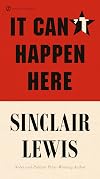
"It Can't Happen Here" by Sinclair Lewis is a dystopian novel from 1935. In light of current events, it is unfortunately also a prediction of what happens when voters are conned into believing stereotypes and bluster from sources repeating myths, playing on their ignorance with solutions that seem workable. These solutions, in fact, endanger all that we hold dear. In Sinclair's novel, the people who realize the dangers in the "easy" solutions offered by the would-be dictator soon find show more themselves enemies of the state. Our protagonist and his allies become criminals, at first without any changes in their actions. of course, unjustified persecution leads them to actively pursue opposition to the fascist government. The rest is what keeps you reading, hoping for a restoration of sanity. But, as you read many, out comes to mind. Keep reading! This boy is a hell of a writer. This review was written for LibraryThing Early Readers. show less
Lists
Americans Abroad (1)
100 knjiga (1)
. (1)
stories at work (1)
On the pile (1)
bound (1)
Schwob Nederland (1)
5 Best 5 Years (1)
Best Satire (1)
Midwestern Books (1)
True Color (1)
Best Dystopias (1)
1930s (1)
Best First Lines (2)
discontinued (3)
1920s (4)
Favourite Books (6)
Actors (1)
Unread books (2)
AP Lit (2)
Out of Copyright (2)
Five star books (1)
Awards


You May Also Like


Associated Authors
Statistics
- Works
- 127
- Also by
- 57
- Members
- 23,050
- Popularity
- #918
- Rating
- 3.8
- Reviews
- 461
- ISBNs
- 996
- Languages
- 20
- Favorited
- 78


