
Edna Ferber (1885–1968)
Author of So Big
About the Author
Edna Ferber was born in Kalamazoo, Michigan, Aug. 15, 1885. She spent her early career as a reporter. In 1910, Everybody's Magazine published her short story, The Homely Heroine, set in Appleton, Wisconsin. Ferber's novel, Dawn O'Hara, the story of a newspaperwoman in Milwaukee, followed in 1911. show more She gained national attention for her series of Emma McChesney stories, tales of a traveling underskirt saleswoman that were published in national magazines. A play based on the stories, Our Mrs. McChesney, was produced in 1915, starring Ethel Barrymore. With collaborator George S. Kaufman, Ferber wrote acclaimed plays Dinner at Eight and The Royal Family. Ferber won the Pulitzer Prize in 1925 for So Big, the story of a woman raising a child on a truck farm outside of Chicago. Her best known books include Show Boat, Cimarron, Giant and Ice Palace. Show Boat was made into a classic movie and Broadway musical; the film version of Cimarron, won the Academy Award for Best Picture in 1931. Ferber wrote two autobiographies, A Peculiar Treasure published in 1939 and A Kind of Magic in 1963. She died of cancer on April 16, 1968. (Bowker Author Biography) show less
Series
Works by Edna Ferber
The Complete James Dean Collection: East of Eden / Giant / Rebel Without a Cause (2011) — Writer — 23 copies
The Collected Short Stories of Edna Ferber: Including Buttered Side Down, Cheerful By Request, Half Portions, and Gigolo (2022) 2 copies
Old Man Minick [short story] 2 copies
Az úszó színház 1 copy
The Afternoon of a Faun 1 copy
סאראטוגה : רומן 1 copy
La llanera infinita 1 copy
Az erdő fia 1 copy
The Works: Edna Ferber 1 copy
The Land Is Bright 1 copy
The Royal Family: Acts 1 & 2 1 copy
Ferber, Edna Archive 1 copy
Show Boat, Volume 1 1 copy
Show Boat, Volume 2 1 copy
Associated Works
Choice Cuts: A Savory Selection of Food Writing from Around the World and Throughout History (2002) — Contributor — 369 copies, 2 reviews
This is My Best: American Greatest Living Authors Present and Give Their Reasons Why (1942) — Contributor — 214 copies
The Vicious Circle: Mystery and Crime Stories by Members of the Algonquin Round Table (2007) — Contributor — 99 copies, 1 review
The Strange History of Suzanne LaFleshe and Other Stories of Women and Fatness (2003) — Contributor — 31 copies, 1 review
The Best Short Stories of 1917 and the Yearbook of the American Short Story (2007) — Contributor — 27 copies
Gender in Modernism: New Geographies, Complex Intersections (2007) — Contributor — 12 copies, 1 review
The Best Short Stories of 1923 and the Yearbook of the American Short Story (1924) — Contributor — 11 copies
Avon Modern Short Story Monthly No. 7 (14 Great stories by 14 Great Authors) (1943) — Contributor — 1 copy
The Ethnic Image in Modern American Literature, 1900-1950, Volumes 1-2 (1984) — Contributor — 1 copy
Omnibook Magazine (Overseas Edition for Armed Forces) July 1945 — Author — 1 copy
Tagged
Common Knowledge
- Canonical name
- Ferber, Edna
- Other names
- FERBER, Edna
- Birthdate
- 1885-08-15
- Date of death
- 1968-04-16
- Gender
- female
- Education
- Lawrence University
- Occupations
- reporter
playwright
novelist
short story writer - Organizations
- Algonquin Round Table
- Awards and honors
- Pulitzer Prize for Fiction (1925)
American Academy of Arts and Letters (1930)
Chicago Literary Hall of Fame (2013) - Cause of death
- stomach cancer
- Nationality
- USA
- Birthplace
- Kalamazoo, Michigan, USA
- Places of residence
- Kalamazoo, Michigan, USA
Chicago, Illinois, USA
Ottumwa, Iowa, USA
Appleton, Wisconsin, USA
New York, New York, USA - Place of death
- New York, New York, USA
- Associated Place (for map)
- USA
Members
Discussions
June 2023: Edna Ferber in Monthly Author Reads (November 2023)
Reviews
https://nwhyte.livejournal.com/2899947.html
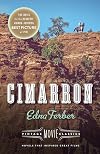
Cimarron is a really good book, a feminist text (the words "feminist" and "feminism" are actually used) whose guts were torn out of it by Hollywood. The central character of the novel is Sabra Cravat, daughter of a Southern family who moved to Kansas after the Civil War; having married Yancey at a very young age, she is swept off to Oklahoma by him. She breaks away from the stereotypes of her Southern parents, and gets over many of her own hangups, show more to build a new version of society in the town of Osage, to the point where she herself is elected to Congress. Cimarron was the best-selling novel in America in 1930, and the film's popularity must surely have been a reward for its insipid reflection of the popular original text. I was struck that the opening titles featured the characters and actors playing each, which looked like an assumption that many viewers would already be familiar with them.
However, we are a long way from intersectionality, and the book is still pretty racist, if not quite as racist as the film. There is still only one named black character (who suffers an even more horrible end than his screen version), though it's also clear that there are lots of others in the town. While Sabra's view of the Indians is pretty bigoted, the unreliable Yancey is totally on their side, and preaches to her frequently about the disgrace of the Trail of Tears and the awful things that white men have done; this is somehow dropped from the film. (Also worth noting that the Vice-President of the United States at the time the film was made was actually descended from the Osage tribe, and remains the only Native American to have served at the top of the executive branch.) The one Jewish character is sympathetically treated in both book and film, but the nasty anti-Semitism of the baddies in the book doesn't make it to the screen.
The feminism of the book is completely erased by the film, in that Yancey is given much more screen time and better lines (though his defence of the Indians is removed), and we are cut off from Sabra's internal dialogue, which is the loudest voice in the novel; it is replaced by Turner’s sighs and meaningful glances. The sub-plot with the sex workers in the book is explicitly a dialogue about different visions of womanhood in the new society that is being built, but becomes just a humorous set of vignettes in the film (apart from Yancey's courtroom defence of Dixie Lee, which in fairness is actually done better on screen than on the page). I'm not especially well versed in the early twentieth century history of American feminism, but it seemed clear to me that the makers of a Hollywood blockbuster did not feel able to reflect the feminism of their source text.
I enjoyed the book much more than I had expected to, and the film's success was surely in large part a homage to the work it was based on. show less
Cimarron is a really good book, a feminist text (the words "feminist" and "feminism" are actually used) whose guts were torn out of it by Hollywood. The central character of the novel is Sabra Cravat, daughter of a Southern family who moved to Kansas after the Civil War; having married Yancey at a very young age, she is swept off to Oklahoma by him. She breaks away from the stereotypes of her Southern parents, and gets over many of her own hangups, show more to build a new version of society in the town of Osage, to the point where she herself is elected to Congress. Cimarron was the best-selling novel in America in 1930, and the film's popularity must surely have been a reward for its insipid reflection of the popular original text. I was struck that the opening titles featured the characters and actors playing each, which looked like an assumption that many viewers would already be familiar with them.
However, we are a long way from intersectionality, and the book is still pretty racist, if not quite as racist as the film. There is still only one named black character (who suffers an even more horrible end than his screen version), though it's also clear that there are lots of others in the town. While Sabra's view of the Indians is pretty bigoted, the unreliable Yancey is totally on their side, and preaches to her frequently about the disgrace of the Trail of Tears and the awful things that white men have done; this is somehow dropped from the film. (Also worth noting that the Vice-President of the United States at the time the film was made was actually descended from the Osage tribe, and remains the only Native American to have served at the top of the executive branch.) The one Jewish character is sympathetically treated in both book and film, but the nasty anti-Semitism of the baddies in the book doesn't make it to the screen.
The feminism of the book is completely erased by the film, in that Yancey is given much more screen time and better lines (though his defence of the Indians is removed), and we are cut off from Sabra's internal dialogue, which is the loudest voice in the novel; it is replaced by Turner’s sighs and meaningful glances. The sub-plot with the sex workers in the book is explicitly a dialogue about different visions of womanhood in the new society that is being built, but becomes just a humorous set of vignettes in the film (apart from Yancey's courtroom defence of Dixie Lee, which in fairness is actually done better on screen than on the page). I'm not especially well versed in the early twentieth century history of American feminism, but it seemed clear to me that the makers of a Hollywood blockbuster did not feel able to reflect the feminism of their source text.
I enjoyed the book much more than I had expected to, and the film's success was surely in large part a homage to the work it was based on. show less
This novel is about a middle-aged, divorced traveling saleswoman named Emma McChesney and the prejudice and hardship she faces. She earns “a man’s salary” and supports her teenaged son. The book was absolutely fascinating as a document of sexism in 1913. Thurber wanted to get into controversial topics but had to talk around them, so sometimes I was baffled as to what was going on, but eventually everything would become clear. (I think.) For example, there was one part where I thought show more the main character Emma was befriending a drag queen but it turned out instead the woman was a stripper. (This makes me sound really thick, but all the talk about “I’m not a real woman” and working in a special club for men only was confusing. And there’s a lot of mystifying period slang.)
I cannot tell if Edna Thurber really believed that housewifery and marriage were the only things that could fulfill a woman, or if she felt (perhaps rightly) that it was obligatory to throw that kind of sentiment over a book that’s about a strong single woman with a career. Reading this book was actually a bit painful because of the unending sexual harrassment Emma faced. It was of a very sanitized “let me take you out to dinner because you’re so beautiful” kind, but I still found it upsetting. Weirdly, this book reminded me of the Lad: A Dog series by Albert Payson Terhune because they both have the same thing happening over and over: Lad/Emma meets someone who is prejudiced against him/her, but then Lad/Emma proves him/herself through incredible heroism and nobleness, and the person realizes how wonderful s/he is. Couldn’t Emma just once meet someone who didn’t make all kinds of assumptions about her, and why did she have to educate these sleazebags over and over? It was just depressing, but I think hyper-realistic.
Here’s a description of Emma and her best friend. “Theirs was not a talking friendship. It was a thing of depth and understanding, like the friendship between two men.” Hate yourself much? But then, “They sat looking into each other’s eyes, and down beyond, where the soul holds forth. And because what each saw there was beautiful and sightly they were seized with shyness such as two men feel when they love each other, so they awkwardly endeavored to cover up their shyness with words.” Oh, I see, so it’s like that kind of friendship between men.
I looked at Edna Ferber’s Wikipedia page and it seems a lot of people think she was gay, but there’s no evidence she ever had a romantic or sexual relationship with anyone, so a lot of other people think there’s no basis for that assumption. I am equally compelled by both points of view, especially based on the passage above. On the one hand, it seems obvious that a woman who never had any attachment with a man was a lesbian and just kept it on the DL; practically everyone I know is gay so why not Edna Ferber? On the other hand, maybe she was ace and just wanted to gaze into someone’s eyes, but people can’t conceive of that as possible so they are unfairly stuffing her into the gay category. Either way, Edna Ferber was not your average bear, and this book reads as very “coded” but I can’t quite crack the code. show less
I cannot tell if Edna Thurber really believed that housewifery and marriage were the only things that could fulfill a woman, or if she felt (perhaps rightly) that it was obligatory to throw that kind of sentiment over a book that’s about a strong single woman with a career. Reading this book was actually a bit painful because of the unending sexual harrassment Emma faced. It was of a very sanitized “let me take you out to dinner because you’re so beautiful” kind, but I still found it upsetting. Weirdly, this book reminded me of the Lad: A Dog series by Albert Payson Terhune because they both have the same thing happening over and over: Lad/Emma meets someone who is prejudiced against him/her, but then Lad/Emma proves him/herself through incredible heroism and nobleness, and the person realizes how wonderful s/he is. Couldn’t Emma just once meet someone who didn’t make all kinds of assumptions about her, and why did she have to educate these sleazebags over and over? It was just depressing, but I think hyper-realistic.
Here’s a description of Emma and her best friend. “Theirs was not a talking friendship. It was a thing of depth and understanding, like the friendship between two men.” Hate yourself much? But then, “They sat looking into each other’s eyes, and down beyond, where the soul holds forth. And because what each saw there was beautiful and sightly they were seized with shyness such as two men feel when they love each other, so they awkwardly endeavored to cover up their shyness with words.” Oh, I see, so it’s like that kind of friendship between men.
I looked at Edna Ferber’s Wikipedia page and it seems a lot of people think she was gay, but there’s no evidence she ever had a romantic or sexual relationship with anyone, so a lot of other people think there’s no basis for that assumption. I am equally compelled by both points of view, especially based on the passage above. On the one hand, it seems obvious that a woman who never had any attachment with a man was a lesbian and just kept it on the DL; practically everyone I know is gay so why not Edna Ferber? On the other hand, maybe she was ace and just wanted to gaze into someone’s eyes, but people can’t conceive of that as possible so they are unfairly stuffing her into the gay category. Either way, Edna Ferber was not your average bear, and this book reads as very “coded” but I can’t quite crack the code. show less
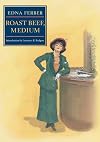
Savvy, straight-talking, and self-reliant, Emma McChesney, is as witty and entertaining as the “fast-talking dames” found in old movies, but it’s closer to 1910 than 1930 or 40. Emma’s an early career woman, working as the Midwest sales representative for T.A. Buck’s Featherloom skirts and petticoats, and most of her life is spent on the road--traveling by train, sleeping in hotels, meeting the most interesting people, and outsmarting the male sales reps who are her competition. show more She’s still stylish and attractive enough to make a man hope, but as a hardworking divorced mother dependant on her income she’s a stickler about her reputation.
Roast Beef Medium is the first of three books about the adventures of Emma McChesney. Edna Ferber, also the author of Giant and Show Boat, wrote the McChesney books long enough ago that they’re all in the public domain and ebook copies of them can be downloaded from sites like Project Gutenberg. I listened to a wonderfully narrated Libravox recording, also free, which kept me grinning even when stuck in traffic. show less
Roast Beef Medium is the first of three books about the adventures of Emma McChesney. Edna Ferber, also the author of Giant and Show Boat, wrote the McChesney books long enough ago that they’re all in the public domain and ebook copies of them can be downloaded from sites like Project Gutenberg. I listened to a wonderfully narrated Libravox recording, also free, which kept me grinning even when stuck in traffic. show less
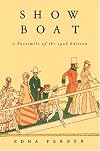
You know that seminal story from your childhood? The one you watched/read/listened to so often that your parents were ready to bribe you out of doing so again in order to save their own sanity? For me, that story was Jerome Kern and Oscar Hammerstein's Show Boat. Specifically, a tape-recording of Show Boat that my dad dubbed for me off a library CD. I still have that tape; I listened to it so often as a kid that any articulation the bass may have had is completely worn away to a muddy show more "wahmmm" sound that threatens, during emotional passages, to swamp everything else. My huge early Walkman and that Show Boat cassette went with me everywhere at the age of seven or eight. I remember listening to it lying in the grass of our backyard; cleaning my room; riding in my grandparents' RV. Show Boat introduced me to such diverse concepts as the power of a reprised melody, the localized economies of post-Civil-War America, the pernicious "one drop of black blood" doctrine, and the deep cultural nostalgia, even on the part of Northerners, for a lost Old South. Whenever "Old Man River" came on, I would make a point of stopping whatever I was doing, closing my eyes, and letting the music envelop me as I "contemplated the evils of slavery." That was how I put it to myself: contemplating the evils of slavery. I'm not sure where I got this idea, and I kind of wish I'd confided the practice to an adult, who could perhaps have suggested a more concrete way to fight present-day racism, but there you go. That's how I rolled.
I've toyed with reading Edna Ferber's 1926 Show Boat, upon which my childhood favorite is based, ever since I found out about its existence around the age of seven. I even checked it out of the library, but the word "miscegenation" was slightly advanced for my second-grade vocabulary. I recently decided to give it another go and I'm glad I did, even if Ferber's writing isn't something to which I would normally be drawn.
Ferber is at her best when describing generalities, ways of life, as in this passage about the tawdry, hackneyed, yet beloved show boat performances:
The swelling emotion here, the wry yet heartfelt romanticism directed toward the lives of certain kinds of white folks on the Mississippi of yesteryear, make it easy to understand what attracted Kern and Hammerstein to this material. The reader can practically hear the string section already. I get the impression that most of Ferber's strong feeling, most of her motivation for writing the novel, came from a desire to evoke a lost, rowdy, rough yet lovely lifestyle. She does this effectively, but at the cost of developing most of the characters beyond stock "types" (the impetuous young girl, the dashing Southern riverboat gambler) or polishing the dialogue to a believable level. The plot moves a bit jerkily, with an awkward piling of disconnected anecdotes on top of each other. And Ferber seemed reluctant to let her characters actually speak, instead of merely describing how they spoke and the kinds of things they said.
There was one character I did find vibrant and believable, about whom I really cared, and she was a surprising exception: Parthenia Ann Hawks, shrewish mother of the main character, Magnolia. Edna Ferber's entry on Wikipedia has one of the shortest "Personal Life" sections I've ever read, and it begins "Ferber had no children, never married, and is not known to have engaged in a romance or sexual relationship with anyone of either gender." Given her own preference for the single life, I was at first surprised at the harshness of her portrayal of Parthy, who remains a kind of spinster even after her marriage to Magnolia's father, Captain Andy Hawks. Parthy is described in viciously satirical terms: a fun-hating tyrant, obsessed with cleanliness and order, who nags and scolds her father, and then her husband and daughter, whenever they suggest something remotely enjoyable. Yet, as the novel progresses, one realizes that there is a certain affectionate humor in Ferber's portrayal, lurking under the antipathy: Parthy does enjoy herself on the show boat, as loathe as she may be to admit it, and as she gradually adapts to river life, she becomes the most incongruous and by far the most dynamic character in the novel.
Despite its shortcomings, I did quite enjoy Show Boat. If nothing else, it was interesting to analyze the ways in which Kern and Hammerstein chose to adapt the plot to the musical stage. Julie, for example, the character who is discovered to have mixed blood, was originally part of the "character team" rather than, as in the Kern/Hammerstein version, the beautiful leading lady - a less Romantic but slightly more interesting setup. In both versions, Magnolia encounters Julie again years later in compromising circumstances, but Kern/Hammerstein alter her from a competent, well-dressed bookkeeper in Chicago's leading brothel, to a pathetic, tattered drunk. Both of these outcomes are equally shocking from Magnolia's perspective, but I thought Ferber's version was substantially more optimistic (and again, less Romantic) in terms of Julie's life after she leaves the show boat. Similarly, Kern/Hammerstein have Magnolia reunited, in the end, with her estranged gambler husband, whereas in Ferber the break is final. I preferred the Ferber version of all of these plot elements: she shows a refreshing respect for un-beautiful women making their own way.
Also notable, of course, is Ferber's treatment of race. Both novel and musical suffer from the casual racism of their time; "Negroes" are treated as picturesque bits of scenery rather than humans, and even when individual black folks emerge, they are portrayed as eye-rolling and childlike. This, despite the best efforts of both productions to be anti-racist: including a miscegenation plot with a sympathetic mixed-blook character in 1926-27 was a daring statement, and the spirituals of Jo and Queenie (the show boat cooks) are an important source of solace and revenue for Magnolia in both versions. Ferber's novel, though, has no equivalent to the most famous Show Boat song, "Old Man River": it does not attempt to foreground, in the same way, the hard, demoralizing labor of African-American people, or the systemic oppression of black folks under white rule ("you gets a little drunk, and you lands in jail"). There are even moments in Ferber when the reader is meant to cheer Magnolia for exercising her white privilege, as when she aggressively insists that a black doorman let her into a house we want her to enter. It's debatable how anti-racist even the Kern/Hammerstein version manages to be - it does, after all, use the words and melodies of a white Jewish duo from New York rather than incorporating actual slave or southern songs. But I'd say it gives it a better shot than the source material.
In any case, I'm glad finally to have read the novel behind the drama, and I'll be interested to see, next time I break out the old cassette, whether having read Ferber's novel affects my perception of its musical offspring. show less
I've toyed with reading Edna Ferber's 1926 Show Boat, upon which my childhood favorite is based, ever since I found out about its existence around the age of seven. I even checked it out of the library, but the word "miscegenation" was slightly advanced for my second-grade vocabulary. I recently decided to give it another go and I'm glad I did, even if Ferber's writing isn't something to which I would normally be drawn.
Ferber is at her best when describing generalities, ways of life, as in this passage about the tawdry, hackneyed, yet beloved show boat performances:
The curtain rose. The music ceased jerkily, in mid-bar. They became little children listening to a fairy tale. A glorious world of unreality opened before their eyes. Things happened. They knew that in life things did not happen thus. But here they saw, believed, and were happy. Innocence wore golden curls. Wickedness wore black. Love triumphed, right conquered, virtue was rewarded, evil punished.
They forgot the cotton fields, the wheatfields, the cornfields. They forgot the coal mines, the potato patch, the stable, the barn, the shed. They forgot the labour under the pitiless blaze of the noonday sun; the bitter marrow-numbing chill of winter; the blistered skin; the frozen road; wind, snow, rain, flood. The women forgot for an hour their washtubs, their kitchen stoves, childbirth pains, drudgery, worry, disappointment. Here were blood, lust, love, passion. Here were warmth, enchantment, laughter, music. It was Anodyne. It was Lethe. It was Escape. It was the Theatre.
The swelling emotion here, the wry yet heartfelt romanticism directed toward the lives of certain kinds of white folks on the Mississippi of yesteryear, make it easy to understand what attracted Kern and Hammerstein to this material. The reader can practically hear the string section already. I get the impression that most of Ferber's strong feeling, most of her motivation for writing the novel, came from a desire to evoke a lost, rowdy, rough yet lovely lifestyle. She does this effectively, but at the cost of developing most of the characters beyond stock "types" (the impetuous young girl, the dashing Southern riverboat gambler) or polishing the dialogue to a believable level. The plot moves a bit jerkily, with an awkward piling of disconnected anecdotes on top of each other. And Ferber seemed reluctant to let her characters actually speak, instead of merely describing how they spoke and the kinds of things they said.
There was one character I did find vibrant and believable, about whom I really cared, and she was a surprising exception: Parthenia Ann Hawks, shrewish mother of the main character, Magnolia. Edna Ferber's entry on Wikipedia has one of the shortest "Personal Life" sections I've ever read, and it begins "Ferber had no children, never married, and is not known to have engaged in a romance or sexual relationship with anyone of either gender." Given her own preference for the single life, I was at first surprised at the harshness of her portrayal of Parthy, who remains a kind of spinster even after her marriage to Magnolia's father, Captain Andy Hawks. Parthy is described in viciously satirical terms: a fun-hating tyrant, obsessed with cleanliness and order, who nags and scolds her father, and then her husband and daughter, whenever they suggest something remotely enjoyable. Yet, as the novel progresses, one realizes that there is a certain affectionate humor in Ferber's portrayal, lurking under the antipathy: Parthy does enjoy herself on the show boat, as loathe as she may be to admit it, and as she gradually adapts to river life, she becomes the most incongruous and by far the most dynamic character in the novel.
Despite its shortcomings, I did quite enjoy Show Boat. If nothing else, it was interesting to analyze the ways in which Kern and Hammerstein chose to adapt the plot to the musical stage. Julie, for example, the character who is discovered to have mixed blood, was originally part of the "character team" rather than, as in the Kern/Hammerstein version, the beautiful leading lady - a less Romantic but slightly more interesting setup. In both versions, Magnolia encounters Julie again years later in compromising circumstances, but Kern/Hammerstein alter her from a competent, well-dressed bookkeeper in Chicago's leading brothel, to a pathetic, tattered drunk. Both of these outcomes are equally shocking from Magnolia's perspective, but I thought Ferber's version was substantially more optimistic (and again, less Romantic) in terms of Julie's life after she leaves the show boat. Similarly, Kern/Hammerstein have Magnolia reunited, in the end, with her estranged gambler husband, whereas in Ferber the break is final. I preferred the Ferber version of all of these plot elements: she shows a refreshing respect for un-beautiful women making their own way.
Also notable, of course, is Ferber's treatment of race. Both novel and musical suffer from the casual racism of their time; "Negroes" are treated as picturesque bits of scenery rather than humans, and even when individual black folks emerge, they are portrayed as eye-rolling and childlike. This, despite the best efforts of both productions to be anti-racist: including a miscegenation plot with a sympathetic mixed-blook character in 1926-27 was a daring statement, and the spirituals of Jo and Queenie (the show boat cooks) are an important source of solace and revenue for Magnolia in both versions. Ferber's novel, though, has no equivalent to the most famous Show Boat song, "Old Man River": it does not attempt to foreground, in the same way, the hard, demoralizing labor of African-American people, or the systemic oppression of black folks under white rule ("you gets a little drunk, and you lands in jail"). There are even moments in Ferber when the reader is meant to cheer Magnolia for exercising her white privilege, as when she aggressively insists that a black doorman let her into a house we want her to enter. It's debatable how anti-racist even the Kern/Hammerstein version manages to be - it does, after all, use the words and melodies of a white Jewish duo from New York rather than incorporating actual slave or southern songs. But I'd say it gives it a better shot than the source material.
In any case, I'm glad finally to have read the novel behind the drama, and I'll be interested to see, next time I break out the old cassette, whether having read Ferber's novel affects my perception of its musical offspring. show less
Lists
Schwob Nederland (1)
discontinued (1)
Jewish Books (3)
1920s (1)
Plays I Like (1)
To Read (1)
Tour of Iowa (1)
Awards


You May Also Like


Associated Authors
Statistics
- Works
- 72
- Also by
- 50
- Members
- 4,989
- Popularity
- #5,019
- Rating
- 3.8
- Reviews
- 139
- ISBNs
- 549
- Languages
- 11
- Favorited
- 11


