
Larry McMurtry (1936–2021)
Author of Lonesome Dove
About the Author
Larry McMurtry, winner of the Pulitzer Prize for Fiction, among other awards, is the author of twenty-four novels, two collections of essays, two memoirs, more than thirty screenplays, & an anthology of modern Western fiction. He lives in Archer City, Texas. (Publisher Provided) Novelist Larry show more McMurtry was born June 3, 1936 in Wichita Falls, Texas. He received a B.A. from North Texas State University in 1958, an M.A. from Rice University in 1960, and attended Stanford University. He married Josephine Ballard in 1959, divorced in 1966, and had one son, folksinger James McMurtry. Until the age of 22, McMurtry worked on his father's cattle ranch. When he was 25, he published his first novel, "Horseman, Pass By" (1961), which was turned into the Academy Award-winning movie Hud in 1962. "The Last Picture Show" (1966) was made into a screenplay with Peter Bogdanovich, and the 1971 movie was nominated for eight Oscars, including one for best screenplay adaptation. "Terms of Endearment" (1975) received little attention until the movie version won five Oscars, including Best Picture, in 1983. McMurtry's novel "Lonesome Dove" (1985) won the Pulitzer Prize in 1986 and the Spur Award and was followed by two popular TV miniseries. The other titles in the Lonesome Dove Series are "Streets of Laredo" (1993), "Dead Man's Walk" (1995), and "Comanche Moon" (1997). The other books in his Last Picture Show Trilogy are "Texasville" (1987) and "Duane's Depressed" (1999). McMurtry suffered a heart attack in 1991 and had quadruple-bypass surgery. Following that, he suffered from severe depression and it was during this time he wrote "Streets of Laredo," a dark sequel to "Lonesome Dove." His companion Diana Ossana, helping to pull him out of his depression, collaborated with him on "Pretty Boy Floyd" (1994) and "Zeke and Ned" (1997). He co-won the Best Screenplay Golden Globe and the Academy Award for Best Adapted Screenplay for Brokeback Mountain in 2006. He made The New York Times Best Seller List with his title's Custer and The Last Kind Words Saloon. McMurtry is considered one of the country's leading antiquarian book dealers. (Bowker Author Biography) show less
Image credit: Larry McMurtry, during the 2006 Writers Guild Awards at the Hollywood Palladium in Hollywood, California, om 4 février 2006
Series
Works by Larry McMurtry
The Colonel and Little Missie: Buffalo Bill, Annie Oakley, and the Beginnings of Superstardom in America (2005) 255 copies, 5 reviews
Still Wild: Short Fiction of the American West 1950 to the Present (2000) — Editor — 165 copies, 1 review
Larry McMurtry: Three Complete Novels (Lonesome Dove, Leaving Cheyenne, The Last Picture Show) (1994) 85 copies
Lonesome Dove Series 4 Books Collection Set By Larry McMurtry(Lonesome Dove, Streets of Laredo, Dead Man's Walk & Comanche Moon) (2024) 5 copies
It's Always we Rambled 1 copy
SEVGİ SÖZCÜKLERİ 1 copy
Sacagawea 1 copy
Street's of Laredo 1 copy
Associated Works
Novel History: Historians and Novelists Confront America's Past and Each Other (2001) — Contributor — 139 copies, 1 review
Lone Star Literature: From the Red River to the Rio Grande: A Texas Anthology (2003) — Foreword, some editions — 77 copies
A Book of Photographs from Lonesome Dove (Wittliff Gallery of Southwestern and Mexican Photography) (2007) — Foreword — 39 copies, 1 review
Texfake: An Account of the Theft and Forgery of Early Texas Printed Documents (1991) — Introduction, some editions — 39 copies, 2 reviews
America Lost and Found: The BBS Story (Head / Easy Rider / Five Easy Pieces / Drive, He Said / The Last Picture Show / The King of Marvin Gardens / A Safe Place) (2010) — Writer — 39 copies
Lovin' Molly [1974 film] — Original book — 2 copies
Tagged
Common Knowledge
- Canonical name
- McMurtry, Larry
- Legal name
- McMurtry, Larry Jeff
- Birthdate
- 1936-06-03
- Date of death
- 2021-03-25
- Gender
- male
- Education
- North Texas State University (BA|1958)
Rice University (MA|1960) - Occupations
- novelist
bookstore owner
screenwriter - Organizations
- PEN American Center
- Awards and honors
- Pulitzer Prize (1985)
National Humanities Medal (2014)
American Antiquarian Society (2006)
Carl Sandburg Literary Award (2014)
Robert Kirsch Award (2002)
Texas Institute of Letters Jesse M. Jones Award (1962, 1967, 1986) (show all 10)
Wallace Stegner Fellowship, Stanford University (1961-62)
Western Literature Association's Distinguished Achievement Award (1987)
Golden Globe for Best Screenplay (2006)
Academy Award (Best Adapted Screenplay, 2006) - Agent
- Ben Ringel
- Relationships
- McMurtry, James (son)
- Cause of death
- congestive heart failure
- Nationality
- USA
- Birthplace
- Wichita Falls, Texas, USA
- Places of residence
- Wichita Falls, Texas, USA
Washington, D.C., USA
Archer City, Texas, USA - Place of death
- Archer City, Texas, USA
- Map Location
- Texas, USA
Members
Discussions
Larry McMurtry in Legacy Libraries (February 2023)
MARCH GROUP READ - Lonesome Dove in Club Read 2019 (May 2019)
Larry McMurtry American Author Challenge in 75 Books Challenge for 2015 (September 2015)
Reviews

Aside from the peerless, inescapable Lonesome Dove, that exemplar of the genre, it seems Larry McMurtry only really wrote one Western. While I've not read all of them so far, of the ones I have I can say they are much the same at their core, whether it's Boone's Lick, Buffalo Girls, the four Berrybender Narratives or this offering from the years of Lonesome Dove's immediate afterglow: Anything for Billy.
Ostensibly telling the story of Billy the Kid (who I assume needs no introduction here), show more Anything for Billy is a typical McMurtry Western offering: agreeable and well-written and hard to criticise, or at least to land a solid punch on; but also slightly frivolous, trotting rather than galloping, a disorienting mix of quixotic comic adventure and stomach-churning moments of violence stuffed with passing nods to real, minor historical figures from the Old West. McMurtry's fans always seemed more interested in recapturing Lonesome Dove's magic than he did, and Anything for Billy shares that lack of ambition his Western offerings often possessed.
McMurtry seemed to position himself as a 'demythologiser' of the American West, not in the modern dogmatic sense of harrowing and shaming it according to political ideology, but in a general sort of antipathy towards it: a rewriting of its stories and legends so that they wilfully lose a bit of their lustre in the transition. Why, I don't know, but – Lonesome Dove, as ever, aside – you read one of his Western stories feeling the whole place was a bit shabby, that you're imbibing something that feels a little bit unnatural.
Some readers might see this contrarianism as a push for realism, but I would argue that McMurtry's ersatz Westerns play as fast and loose with the real characters of the West as the hacks and pop-culture storytellers ever have, only in the opposite direction. Nowhere is this starker than in Anything for Billy. The most obvious omission is that of Pat Garrett (without spoilers, Billy in this novel is killed by someone completely different, in a completely different place, for completely different reasons). Some of Garrett's function in the legend is fulfilled by another (fictional) character, but anyone with knowledge of the "real" story will be left scratching their heads at all the real people omitted, the fictional people included in their stead, and the events that are changed to a lesser purpose. It's a sandbox that throws out all the ready-made toys while still at play: a sort of fever-dream version of the Billy the Kid legend, neither pure, welcome truth nor easy, entertaining myth.
Indeed, you could take the story and change the name of its subject and have a perfectly serviceable Western fiction (indeed, McMurtry almost does this as a half-measure, calling his incarnation 'Billy Bone' rather than William Bonney). The one reason I expect McMurtry hitched this novel more explicitly to the 'Billy the Kid' name was to explore Billy's disconcertingly casual murderousness. Billy is personally charming, in a runtish sort of way, but "a blank domino when it came to conscience" (pg. 303), and this fits in well with the author's penchant for comic opera laced with hyperviolence. (For example, McMurtry invents one character, perhaps the only appealing one in the novel, for no real purpose, and then kills them off in a lethargic and humiliating way.)
But while the author conveys Billy's psychosis passably well, ultimately the book falls short as a character exploration. For all his interest in demythologising the West, McMurtry makes no effort to account for how Billy acquired his reputation nor how he developed it in the rumour mills of the Old West; in short, how this unremarkable, hapless thug became a Western legend, a notorious outlaw to rank with the most feared villains, without really doing much of anything beyond a few grubby homicides. It leaves the reader with that reliable, passing enjoyment of another McMurtry Western but, as ever, also more than a little bemused at what could have been and what was left unclaimed. show less
Ostensibly telling the story of Billy the Kid (who I assume needs no introduction here), show more Anything for Billy is a typical McMurtry Western offering: agreeable and well-written and hard to criticise, or at least to land a solid punch on; but also slightly frivolous, trotting rather than galloping, a disorienting mix of quixotic comic adventure and stomach-churning moments of violence stuffed with passing nods to real, minor historical figures from the Old West. McMurtry's fans always seemed more interested in recapturing Lonesome Dove's magic than he did, and Anything for Billy shares that lack of ambition his Western offerings often possessed.
McMurtry seemed to position himself as a 'demythologiser' of the American West, not in the modern dogmatic sense of harrowing and shaming it according to political ideology, but in a general sort of antipathy towards it: a rewriting of its stories and legends so that they wilfully lose a bit of their lustre in the transition. Why, I don't know, but – Lonesome Dove, as ever, aside – you read one of his Western stories feeling the whole place was a bit shabby, that you're imbibing something that feels a little bit unnatural.
Some readers might see this contrarianism as a push for realism, but I would argue that McMurtry's ersatz Westerns play as fast and loose with the real characters of the West as the hacks and pop-culture storytellers ever have, only in the opposite direction. Nowhere is this starker than in Anything for Billy. The most obvious omission is that of Pat Garrett (without spoilers, Billy in this novel is killed by someone completely different, in a completely different place, for completely different reasons). Some of Garrett's function in the legend is fulfilled by another (fictional) character, but anyone with knowledge of the "real" story will be left scratching their heads at all the real people omitted, the fictional people included in their stead, and the events that are changed to a lesser purpose. It's a sandbox that throws out all the ready-made toys while still at play: a sort of fever-dream version of the Billy the Kid legend, neither pure, welcome truth nor easy, entertaining myth.
Indeed, you could take the story and change the name of its subject and have a perfectly serviceable Western fiction (indeed, McMurtry almost does this as a half-measure, calling his incarnation 'Billy Bone' rather than William Bonney). The one reason I expect McMurtry hitched this novel more explicitly to the 'Billy the Kid' name was to explore Billy's disconcertingly casual murderousness. Billy is personally charming, in a runtish sort of way, but "a blank domino when it came to conscience" (pg. 303), and this fits in well with the author's penchant for comic opera laced with hyperviolence. (For example, McMurtry invents one character, perhaps the only appealing one in the novel, for no real purpose, and then kills them off in a lethargic and humiliating way.)
But while the author conveys Billy's psychosis passably well, ultimately the book falls short as a character exploration. For all his interest in demythologising the West, McMurtry makes no effort to account for how Billy acquired his reputation nor how he developed it in the rumour mills of the Old West; in short, how this unremarkable, hapless thug became a Western legend, a notorious outlaw to rank with the most feared villains, without really doing much of anything beyond a few grubby homicides. It leaves the reader with that reliable, passing enjoyment of another McMurtry Western but, as ever, also more than a little bemused at what could have been and what was left unclaimed. show less

"Lorie, darlin'."
It's hard to pinpoint what makes Lonesome Dove so good. It is extremely well-written and well-plotted, with characters you enjoy spending time with and a wealth of dramatic moments. And yet, none of that explains why it is so good. It's nearly 1,000 pages long and you don't want it to end.
I'm willing to just hold my hands up and accept it; it's just one of those rare stories that seems to transcend its formula through some strange alchemy, like Star Wars or Casablanca. show more Author Larry McMurtry just takes a Western – if you were to summarize the book to someone, it would just sound like an average Western – and delivers it note-perfect. Every character is vivid and real, and yet each is different from one another. Every moment of humour lands. Every death stings. Every plot point stays tight, and every morning when the sun rises over our cowboys on the trail it feels like a new sunrise painted just for us. It is long, this book, and yet it always seems shorter than a song.
What proves its magic is that McMurtry did not intend for it to go like this: he wanted a bleak, hell-and-leather Western version of Dante's Inferno, but ended up – in his own words – with a sort of Western Gone with the Wind. But this tension also saves it from falling into fatal melodrama: McMurtry is consciously avoiding any Gone with the Wind sentimentality, trying to keep it bloody, and it tempers the story with a keen edge. It is a magically-spun web, but a web where you know a spider is lurking, ready to devour any character who makes poor decisions, or who is in the wrong place at the wrong time, or is just someone unfortunate in a cruel world.
The magic is so strong it carries through into the television adaptation from 1989, which is one of the finest adaptations of a novel you could ever hope to see. The CBS mini-series deserves to stand with anything from our current Golden Age of Television. That I was so completely engrossed in this massive novel, despite knowing every beat of the story from the faithful TV adaptation, is testament to its magic. It is a book that makes you remember what a joy and a gift it is to read. It is a book you don't think about, you don't analyse, you just read and soak it in and, like Gus in the town of Lonesome Dove, sit and drink and watch the sun ease out of the day (pg. 6). show less
It's hard to pinpoint what makes Lonesome Dove so good. It is extremely well-written and well-plotted, with characters you enjoy spending time with and a wealth of dramatic moments. And yet, none of that explains why it is so good. It's nearly 1,000 pages long and you don't want it to end.
I'm willing to just hold my hands up and accept it; it's just one of those rare stories that seems to transcend its formula through some strange alchemy, like Star Wars or Casablanca. show more Author Larry McMurtry just takes a Western – if you were to summarize the book to someone, it would just sound like an average Western – and delivers it note-perfect. Every character is vivid and real, and yet each is different from one another. Every moment of humour lands. Every death stings. Every plot point stays tight, and every morning when the sun rises over our cowboys on the trail it feels like a new sunrise painted just for us. It is long, this book, and yet it always seems shorter than a song.
What proves its magic is that McMurtry did not intend for it to go like this: he wanted a bleak, hell-and-leather Western version of Dante's Inferno, but ended up – in his own words – with a sort of Western Gone with the Wind. But this tension also saves it from falling into fatal melodrama: McMurtry is consciously avoiding any Gone with the Wind sentimentality, trying to keep it bloody, and it tempers the story with a keen edge. It is a magically-spun web, but a web where you know a spider is lurking, ready to devour any character who makes poor decisions, or who is in the wrong place at the wrong time, or is just someone unfortunate in a cruel world.
The magic is so strong it carries through into the television adaptation from 1989, which is one of the finest adaptations of a novel you could ever hope to see. The CBS mini-series deserves to stand with anything from our current Golden Age of Television. That I was so completely engrossed in this massive novel, despite knowing every beat of the story from the faithful TV adaptation, is testament to its magic. It is a book that makes you remember what a joy and a gift it is to read. It is a book you don't think about, you don't analyse, you just read and soak it in and, like Gus in the town of Lonesome Dove, sit and drink and watch the sun ease out of the day (pg. 6). show less
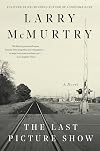
This book was a classic case of “they had us in the first half.” It begins with a lot of levity and comedic tone to describe the lives of 3 teens of varying backgrounds. There are some very yuck and uncomfortable relationships that happen but they do feel very organically written as a product of that time frame (~early 50s). The 2nd half of this book shifts tonally as the seniors begin to end their high school career and focus on their prospective futures (or lack thereof). Lots of show more interesting dynamics and a very bittersweet dissection of small town life. show less
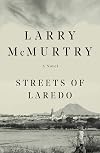
Still annoyed that I have an edition with a deeply boring cover.
Years later... Call is hired to hunt a bandit hijacking trains. Somehow this sets in train a huge series of events dragging in a wide range of characters, some of whom are hapless, and die, some of whom are experienced hands, who also die. Profoundly urnomanitc, full of failure, bitterness, regret and tragedy, usually quite senseless, as well as horror, usually man-made, this nevertheless manages to be an incredible and rousing show more epic adventure. I think McMurtry was a bit wry about how his anti-westerns became so beloved in a way Blood Meridian isn't, even though they're kind of about the same thing, but McMurtry is too prosaic and true-to-life to turn his horrors and atrocities into a generalised apocalypse of the human soul. I think he fundamentally likes human beings, which is why these books are as good as they are. For all the bad things that happen, the terrible msitakes that are made and the life-changing consequences, there's Pea Eye, and the equally true to life fact that sometimes serious mistakes *can* be fixed. show less
Years later... Call is hired to hunt a bandit hijacking trains. Somehow this sets in train a huge series of events dragging in a wide range of characters, some of whom are hapless, and die, some of whom are experienced hands, who also die. Profoundly urnomanitc, full of failure, bitterness, regret and tragedy, usually quite senseless, as well as horror, usually man-made, this nevertheless manages to be an incredible and rousing show more epic adventure. I think McMurtry was a bit wry about how his anti-westerns became so beloved in a way Blood Meridian isn't, even though they're kind of about the same thing, but McMurtry is too prosaic and true-to-life to turn his horrors and atrocities into a generalised apocalypse of the human soul. I think he fundamentally likes human beings, which is why these books are as good as they are. For all the bad things that happen, the terrible msitakes that are made and the life-changing consequences, there's Pea Eye, and the equally true to life fact that sometimes serious mistakes *can* be fixed. show less
Lists
Five star books (1)
Overdue Podcast (1)
High Priority (1)
1970s (1)
1970 Club (1)
Family Drama (1)
Favourite Books (3)
Best Westerns (3)
USA Road Trip (1)
1960s (1)
Page Turners (1)
100 New Classics (1)
Simon & Schuster (1)
Awards


You May Also Like


Associated Authors
Statistics
- Works
- 97
- Also by
- 18
- Members
- 43,500
- Popularity
- #389
- Rating
- 3.9
- Reviews
- 904
- ISBNs
- 942
- Languages
- 16
- Favorited
- 135


