
Cormac McCarthy (1) (1933–2023)
Author of The Road
For other authors named Cormac McCarthy, see the disambiguation page.
Series
Works by Cormac McCarthy
Whales and Men 5 copies
Short Fiction 5 copies
The Kekulé Problem 4 copies
Scenes of the Crime 1 copy
The Crossing {video} 1 copy
The Sewanee review 1 copy
The Dark Waters {story} 1 copy
Associated Works
The Graphic Canon, Vol. 3: From Heart of Darkness to Hemingway to Infinite Jest (2013) — Contributor — 160 copies, 1 review
TriQuarterly 48: Western Stories — Contributor — 2 copies
Nautilus, Issue 047: Consciousness — Contributor — 1 copy
Tagged
Common Knowledge
- Legal name
- McCarthy, Charles Joseph, Jr.
- Birthdate
- 1933-07-20
- Date of death
- 2023-06-13
- Gender
- male
- Education
- St. Mary's Parochial School
Knoxville Catholic High School, Knoxville, Tennessee, USA
University of Tennessee - Occupations
- novelist
playwright
screenwriter - Organizations
- United States Air Force
Santa Fe Institute - Awards and honors
- Ingram-Merrill awards (1959, 1960)
Traveling Fellowship from the American Academy of Arts and Letters (1965)
William Faulkner Foundation Award for notable first novel for The Orchard Keeper (1966)
Guggenheim Fellowship for creative writing (1969)
MacArthur Fellowship (1981)
National Book Award for Fiction for All the Pretty Horses (1992) (show all 18)
National Book Critics Circle Award for All the Pretty Horses (1992)
Robert Penn Warren Award for Fiction (1993)
International Dublin Literary Award longlist for The Crossing (1996)
International Dublin Literary Award longlist for Cities of the Plain (2000)
James Tait Black Memorial Prize for Fiction and Believer Book Award for The Road (2006)
Pulitzer Prize for Fiction for The Road (2007)
International Dublin Literary Award shortlist for No Country for Old Men (2008)
Maltese Falcon Award, Japan, for No Country for Old Men (2008)
Premio Ignotus for The Road (2008)
International Dublin Literary Award longlist for The Road (2008)
PEN/Saul Bellow Award for Achievement in American Fiction (2009)
Best of the James Tait Black, shortlist, The Road (2012) - Agent
- Amanda Urban (International Creative Management)
- Relationships
- McCarthy, Cullen (son)
McCarthy, John (son) - Short biography
- Cormac McCarthy (born Charles McCarthy, Jr.; July 20, 1933) is an American novelist, playwright, short-story writer, and screenwriter. He has written three short-stories, two plays, two screenplays, and ten novels, spanning the Southern Gothic, Western, and post-apocalyptic genres. He is well known for his graphic depictions of violence and his unique writing style, recognizable by its lack of punctuation and attribution. He is widely regarded as one of the greatest contemporary writers.
McCarthy was born in Providence, Rhode Island, although he was raised primarily in Tennessee. In 1951, he enrolled in the University of Tennessee, but dropped out to join the Air Force. His debut novel, The Orchard Keeper, was published in 1965. Awarded literary grants, McCarthy was able to travel to southern Europe, where he wrote his second novel, Outer Dark (1968). Suttree (1979), like his other early novels, received generally positive reviews, but was not a commercial success. A MacArthur genius grant enabled him to travel to the American Southwest, where he researched and wrote his fifth novel, Blood Meridian (1985). Although it garnered lukewarm critical and commercial reception, it is now regarded as his magnum opus, with some even labeling it the Great American Novel.
McCarthy first experienced widespread success with All the Pretty Horses (1992), for which he received both the National Book Award and National Book Critics Circle Award. It was followed by The Crossing (1994) and Cities of the Plain (1998), completing "The Border Trilogy." His 2005 novel No Country for Old Men received mixed reviews. His 2006 novel The Road won the 2007 Pulitzer Prize and the James Tait Black Memorial Prize for Fiction. Many of McCarthy's works have been adapted into film. No Country for Old Men was adapted into a 2007 film, winning four Academy Awards, including Best Picture. All the Pretty Horses, The Road, and Child of God have also been adapted into films, while Outer Dark was turned into a 15-minute short.
McCarthy currently works with the Santa Fe Institute (SFI), a multidisciplinary research center. At the SFI, he published the essay "The Kekulé Problem" (2017), which explores the human subconscious and the origin of language. - Nationality
- USA
- Birthplace
- Providence, Rhode Island, USA
- Places of residence
- Providence, Rhode Island, USA
Knoxville, Tennessee, USA
Chicago, Illinois, USA
Sevier County, Tennessee, USA
Ibiza, Spain
Rockford, Tennessee, USA (show all 10)
Louisville, Tennessee, USA
El Paso, Texas, USA
New Orleans, Louisiana, USA
Santa Fe, New Mexico, USA - Place of death
- Santa Fe, New Mexico, USA
- Map Location
- USA
Members
Discussions
Cormac McCarthy in Legacy Libraries (May 24)
All the Pretty Horses likely coming in Folio Society Devotees (August 2024)
Cormac McCarthy in Library of America Subscribers (August 2023)
Cormac McCarthy Is Dead in Folio Society Devotees (June 2023)
Cormac McCarthy Dies in Book talk (June 2023)
Let's Discuss The Road by Cormac McCarthy in What Are You Reading Now? (March 2019)
January 2014: Cormac McCarthy in Monthly Author Reads (August 2018)
Cormac McCarthy- American Author Challenge in 75 Books Challenge for 2014 (April 2014)
GROUP READ: Suttree by Cormac McCarthy in The 12 in 12 Category Challenge (September 2012)
Reviews
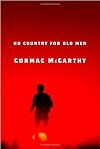
The best books are the ones I read slowly.
When the plot is great, like Silence of the Lambs for example, I'm turning pages, flipping and flipping more and more quickly to get to the end, to see what happens, to figure it out—the writing is merely the conveyance for the plot. But when the writing is good, and I mean really good, I read at a snail's pace. It's like a meal: I want to savour every bit. I read McCarthy especially slowly because he's an absolute master of his craft—his words show more are wrought so deliberately, they're like a fine wooden box with a beautiful inlaid design on the lid, all different grains and colours but fitted together seamlessly.
Whenever I finish something Cormac McCarthy has written, I feel like I need to smoke a cigarette and go stare out at the desert plains at dusk. People can wax poetic about their Dickens and their Shakespeare and whatever post-postmodern litfic author is the most popular today, but this, to me, is literature. This is what great literature should feel like. And yes it's spare, yes it's laconic, sometimes the prose is so barren it lacks even punctuation, but it's fucking fantastic.
It's hard for me to explain just why, too. The best I can manage is that so much is left to the imagination—you'd be hard-pressed to find an adverb anywhere. The characters are seldom described, and even then, it's only ever parts of them: Chigurh's eyes, the scar on Llewelyn’s arm. The author only ever gives you the words that are absolutely necessary, and it seems like they couldn't possibly be enough, yet somehow they always are.
I won't waste time talking about things like plot or style; they're remarkable, but in the light of this incredible novel, they're practically trivialities. You get the sense that unlike most other authors, McCarthy doesn't care much about you as a reader. He certainly doesn't aim to please or titillate you—he's here to say something, something important. About good and evil, and temptation, and flaws, and the midnight wind that whistles over the ghost-dark Texas plains, and the inescapability of fate incarnated into a silent man with an air tank and eyes like wet lapis. There's something epic about this story, dare I say it's almost biblical, with seemingly omnipotent wrath and capability seldom seen outside the Old Testament. But unlike the Good Book, there is no church built around the concepts explored here. There is only dust and blood and the distant sound of screaming, so faint and terrible it might just be the wind. show less
When the plot is great, like Silence of the Lambs for example, I'm turning pages, flipping and flipping more and more quickly to get to the end, to see what happens, to figure it out—the writing is merely the conveyance for the plot. But when the writing is good, and I mean really good, I read at a snail's pace. It's like a meal: I want to savour every bit. I read McCarthy especially slowly because he's an absolute master of his craft—his words show more are wrought so deliberately, they're like a fine wooden box with a beautiful inlaid design on the lid, all different grains and colours but fitted together seamlessly.
Whenever I finish something Cormac McCarthy has written, I feel like I need to smoke a cigarette and go stare out at the desert plains at dusk. People can wax poetic about their Dickens and their Shakespeare and whatever post-postmodern litfic author is the most popular today, but this, to me, is literature. This is what great literature should feel like. And yes it's spare, yes it's laconic, sometimes the prose is so barren it lacks even punctuation, but it's fucking fantastic.
It's hard for me to explain just why, too. The best I can manage is that so much is left to the imagination—you'd be hard-pressed to find an adverb anywhere. The characters are seldom described, and even then, it's only ever parts of them: Chigurh's eyes, the scar on Llewelyn’s arm. The author only ever gives you the words that are absolutely necessary, and it seems like they couldn't possibly be enough, yet somehow they always are.
I won't waste time talking about things like plot or style; they're remarkable, but in the light of this incredible novel, they're practically trivialities. You get the sense that unlike most other authors, McCarthy doesn't care much about you as a reader. He certainly doesn't aim to please or titillate you—he's here to say something, something important. About good and evil, and temptation, and flaws, and the midnight wind that whistles over the ghost-dark Texas plains, and the inescapability of fate incarnated into a silent man with an air tank and eyes like wet lapis. There's something epic about this story, dare I say it's almost biblical, with seemingly omnipotent wrath and capability seldom seen outside the Old Testament. But unlike the Good Book, there is no church built around the concepts explored here. There is only dust and blood and the distant sound of screaming, so faint and terrible it might just be the wind. show less

If you are a fan of the analysis of evil, there is no greater fiction work than this, and no greater character than The Judge.
The Judge is the best antagonist I've ever read, and the most evil character I've ever read, and that enough earned this book my five stars. And while the violence and sexual crimes of The Judge make him stand alone among evil characters, his philosophy makes him a great antagonist. McCarthy has written the devil in these pages.
That comparison between The Judge and show more Satan is a common one. He possesses seemingly impossible knowledge, has a philosophy that claims "War is god," and commits every evil act that I could imagine someone in that setting committing. And his interactions with 'the kid', the main character, show that he is still a devil that is full of deceit. He operates in the way that the serpent in the garden of eden does.
He urges those around him to follow him by performing near-miracles or expressing his inhuman knowledge. Those that associate with him receive their spoils for a time, but the Judge always turns on them. Seemingly everyone who associates with the Judge meets a brutal, violent end. Except the Judge of course. And those who rebel against him are greeted with violence of all disgusting kinds.
The Judge is not the only character in this book, but he is THE character. His influence will be felt for centuries in literature. He is a character only McCarthy could write.
Please. Read this book. show less
The Judge is the best antagonist I've ever read, and the most evil character I've ever read, and that enough earned this book my five stars. And while the violence and sexual crimes of The Judge make him stand alone among evil characters, his philosophy makes him a great antagonist. McCarthy has written the devil in these pages.
That comparison between The Judge and show more Satan is a common one. He possesses seemingly impossible knowledge, has a philosophy that claims "War is god," and commits every evil act that I could imagine someone in that setting committing. And his interactions with 'the kid', the main character, show that he is still a devil that is full of deceit. He operates in the way that the serpent in the garden of eden does.
He urges those around him to follow him by performing near-miracles or expressing his inhuman knowledge. Those that associate with him receive their spoils for a time, but the Judge always turns on them. Seemingly everyone who associates with the Judge meets a brutal, violent end. Except the Judge of course. And those who rebel against him are greeted with violence of all disgusting kinds.
The Judge is not the only character in this book, but he is THE character. His influence will be felt for centuries in literature. He is a character only McCarthy could write.
Please. Read this book. show less
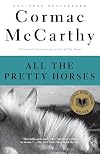
Years ago, I read another Cormac McCarthy novel and thereafter I vowed never again. That novel disgusted me with its dim view of humanity. How could I know All the Pretty Horses was out there? It is an ode to beauty and the greatness of humanity even when life/fate offers us no reward for decency, goodness, and honesty. We follow a young man coming into his own. His innate character makes him a joy to observe. Even his failings reveal his powerful honesty. The courage with which this young show more man confronts life when so many around him cower from the consequences of facing the truth in their lives. I especially admire the way the author reveals the true nature of his characters through the reactions of the other participants in the story. The book that turned me off supposedly has some of the most beautiful prose in English, Blood Meridian. Since I had heard so often the work was brilliant, I assumed I was incapable of appreciating it. I found the said novel shockingly dark even for my cynical worldview, and yet this novel captivated me in a positive and profound way that I can’t describe. There are word pictures of horses painted by an artist who truly loves these magnificent creatures. Specifically, what comes to mind is the passage about why, though horses have a soul, they have no need for heaven. The juxtaposition of horses and humans is fascinating. The novel calls us to live our lives with unflinching integrity. Though we make mistakes, the act of being true to ourselves gives us a nobility akin to the greatest horses. I submit the author tells us anything less and we aren’t living at all. Rather, we are surviving in some lesser state unworthy of our soul and, I submit, unworthy of our Creator. show less

8. Outer Dark by Cormac McCarthy (1968, 262 page Kindle e-book, read Jan 27 - 31)
This is McCarthy's second novel, and wow, what a change. [[Kenneth Lincoln]] says this book lays the foundation of all McCarthy's future work. The atmosphere feels post-apocalyptic, with carnage, insanity, hopelessness and even characters that act like demons. But, this is pre-automobile eastern Tennessee. No date or cultural timing references are given, but critics constantly say the era is around the year show more 1900.
And yet, it is so compelling. It's a hard book to stop reading. When finished, late into the night, I couldn't put the book down and let it go. I went back and read the beginning again and then started looking up reviews and commentary online. For all the horrors, I found it a fun, addictive book. I just kept wondering about.
Culla and Rinthy Holme, brother and sister living in extreme poverty in an isolated structure practically in the wilderness, conceive a child in incest. The guilt, while never spoken, is a focal point. It sets their fate. This is Culla's dream the day before birth (page 4)
"There was a prophet standing in the square with arms upheld in exhortation to the beggared multitude gathered there. A delegation of human ruin who attended him with blind eyes upturned and puckered stumps and leprous sores. The sun hung on the cusp of eclipse and the prophet spoke to them. This hour the sun would darken and all these souls would be cured of their afflictions before it appeared again. And the dreamer himself was caught up among the supplicants and when they had been blessed and the sun began to blacken he did push forward and hold up his hand and call out. Me, he cried. Can I be cured? The prophet looked down as if surprised to see him there amidst such pariahs. The sun paused. He said: Yes, I think perhaps you will be cured. Then the sun buckled and dark fell like a shout. The last wirethin rim was crept away. They waited. Nothing moved. They waited a long time and it grew chill. Above them hung the stars of another season. There began a restlessness and a muttering. The sun did not return. It grew cold and more black and silent and some began to cry out and some despaired but the sun did not return. Now the dreamer grew fearful. Voices were being raised against him. He was caught up in the crowd and the stink of their rags filled his nostrils. They grew seething and more mutinous and he tried to hide among them but they knew him even in that pit of hopeless dark and fell upon him with howls of outrage."
Culla will, of course, not be cured of his sin. When the baby is born, he takes it and abandons it in the woods, then returns back to the baby and almost retracts (this happens in a reverie of incomprehensible and yet fascinating syntax and obscure vocabulary).
What plays out seems to be a condemnation of the pair to endless wandering. But there are curiosities and such hopeless darkness in the forms of poverty and violence. Culla will have something like the mark of Cain. He is always suspected of crimes he has nothing to do with, and finds himself running and running. And there are these three guys following him, acting like demons and massacring everyone he befriends. Rinthy chases after the baby. But, while her wanders are fruitless, she is always met with kindness and protected.
The book plays it's dark self out darkly. I haven't read Divine Comedy, but I wouldn't be surprised if the passage through purgatory and hell has some parallels here. But part of what makes this book work is the humanity of the characters. We come to like so many of these characters we meet so briefly. They charm even in the flaws and even as we know that what is coming to them is not good. And I haven't mentioned the tinker - the peddling salesman who pushes his wares on cart, hated by pretty much everyone he encounters and yet smiles his way along. He is another central curiosity, and he is the one who finds the baby.
It's a book that makes we wonder about what it is about religion that made McCarthy hate is so passionately and yet feel compelled to encounter it in such gory intimacy.
Recommended highly for those willing to wade into this kind of stuff.
2015
https://www.librarything.com/topic/185746#5065180 show less
This is McCarthy's second novel, and wow, what a change. [[Kenneth Lincoln]] says this book lays the foundation of all McCarthy's future work. The atmosphere feels post-apocalyptic, with carnage, insanity, hopelessness and even characters that act like demons. But, this is pre-automobile eastern Tennessee. No date or cultural timing references are given, but critics constantly say the era is around the year show more 1900.
And yet, it is so compelling. It's a hard book to stop reading. When finished, late into the night, I couldn't put the book down and let it go. I went back and read the beginning again and then started looking up reviews and commentary online. For all the horrors, I found it a fun, addictive book. I just kept wondering about.
Culla and Rinthy Holme, brother and sister living in extreme poverty in an isolated structure practically in the wilderness, conceive a child in incest. The guilt, while never spoken, is a focal point. It sets their fate. This is Culla's dream the day before birth (page 4)
"There was a prophet standing in the square with arms upheld in exhortation to the beggared multitude gathered there. A delegation of human ruin who attended him with blind eyes upturned and puckered stumps and leprous sores. The sun hung on the cusp of eclipse and the prophet spoke to them. This hour the sun would darken and all these souls would be cured of their afflictions before it appeared again. And the dreamer himself was caught up among the supplicants and when they had been blessed and the sun began to blacken he did push forward and hold up his hand and call out. Me, he cried. Can I be cured? The prophet looked down as if surprised to see him there amidst such pariahs. The sun paused. He said: Yes, I think perhaps you will be cured. Then the sun buckled and dark fell like a shout. The last wirethin rim was crept away. They waited. Nothing moved. They waited a long time and it grew chill. Above them hung the stars of another season. There began a restlessness and a muttering. The sun did not return. It grew cold and more black and silent and some began to cry out and some despaired but the sun did not return. Now the dreamer grew fearful. Voices were being raised against him. He was caught up in the crowd and the stink of their rags filled his nostrils. They grew seething and more mutinous and he tried to hide among them but they knew him even in that pit of hopeless dark and fell upon him with howls of outrage."
Culla will, of course, not be cured of his sin. When the baby is born, he takes it and abandons it in the woods, then returns back to the baby and almost retracts (this happens in a reverie of incomprehensible and yet fascinating syntax and obscure vocabulary).
What plays out seems to be a condemnation of the pair to endless wandering. But there are curiosities and such hopeless darkness in the forms of poverty and violence. Culla will have something like the mark of Cain. He is always suspected of crimes he has nothing to do with, and finds himself running and running. And there are these three guys following him, acting like demons and massacring everyone he befriends. Rinthy chases after the baby. But, while her wanders are fruitless, she is always met with kindness and protected.
The book plays it's dark self out darkly. I haven't read Divine Comedy, but I wouldn't be surprised if the passage through purgatory and hell has some parallels here. But part of what makes this book work is the humanity of the characters. We come to like so many of these characters we meet so briefly. They charm even in the flaws and even as we know that what is coming to them is not good. And I haven't mentioned the tinker - the peddling salesman who pushes his wares on cart, hated by pretty much everyone he encounters and yet smiles his way along. He is another central curiosity, and he is the one who finds the baby.
It's a book that makes we wonder about what it is about religion that made McCarthy hate is so passionately and yet feel compelled to encounter it in such gory intimacy.
Recommended highly for those willing to wade into this kind of stuff.
2015
https://www.librarything.com/topic/185746#5065180 show less
Lists
Greatest Books (1)
history (1)
Sense of place (1)
Nineties (1)
2024 (1)
100 New Classics (1)
Elegant Prose (1)
Read These Too (1)
On the pile (1)
1980s (1)
Latin America (1)
Ranking (1)
High Priority (1)
2000s decade (2)
. (2)
Best Westerns (2)
Southern Fiction (2)
Overdue Podcast (2)
Fiction For Men (3)
Favourite Books (6)
Five star books (5)
Unread books (4)
AP Lit (4)
el (3)
Best Dystopias (3)
A Novel Cure (3)
Thrillers (1)
Must read (1)
98 (1)
. (2)
TDCD BOOK LIST (1)
2017 Goal (1)
Uni (1)
To Read (1)
Favorite Books (1)
Awards


You May Also Like
Associated Authors
Statistics
- Works
- 36
- Also by
- 7
- Members
- 104,936
- Popularity
- #87
- Rating
- 4.0
- Reviews
- 2,978
- ISBNs
- 949
- Languages
- 34
- Favorited
- 23


