
James A. Michener (1907–1997)
Author of The Source
About the Author
James A. Michener, 1907 - 1997 James Albert Michener was born on February 3, 1907 in Doylestown, Pa. He earned an A.B. from Swarthmore College, an A.M. from Colorado State College of Education, and an M.A. from Harvard University. He taught for many years and was an editor for Macmillan Publishing show more Company. His first book, "Tales of the South Pacific," derived from Michener's service in the Pacific in World War II, won the 1947 Pulitzer Prize for Fiction and was the basis for the Rodgers and Hammerstein Broadway musical South Pacific, which won the 1950 Pulitzer Prize for Drama. Michener completed close to 40 novels. Some other epic works include "Hawaii," "Centennial," "Space," and "Caribbean." He also wrote a significant amount of nonfiction including his autobiography "The World Is My Home." Among his many other honors, James Michener received the Presidential Medal of Freedom in 1977. He was married to Patti Koon in 1935; they divorced in 1948. He married Vange Nord in 1948 (divorced 1955) and Mari Yoriko Sabusawa in 1955 (deceased 1994). He died in 1997 in Austin, Texas. (Bowker Author Biography) show less
Series
Works by James A. Michener
Firstfruits: A Harvest of 25 Years of Israeli Writing (1965) — Editor; Introduction — 47 copies, 1 review
Caravans 1973 8 copies
James A. Michener papers 4 copies
[no title] 3 copies
Mot Rymden II 3 copies
James A. Michener on the Social Studies (Bulletin (National Council for the Social Studies)) (1991) 3 copies
Facing East 3 copies
O pacto 2 copies
Caribbean, Volume 1 of 2 2 copies
Frihetens Sjö II 2 copies
Frihetens Sjö I 2 copies
Mot Rymden I 2 copies
Chesapeake, Volume 1 of 2 2 copies
The Convenant 2 copies
Legacy / The Covenant, Volume II 2 copies
The Novel / Texas 2 copies
Centennial / Chesapeake / Hawaii 2 copies
Caribbean, Volume 3 of 5 2 copies
A ponte de Andau: romance 1 copy
Los puentes de Toko-ri 1 copy
Caribbean / Space 1 copy
La alianza 1 copy
The Source James A. Michener 1 copy
Pologne 1 copy
Chesapeake 1 copy
De bruggen van Toko-ri 1 copy
Sucedió en el Pacífico 1 copy
Legacy 1 copy
The Greatest Adventure 1 copy
Sáu người đi khắp thế gian 2 1 copy
Sáu người đi khắp thế gian 1 1 copy
IBERIA 1 copy
HAWAII 1 copy
The Quality of Life 1 copy
MIC Sayonara 1 copy
William Penn 1 copy
De Bron; deel 1 en 2 1 copy
Facing East 1 copy
Bridge at Adau 1 copy
Texas-Vol II 1 copy
Texas-Vol I 1 copy
WHY MAN EXPLORES : NASA 1 copy
El manantial de Israel 1 copy
America 1 copy
The Source, Volume 1 of 4 1 copy
Hawaii, Volume 3 of 3 1 copy
Alaska, Volume 1 of 4 1 copy
Colorado 1 copy
The Novel 1 copy
Die Bucht Roman 1 copy
Sáu Người Đi Khắp Thế Gian 1 1 copy
VIAJE 1 copy
De bron 1 copy
Legado de honra 1 copy
Dynasty 1 copy
Tales of the South Pacific.."Abridged Edition, Containing 14 Or the Original 19 Stories" (1955) 1 copy
World is My Home (Random House Large Print) Lrg edition by Michener, James A. (1992) Paperback 1 copy
Pacifique Sud... 1 copy
Associated Works
Reporting Vietnam: American Journalism 1969-1975, Volume 2 (1998) — Contributor — 301 copies, 2 reviews
On the Firing Line: The Public Life of Our Public Figures (1989) — Contributor — 128 copies, 1 review
Who's Writing This? Notations on the Authorial I, with Self-Portraits {not Antæus} (1995) — Contributor — 75 copies
Reader's Digest Condensed Books 1975 v01: Our John Willie / Centennial / Harlequin / Eric (1975) — Author — 32 copies, 1 review
Reader's Digest Best Sellers 1966: The Source | Intern | Hotel St. Gregory | To Sir, With Love (1966) — Author — 22 copies
Golden Moments: A Collection of United States 1984 Commemorative Olympic Issues (1984) — Foreword — 20 copies
Three Great Novels of World War II: Tales of the South Pacific by James A. Michener / Mister Roberts by Thomas Heggen / Battle Cry by Leon Uris (1985) 13 copies
Adventures in Two Worlds / The Bridges at Toko-ri / Kiss Me Again, Stranger / Rivets / The Silent World / Story of Aviation / The Swimming Pool / 7 Short Stories of De Maupassant (1953) — Contributor — 12 copies
Reader's Digest Today's Best Nonfiction 21 1992: The World is My Home / Bette Davis: A Biography / Forty Days / Swift Justice (1992) — Author — 10 copies
Best-in-Books The Silver Chalice; A King's Story; A Man Called Peter; The Day Chist Died; Kids Say the Darndest Things; A Stillness at Appomattox; High Adventure; Return to… (1960) — Contributor — 8 copies
Reader's Digest Condensed Books 1951 v04: Fallen Away / Return to Paradise / A Roving Commission / The Southwest Corner / The Arms of Venus (1951) — Author — 5 copies
Readers Digest Condensed Books: The Man With the Golden Gun • The Vine and the Olive • The Source • Geordie • The Century of the Detective (1966) — Contributor — 4 copies
Best-In-Books: Twilight for the Gods / 20,000 Miles South / Rascals in Paradise / Lincoln's Commando / Bermuda (1957) — Contributor — 4 copies
Reader's Digest Condensed Books: Hawaii • Surface at the Pole • Pioneer Go Home • The Lovely Ambition • Village of Stars (1961) — Contributor — 4 copies
The Spell of the Pacific: An Anthology of Its Literature — Introduction — 4 copies
Reader's Digest Condensed Books: Monarch of Goddess Island • East of Eden • The Anatomy of a Crime • Return to Paradise • The Intruder (1956) 4 copies
Reader's Digest Condensed Books: The Invisible Cord • Incident at Hawk's Hill • Daylight Must Come • Centennial (1975) 3 copies
Reader's Digest Condensed Books: Cold Harbour • Something to Hide • Journey • Landscape of Lies 3 copies
Best-in-Books: Jubilee / Greenwillow / This Great Big Wonderful World / The Mind Goes Forth / ...And the Rain My Drink (1956) 3 copies, 1 review
Books Abridged: Sayonara, Fire in the Ashes, Adventure Happy, and Cress Delahanty (1954) — Contributor — 3 copies
Reader's Digest Condensed Books: Trustee from the Toolroom • The Leopard • The Triumph of Surgery • Hawaii (1961) — Author — 2 copies
De grote Ceasar; De tijgerkat; De goden van Hawaii; Diamanten voor Janice — Contributor — 2 copies, 1 review
Reader's Digest Condensed Books: Adventures In Two Worlds • The Bridges At Toko-Ri • Old Herbaceous • Operation Cicero • Digby (1954) 2 copies
Um túmulo na areia - Etapas da cirurgia - Trilhas sangrentas - A bruxa de Mount Mellyn - Volta ao paraíso — Contributor — 2 copies
Reading-for-Men: The Gracious Lily Affair, Tip on a Dead Jockey, Rally Round the Flag, Boys!, They Fought for the Sky, Rascals in Paradise (1958) — Contributor — 2 copies
Reader's Digest Condensed Books: Journey • Killer's Wake • Lady of No Man's Land • Grass Roots (1989) 1 copy
Selezione del libro. Marnie. I ponti di Toko-Ri. I cacciatori di microbi. La landa senza stelle. (1963) — Contributor — 1 copy
Selezione del libro: i grandi successi condensati contiene: La sposa di Harry Black - Segnale trentadue - Ritorno al paradiso - La morte corre sul fiume — Contributor — 1 copy
Volume XI: 1. West Wind to Hawaii; 2. The Final Diagnosis; 3. Jungle Girl; 4. Act One: An An Autobiography; 4. Woman of Straw — Contributor — 1 copy
The Teaching Experience: An Introduction to Education Through Literature (1976) — Contributor — 1 copy
Det Bästas Bokval (1956) vol 2 : Broarna vid Toko-Ri; Vinden sveper nedåt Ryder Hill; På lösan sand; Elefant-Bill; Spindeln — Contributor — 1 copy
Keizerlijk bezoek; Laten wij opnieuw beginnen; Jeremy Todd; De bruggen bij Toko-ri — Contributor — 1 copy, 1 review
The Ethnic Image in Modern American Literature, 1900-1950, Volumes 1-2 (1984) — Contributor — 1 copy
Reader's Digest Auswahlbücher 1957,4. Herbst 1957 — Contributor — 1 copy
O Cardeal; A Cidade Que Recusou Morrer; Vento Oeste Para o Havaí; O Caçador de Cavalos — Contributor — 1 copy
Tagged
Common Knowledge
- Legal name
- Michener, James Albert
- Birthdate
- 1907-02-03
- Date of death
- 1997-10-16
- Gender
- male
- Education
- Swarthmore College
University of Northern Colorado - Occupations
- novelist
editor
teacher - Organizations
- United States Navy (WWII)
- Awards and honors
- Presidential Medal of Freedom (1977)
Honorary portrait image on a United States postage stamp (2008)
Pulitizer Prize (Fiction, 1948) - Relationships
- Uys, Errol Lincoln (assistent bij boek Het Verbond)
- Short biography
- James A. Michener
- De wereld is mijn thuis
- Historische romans op basis van gedegen onderzoek
- Bewogen leven
James A. Michener (1907-1997) had geen makkelijke jeugd: hij verloor al zeer jong zijn ouders en kende als kind veel armoede. In de Tweede Wereldoorlog was hij onder meer piloot en beleefde enkele crashes. Over deze tijd schreef hij onder meer in Tales of the South Pacific (1947), zijn debuutroman die meteen bekroond werd met de Pulitzer Prize.
Het zijn meestal lijvige werken, maar de romans van Michener zijn nog altijd zeer de moeite waard. Hij schreef tientallen (overwegend) historische romans. Zijn verhalen gaan letterlijk de hele wereld over: de onderwerpen die hij behandelt betreffen vaak de geschiedenis van een bepaald land. Michener was zelf ook een fervent reiziger: zo heeft hij de meeste landen ter wereld wel bezocht.
Research
Het werk van Michener wordt gekenmerkt door grondige research en gedegen kennis van het onderwerp waarover hij schrijft. Meestal werkte hij jarenlang aan een boek. - Cause of death
- kidney failure
- Nationality
- USA
- Birthplace
- Doylestown, Pennsylvania, USA
- Places of residence
- Doylestown, Pennsylvania, USA
Austin, Texas, USA - Place of death
- Austin, Texas, USA
- Burial location
- Austin Memorial Park, Austin, Texas, USA
- Associated Place (for map)
- Texas, USA
Members
Discussions
The Bridge at Andau ~ James Michener in Quote Keepers (June 2025)
Michener 'read alikes" in Book Recommendations Requests (May 2022)
What Are You Reading The Week of 31 January 2015? in What Are You Reading Now? (July 2015)
Reviews
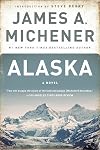
I went in with very little knowledge of and, sincerely, a little dubiousness about my interest in the 49th state, but the narrative immediately swept me up. And the scope of that narrative is pretty extraordinary, starting hundreds of millions of years in the past with wandering land masses colliding and forming seas, mountains, and land masses that we recognize today. Then the narrative runs through the supposed initial migration from the modern Asian continent across the land bridge, show more through early Russian exploration, the fur trade, whaling and seal hunting, American acquisition, the gold rush, and the general lawlessness, neglect, callous exploitation of natural resources, and harmful social policies of misguided paternalism that continued to shape Alaska and its people through the 20th century. Of course some of the history is abbreviated, but it has to be, in the service of readability.
Many of the characters are fictional, but almost without exception (and there are exceptions) Michener's characters are complex, realistically motivated, and just plain interesting. As Michener does, many of the characters are from the same family lines, told through successive generations of Voronovs, Venns, BigEars, Rosses, and Flatchs. And these characters themselves are metaphors for the kinds of people that have inhabited Alaska. They are used to animate historical, religious, economic, political, geological, sociological, commercial, and environmental forces that have shaped this region. You may think you aren't interested in prospecting, railroads, civil engineering on tundra, the economics of municipal development in the Arctic Circle, the salmon industry, or civil aviation but it all fits together and is simply interesting and surprising as it plays out through the characters ... throughout all 1,075 pages.
Yes, there are plenty of passages with dialogue and observations that are rife with racial hatred. And those spots will likely make readers cringe. But I think the discomfort is supposed to tell us something about those settlers (colonizers, really) thought of the indigenous people, what they thought of the Chinese labor they brought over and exploited, and what they thought of non-whites in general. The language sticks out, but it's supposed to stick out. We are supposed to see it and wince at it and reflect on how those attitudes literally contributed to the shaping of Alaska.
This was a pretty remarkable book, right up there among Michener's best. show less
Many of the characters are fictional, but almost without exception (and there are exceptions) Michener's characters are complex, realistically motivated, and just plain interesting. As Michener does, many of the characters are from the same family lines, told through successive generations of Voronovs, Venns, BigEars, Rosses, and Flatchs. And these characters themselves are metaphors for the kinds of people that have inhabited Alaska. They are used to animate historical, religious, economic, political, geological, sociological, commercial, and environmental forces that have shaped this region. You may think you aren't interested in prospecting, railroads, civil engineering on tundra, the economics of municipal development in the Arctic Circle, the salmon industry, or civil aviation but it all fits together and is simply interesting and surprising as it plays out through the characters ... throughout all 1,075 pages.
Yes, there are plenty of passages with dialogue and observations that are rife with racial hatred. And those spots will likely make readers cringe. But I think the discomfort is supposed to tell us something about those settlers (colonizers, really) thought of the indigenous people, what they thought of the Chinese labor they brought over and exploited, and what they thought of non-whites in general. The language sticks out, but it's supposed to stick out. We are supposed to see it and wince at it and reflect on how those attitudes literally contributed to the shaping of Alaska.
This was a pretty remarkable book, right up there among Michener's best. show less
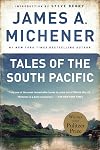
I first read this in high school, some 40 years ago. When I found myself referencing it recently in a review for another book (McKenna's "The Sand Pebbles"), I knew I had to reread it. Reading it with older eyes only enhanced the luster.
It's all here: history, anthropology, war journalism, vignettes of life and waiting and death. It's strengths are the limits Michener gives it: it's about some people on some islands in part of the South Pacific during part of World War II, and their limited show more hopes, fears, and experiences. It's as good a novel about war and people in war as you can find, really clearly evoking the tone, language, and culture of the 1940s. Blurbs about this book play up romance, but it's really about trying to hold on against loss, and that very loss.
As the caretaker says near the end, "Dey's only so many good men, and if you uses 'em up, where you gonna git de others?" show less
It's all here: history, anthropology, war journalism, vignettes of life and waiting and death. It's strengths are the limits Michener gives it: it's about some people on some islands in part of the South Pacific during part of World War II, and their limited show more hopes, fears, and experiences. It's as good a novel about war and people in war as you can find, really clearly evoking the tone, language, and culture of the 1940s. Blurbs about this book play up romance, but it's really about trying to hold on against loss, and that very loss.
As the caretaker says near the end, "Dey's only so many good men, and if you uses 'em up, where you gonna git de others?" show less
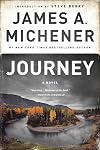
Back in the day, I was a huge James Michener fan, and I thought I'd read all his books. Somehow or other, Journey slipped through the cracks, so I was eager to read it-- especially since it takes place during the Klondike Gold Rush during the late 1890s.
As Michener states at the end of the book, Journey was originally a chapter in his novel, Alaska, and it had to be cut from the final edition. He liked the story so much that he kept it, and it was published as a novel in 1989. (Only someone show more like Michener could cut one chapter from his book and have it be long enough for a 200-page novel!)
The story follows four English aristocrats and an Irish servant as they take the arduous overland route through Canada, chosen because the leader of the expedition hated America so much that he refused to let even his little toe cross the border into the U.S. In true Michener fashion, I was hooked by the story, the setting, and-- last but not least-- the characters. The U.S.-hating Lord Luton is a supreme example of his class and era, and it's a miracle my eyes didn't lock in the back of my head due to all the eye-rolling he caused me. It's hard for me not to get involved as I read a Michener novel, and Journey was no exception.
If you love historical fiction that not only teaches you about history but also tells a wonderful story, you can't go wrong by reading this book-- especially since it's several hundred pages shorter than a standard Michener novel. Who knows? You may get hooked and start reading those Michener "doorstops," too. The man certainly knew how to tell a multi-generational tale, and few authors can even come close. show less
As Michener states at the end of the book, Journey was originally a chapter in his novel, Alaska, and it had to be cut from the final edition. He liked the story so much that he kept it, and it was published as a novel in 1989. (Only someone show more like Michener could cut one chapter from his book and have it be long enough for a 200-page novel!)
The story follows four English aristocrats and an Irish servant as they take the arduous overland route through Canada, chosen because the leader of the expedition hated America so much that he refused to let even his little toe cross the border into the U.S. In true Michener fashion, I was hooked by the story, the setting, and-- last but not least-- the characters. The U.S.-hating Lord Luton is a supreme example of his class and era, and it's a miracle my eyes didn't lock in the back of my head due to all the eye-rolling he caused me. It's hard for me not to get involved as I read a Michener novel, and Journey was no exception.
If you love historical fiction that not only teaches you about history but also tells a wonderful story, you can't go wrong by reading this book-- especially since it's several hundred pages shorter than a standard Michener novel. Who knows? You may get hooked and start reading those Michener "doorstops," too. The man certainly knew how to tell a multi-generational tale, and few authors can even come close. show less

I am not often at a loss when it comes to writing a review, but I am in this case because the book hits way too close to home. - For I, too, am a child of the 1956 Hungarian Revolution. Although my family didn't escape over the bridge at Andau, we did escape, in the middle of winter, over frozen snowfields, into Yugoslavia.
I will unequivocally state one thing - the horrors of the secret police, the AVO, described in the book are not an exaggeration. I grew up with similar tales told by my show more mother and other immediate family members.
Although part of the book does seem dated when it comes to the warnings regarding communism (or socialism in modern parlance), it really isn't. As you read it, periodically ask yourself whether any of the societal descriptions seem to describe the world we live in today, as well. show less
I will unequivocally state one thing - the horrors of the secret police, the AVO, described in the book are not an exaggeration. I grew up with similar tales told by my show more mother and other immediate family members.
Although part of the book does seem dated when it comes to the warnings regarding communism (or socialism in modern parlance), it really isn't. As you read it, periodically ask yourself whether any of the societal descriptions seem to describe the world we live in today, as well. show less
Lists
Time-Sweep Novels (10)
THE WAR ROOM (1)
Africa (1)
1980s (1)
Summer 2025 (1)
Carole's List (2)
Favourite Books (3)
discontinued (3)
1950s (1)
1980 great books (1)
Awards


You May Also Like


Associated Authors
Statistics
- Works
- 210
- Also by
- 102
- Members
- 49,402
- Popularity
- #315
- Rating
- 3.9
- Reviews
- 646
- ISBNs
- 1,015
- Languages
- 17
- Favorited
- 114


