
John Jakes (1932–2023)
Author of North and South
About the Author
John Jakes was born in Chicago in 1932. He studied acting at Northwestern University, where he began writing professionally during his freshman year. Later he enrolled in a creative writing program at DePauw University and received a master's degree in American literature from Ohio State show more University. Early in his career Jakes wrote copy for a pharmaceutical company and various ad agencies, and authored dozens of short stories encompassing western, mystery and science fiction themes. In March 1973, Jakes commenced work on The Kent Family Chronicles, a multi-volume set portraying American history through the lives of a fictional family. Later works include North and South (1982), California Gold (1989), Homeland (1993), and American Dreams. Six of his major novels have been filmed as television miniseries, and North and South remains one of the highest rated miniseries in the history of television. Jakes is actively involved in the adaptation of North and South for the Broadway stage. John Jakes has been hailed as the godfather of the historical novel, and America's history teacher. (Bowker Author Biography) show less
Disambiguation Notice:
John William Jakes (b. 1932), American author of fantasy, science fiction, westerns, and historical fiction. Although Jakes uses the name Alan Payne, there are other authors in LT named Alan Payne. Please do not combine them.
Series
Works by John Jakes
A Century of Great Western Stories-An Anthology of Western Fiction (2000) — Editor; Contributor — 126 copies
Tonight We Steal the Stars / The Wagered World (Ace Double, 81680) (1969) — Author — 72 copies, 1 review
The American Bicentennial Series Box Set (Kent Family Chronicles, Volumes I,II,III,IV & V) (1976) 4 copies
The Kent Chronicles (7 Volumes): The Bastard, The Rebels, The Seekers, The Furies, The Titans, The Warriors, The Lawless (1977) 4 copies
The Kent Family Chronicles Volumes Four Through Six: The Furies, The Titans, and The Warriors (2018) 3 copies
Machine 3 copies
The Dreaming Trees 2 copies
The Girl in the Gem (Short Story) 2 copies
No Comment 2 copies
TEXAS RIDE NORTH, THE 2 copies
Os titãs 1 copy
Północ i Południe 1 copy
NORD E SUD - Prima Edizione 1 copy
Miłość i wojna 1 copy
Sever a Jih 2. díl 1 copy
Sever a Jih 1. díl 1 copy
Old spacemen never die! 1 copy
he Warriors 1 copy
Láska a válka 1. 1 copy
Nebesa in pekel 1 copy
Piekło i niebo 1 copy
Nebe a peklo 1. díl 1 copy
Traitors' Legion 1 copy
sobre rodas 1 copy
Der Gefangene 1 copy
De dödsdömda 1 copy
Shango 1 copy
North and South 1 copy
The Most Horrible Story 1 copy
The Android Kill 1 copy
The Cybernetic Kid 1 copy
Mention my Name Atlantis 1 copy
Frozen Hell 1 copy
Brak: Spell Of The Dragon 1 copy
Centenniel Series 1 copy
Dr. Sweetkill 1 copy
Piekło i niebo cz. 2 1 copy
The Beast 1 copy
Chamber of Chills #4 1 copy
The Woman at Apache Wells, Peace Officer, Sisters: Stellar Audio Volume 4 (Western, Vol 4) (1996) 1 copy
The Girl in the Golden Cage 1 copy
The Running Hounds 1 copy
The Defiled Sister 1 copy
With Wings 1 copy
Piekło i niebo cz.1 1 copy
The American Bicentennial Series, The Kent Family Chronicles, Volumes I-6, Boxed Set [Paperback]1976 by John Jakes (1900) 1 copy
Karkuri 1 copy
Kentin suku 1 copy
Pioneeri 1 copy
Cloak And Dagger 1 copy
Os pioneiros 1 copy
Wojna i miłość cz. 2 1 copy
Voittajat 1 copy
Wojna i miłość cz.1 1 copy
Północ i Południe cz. 2 1 copy
Północ i Południe cz. 1 1 copy
Das Versprechen 1 copy
1996 1 copy
1990 1 copy
Associated Works
Isaac Asimov's Magical Worlds of Fantasy, Volume 1: Wizards (1983) — Contributor — 267 copies, 1 review
Masterpieces of Terror and the Unknown: A Treasury of Bizarre Tales Old and New (1993) — Contributor — 213 copies, 2 reviews
The Arbor House Treasury of Great Western Stories (1982) — Contributor; Introduction — 107 copies, 1 review
Mammoth Book of Short Fantasy Novels (Mammoth) (1986) — Contributor, some editions — 80 copies, 1 review
Six Science Fiction Plays (Pocket Books Sci-Fi No. 48766) (1975) — Contributor — 61 copies, 2 reviews
The Arbor House Treasury of Detective and Mystery Stories from the Great Pulps (1983) — Contributor — 53 copies, 3 reviews
The Mammoth Book of Short Spy Novels: Twelve Espionage Masterpieces (1986) — Contributor — 36 copies
Reader's Digest Condensed Books 1990 v01: Tiebreaker / What Was Good About Today / California Gold / Monkeys on the Interstate (1990) — Author — 32 copies
Reader's Digest Select Editions 1998 v05 #239: You Belong To Me / American Dreams / Toxin / Firebird (1998) 30 copies
Reader's Digest Condensed Books 1993 v06: The Cat Who Went Into the Closet / Homeland / Tell Me No Secrets (1993) — Author — 20 copies
The Magazine of Fantasy and Science Fiction September 1954, Vol. 7, No. 3 (1954) — Contributor — 14 copies
Space Science Fiction, Spring 1957 (Vol. 1 ∙ No.1) — Contributor — 6 copies
Fantastic stories of imagination. No. 123 (January 1965) — Contributor — 4 copies
Conan the Barbarian [1970] #013 — Contributor — 2 copies
Tagged
Common Knowledge
- Canonical name
- Jakes, John
- Legal name
- Jakes, John William
- Other names
- Payne, Alan
Scotland, Jay - Birthdate
- 1932-03-31
- Date of death
- 2023-03-11
- Gender
- male
- Education
- Northwestern University
DePauw University (BA|1953)
Ohio State University (MA|American Literature, 1954) - Occupations
- advertising industry
research fellow
novelist
playwright
actor - Organizations
- Swordsmen and Sorcerers' Guild of America
University of South Carolina
Authors Guild
Dramatists Guild of America
PEN (American)
Science Fiction and Fantasy Writers of America - Awards and honors
- Cooper Medal (2002)
Western Heritage Literary Award, National Cowboy Hall of Fame (1995)
South Carolina Academy of Authors
Owen Wister Award (2007) - Nationality
- USA
- Birthplace
- Chicago, Illinois, USA
- Places of residence
- Chicago, Illinois, USA
Columbia, South Carolina, USA
Sarasota, Florida, USA - Place of death
- Sarasota, Florida, USA
- Disambiguation notice
- John William Jakes (b. 1932), American author of fantasy, science fiction, westerns, and historical fiction. Although Jakes uses the name Alan Payne, there are other authors in LT named Alan Payne. Please do not combine them.
- Associated Place (for map)
- USA
Members
Discussions
John Jakes North and South Trilogy, SIGNED EDITION BIS (Item#2932; $405) in Easton Press Collectors (April 2023)
North and South by John Jakes - norabelle414 tutoring Samantha_kathy in 75 Books Challenge for 2012 (April 2012)
Reviews
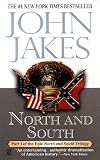
What to say about this book, this brick of a historical fiction novel?
First off, the positives, and there is a lot going in this book’s favor.
The novel is imminently readable, no small advantage for a book of this length. The reader can breeze their way through several chapters without the fatigue that sometimes attends sprawling, historical narratives like this. True, the characters are a bit simple, the heroes are absolute paragons and the villains are cartoonishly evil. However, the show more plot flows wonderfully and the author juggles the dozen or so interesting characters and their crisscrossing plotlines adroitly.
The principal virtue of this book is its entertainment value. The historic details are present and integral but somehow feel surface level at times. Overall this book narrowly misses the distinction that some historical fiction attains (from the pen of someone like Mary Renault, for instance) of breathing vibrant life into a specific time and place long past, fully capturing the feel for a certain period. This novel presents the history as linear and apparent, which of course it is to us now, but somewhat strains credulity when the main characters back in the mid 1800’s regularly foresee the nature of events, elections, succession, battles, etc. and are almost always right. One almost gets the sense that every main character already knows all about the Civil War in general, just not their specific part to play in it.
Now on to the less positive impressions this book left me with.
First and foremost is the problem of Virgilia.
Virgilia, sister of George Hazzard, is the only truly staunch abolitionist we see in in the entire novel. She is also portrayed as raving mad, vindictive, and seemingly more interested in the cause of abolition for personal motives (resentment, a desire to “get even” with the world, etc.) than for any real moral reasons. Her portrayal only deteriorates as the novel progresses. In the beginning she’s unpleasant, (repeatedly other characters theorize she only does abolition work because she is homely and therefore needs something to occupy her time) and may say something unkind and too pointedly political during dinner. But by the book’s end she’s a complete lunatic who wants to see Orry hanged by a mob. Now I don’t deny some abolitionists were extreme in their views, but it bears repeating that Virgilia is the ONLY abolitionist we spend any time with in the book. Without any other abolitionist characters, she becomes a representative sample which makes her characterization extremely troubling. The only one adamantly against the whole institution of slavery is a spiteful, vindictive person with an apparently serious set of mental disorders.
There were many persuasive, moral, and eloquent abolitionists from this period in American history. We have their speeches, essays, and letters and their assertions were, of course, proven correct. But we hear from none of them in this book, thus we miss a vital element of the debates going on at the time and the work of good people horrified by slavery is omitted.
The problem of Virgilia is really just a symptom of a larger issue I had with the book, that is that it veers incredibly close to ahistorical “Lost Cause” talking points and removes and responsibility for the institution of slavery from any individual slave owners.
At one point towards the end of the novel, Cooper Main, a likeable and honorable South Carolinian, speaks to his wife about his upcoming service to the confederate government. He states he believes the cause “already lost” yet feels compelled to serve his state for the sake of honor. Further, by the end of the novel every “good” character who owns slaves is convinced of the institutions’ moral wrongness yet feels unable to give it up. Indeed, Orry finds a note from his father disclosing that he too knew slavery was wrong despite never expressing those views publicly. This framing attempts to portray the slave holders themselves as victims of a sort while at the same time ameliorating or obviating their own personal responsibility for the “peculiar institution” and didn’t sit well with me.
In their repeated forays into the North, the Mains are often accosted by bigoted Yankees and held personally responsible for all the evils of slavery in America. The author points out, through tone and framing, that this is doesn’t hold up to scrutiny. But they ARE responsible for owning slaves themselves, something the novel never seems eager to address head on, and if they’re not individually responsible for their own actions then who in history was?
I understand the novelist’s impulse to make characters on both sides of the Mason Dixon relatable, to make both families morally good people, it makes for excellent story telling. But this humanizing impulse shouldn’t extend to wiping out personal responsibility for one of the worst institutions to ever exist in the history of our species. I may read the other books in this series but I am thus far skeptical for the reasons mentioned above. show less
First off, the positives, and there is a lot going in this book’s favor.
The novel is imminently readable, no small advantage for a book of this length. The reader can breeze their way through several chapters without the fatigue that sometimes attends sprawling, historical narratives like this. True, the characters are a bit simple, the heroes are absolute paragons and the villains are cartoonishly evil. However, the show more plot flows wonderfully and the author juggles the dozen or so interesting characters and their crisscrossing plotlines adroitly.
The principal virtue of this book is its entertainment value. The historic details are present and integral but somehow feel surface level at times. Overall this book narrowly misses the distinction that some historical fiction attains (from the pen of someone like Mary Renault, for instance) of breathing vibrant life into a specific time and place long past, fully capturing the feel for a certain period. This novel presents the history as linear and apparent, which of course it is to us now, but somewhat strains credulity when the main characters back in the mid 1800’s regularly foresee the nature of events, elections, succession, battles, etc. and are almost always right. One almost gets the sense that every main character already knows all about the Civil War in general, just not their specific part to play in it.
Now on to the less positive impressions this book left me with.
First and foremost is the problem of Virgilia.
Virgilia, sister of George Hazzard, is the only truly staunch abolitionist we see in in the entire novel. She is also portrayed as raving mad, vindictive, and seemingly more interested in the cause of abolition for personal motives (resentment, a desire to “get even” with the world, etc.) than for any real moral reasons. Her portrayal only deteriorates as the novel progresses. In the beginning she’s unpleasant, (repeatedly other characters theorize she only does abolition work because she is homely and therefore needs something to occupy her time) and may say something unkind and too pointedly political during dinner. But by the book’s end she’s a complete lunatic who wants to see Orry hanged by a mob. Now I don’t deny some abolitionists were extreme in their views, but it bears repeating that Virgilia is the ONLY abolitionist we spend any time with in the book. Without any other abolitionist characters, she becomes a representative sample which makes her characterization extremely troubling. The only one adamantly against the whole institution of slavery is a spiteful, vindictive person with an apparently serious set of mental disorders.
There were many persuasive, moral, and eloquent abolitionists from this period in American history. We have their speeches, essays, and letters and their assertions were, of course, proven correct. But we hear from none of them in this book, thus we miss a vital element of the debates going on at the time and the work of good people horrified by slavery is omitted.
The problem of Virgilia is really just a symptom of a larger issue I had with the book, that is that it veers incredibly close to ahistorical “Lost Cause” talking points and removes and responsibility for the institution of slavery from any individual slave owners.
At one point towards the end of the novel, Cooper Main, a likeable and honorable South Carolinian, speaks to his wife about his upcoming service to the confederate government. He states he believes the cause “already lost” yet feels compelled to serve his state for the sake of honor. Further, by the end of the novel every “good” character who owns slaves is convinced of the institutions’ moral wrongness yet feels unable to give it up. Indeed, Orry finds a note from his father disclosing that he too knew slavery was wrong despite never expressing those views publicly. This framing attempts to portray the slave holders themselves as victims of a sort while at the same time ameliorating or obviating their own personal responsibility for the “peculiar institution” and didn’t sit well with me.
In their repeated forays into the North, the Mains are often accosted by bigoted Yankees and held personally responsible for all the evils of slavery in America. The author points out, through tone and framing, that this is doesn’t hold up to scrutiny. But they ARE responsible for owning slaves themselves, something the novel never seems eager to address head on, and if they’re not individually responsible for their own actions then who in history was?
I understand the novelist’s impulse to make characters on both sides of the Mason Dixon relatable, to make both families morally good people, it makes for excellent story telling. But this humanizing impulse shouldn’t extend to wiping out personal responsibility for one of the worst institutions to ever exist in the history of our species. I may read the other books in this series but I am thus far skeptical for the reasons mentioned above. show less

Wow. I really enjoyed this book. it's not often I read stories set in this time/location, but I am glad I came across this book. As a history buff, this book was well-researched and it was easy to imagine what life could have been like, either in the North or the South.
One thing that makes this story so strong is that the abolitionists and slavers are not portrayed in black and white (no pun intended) You have rabid abolitionists like Virgilia, and people who question slavery and can admit show more to flaws in the system without being outright abolitionists. I think the author presented a balanced view of the two sides, as well as the circumstances that helped to start the Civil War, through mainly the eyes of the two main characters Orry and George, along with relatives and friends. show less
One thing that makes this story so strong is that the abolitionists and slavers are not portrayed in black and white (no pun intended) You have rabid abolitionists like Virgilia, and people who question slavery and can admit show more to flaws in the system without being outright abolitionists. I think the author presented a balanced view of the two sides, as well as the circumstances that helped to start the Civil War, through mainly the eyes of the two main characters Orry and George, along with relatives and friends. show less

If the previous Planet of the Apes novels and films explored the ramifications of nuclear war and the possibilities of altering the future, Conquest of the Planet of the Apes serves as an allegory for the end of slavery in the United States. Milo, Cornelius and Zira's son from the previous entry, now known as Caesar, visits a city of the future where Apes make up a slave class that performs all the menial labor for their human masters. Naturally, that future, 1990, more reflects the ideas of show more the early 1970s than the reality of the last decade of the twentieth century. Responding to injustice, Caesar infiltrates the system of this city-state and begins fomenting rebellion among Ape-kind, all while hiding his identity. In the final, bloody struggle, it's easy to imagine the stirring chords of "John Brown's Body" playing in the background. The author of Conquest of the Planet of the Apes, John Jakes, does not reach the same philosophical level as his predecessors Pierre Boulle and Jerry Pournelle, but he imbues his writing with a sense of action and righteous justice that will hold readers' attention. show less

This is set in the decades leading up to the American Civil War. It focuses on two families: the Hazards, living in Pittsburgh, and the Mains, who own a plantation (and slaves) in South Carolina. George Hazard and Orry Main become best friends when at military school in the early 1840s(?). They fight together in the Mexican War, then retire from the military. George does marry, but Orry falls for a woman who is marrying a brutal slave owner.
Years later, George’s youngest brother, Billy, show more and Orry’s young cousin, Charles, head to the same military school together (though they have known each other through the families’ friendship for a while now)… but now the school is much more divisive along North/South lines with slavery/politics being the issue.
Orry’s brother, Cooper, is very much against owning slaves and he marries a woman from the North. George’s sister, Virgilia, is a staunch abolitionist and gets in Orry’s face whenever the Mains visit. Billy has fallen in love with Orry’s youngest sister, Brett, though he had a brief flirtation with a sister, Ashton, just slightly older. Brett really is the marrying type vs Ashton’s flirtatious ways.
There is a lot going on in this long book and a lot of North/South mixing between the families and their friends/acquaintances. It’s not often I rate a book this long (over 800 pages) this high, but I really liked this one all the way though (though it was a bit tricky at the start to get a handle on who was who!). There is even more going on (and more characters) than I’ve detailed in my summary. This is the first in a trilogy. I assume the others are also very long, so it might be a while before I get to the next, but I will definitely read it at some point. I’ve never seen the miniseries, but would like to; I hadn’t realized Patrick Swayze is in it! show less
Years later, George’s youngest brother, Billy, show more and Orry’s young cousin, Charles, head to the same military school together (though they have known each other through the families’ friendship for a while now)… but now the school is much more divisive along North/South lines with slavery/politics being the issue.
Orry’s brother, Cooper, is very much against owning slaves and he marries a woman from the North. George’s sister, Virgilia, is a staunch abolitionist and gets in Orry’s face whenever the Mains visit. Billy has fallen in love with Orry’s youngest sister, Brett, though he had a brief flirtation with a sister, Ashton, just slightly older. Brett really is the marrying type vs Ashton’s flirtatious ways.
There is a lot going on in this long book and a lot of North/South mixing between the families and their friends/acquaintances. It’s not often I rate a book this long (over 800 pages) this high, but I really liked this one all the way though (though it was a bit tricky at the start to get a handle on who was who!). There is even more going on (and more characters) than I’ve detailed in my summary. This is the first in a trilogy. I assume the others are also very long, so it might be a while before I get to the next, but I will definitely read it at some point. I’ve never seen the miniseries, but would like to; I hadn’t realized Patrick Swayze is in it! show less
Lists
Awards


You May Also Like


Associated Authors
Statistics
- Works
- 268
- Also by
- 58
- Members
- 20,456
- Popularity
- #1,060
- Rating
- 3.8
- Reviews
- 190
- ISBNs
- 745
- Languages
- 15
- Favorited
- 29
