
Francine Rivers
Author of Redeeming Love
About the Author
Francine Rivers received a Bachelor of Arts degree in English and Journalism from the University of Nevada, Reno. From 1976 to 1985, she had a successful writing career in the general market and her books won numerous awards. In 1986, she became a born-again Christian and started writing Christian show more fiction. Her book, Redeeming Love, is a retelling of the biblical story of Gomer and Hosea set during the time of the California Gold Rush. Her Christian novels have won numerous awards including four Rita Awards, the Christy Award, the ECPA Gold Medallion, and the Holt Medallion in Honor of Outstanding Literary Talent. In 1997, she was inducted into the Romance Writers' of America Hall of Fame. She is the author of Lineage of Grace series, Mark of the Lion series, and Sons of Encouragement series. In 2014 her title, Bridge to Haven, made The New York Times Best Seller List. Her latest bestseller is The Masterpiece, published in February 2018. (Bowker Author Biography) show less
Series
Works by Francine Rivers
A Lineage of Grace: Five Stories of Unlikely Women Who Changed Eternity (2000) 1,615 copies, 12 reviews
Sons of Encouragement: Five Stories of Faithful Men Who Changed Eternity (2007) 447 copies, 3 reviews
Redeeming Love Paperback with Study Edition by Rivers, Francine published by Multnomah Books (2005) Paperback (1900) 21 copies
Uma Voz no Vento 2 copies
LEOTA SE TUIN 1 copy
Redeeming Love 1 copy
Insanity of God, The 1 copy
Her Daughter's Dream, Part 2 1 copy
Her Mother's Hope, Part 1 1 copy
Rascumparata prin iubire 1 copy
The Woman Between: A Novel 1 copy
Tamar Padar 1 copy
The Rose in the Wheel 1 copy
Die rooi koord 1 copy
Leotas Garden 1 copy
The Atonement Guild 1 copy
Associated Works
Tagged
Common Knowledge
- Legal name
- Rivers, Francine Sandra
- Birthdate
- 1947
- Gender
- female
- Education
- University of Nevada, Reno (BA|English and Journalism)
- Occupations
- journalist
author - Relationships
- Rivers, Rick (husband)
- Nationality
- USA
- Places of residence
- Northern California, USA
- Associated Place (for map)
- Northern California, USA
Members
Reviews

I KNEW I would hate this book just from reading the summary and the fact that Francine Rivers wrote it, but I just had to read it. This has been on my TBR list for a few years now and I finally had to subject myself to this trainwreck because I freely admit that I am a rubbernecker.
I do not like Francine Rivers as an author because despite loving the historical research and details she puts in her novels (the Mark of the Lion series, for example. 1st-century Roman life is presented to the show more reader in amazing detail) she gets heavy-handed with the preaching. Not only that, but she also pushes toxic feminity (submitting to the man, submitting to the pastor, other male lead figures) and this causes the women in her books to make some really bone-headed decisions.
Like, for example, in this book, Dynah is raped, and then when she is taken to the hospital, she refuses estrogen therapy (this book was written in the 90's, so today it'd likely be referred to as Plan B) and refers to it as an abortifacient. Mind you, she'd been raped only a few hours earlier, and pregnancy does not occur until the fertilized egg is implanted into the uterine wall, so a woman does not actually become pregnant until about 5-15 days after sex. But the author is so staunch in her Christian/pro-life beliefs that plan B is the devil's work. This is one of the reasons I gave this book 1 star.
I'm thinking to myself, oh my god, Dynah, you fucking dumb cunt. If you'd just agreed to take the pills, then you wouldn't have had to deal with all the bullshit and grief that would happen eventually in the book.
Another thing that really bothered me was how near the beginning of the book, Dynah is thanking God for everything in her life, and then after the rape happens, she asks God if she did anyhing to deserve being raped. I mean that in itself is a normal line of reasoning for a religious person to ask after a traumatic event, but this kind of thing is one of the reasons I became an atheist.
If a god truly is a loving one, then he would not allow women to be raped, among other awful things that happen in the world. But in the mind of the author, everything happens for a reason, including the sexual assault of a woman, the unwanted pregnancy that follows, and all the sadness and psychlogical trauma involved.
The title itself pisses me off too. 'Atonement Child' somehow feels like the child was foisted onto Dynah as punishment. Punishment for what? Having the nerve to walk part of the way home (to the dorm) at night after work?
I'd love to see a novel where Francine Rivers just focuses on historical research and writing a good story instead of shoving her beliefs down readers' throats or trying to convince us that a god that allows awful things to happen "has a plan", because that is a theme/message I've read in all her other books that I've read. show less
I do not like Francine Rivers as an author because despite loving the historical research and details she puts in her novels (the Mark of the Lion series, for example. 1st-century Roman life is presented to the show more reader in amazing detail) she gets heavy-handed with the preaching. Not only that, but she also pushes toxic feminity (submitting to the man, submitting to the pastor, other male lead figures) and this causes the women in her books to make some really bone-headed decisions.
Like, for example, in this book, Dynah is raped, and then when she is taken to the hospital, she refuses estrogen therapy (this book was written in the 90's, so today it'd likely be referred to as Plan B) and refers to it as an abortifacient. Mind you, she'd been raped only a few hours earlier, and pregnancy does not occur until the fertilized egg is implanted into the uterine wall, so a woman does not actually become pregnant until about 5-15 days after sex. But the author is so staunch in her Christian/pro-life beliefs that plan B is the devil's work. This is one of the reasons I gave this book 1 star.
I'm thinking to myself, oh my god, Dynah, you fucking dumb cunt. If you'd just agreed to take the pills, then you wouldn't have had to deal with all the bullshit and grief that would happen eventually in the book.
Another thing that really bothered me was how near the beginning of the book, Dynah is thanking God for everything in her life, and then after the rape happens, she asks God if she did anyhing to deserve being raped. I mean that in itself is a normal line of reasoning for a religious person to ask after a traumatic event, but this kind of thing is one of the reasons I became an atheist.
If a god truly is a loving one, then he would not allow women to be raped, among other awful things that happen in the world. But in the mind of the author, everything happens for a reason, including the sexual assault of a woman, the unwanted pregnancy that follows, and all the sadness and psychlogical trauma involved.
The title itself pisses me off too. 'Atonement Child' somehow feels like the child was foisted onto Dynah as punishment. Punishment for what? Having the nerve to walk part of the way home (to the dorm) at night after work?
I'd love to see a novel where Francine Rivers just focuses on historical research and writing a good story instead of shoving her beliefs down readers' throats or trying to convince us that a god that allows awful things to happen "has a plan", because that is a theme/message I've read in all her other books that I've read. show less
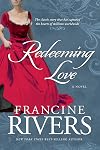
nothing at all like i was expecting. Painful to read, but also one of, if not THE most powerful book I've ever read.
I don't understand why more Christian books aren't written like this. It's kind of driving me crazy. It seems that people think that for it to be a Christian romance there has to be an element of self-denial (which supplies the sexual tension that the whole book feeds off of until the very end when they marry). I hardly ever come across one that goes into life after marriage, show more unless it's part of a series, and even then the focus is off the first couple; they're married now, so their story is over.
This attitude is not only boring, it's damaging. Being a Christian does not mean that you're perfect and chaste. I generally appreciate less scandal and vulgarity, but these books take it to the extreme.
And why are all the heroines progressive, feisty women? Is there not more than one persona that was appealing several hundred years ago? It seems they are all (poorly) modeled after Jane Austin's Elizabeth Bennet. But even Jane Austin only did it that one time. Her other characters, and even other lovable characters in Pride and Prejudice, were vastly different. Some were arrogant and self centered, some were meek and shy, some had a servant attitude, some were immature. All of them unique and flawed. Why are all the women in these historical fiction novels so one dimensional?
How wonderful it would be if more love stories were modeled after ones in the Bible. We could really learn a thing or two about how real love works, about patience, kindness, too. About how love and healing can find any person, no matter how deep they're standing in sin, and how God can make anyone clean.
Redeeming Love was the most beautiful love story I've ever read. While I'm so thankful that I got to experience it, I'm also a little sad because I don't think I'll come across anything quite like it again. Read this and savor every moment of it. show less
I don't understand why more Christian books aren't written like this. It's kind of driving me crazy. It seems that people think that for it to be a Christian romance there has to be an element of self-denial (which supplies the sexual tension that the whole book feeds off of until the very end when they marry). I hardly ever come across one that goes into life after marriage, show more unless it's part of a series, and even then the focus is off the first couple; they're married now, so their story is over.
This attitude is not only boring, it's damaging. Being a Christian does not mean that you're perfect and chaste. I generally appreciate less scandal and vulgarity, but these books take it to the extreme.
And why are all the heroines progressive, feisty women? Is there not more than one persona that was appealing several hundred years ago? It seems they are all (poorly) modeled after Jane Austin's Elizabeth Bennet. But even Jane Austin only did it that one time. Her other characters, and even other lovable characters in Pride and Prejudice, were vastly different. Some were arrogant and self centered, some were meek and shy, some had a servant attitude, some were immature. All of them unique and flawed. Why are all the women in these historical fiction novels so one dimensional?
How wonderful it would be if more love stories were modeled after ones in the Bible. We could really learn a thing or two about how real love works, about patience, kindness, too. About how love and healing can find any person, no matter how deep they're standing in sin, and how God can make anyone clean.
Redeeming Love was the most beautiful love story I've ever read. While I'm so thankful that I got to experience it, I'm also a little sad because I don't think I'll come across anything quite like it again. Read this and savor every moment of it. show less
The Scarlet Thread: A Novel (The Historical Christian Fiction Story of Two Women, Centuries Apart, Joined through a Journal from the Oregon Trail) by Francine Rivers

Sierra and Alex's marriage takes a downward spiral when she resents him moving their family to Los Angeles to pursue his career dreams and he resents her griping. At her lowest point, she meets a believer in Jesus who invites her to church, where she begins to repent and find hope in Christ and help in accepting her husband's attempts at reconciliation. Interspersed with this story are journal entries from Sierra's ancestor who struggled with difficult circumstances with her family, her show more husband, and God before eventually finding the "scarlet thread" of redemption that God weaves through our lives and throughout history. At first, I was annoyed and irritated with Sierra's selfish attitude of wanting and demanding her own way ... and then realizing the same attitude in myself. Ouch. Content considerations: deals with the subject of marital relations and adultery. show less
By default nothing I say hasn't been said by the vast majority of people who review this book and get overshadowed by perfect five star ones who gloss over it.
Angel/Mara/Tirzah/Amanda/Mandy/Sarah. This is your first red flag. Our main character has her name constantly changed by her kidnapper who will become her husband.
I don't think that I even need to tell you how in any other story having your identity forcefully changed by your kidnapper is wrong and a form of gaslighting and abuse. Or show more were this a horror story, we'd immediately know to hate him as he's the villain. Well, I might have to elaborate on the names.
Angel is her name as she works in the strip clubs and whore houses, which she has done since she was a small child. The whole time it's in her POV it doesn't matter she's being called Angel/Mara/Tirzah/Amanda/Mandy/Sarah, because she is calling herself Angel the whole book and it's mostly her POV.
Mara means bitter and is an insult. It's her name until iirc Michael(kidnapper)'s brother Paul rapes her as payment for a ride to escape her kidnap. I believe she is Tirzah afterward on and off as a form of punishment. Then Angel ends up in a lot of bad situations and while laying delusional in a ditch Michael asks her to marry him and she says "why not?".
This leads to they're "married" and she is now Amanda. Or Mandy. Depends on what people call her. She's forced into feeling bad she cannot bare kids due to her pimp performing a surgery to sterilize her(don't worry, God "fixes" her, sorry to infertile people because yes, it's offensive as hell). So everyone can have kids but her and she's guilted and lead to believe she's less of a woman because she can't give Michael kids.
Rushing the rest... A young girl FRESHLY sixteen sounds like a better match for the adult Michael so Angel shoves them together and bails. She finds God and he names Angel Sarah and she returns home. Paul the rapist is bemoaning his pedophiliac urges and talking about how wrong it is and how young the child is and then Angel tells the child to force Paul to take what he wants. So you get Sarah and Michael together and a scene of a barely sixteen-year-old girl cornering a man naked as he screams about how sick he is and how wrong this is.
So the rapist gets with a child and we get God curing Angel of her infertility and a very wordy epilogue of how Sarah had a ton of kids just like the Sarah in the bible.
So much kidnap, coercion, rape, sex worker shaming, and pedophilia.
I'm not overtly religious and this all is a massive nope and red flag to not give this to kids or ever support this. But I suppose people somehow rationalize that stuff weirdly.
Tons of content warnings and trigger warnings to be had. Would not recommend it. show less
Angel/Mara/Tirzah/Amanda/Mandy/Sarah. This is your first red flag. Our main character has her name constantly changed by her kidnapper who will become her husband.
I don't think that I even need to tell you how in any other story having your identity forcefully changed by your kidnapper is wrong and a form of gaslighting and abuse. Or show more were this a horror story, we'd immediately know to hate him as he's the villain. Well, I might have to elaborate on the names.
Angel is her name as she works in the strip clubs and whore houses, which she has done since she was a small child. The whole time it's in her POV it doesn't matter she's being called Angel/Mara/Tirzah/Amanda/Mandy/Sarah, because she is calling herself Angel the whole book and it's mostly her POV.
Mara means bitter and is an insult. It's her name until iirc Michael(kidnapper)'s brother Paul rapes her as payment for a ride to escape her kidnap. I believe she is Tirzah afterward on and off as a form of punishment. Then Angel ends up in a lot of bad situations and while laying delusional in a ditch Michael asks her to marry him and she says "why not?".
This leads to they're "married" and she is now Amanda. Or Mandy. Depends on what people call her. She's forced into feeling bad she cannot bare kids due to her pimp performing a surgery to sterilize her(don't worry, God "fixes" her, sorry to infertile people because yes, it's offensive as hell). So everyone can have kids but her and she's guilted and lead to believe she's less of a woman because she can't give Michael kids.
Rushing the rest... A young girl FRESHLY sixteen sounds like a better match for the adult Michael so Angel shoves them together and bails. She finds God and he names Angel Sarah and she returns home. Paul the rapist is bemoaning his pedophiliac urges and talking about how wrong it is and how young the child is and then Angel tells the child to force Paul to take what he wants. So you get Sarah and Michael together and a scene of a barely sixteen-year-old girl cornering a man naked as he screams about how sick he is and how wrong this is.
So the rapist gets with a child and we get God curing Angel of her infertility and a very wordy epilogue of how Sarah had a ton of kids just like the Sarah in the bible.
So much kidnap, coercion, rape, sex worker shaming, and pedophilia.
I'm not overtly religious and this all is a massive nope and red flag to not give this to kids or ever support this. But I suppose people somehow rationalize that stuff weirdly.
Tons of content warnings and trigger warnings to be had. Would not recommend it. show less
Lists
Awards


You May Also Like


Associated Authors
Statistics
- Works
- 112
- Also by
- 2
- Members
- 38,631
- Popularity
- #467
- Rating
- 4.2
- Reviews
- 646
- ISBNs
- 798
- Languages
- 20
- Favorited
- 97

