
Eamon Duffy
Author of The Stripping of the Altars: Traditional Religion in England, 1400-1580
About the Author
Eamon Duffy is Professor of the History of Christianity at the University of Cambridge and President of Magdalene College.
Image credit: https://en.wikipedia.org/wiki/Eamon_Duffy
Works by Eamon Duffy
The Stripping of the Altars: Traditional Religion in England, 1400-1580 (1993) 1,365 copies, 15 reviews
The Voices of Morebath: Reformation and Rebellion in an English Village (2001) 536 copies, 2 reviews
Associated Works
The Golden Legend: Readings on the Saints (1259) — Introduction, some editions — 625 copies, 8 reviews
Great Spirits 1000-2000: The Fifty-Two Christians Who Most Influenced Their Millennium (2002) — Contributor — 30 copies, 1 review
Catholicism and Catholicity: Eucharistic Communities in Historical and Contemporary Perspectives (1999) — Afterword — 13 copies
Tagged
Common Knowledge
- Canonical name
- Duffy, Eamon
- Birthdate
- 1947-02-09
- Gender
- male
- Education
- University of Cambridge (DD | 1994)
Selwyn College, University of Cambridge (Ph.D | 1972)
University of Hull (BA | 1968) - Occupations
- professor
religion historian - Organizations
- University of Cambridge
King's College London
University of Durham
Ecclesiastical History Society (president 2004–2005)
Roman Catholic Church
Pontifical Historical Commission - Awards and honors
- Honorary Doctorate (Divinity ∙ University of Hull)
British Academy (Fellow, 2004)
Society of Antiquaries of London (Fellow, 2005)
Longman–History Today Award (1994)
Order of St. Gregory the Great (Knight)
Honorary Fellow, Ecclesiastical History Society (show all 7)
Royal Irish Academy (Honorary Member, 2012) - Short biography
- Eamon Duffy, FBA, FSA (born 9 February 1947) is an Irish historian and academic. He is Professor of the History of Christianity at the University of Cambridge, and a Fellow and former President of Magdalene College. Duffy did his doctoral work at Cambridge under Owen Chadwick and Gordon Rupp, and taught formerly at the University of Durham and at King's College London. He is Chairman of the editorial board of the Calendar of Papal Letters relating to Great Britain and Ireland, a multi-volume project which aims to publish all the Vatican material relating to these islands between the fourteenth and the sixteenth centuries. A former member of the Pontifical Historical Commission, he sits on numerous editorial boards and advisory panels, including the Fabric Commission of Westminster Abbey. He is a Fellow of the British Academy, a Fellow of the Society of Antiquaries, an Honorary Fellow of the Ecclesiastical History Society, an Honorary Professor in the Department of Theology at Durham, and holds honorary Doctorates from the University of Hull, King's College London, Durham and the Pontifical Institute for Medieval Studies in Toronto. He is a frequent broadcaster on radio and television.
- Nationality
- Ireland
- Birthplace
- Dundalk, County Louth, Ireland
- Places of residence
- Cambridge, Cambridgeshire, England, UK
- Associated Place (for map)
- Ireland
Members
Reviews
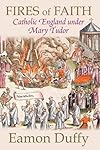
I read Duffy's excellent book: The Stripping of the Altars: Traditional Religion in England, 1400-1580 and found it a feast of Reformation History that heretofore was untold and somewhat obscure. This book, Fires of Faith, is more of a Roman Catholic apologetic for intolerance and incompetence wreaked by Mary Tudor's regime, precisely that aspect of her reign that is quite indefensible. Duffy tries to highlight positive attributes of the regime, but is unconvincing at every turn. The show more grotesque burnings are defended as part of the times and we are asked to consider this as part of a zero sum game between 16th Century Roman Catholicism and Protestantism. Maybe so, but this still leaves naked the sheer inanity of the regime; Duffy admits as much in acknowledging that the burnings and circus-like show trials were counter-productive. I should say so. Although alluded to, Mary's morose psychological need for settling scores by acting in a self-destructive manner is never discussed at length. This is important given the evidence of her severely depressed and delusional state. Likewise Duffy ignores the larger historical context, including Mary's extremely unpopular marriage to Philip II (who surreptitiously left the squalid scene posthaste for Spain, never intending to return), the loss of Calais, and Mary's (ironic) tearful and significant fights with Pope Paul IV over his anti-Habsburg policies.
At the end of the book, I felt an amazing sense of relief that Elizabeth I came on the scene and established the Via Media. Her dislike of Mary's religious policies was well known by the public and it was expected that a change would occur when she became Queen. They were correct. Upon her accession, heresy laws were instantaneously repealed and the the burnings ceased, immediately. During Mary's reign one could be reported to the authorities for not fingering Rosary beads. Her intolerance is not to be measured by our standards, I grant you that. However, it should be noted that the great English Church composer, Thomas Tallis, was a Catholic and a Gentleman of Elizabeth's Chapel Royal, until his death. In 1575 Queen Elizabeth granted Tallis and William Byrd (Tallis's pupil and also a Catholic) a monopoly in England on printing music. Yes, Elizabeth I established an ambiguous religious settlement but as long as one did not express the wish to overthrow her (alas, Pope Paul IV made it a sin for Catholics to obey her - Regnans in Excelsis, the papal bull deposing Elizabeth, 1570), you could practice your Catholicism after paying a fine. After reading Duffy's book, the prospect of finding a comparable example of such intelligent and open thinking during Mary's reign is grimly ludicrous. show less
At the end of the book, I felt an amazing sense of relief that Elizabeth I came on the scene and established the Via Media. Her dislike of Mary's religious policies was well known by the public and it was expected that a change would occur when she became Queen. They were correct. Upon her accession, heresy laws were instantaneously repealed and the the burnings ceased, immediately. During Mary's reign one could be reported to the authorities for not fingering Rosary beads. Her intolerance is not to be measured by our standards, I grant you that. However, it should be noted that the great English Church composer, Thomas Tallis, was a Catholic and a Gentleman of Elizabeth's Chapel Royal, until his death. In 1575 Queen Elizabeth granted Tallis and William Byrd (Tallis's pupil and also a Catholic) a monopoly in England on printing music. Yes, Elizabeth I established an ambiguous religious settlement but as long as one did not express the wish to overthrow her (alas, Pope Paul IV made it a sin for Catholics to obey her - Regnans in Excelsis, the papal bull deposing Elizabeth, 1570), you could practice your Catholicism after paying a fine. After reading Duffy's book, the prospect of finding a comparable example of such intelligent and open thinking during Mary's reign is grimly ludicrous. show less
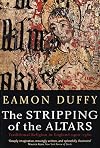
One of those classics of late medieval/early modern history that it's assumed anyone in the field has read, and that I've thus long felt guilty for never having done so. In my defense it is a brick of a book, crammed full of evidence for the vitality of religious life on a personal and parochial life in an England on the verge of the Reformation.
Eamon Duffy marshalls a wide array of sources—wills, journals, liturgies, and more—to I think successfully make the case that, contra many show more centuries of historiography that was Protestant in its sympathies, Catholicism in late medieval England was far from moribund, at least at a grass-roots level. I would also agree with him that the shift of the general population's religious convictions, identities, and preferences took place over a span of generations and was not so abrupt as had often been assumed. As for Duffy's framing of the actions of the reformers overall actions and the chronological framework he employs, your feelings about it will probably be shaped by whether your allegiances lie with Rome (as Duffy's clearly do) or against. show less
Eamon Duffy marshalls a wide array of sources—wills, journals, liturgies, and more—to I think successfully make the case that, contra many show more centuries of historiography that was Protestant in its sympathies, Catholicism in late medieval England was far from moribund, at least at a grass-roots level. I would also agree with him that the shift of the general population's religious convictions, identities, and preferences took place over a span of generations and was not so abrupt as had often been assumed. As for Duffy's framing of the actions of the reformers overall actions and the chronological framework he employs, your feelings about it will probably be shaped by whether your allegiances lie with Rome (as Duffy's clearly do) or against. show less

I found this less gripping than the other Duffy works I have read, and at times it seemed that Duffy the Catholic and Duffy the historian had come to awkward compromises. There were certain details of history that I expected, but did not find.
That said, it is really an amazing feat to include the whole history of the popes into a single readable volume. I certainly recommend reading this book, but it is not the last word on the subject.
I read the 2014 fourth edition.
That said, it is really an amazing feat to include the whole history of the popes into a single readable volume. I certainly recommend reading this book, but it is not the last word on the subject.
I read the 2014 fourth edition.

At first sight confirms all we ever thought about medieval Catholicism, but the message is that this was popular and regretted when it was lost. Details the enthusiasm for return to images and sacramentalism in many parishes and their efforts to preserve images when they were out of favour. Purgatory was a dominant fear and tremendous efforts were exerted to call upon those left behind to shorten it with prayer. The Host was worshipped and when Mary returned people in Kent were forced to show more kneel before it. He says that the service was widely understood, even in Latin, and there was a lot of religious material available in English. However Bibles were rapidly removed when Catholics returned and sermons were about morality not knowledge. Elizabeth's long reign ensured that all the imagery eventually was lost and did not return.
Very long book but beautifully written passages make it compelling reading.
It is an answer to the standard Protestant account of the Reformation provided by Dickens in the 80s. show less
Very long book but beautifully written passages make it compelling reading.
It is an answer to the standard Protestant account of the Reformation provided by Dickens in the 80s. show less
Lists
Awards


You May Also Like


Associated Authors
Statistics
- Works
- 29
- Also by
- 9
- Members
- 3,904
- Popularity
- #6,485
- Rating
- 4.0
- Reviews
- 45
- ISBNs
- 72
- Languages
- 8
- Favorited
- 6
