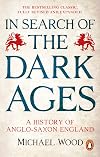
Vivid and thorough story, doing his utmost to highlight the lives of ordinary people, or at least, non-Kings, especially women.
The church when Christianity is adopted, gets very involved, providing administrative skills, guidance (?) dispassionate help (?) prayer support, encouragement against the pagans. It seems reliant on Monasticism, ritual, relics, but not much on the bible. A couple of references to translations of the gospels into the vernacular.
One feels sorry for the way that the last two centuries of A/S life was blighted by the Viking invasions.
Shocking to hear of slavery throughout, general savagery and chopping off the hands of hostages.
My kindle copy had no maps, but did have an index and good illustrations.
The church when Christianity is adopted, gets very involved, providing administrative skills, guidance (?) dispassionate help (?) prayer support, encouragement against the pagans. It seems reliant on Monasticism, ritual, relics, but not much on the bible. A couple of references to translations of the gospels into the vernacular.
One feels sorry for the way that the last two centuries of A/S life was blighted by the Viking invasions.
Shocking to hear of slavery throughout, general savagery and chopping off the hands of hostages.
My kindle copy had no maps, but did have an index and good illustrations.
The Secret History of Soviet Russia's Police State: Cruelty, Co-operation and Compromise, 1917–91 by Martyn Whittock
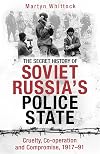
A factual layout of what the secret police did in Russia over most of the 20th century, fully annotated and clearly described, as is usual with Martyn's histories.
From the REd terror, 1918, (15000 deaths in 2 months), via the Civil war and Ukrainian (Kulak) famine, (part of collectivisation, cost 5M souls) to the Great Terror, 1937-8, (8m arrested, 1m shot, 2m dead in camps, in 2 years) and on to the Empire of recession; life in the Gulag before during and after the Patriotic war. Then there's everything they did to the Eastern European nations they liberated.
INcredibly they had an election in 1918, 42m voted, (turnout something like 60%), The Bolsheviks got only 24% the SRs got 42% and others were split. They had an assembly which was broken up after just one day, the B were not giving up power.
What had the Russian people done to deserve this? They fell into the hands of monomaniacs without any scruples.
From the REd terror, 1918, (15000 deaths in 2 months), via the Civil war and Ukrainian (Kulak) famine, (part of collectivisation, cost 5M souls) to the Great Terror, 1937-8, (8m arrested, 1m shot, 2m dead in camps, in 2 years) and on to the Empire of recession; life in the Gulag before during and after the Patriotic war. Then there's everything they did to the Eastern European nations they liberated.
INcredibly they had an election in 1918, 42m voted, (turnout something like 60%), The Bolsheviks got only 24% the SRs got 42% and others were split. They had an assembly which was broken up after just one day, the B were not giving up power.
What had the Russian people done to deserve this? They fell into the hands of monomaniacs without any scruples.
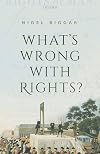
Formidable interaction with the notion of "Human Rights". Lots of doubts about them, when imposed by courts, without regard to actual problems on the ground, or the prevailing moraity.
But he has several chapters of difficult theoretical issues before getting to the issues that interest us today in the last three chapters, and his conclusions would be the best way to approach the book.
But he has several chapters of difficult theoretical issues before getting to the issues that interest us today in the last three chapters, and his conclusions would be the best way to approach the book.
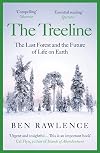
Interesting exploration of the Northern forests, linking each areas forests to one species. Scotch Pine, Scotland; Birch, Lapland; Larch, (deciduous pine), Siberia; White Spruce, Alaska; Balsam Poplar, truly deciduous tree with mining taproots, Canada.
Mixes up information about the trees with an account of the local people impacted by the forests and civilisation. Also a fair bit of rather speculative stuff about the products of the trees and the Edenic life lived by everybody before the West got to them.
Could have been shorter and maps would be a great help. Good index and references.
Mixes up information about the trees with an account of the local people impacted by the forests and civilisation. Also a fair bit of rather speculative stuff about the products of the trees and the Edenic life lived by everybody before the West got to them.
Could have been shorter and maps would be a great help. Good index and references.
Greywacke: How a Priest, a Soldier and a School Teacher Uncovered 300 Million Years of History by Nick Davidson
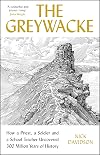
Enjoyable account of the development of geology in Victorian times by Sedgwick, Murchison and Lapworth. Such different character, Murch flamlbuoyant, Sedgewick resentful and oppressed with work and Lapworth completely self effacing, a saint! Its got a glossary and good footnotes but without being a geologist its hard to follow exactly what these men were doing. Whatever it was it involved hours of exposure to the wilds then deep cogitation later on.
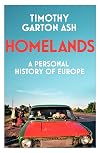
Thorough, he seems to have interviewed everyone and attended everything of significance. Loads of detail and all the ups and downs described. Its a happy story as the Iron Wall falls but it goes downhill steadily from there. Democracy gone in Hungary, going elsewhere, Ukraine invaded, and the tragedy of Brexit. Lots of good quotes: "pessimism of the intellect, optimism of the will". Dont despair, dont get into fatalism, and he does believe that individuals can make a difference, bad as well as good.
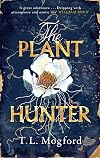
A young man goes looking for exotic plants in China; an enjoyable travelogue to China in C19 with acknowledgement of the malign effects of the British in China. Its supposed to be 1869, our hero goes up the Yangtze, to the river Yuan into the Miao mountains. The plot is rather clunky, with some implausible developments, but the descriptions of life in those remote times and places is interesting and sounded genuine.
The Lie of the Land: By the Sunday Times bestselling author of The Lost Rainforests of Britain by Guy Shrubsole
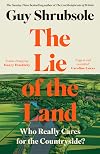
His message is that ownership of land cannot mean that you can do what you like with it. Everybody has a stake in it, whether the aristocrats like it or not, especially in this day of warming and species loss. He is particularly against grouse moors, which seem hopelessly damaging. And 50 mil pheasants released into the wild every winter, a foreign species interfering with nature. Lots of interesting stories about introduction of non-native species. Often by the Earl of Bedford.
Its odd to see the Fens described as a disaster, (contrived by the E of Bedford), after 400 years of crops from the (shrinking) peat. Lots of other interesting stuff about the Enclosures, and it turns out that ouer National Parks are almost wholly owned by private landlords! Even th USA has them owned by the state!
Its odd to see the Fens described as a disaster, (contrived by the E of Bedford), after 400 years of crops from the (shrinking) peat. Lots of other interesting stuff about the Enclosures, and it turns out that ouer National Parks are almost wholly owned by private landlords! Even th USA has them owned by the state!
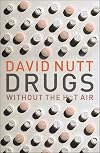
A comprehensive discussion of the whole area, with practical sections, e.g. what should I tell my children, and he highlights www.drugscience.org.uk as a source of info.
Alcohol and tobacco much the most dangerous, opium and cocaine very addictive and destructive, most of the rest, e.g. cannabis and ecstasy not worth the angst really. All the facts are there, and lots of interesting stories.
He is, like nearly all other writers, strong on the hopelessness of the "War on drugs" and the harm it has done.
He is very keen on the psychedelics; are they going to transform future drug therapy? Sadly they don't seem much use to Schizophrenia, but PTSD, depression OCD maybe.
Very keen to deal with it all scientifically, not by morality. I am not sure that is possible.
Alcohol and tobacco much the most dangerous, opium and cocaine very addictive and destructive, most of the rest, e.g. cannabis and ecstasy not worth the angst really. All the facts are there, and lots of interesting stories.
He is, like nearly all other writers, strong on the hopelessness of the "War on drugs" and the harm it has done.
He is very keen on the psychedelics; are they going to transform future drug therapy? Sadly they don't seem much use to Schizophrenia, but PTSD, depression OCD maybe.
Very keen to deal with it all scientifically, not by morality. I am not sure that is possible.
The Secret History of Alcoholism: The Story of Famous Alcoholics and Their Destructive Behaviour by James Graham
Intriguing book finding alcohol behind much of human history. Outlines the tendency of alcoholics to lie, be violent, egotistical, and sometimes to murder. Then goes over the stories of all the notorious violent drunks he can find.
Certain sure signs of alcoholism enable him to identify it where historians have missed out. Remembering your first drink, morning drinking, FH of it, benders, (going absent and boozing), blackouts, superficial emotions, amazing tolerance of booze. Then he labels various people in history as alcoholics, when others have mistaken them as heavy drinkers. He feels there is a characteristic psychology of alcoholics.
IN particular Alcoholism causes egomania.
Alcoholics find alcohol very stimulating.
Is alcoholism a sufficient explanation for Stalin's outrages? And Alexanders, and Ivan the Terrible's? Is alcoholism a disease, or just the end of a spectrum of drinking?
Certain sure signs of alcoholism enable him to identify it where historians have missed out. Remembering your first drink, morning drinking, FH of it, benders, (going absent and boozing), blackouts, superficial emotions, amazing tolerance of booze. Then he labels various people in history as alcoholics, when others have mistaken them as heavy drinkers. He feels there is a characteristic psychology of alcoholics.
IN particular Alcoholism causes egomania.
Alcoholics find alcohol very stimulating.
Is alcoholism a sufficient explanation for Stalin's outrages? And Alexanders, and Ivan the Terrible's? Is alcoholism a disease, or just the end of a spectrum of drinking?
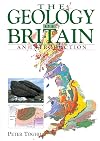
Thorough intro going over basics, including stuff about magnetising of fresh rock and the regular reversing of the magnetic pole means they can plot new rock moving across the ocean plates at 3-15cm/year. Then he gets going with the description of Britain starting with the old rocks in Scotland and moving SE to the rest of UK. Its all amazingly complex, but seems to have been sorted out convincingly.
Lots of very good illustrations, maps and diagrams.
Lots of very good illustrations, maps and diagrams.
Roy loses his job, stages a protest and drops his family into a financial crisis. They are incredibly dysfunctional anyway and the three elder kids have gone their different ways, highly odd with one being thrown out by Roy. Lots of rather extreme events, but all the family members turn out to have a nice side to them. The central character is eventually understood, or at least accepted and they all find more contentment. Interesting observations about a later child in the family, and how families run along when the spark has gone.
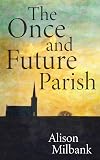
Spirited book saying that the parish is our key resource in reaching England. Embrace localism. Stop pulling all resources into the diocese, invest in your ordained clergy, give up on management techniques. Overlaps to some extent with teh views of www.psephizo. Some interesting specifics on Messy church and HTB, no creed, no communion, creaming off the young,
Where we talk about the Bible she relies on the church.
Where we talk about the Bible she relies on the church.
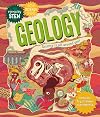
Very short introduction, goes over all the basics, igneous, sedimentary and metamorphic rocks, crusts, magma and core, in two layers, both metallic the inner solid, but no mention of what is actually in there!) The rock cycle, different sorts of all the rock types. But sorting it all out from contemplation of cliff faces is amazing. Brief outlines of the historical figures. The experiments looked a bit feeble, what about something on identifying stones?
The Peepshow: The thrilling new page-turner from Britain’s top-selling true crime writer by Kate Summerscale
Seems to be a review of all the information gathered about the murders associated with Christie. Loads of interesting stuff about the lives of people in London of the 50s, but came to no new or particular conclusions. Lots of padding about the crime writer who got involved and the top reporter who was full of self disgust over his writing.
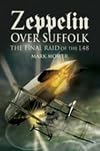
The story of Zeppelin L48, shot down over Theberton on 17th June 1917 after scattering its bombs around Kirton and Leiston for a few hours. Artillery didnt get it but three aircraft did, when it dropped to the sort of altitude they could reach with incendiary bullets. 3 crew survived one dying later of wounds. Their compass froze, many of the crew suffered from Hypoxia, generally a suicidal mission.
They seemed to make a determined effort with the Zeps, 45 of them but navigation was difficult and they were easy to shoot down.
One of the fighter planes attacking L 48 was a FE2b made by Ransomes, and piloted by Holder who took it over the works to the delight of the workers there.
Farman Experimental, The Wright Flyer flew in 1903, Kittiwake. The rapid development of aircraft technology.
They seemed to make a determined effort with the Zeps, 45 of them but navigation was difficult and they were easy to shoot down.
One of the fighter planes attacking L 48 was a FE2b made by Ransomes, and piloted by Holder who took it over the works to the delight of the workers there.
Farman Experimental, The Wright Flyer flew in 1903, Kittiwake. The rapid development of aircraft technology.
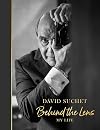
I wanted to see what he had to say about his faith. 1986 aged 40 in a hotel realised he wanted to look into the afterlife, so he bought a NT and started with Romans, discovering "a way of life I wanted to be part of, about how people should respond to others". He identified this as love later and it took another 20 years before he professed total faith in Christianity. He says he definitely never proselytises. Takes tremendous trouble over his roles, genning up on the literature and thinking deeply how the character will sound. The book is illustrated with loads of - I presume - his own photos. Lots of loves, family, canals, drums, clarinet. Father a rich gynaecologist. Jewish Lithuanian origin.
A massive book with 200 pages of notes, and many others answering his critics. Its really part of the culture wars, saying that the Empire was not all bad, that later on it was ethically driven (at least from the centre), that it could not be compared to a vehemently racist and murderous regime like Nazi Germany. All the notorious scandals are looked at and sometimes regretted, at other times shown to be less awful than usually presented.
Well written prose, very readable.
Well written prose, very readable.
Vivid account of her drug addiction, which seemed to go on way beyond the book's end. I am amazed she survived unscathed, and has had two kids and is now married, although not to the father, (who seems to be on good terms). All happened in London, describes her hidey hole in Westminster Bridge, lots of info about the low life of London in the 80s. But why did she ever start? Her older brother seems a settled character, but she was always a risk taker, and the breakup of her parents marriage then a couple of unsuitable successors didn't help.
A very important for our society and timely. Also on BBC Radio 4.
some quotes:
DSM lists ADHD as a neurodevelopmental disorder. Something interesting happens when a disorder gets into the DSM, it makes it feel like it is a discrete entity. The condition is considered ratified, support groups emerge and the disorder is given longevity. 185
The effects of labelling on identity: people sometimes identify with the label and behaviour conforms, people can comply with the stereotypes, not always but when a diagnosis opens the door to help, validates suffering and attracts a community, why would they not? 200
People relate to something in that new diag and change to fit, "making up people". It instructs them on which new signs to look out for. It changes people, they conform to it 253
some quotes:
DSM lists ADHD as a neurodevelopmental disorder. Something interesting happens when a disorder gets into the DSM, it makes it feel like it is a discrete entity. The condition is considered ratified, support groups emerge and the disorder is given longevity. 185
The effects of labelling on identity: people sometimes identify with the label and behaviour conforms, people can comply with the stereotypes, not always but when a diagnosis opens the door to help, validates suffering and attracts a community, why would they not? 200
People relate to something in that new diag and change to fit, "making up people". It instructs them on which new signs to look out for. It changes people, they conform to it 253
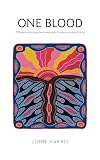
The definitive account of the story, till now at any rate. The first 100 years seems to have been non-stop failure. Failure to touch adult Abos; but unlike the settlers they counted them as human from the word go, and expressed compassion. But all the while the Blackfellows sickened and died.
The missionaries arrived with certain fixed ideas: that they were all the condemned children of Ham, and that they needed civilising as much as Christianity. They were intolerant of different sexual and marital mores, and even criticised them for sabbath breaking!!!
They thought they had to get them to learn English, hence the desire to get the children out of their families. They quickly found the children were as bright as others but they were never settled away from their tribe.
Total failure to come to terms with hunter gatherer lifestyle and to look for any redeeming features in their beliefs.
As far as I've got, I cannot read it all, it was only when they began to learn their languages and provide the bible in them that progress was made.
The missionaries arrived with certain fixed ideas: that they were all the condemned children of Ham, and that they needed civilising as much as Christianity. They were intolerant of different sexual and marital mores, and even criticised them for sabbath breaking!!!
They thought they had to get them to learn English, hence the desire to get the children out of their families. They quickly found the children were as bright as others but they were never settled away from their tribe.
Total failure to come to terms with hunter gatherer lifestyle and to look for any redeeming features in their beliefs.
As far as I've got, I cannot read it all, it was only when they began to learn their languages and provide the bible in them that progress was made.
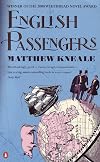
Combines two stories, one is the tale of some crackpot Englishmen who set out to find Eden in Tasmania, or to prove other half cocked ideas on the way, the other story is an imaginative reconstruction of what we know happened to the Tasmanian Abos.
Its a bit long, the first story provides some comic relief. But I didnt read it all.
Its a bit long, the first story provides some comic relief. But I didnt read it all.
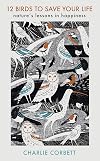
Nice book about how rediscovering Nature, in particular birdlife helped him recover from the loss of his mother. 12 chapters more about his personal issues and his eccentric relations than about the birds, but interesting snippets about the birds.
Gives a great description of a panic attack and has lots of charming stories of bird sights he has seen. He must have marvellous eyesight, but I can testify that he is right about skylarks.
Finds spiritual sustenance in the beauty complexity and unselfconscious business of nature all around him.
Gives a great description of a panic attack and has lots of charming stories of bird sights he has seen. He must have marvellous eyesight, but I can testify that he is right about skylarks.
Finds spiritual sustenance in the beauty complexity and unselfconscious business of nature all around him.
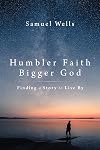
When I read that Sam wrote this because he disliked Tim Kellers book on God I had to read it.
He identifies ten arguments against faith and describes for his readers reasonable answers to all the doubts. He is a capable and vivid writer who is readable and he vigorously describes the problems with Christianity!
Each objection is met with the traditional account, then a rival account is offered, and finally his own proposal. It is all a bit complex.
The bible is used at important points and effectively helps the argument.
I think the great hope offered is resurrection, and so there is not a great deal about sin and the cross.
He identifies ten arguments against faith and describes for his readers reasonable answers to all the doubts. He is a capable and vivid writer who is readable and he vigorously describes the problems with Christianity!
Each objection is met with the traditional account, then a rival account is offered, and finally his own proposal. It is all a bit complex.
The bible is used at important points and effectively helps the argument.
I think the great hope offered is resurrection, and so there is not a great deal about sin and the cross.

Nearly gave this book to a charity shop before I realised it was just what I had been looking for, an attempted assessment of the evangelical approach to theology.
Written in the 90s when it felt confident about its success, things are different now, with an unsuccessful ABC just leaving his post and the evangelicals sharing everyone else's decline.
Nevertheless a thorough review of our beliefs in the light of modernity and the enlightenment, with interesting criticisms of Warfield's approach.
Written in the 90s when it felt confident about its success, things are different now, with an unsuccessful ABC just leaving his post and the evangelicals sharing everyone else's decline.
Nevertheless a thorough review of our beliefs in the light of modernity and the enlightenment, with interesting criticisms of Warfield's approach.

The charming story of this bright young country girl who gets self educated but falls for a wastrel and keeps trusting him again. Along the way posh neighbours recognise her worth and try to help her but are always turned down.
It is based on her own simple account, written at the suggestion of the local Mrs E Cobbold, who herself wrote a novel when she was Miss Snipe. By that time she had lived a score of years in Tattingstone Workhouse. The story starts in 1740 and ends in about 1800. In between we see life in poverty in Sproughton, and in danger in the Gordon riots in London.
The workhouse comes out of it very well, offering kindness and support within the restrictions of the rules.
It is based on her own simple account, written at the suggestion of the local Mrs E Cobbold, who herself wrote a novel when she was Miss Snipe. By that time she had lived a score of years in Tattingstone Workhouse. The story starts in 1740 and ends in about 1800. In between we see life in poverty in Sproughton, and in danger in the Gordon riots in London.
The workhouse comes out of it very well, offering kindness and support within the restrictions of the rules.
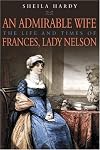
Enjoyable but detailed rehabilitation of the reputation of Nelson's wife. She seems to have been an affectionate, loyal and sensible wife, badly used, eventually by her heroic husband.
Lots of detail of the daily lives and meetings of the middle classes and the hunger for influence at court, and the constant worries about money.
Fanny brought up on Nevis in the Caribbean.
Lots of detail of the daily lives and meetings of the middle classes and the hunger for influence at court, and the constant worries about money.
Fanny brought up on Nevis in the Caribbean.
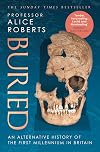
Vivid descriptions of the findings from various sites in the UK. Roughly chronological through teh first 7 centuries of the Common Era. Fascinating details about the findng of the deposits, often thanks to metal detectorists, and how they can be investigated. Mostly this is written before DNA analysis arrives.
In the last few chapters she gets into prolonged discussions of ethnicity, race, culture, and identity. Relating it to Brexit and US quarrels about being "Anglo Saxons".
In the last few chapters she gets into prolonged discussions of ethnicity, race, culture, and identity. Relating it to Brexit and US quarrels about being "Anglo Saxons".
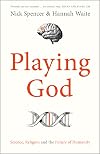
Thorough treatment of what it tackles. Religion does have something to say to science, it needs a conversation, not a shouting match, it all revolves around the question, "What is a human"?
The chapters cover the following topics.
Cryonics to live forever?
Extra-terrestrial life, what if there is intelligent life out there?
Anti-vaxxers
Are animals people if not why? Language
Will AI become human, The importance of bodies
A scientific cure for sadness
The unformed body, abortion, very helpful here.
Editing the genome.
The chapters cover the following topics.
Cryonics to live forever?
Extra-terrestrial life, what if there is intelligent life out there?
Anti-vaxxers
Are animals people if not why? Language
Will AI become human, The importance of bodies
A scientific cure for sadness
The unformed body, abortion, very helpful here.
Editing the genome.

His message seems compelling, after death comes sleep till judgement; then for those who were unrepentant its destruction. No eternal torment. Eternal is the verdict not the duration.
But that leaves the whole issue of "the judgement", no Grove books on that!
The same man wrote one of my favourite science and faith books.
But that leaves the whole issue of "the judgement", no Grove books on that!
The same man wrote one of my favourite science and faith books.