
Samuel Wells
Author of Improvisation: The Drama of Christian Ethics
About the Author
Samuel Wells (PhD, University of Durham) is vicar of St. Martin-in-the-Fields Anglican Church at Trafalgar Square in London and visiting professor of Christian ethics at King's College. He has written numerous books, including Be Not Afraid.
Works by Samuel Wells
Living Without Enemies: Being Present in the Midst of Violence (Resources for Reconciliation) (2011) 55 copies
Joining the Angels' Song: Eucharistic Prayers for Sundays and Holy Days, Years A, B & C (2016) 9 copies
Finding Abundance in Scarcity: Steps Towards Church Transformation A HeartEdge Handbook (2021) 5 copies
Mediterranean Days 1 copy
Associated Works
Faithfulness and Fortitude: Conversations with the Theological Ethics of Stanley Hauerwas (2000) — Editor, some editions; Editor — 27 copies
Living Out Loud: Conversations about Virtue, Ethics and Evangelicalism (2010) — Contributor — 17 copies
Tagged
Common Knowledge
- Canonical name
- Wells, Samuel
- Legal name
- Wells, Samuel
- Other names
- 塞繆爾.韋爾斯
- Birthdate
- 1965
- Gender
- male
- Nationality
- UK
- Associated Place (for map)
- UK
Members
Reviews
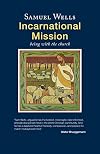
I’ve been reading Incarnational Mission by Wells with great admiration. So much wisdom about the difference between knowing what people need and giving it to them and helping them perceive their need and ultimately sharing with them in their need, because so much of what we all really need, is just not available. He takes us through the many different aspects of “being With” the world, attending, partnering, participating, enjoying, even mystery and he has such a perceptive way of show more understanding the different sorts of people with whom we must incarnate the presence of Jesus. He sees the antagonistic, the indifferent, those from different religions, the seekers, and then he goes on to share remarkable insights about the nature of organizations, as distinct from institutions, and governments. Its all illustrated with remarkable stories from people’s lives, so what’s not to like? Well it just doesn’t seem to be what goes on in the New Testament when believers meet others. Instead of sharing with there seems to be a quick slide to conflict. Confrontation rather than partnership. I am not a quarrelsome person and have no desire to disagree but that seems to be what happens in NT times of witness. I don’t like the sort of teaching which implies that unless we are being persecuted we are not doing it properly, that we must always be ‘contending’ for the faith or we are wasting our time, but unfortunately there does seem to be some truth in such an idea.
Maybe it was because they were in exceptional times, the message was raw in NT days, but more likely its because the emphasis in this book is on Incarnation rather than something else, Gospel or cross or salvation.
The conciliatory answer is to say that we all need both, but then I feel that Wells could have helped us more with something about how to get a challenge across. You can take humility too far, or maybe you just have to be willing to offend at times. show less
Maybe it was because they were in exceptional times, the message was raw in NT days, but more likely its because the emphasis in this book is on Incarnation rather than something else, Gospel or cross or salvation.
The conciliatory answer is to say that we all need both, but then I feel that Wells could have helped us more with something about how to get a challenge across. You can take humility too far, or maybe you just have to be willing to offend at times. show less
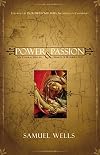
This is a hard book to review. It has some brilliant insights and sections, but they are kind of scattered, so the book lacks consistency.
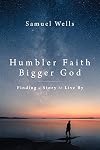
When I read that Sam wrote this because he disliked Tim Kellers book on God I had to read it.
He identifies ten arguments against faith and describes for his readers reasonable answers to all the doubts. He is a capable and vivid writer who is readable and he vigorously describes the problems with Christianity!
Each objection is met with the traditional account, then a rival account is offered, and finally his own proposal. It is all a bit complex.
The bible is used at important points and show more effectively helps the argument.
I think the great hope offered is resurrection, and so there is not a great deal about sin and the cross. show less
He identifies ten arguments against faith and describes for his readers reasonable answers to all the doubts. He is a capable and vivid writer who is readable and he vigorously describes the problems with Christianity!
Each objection is met with the traditional account, then a rival account is offered, and finally his own proposal. It is all a bit complex.
The bible is used at important points and show more effectively helps the argument.
I think the great hope offered is resurrection, and so there is not a great deal about sin and the cross. show less
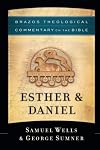
This volume is a welcome addition to the Brazos Theological Commentary on the Bible series. This series lies somewhere between exegesis and exposition. As the title suggests the theological issues are to the fore and this provides a fresh approach.
Samuel Wells, rector of St Martins-in-the-Field, London, takes a narrative view of Esther. Some commentaries concentrate on the leaves of a tree, Wells focuses on the forest. This is no atomistic approach. In his opening chapter he uses the terms show more farce, burlesques-style, a study in improvisation to describe it. This is no dry and dusty tome. He brilliantly opens up Esther and shows the book to be both far fetched and existentially urgent.
Wells is author of Improvisation: The Drama of Christian Ethics and he also sees elements of improvisation within Esther. Intriguingly, he sees the key question of Esther as "How to navigate the dangerous waters of exile, between the two extremes of spineless assimilation and fruitless resistance?"
George Sumner is professor of World Mission at Wycliffe College, Toronto, and so inevitably and intriguingly the missional elements of Daniel are highlighted. As he writes in the introduction: "There is no missiology without Christology (and vice versa), even as there is no Christology without staurology." He, as does Wells, provides a Christological perspective on the text. He sees Daniel as a single coherent work - despite its redactional history. He takes a "circulatory system" approach, where a major artery runs directly from Daniel to Revelation and he rightly interprets the two books in relation.
Sumner does not suffer from chronological snobbery and he freely uses Calvin, Jerome, Melanchthon and others to help make sense of the text.
There is a subject index and a useful scripture index.
Of the making of commentaries there seems so end. So what fresh insights does this volume offer? The strength is that Wells provides a drama-tic setting to Esther and Sumner brings missional insights to the understanding of dabble. Both authors take seriously the Christological and canonical settings of the books. The weakness is that there is no common format. But then, perhaps that is a strength - each author is free to do what they would like and thus play to their strengths. show less
Samuel Wells, rector of St Martins-in-the-Field, London, takes a narrative view of Esther. Some commentaries concentrate on the leaves of a tree, Wells focuses on the forest. This is no atomistic approach. In his opening chapter he uses the terms show more farce, burlesques-style, a study in improvisation to describe it. This is no dry and dusty tome. He brilliantly opens up Esther and shows the book to be both far fetched and existentially urgent.
Wells is author of Improvisation: The Drama of Christian Ethics and he also sees elements of improvisation within Esther. Intriguingly, he sees the key question of Esther as "How to navigate the dangerous waters of exile, between the two extremes of spineless assimilation and fruitless resistance?"
George Sumner is professor of World Mission at Wycliffe College, Toronto, and so inevitably and intriguingly the missional elements of Daniel are highlighted. As he writes in the introduction: "There is no missiology without Christology (and vice versa), even as there is no Christology without staurology." He, as does Wells, provides a Christological perspective on the text. He sees Daniel as a single coherent work - despite its redactional history. He takes a "circulatory system" approach, where a major artery runs directly from Daniel to Revelation and he rightly interprets the two books in relation.
Sumner does not suffer from chronological snobbery and he freely uses Calvin, Jerome, Melanchthon and others to help make sense of the text.
There is a subject index and a useful scripture index.
Of the making of commentaries there seems so end. So what fresh insights does this volume offer? The strength is that Wells provides a drama-tic setting to Esther and Sumner brings missional insights to the understanding of dabble. Both authors take seriously the Christological and canonical settings of the books. The weakness is that there is no common format. But then, perhaps that is a strength - each author is free to do what they would like and thus play to their strengths. show less
Awards
You May Also Like


Associated Authors
Statistics
- Works
- 53
- Also by
- 3
- Members
- 1,615
- Popularity
- #15,955
- Rating
- 4.0
- Reviews
- 15
- ISBNs
- 145
- Languages
- 2
- Favorited
- 5