
Stanley Hauerwas
Author of Resident Aliens
About the Author
Stanley Hauerwas, one of America's best-known and most highly regarded contemporary theologians, is the author of many notable works, including The Work of Theology, Approaching the End, Hannah's Child, and Growing Old in Christ.
Image credit: Used by permission of Baker Publishing Group, copyright © 2008. All rights to this material are reserved. Materials are not to be distributed to other web locations for retrieval, published(see © info.)
Series
Works by Stanley Hauerwas
With the Grain of the Universe: The Church's Witness and Natural Theology (2001) 345 copies, 4 reviews
After Christendom? How the Church Is to Behave If Freedom, Justice, and a Christian Nation Are Bad Ideas (1991) 269 copies, 1 review
Living Gently in a Violent World: The Prophetic Witness of Weakness (Resources for Reconciliation) (2008) 237 copies, 4 reviews
A Better Hope: Resources for a Church Confronting Capitalism, Democracy, and Postmodernity (2001) 231 copies, 1 review
The Blackwell Companion to Christian Ethics (2004) — Editor; Contributor, some editions — 185 copies, 1 review
Suffering Presence: Theological Reflections on Medicine, the Mentally Handicapped and the Church (1986) 114 copies
A Cross-Shattered Church: Reclaiming the Theological Heart of Preaching (2009) 114 copies, 2 reviews
Wilderness Wanderings: Probing Twentieth-century Theology And Philosophy (Radical Traditions, Theology in a Post-Critical Key Series) (1997) 108 copies, 1 review
Christians Among the Virtues: Theological Conversations With Ancient and Modern Ethics (1997) 103 copies, 1 review
War and the American Difference: Theological Reflections on Violence and National Identity (2011) 101 copies
Christianity, Democracy, and the Radical Ordinary: Conversations Between a Radical Democrat and a Christian (2008) 47 copies
Jesus Changes Everything: A New World Made Possible (Plough Spiritual Guides) (2025) 45 copies, 2 reviews
Theology Without Foundations: Religious Practice and the Future of Theological Truth (1994) — Editor — 45 copies
The Wisdom of the Cross: Essays in Honor of John Howard Yoder (1999) — Editor; Contributor — 38 copies
Postliberal Theology and the Church Catholic: Conversations with George Lindbeck, David Burrell, and Stanley Hauerwas (2012) — Interviewee — 36 copies
Beginnings: Interrogating Hauerwas (T&T Clark Enquiries in Theological Ethics) (2017) — Author — 13 copies
Fully Alive: The Apocalyptic Humanism of Karl Barth (Richard E. Myers Lectures: Presented by University Baptist Church, Charlottesville) (2022) 10 copies
Responsibility for Devalued Persons: Ethical Interactions Between Society, the Family, and the Retarded (1982) 5 copies, 1 review
Pentecostals and Nonviolence: Reclaiming a Heritage (Pentecostals, Peacemaking, and Social Justice) (2012) — Foreword; Preface — 4 copies
Remembering: A Biography of Books 3 copies
Η πολιτική του Ευαγγελίου 1 copy
The Path to Serenity 1 copy
Associated Works
Heresies and How to Avoid Them: Why It Matters What Christians Believe (2007) — Foreword — 269 copies, 2 reviews
The Modern Theologians: An Introduction to Christian Theology Since 1918 (2005) — Contributor, some editions — 217 copies, 1 review
The Life of Meaning: Reflections on Faith, Doubt, and Repairing the World (2007) — Contributor — 132 copies, 5 reviews
The Fate of Communion: The Agony of Anglicanism and the Future of a Global Church (2006) — Foreword — 102 copies
Must Christianity Be Violent?: Reflections on History, Practice, and Theology (2003) — Contributor — 94 copies
Virtues and Practices in the Christian Tradition: Christian Ethics after MacIntyre (1997) — Contributor — 61 copies
Living Well and Dying Faithfully: Christian Practices for End-of-Life Care (2009) — Foreword — 59 copies
A Faith Not Worth Fighting For: Addressing Commonly Asked Questions about Christian Nonviolence (Peaceable Kingdom) (2012) — Foreword — 44 copies, 1 review
A Mind Patient and Untamed: Assessing John Howard Yoder's Contributions to Theology, Ethics, and Peacemaking (2004) — Introduction — 24 copies
On Moral Medicine: Theological Perspectives in Medical Ethics (2012) — Contributor, some editions — 23 copies, 1 review
Living Out Loud: Conversations about Virtue, Ethics and Evangelicalism (2010) — Contributor — 17 copies
Apocalyptic and the Future of Theology: With and Beyond J. Louis Martyn (2012) — Contributor — 8 copies
The Malady of the Christian Body: A Theological Exposition of Paul's First Letter to the Corinthians, Volume 1 (2016) — Foreword — 7 copies
The Freedom of a Christian Ethicist: The Future of a Reformation Legacy (2016) — Contributor — 6 copies
The Church Made Strange for the Nations: Essays in Ecclesiology and Political Theology (Princeton Theological Monograph) (2011) — Contributor — 5 copies
Religion and the Politics of Peace and Conflict (Princeton Theological Monograph) (2009) — Contributor — 3 copies
Tagged
Common Knowledge
- Canonical name
- Hauerwas, Stanley
- Legal name
- Hauerwas, Stanley Martin
- Other names
- 侯活士
- Birthdate
- 1940-07-24
- Gender
- male
- Education
- Southwestern University (BA)
Yale University (BD, MA, MPhil, PhD)
University of Edinburgh (DD) - Occupations
- theologian
ethicist
public intellectual - Organizations
- Duke Divinity School
University of Notre Dame
University of Aberdeen - Awards and honors
- America's Best Theologian (Time Magazine, 2001)
- Nationality
- USA
- Birthplace
- Pleasant Grove, Texas, USA
- Places of residence
- Durham, North Carolina, USA
- Associated Place (for map)
- USA
Members
Reviews
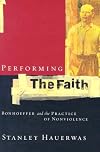
Hauerwas is always challenging and thought-provoking. This work on Bonhoeffer is no different.
In Performing the Faith, Hauerwas uses Bonhoeffer's life to show how Christians can be creative in their practice of non-violence (of course, that's an extremely reductive summary). Here are some examples of the sort of brilliance you'll find:
"No account of the Christian life is adequate that ignores the beauty of God's creation as well as the beauty created in response to that creation we sometimes show more call art" (22).
"Good performers of the Christian faith, like good musicians, are those who have refined the art of allowing themselves to be played by the work even as they perform it" (102).
"The failure to live with humility, a failure common to Christian and non-Christian alike, results in a distorted understanding of the way things are" (127).
"Insights, even about the human condition, are a dime a dozen. People seldom, and rightly so, are willing to risk their lives or even make a small sacrifice on the basis of an 'insight'" (139).
I am a pacifist because I think nonviolence is the necessary condition for a politics not based on death" (201).
The most profound chapter in the book was his pacifist response to 9/11. For Hauerwas, the whole response to the terror attacks were derailed when President Bush first brought up the term "war". That galvanized and misled the entire response to date.
I do have one major frustration with this book, though. It's not about Bonhoeffer, and it's not one logical unit. It's a collection of essays of various levels of academic writing around the theme of non-violence. Bonhoeffer, whose picture and name grace the cover of the book, is only given a two-part essay comprising 39 pages.
Once you understand that, you can give your mind and heart a work-out with these incisive essays. show less
In Performing the Faith, Hauerwas uses Bonhoeffer's life to show how Christians can be creative in their practice of non-violence (of course, that's an extremely reductive summary). Here are some examples of the sort of brilliance you'll find:
"No account of the Christian life is adequate that ignores the beauty of God's creation as well as the beauty created in response to that creation we sometimes show more call art" (22).
"Good performers of the Christian faith, like good musicians, are those who have refined the art of allowing themselves to be played by the work even as they perform it" (102).
"The failure to live with humility, a failure common to Christian and non-Christian alike, results in a distorted understanding of the way things are" (127).
"Insights, even about the human condition, are a dime a dozen. People seldom, and rightly so, are willing to risk their lives or even make a small sacrifice on the basis of an 'insight'" (139).
I am a pacifist because I think nonviolence is the necessary condition for a politics not based on death" (201).
The most profound chapter in the book was his pacifist response to 9/11. For Hauerwas, the whole response to the terror attacks were derailed when President Bush first brought up the term "war". That galvanized and misled the entire response to date.
I do have one major frustration with this book, though. It's not about Bonhoeffer, and it's not one logical unit. It's a collection of essays of various levels of academic writing around the theme of non-violence. Bonhoeffer, whose picture and name grace the cover of the book, is only given a two-part essay comprising 39 pages.
Once you understand that, you can give your mind and heart a work-out with these incisive essays. show less
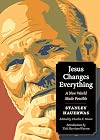
Summary: The radical implications of Jesus’ call to follow him for every area of life from personal to societal.
Did answering the call of Jesus to follow him turn your life upside down (or rather right side up)? Stanley Hauerwas has maintained through all of his writing that Jesus changes everything. Following him isn’t about inspiring messages followed by polite chit-chat in the church lobby that has little effect on life Monday through Saturday. Rather, this collection of readings from show more his works demonstrates how Jesus indeed changes everything from our life orientation to our identification with God’s people to our money, our pursuit of peace, and even our politics.
The book is organized in six sections. What follows is a brief summary to highlight what you will find:
Part I: Following Jesus. Jesus call is a call to follow him, giving him our ultimate allegiance, even unto death, to get out of the boat far from shore and come to him. It’s not a call to an abstract kingdom but into relationship with the living, breathing king. But to follow this king is not a modification of the existing social order, but to become part of a new social order. While love is central to that life, it is love defined by the cross, where Jesus fully identifies with sin and suffering to raise us to new life.
Part II: Good News. The good news is that in Christ the impossible of the sermon on the mount becomes possible. There is really more to life than living for ourselves. Jesus means it when he calls us to be perfect because that perfection is already in effect in him, and may be in us as we look at and follow him. This way of living subverts the existing social order as it embraces a community of reconciliation and forgiveness.
Part III: God’s Alternative Society. At Pentecost, God created something new out of people from every language group. Specifically he created the alternative society called church. It is a society characterized by truth and charity. It is our first family through baptism. For Hauerwas, this has radical implications for marriage, which is supported and derived from our other commitments. Hauerwas contends, “You do not fall in love and then get married. You get married and then learn what real love requires.’
Part IV: Kingdom Economics. Hauerwas is blunt. We have a problem with wealth and we try to soften the radical teaching of Jesus. The issue is whether we see our goods voluntarily at the disposal of others and are able to say “enough” to ourselves. To not offer help we are able to give is theft. Even the prayer for daily bread is for our bread. He asks whether we are closer to the extravagant Mary or the grifting Judas.
Part V: Sowing Seeds of Peace. The way of Jesus is the way of peace. He made peace with God and with one another possible at the cross. He challenges Christians to practice this when we have grievances and he speaks a challenging word to divisive political partisanship. Any identification of Christianity with party or nation is idolatrous. Rather Christians are to “help the world find habits of peace.” He unflinchingly calls Christians to non-violence which may mean “that we and those we love cannot be spared death.” This is dangerous business, only to be contemplated with the hope of the resurrection. He makes the modest proposal that Christians begin by at least agreeing that they will not kill each other.
Part VI: The Politics of Witness. The question is not which party or policies ought the church support. Instead, Hauerwas argues,
“Put starkly, the first task of the church when it comes to social ethics is to be the church. Such a claim may well sound self-serving or irrelevant until we remember that what makes the church the church is its faithful manifestation of the peaceable kingdom in the world. As such, the church does not have a social ethic; the church is a social ethic.”
Jesus alone is king. Rather than killing for freedom, we are called to faithfulness, even unto death. Instead of seeking social status through political alliances, we pursue our freedom to be the church apart from any social order. Rather than the polite society of Sunday mornings being the church could actually get us in trouble, Hauerwas concludes; “By God, sisters and brothers, being Christian could turn out to be more interesting than we had imagined.”
More interesting indeed. This is an uncomfortable book. But it has the ring of truth as being faithful to the one who went to the cross and bids us die. Charles E. Moore captures the message of Hauerwas across the years, and articulates an alternate path to quiet discouragement or political captivity. He skillfully edits the readings to make this a seamless composition. He also offers a brief biography of Hauerwas complemented by an Introduction by former Times columnist Tish Harrison Warren.
I love these Plough Spiritual Guides. Each one I’ve read calls me into both an encounter with Christ, and to the life of following him. This one is no exception. If you are discouraged with the state of the contemporary church, pick this up. It will both challenge your heart and capture your imagination.
____________________
Disclosure of Material Connection: I received a complimentary copy of this book from the publisher for review. show less
Did answering the call of Jesus to follow him turn your life upside down (or rather right side up)? Stanley Hauerwas has maintained through all of his writing that Jesus changes everything. Following him isn’t about inspiring messages followed by polite chit-chat in the church lobby that has little effect on life Monday through Saturday. Rather, this collection of readings from show more his works demonstrates how Jesus indeed changes everything from our life orientation to our identification with God’s people to our money, our pursuit of peace, and even our politics.
The book is organized in six sections. What follows is a brief summary to highlight what you will find:
Part I: Following Jesus. Jesus call is a call to follow him, giving him our ultimate allegiance, even unto death, to get out of the boat far from shore and come to him. It’s not a call to an abstract kingdom but into relationship with the living, breathing king. But to follow this king is not a modification of the existing social order, but to become part of a new social order. While love is central to that life, it is love defined by the cross, where Jesus fully identifies with sin and suffering to raise us to new life.
Part II: Good News. The good news is that in Christ the impossible of the sermon on the mount becomes possible. There is really more to life than living for ourselves. Jesus means it when he calls us to be perfect because that perfection is already in effect in him, and may be in us as we look at and follow him. This way of living subverts the existing social order as it embraces a community of reconciliation and forgiveness.
Part III: God’s Alternative Society. At Pentecost, God created something new out of people from every language group. Specifically he created the alternative society called church. It is a society characterized by truth and charity. It is our first family through baptism. For Hauerwas, this has radical implications for marriage, which is supported and derived from our other commitments. Hauerwas contends, “You do not fall in love and then get married. You get married and then learn what real love requires.’
Part IV: Kingdom Economics. Hauerwas is blunt. We have a problem with wealth and we try to soften the radical teaching of Jesus. The issue is whether we see our goods voluntarily at the disposal of others and are able to say “enough” to ourselves. To not offer help we are able to give is theft. Even the prayer for daily bread is for our bread. He asks whether we are closer to the extravagant Mary or the grifting Judas.
Part V: Sowing Seeds of Peace. The way of Jesus is the way of peace. He made peace with God and with one another possible at the cross. He challenges Christians to practice this when we have grievances and he speaks a challenging word to divisive political partisanship. Any identification of Christianity with party or nation is idolatrous. Rather Christians are to “help the world find habits of peace.” He unflinchingly calls Christians to non-violence which may mean “that we and those we love cannot be spared death.” This is dangerous business, only to be contemplated with the hope of the resurrection. He makes the modest proposal that Christians begin by at least agreeing that they will not kill each other.
Part VI: The Politics of Witness. The question is not which party or policies ought the church support. Instead, Hauerwas argues,
“Put starkly, the first task of the church when it comes to social ethics is to be the church. Such a claim may well sound self-serving or irrelevant until we remember that what makes the church the church is its faithful manifestation of the peaceable kingdom in the world. As such, the church does not have a social ethic; the church is a social ethic.”
Jesus alone is king. Rather than killing for freedom, we are called to faithfulness, even unto death. Instead of seeking social status through political alliances, we pursue our freedom to be the church apart from any social order. Rather than the polite society of Sunday mornings being the church could actually get us in trouble, Hauerwas concludes; “By God, sisters and brothers, being Christian could turn out to be more interesting than we had imagined.”
More interesting indeed. This is an uncomfortable book. But it has the ring of truth as being faithful to the one who went to the cross and bids us die. Charles E. Moore captures the message of Hauerwas across the years, and articulates an alternate path to quiet discouragement or political captivity. He skillfully edits the readings to make this a seamless composition. He also offers a brief biography of Hauerwas complemented by an Introduction by former Times columnist Tish Harrison Warren.
I love these Plough Spiritual Guides. Each one I’ve read calls me into both an encounter with Christ, and to the life of following him. This one is no exception. If you are discouraged with the state of the contemporary church, pick this up. It will both challenge your heart and capture your imagination.
____________________
Disclosure of Material Connection: I received a complimentary copy of this book from the publisher for review. show less
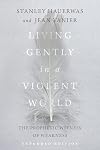
Summary: Essays by the two authors reflecting on the practice of gentleness in the L'Arche communities where assistants and the disabled live in community, and the theological and political significance of this witness in a violent world.
Stanley Hauerwas has been named "America's best theologian" by Time magazine, known for his advocacy that the church embody its social ethic, that it be itself, in its communal life, and for his critique of liberal democracy, capitalism, and militarism, and show more the church's often unthinking endorsement and adoption of these ideologies. Jean Vanier, deceased in 2019, was the founder of L'Arche, a network of communities where helpers and the disabled live and share life together in "houses" or communities. Until 2006, they had never met, although Hauerwas had commended the work of L'Arche. They were invited to a conference by the Center for Spirituality, Health, and Disability at the University of Aberdeen, where they spent two days conversing and speaking. This book, recently reissued in an expanded edition with study guide, reflects those conversations.
Other than introductory and concluding essays by John Swinton, this book consists of four alternating essays by Vanier and Hauerwas. The first, by Vanier is a narrative of the beginnings and development of L'Arche. Drawn by the work of Father Thomas Philippe with the disabled in France, he moved there, began to live with two disabled men who had been institutionalized, and soon found himself leading the community. He describes L'Arche as fragile, subject to government regulations and the question of whether people will always choose to live with them. He also describes L'Arche as a place of transformation, both for assistants and the disabled, transformations that reflect the mystery of the Spirit's work. He describes three crucial activities in their community, all requiring gentleness and patience: meals together, prayer and communion, and celebration of everything from birthdays and holidays to deaths of members. The message in all of this is, "You are a gift. You're a gift to the community."
Hauerwas responds by discussing how L'Arche is a "modest proposal" in a violent world that is a witness to the church of its call to gentleness and non-violence. It is a witness of care for those who cannot be cured, of patience in a particular place. For this reason, Hauerwas also believes that L'Arche needs the church as a reminder that they need to worship with the larger body that is not L'Arche. It is not only as a witness to the church, amplified through the church, but also support and sustenance from the church that makes its life possible.
Vanier then writes of L'Arche as a place that in a small way addresses the woundedness of the world by recognizing in weakness and wounds a way to God. He speaks of the connection of fear and violence, and the power of surrendering our fears to love--the love of God and the present love of the community, both the abled and the disabled. Grieving the sentiment that would abort all those with Down syndrome and the message that leaves the disabled feeling, "I am no good" Vanier writes:
"The heart of L'Arche is to say to people, 'I am glad you exist.' And the proof that we are glad that they exist is that we stay with them for a long time. We are together, we can have fun together. 'I am glad you exist' is translated into physical presence" (p. 69).
Hauerwas's concluding essay explores the politics of gentleness in an extended engagement with the thought of John Rawls and Martha Nussbaum, both who labored to articulate a rationale for the rights of the disabled to help. He summarizes how L'Arche went beyond this:
"Nussbaum wants to give Jean justifications for helping the disabled. What she can't do is give him a reason to live with them. But that is exactly what Jean says he needed. He had to be taught how to be gentle. It is not easy to learn to be gentle with the mentally disabled. As Jean has already said, they also suffer from the wound of loneliness. They can ask for too much. Which means gentleness requires the slow and patient work necessary to create trust. Crucial for the development of trust is that assistants in L'Arche discover the darkness, brokenness, and selfishness shaped by their own loneliness.... According to Jean, through the struggle to discover we are wounded like the mentally disabled, we discover how much 'we need Jesus and his Paraclete..." (p. 90).
There is a gentleness that flows out of this awareness before God of our mutual weakness, exemplified in the practice of mutually washing one another's feet, transformative to assistants and disabled alike, that is a witness in a violent world.
This slim volume is an extraordinary testament, a witness as it were, to the power of gentleness that flows from weakness, both in its description of the quiet wonder taking place within L'Arche, and the record of the conversation between Vanier and Hauerwas, as they opened minds and hearts to each other to explore the significance of the "modest proposal" that is L'Arche in an impatient and violent world. show less
Stanley Hauerwas has been named "America's best theologian" by Time magazine, known for his advocacy that the church embody its social ethic, that it be itself, in its communal life, and for his critique of liberal democracy, capitalism, and militarism, and show more the church's often unthinking endorsement and adoption of these ideologies. Jean Vanier, deceased in 2019, was the founder of L'Arche, a network of communities where helpers and the disabled live and share life together in "houses" or communities. Until 2006, they had never met, although Hauerwas had commended the work of L'Arche. They were invited to a conference by the Center for Spirituality, Health, and Disability at the University of Aberdeen, where they spent two days conversing and speaking. This book, recently reissued in an expanded edition with study guide, reflects those conversations.
Other than introductory and concluding essays by John Swinton, this book consists of four alternating essays by Vanier and Hauerwas. The first, by Vanier is a narrative of the beginnings and development of L'Arche. Drawn by the work of Father Thomas Philippe with the disabled in France, he moved there, began to live with two disabled men who had been institutionalized, and soon found himself leading the community. He describes L'Arche as fragile, subject to government regulations and the question of whether people will always choose to live with them. He also describes L'Arche as a place of transformation, both for assistants and the disabled, transformations that reflect the mystery of the Spirit's work. He describes three crucial activities in their community, all requiring gentleness and patience: meals together, prayer and communion, and celebration of everything from birthdays and holidays to deaths of members. The message in all of this is, "You are a gift. You're a gift to the community."
Hauerwas responds by discussing how L'Arche is a "modest proposal" in a violent world that is a witness to the church of its call to gentleness and non-violence. It is a witness of care for those who cannot be cured, of patience in a particular place. For this reason, Hauerwas also believes that L'Arche needs the church as a reminder that they need to worship with the larger body that is not L'Arche. It is not only as a witness to the church, amplified through the church, but also support and sustenance from the church that makes its life possible.
Vanier then writes of L'Arche as a place that in a small way addresses the woundedness of the world by recognizing in weakness and wounds a way to God. He speaks of the connection of fear and violence, and the power of surrendering our fears to love--the love of God and the present love of the community, both the abled and the disabled. Grieving the sentiment that would abort all those with Down syndrome and the message that leaves the disabled feeling, "I am no good" Vanier writes:
"The heart of L'Arche is to say to people, 'I am glad you exist.' And the proof that we are glad that they exist is that we stay with them for a long time. We are together, we can have fun together. 'I am glad you exist' is translated into physical presence" (p. 69).
Hauerwas's concluding essay explores the politics of gentleness in an extended engagement with the thought of John Rawls and Martha Nussbaum, both who labored to articulate a rationale for the rights of the disabled to help. He summarizes how L'Arche went beyond this:
"Nussbaum wants to give Jean justifications for helping the disabled. What she can't do is give him a reason to live with them. But that is exactly what Jean says he needed. He had to be taught how to be gentle. It is not easy to learn to be gentle with the mentally disabled. As Jean has already said, they also suffer from the wound of loneliness. They can ask for too much. Which means gentleness requires the slow and patient work necessary to create trust. Crucial for the development of trust is that assistants in L'Arche discover the darkness, brokenness, and selfishness shaped by their own loneliness.... According to Jean, through the struggle to discover we are wounded like the mentally disabled, we discover how much 'we need Jesus and his Paraclete..." (p. 90).
There is a gentleness that flows out of this awareness before God of our mutual weakness, exemplified in the practice of mutually washing one another's feet, transformative to assistants and disabled alike, that is a witness in a violent world.
This slim volume is an extraordinary testament, a witness as it were, to the power of gentleness that flows from weakness, both in its description of the quiet wonder taking place within L'Arche, and the record of the conversation between Vanier and Hauerwas, as they opened minds and hearts to each other to explore the significance of the "modest proposal" that is L'Arche in an impatient and violent world. show less

Summary: A Christian ethic centered in the character of the rule Jesus inaugurated, lived by the church in nonviolent service.
I recently reviewed a distillation of Stanley Hauerwas’ writings titled Jesus Changes Everything (at https://bobonbooks.com/2025/03/26/review-jesus-changes-everything/). I was so impressed with his writings that I wanted to read more and picked up his The Peaceable Kingdom. This is his “primer in Christian ethics” and elaborates the idea that peace and show more nonviolence is central to the character of Jesus’ kingdom and the calling of those who follow him, gathered in Christian communities. I was surprised in reading this work to find it was far more “academic,” befitting his work as a seminary professor at Duke.
In my review, I will not focus on all the details of what is at times a dense discussion (but well worth the wading). Rather, I will summarize what I found and briefly comment.
First of all, he denies the possibility of an “absolute” ethics while arguing for the distinctiveness of a Christian ethic. For him, doctrine and ethics are inseparable. Truth must be lived and this inevitably involves an ethic. Moreover, for the Christian, that ethic centers in the narrative of Jesus–his life, death, and resurrection–that inaugurates a kingdom of forgiveness and peace. That peace is both with God and with one another.
Jesus calls his followers into a community of character. Specifically, Jesus calls us into lives of repenting from violence and discord, exercising our agency to live peaceably. Hence, the church, as Christ’s body, doesn’t have an ethic but is one. We are the servant community living in patience and hope for the dawning of Jesus kingdom. The church isn’t the kingdom but lives in anticipation of it by its character.
Hauerwas notes the focus on casuistry and ethical decision-making in much of ethics. A Christian ethic is different, flowing not from calculated decisions but what a person or community is and is becoming. Finally, Hauerwas proposes that a key virtue undergirding peaceableness is patience. He argues the virtue of doing nothing, siding with H. Richard Niebuhr over his brother Reinhold Niebuhr. With this patience comes joy, as we relinquish controlling our lives and those of others to God. Rather than tackling the many problems of the world, he argues for the grace of doing one thing.
For me, the strongest parts of Hauerwas’ argument are the appeal to the narrative of Jesus for our ethic and the insistence that the church is a social ethic. However, I do not believe that nonviolence always means doing nothing. Rosa Parks was peaceable and nonviolent, but she sat down. So were John Lewis and others who engaged in sit-ins. And sometimes, doing nothing is an act of nonviolent resistance, not nonresistance. Given that Hauerwas wrote twenty-five years after the civil rights movement, it surprises me he does not address this.
However, Hauerwas is one of the leading voices in reasserting the calling of the church to peace and nonviolence within society. It is an important testimony at a time when Christians seem bent on “taking sides” in the divisive political issues of our days, even using warfare metaphors to characterize their efforts. Perhaps this book is indeed a “primer” for how then we should live as the people of God. show less
I recently reviewed a distillation of Stanley Hauerwas’ writings titled Jesus Changes Everything (at https://bobonbooks.com/2025/03/26/review-jesus-changes-everything/). I was so impressed with his writings that I wanted to read more and picked up his The Peaceable Kingdom. This is his “primer in Christian ethics” and elaborates the idea that peace and show more nonviolence is central to the character of Jesus’ kingdom and the calling of those who follow him, gathered in Christian communities. I was surprised in reading this work to find it was far more “academic,” befitting his work as a seminary professor at Duke.
In my review, I will not focus on all the details of what is at times a dense discussion (but well worth the wading). Rather, I will summarize what I found and briefly comment.
First of all, he denies the possibility of an “absolute” ethics while arguing for the distinctiveness of a Christian ethic. For him, doctrine and ethics are inseparable. Truth must be lived and this inevitably involves an ethic. Moreover, for the Christian, that ethic centers in the narrative of Jesus–his life, death, and resurrection–that inaugurates a kingdom of forgiveness and peace. That peace is both with God and with one another.
Jesus calls his followers into a community of character. Specifically, Jesus calls us into lives of repenting from violence and discord, exercising our agency to live peaceably. Hence, the church, as Christ’s body, doesn’t have an ethic but is one. We are the servant community living in patience and hope for the dawning of Jesus kingdom. The church isn’t the kingdom but lives in anticipation of it by its character.
Hauerwas notes the focus on casuistry and ethical decision-making in much of ethics. A Christian ethic is different, flowing not from calculated decisions but what a person or community is and is becoming. Finally, Hauerwas proposes that a key virtue undergirding peaceableness is patience. He argues the virtue of doing nothing, siding with H. Richard Niebuhr over his brother Reinhold Niebuhr. With this patience comes joy, as we relinquish controlling our lives and those of others to God. Rather than tackling the many problems of the world, he argues for the grace of doing one thing.
For me, the strongest parts of Hauerwas’ argument are the appeal to the narrative of Jesus for our ethic and the insistence that the church is a social ethic. However, I do not believe that nonviolence always means doing nothing. Rosa Parks was peaceable and nonviolent, but she sat down. So were John Lewis and others who engaged in sit-ins. And sometimes, doing nothing is an act of nonviolent resistance, not nonresistance. Given that Hauerwas wrote twenty-five years after the civil rights movement, it surprises me he does not address this.
However, Hauerwas is one of the leading voices in reasserting the calling of the church to peace and nonviolence within society. It is an important testimony at a time when Christians seem bent on “taking sides” in the divisive political issues of our days, even using warfare metaphors to characterize their efforts. Perhaps this book is indeed a “primer” for how then we should live as the people of God. show less
Lists
Awards


You May Also Like


Associated Authors
Statistics
- Works
- 74
- Also by
- 34
- Members
- 9,539
- Popularity
- #2,521
- Rating
- 4.1
- Reviews
- 57
- ISBNs
- 239
- Languages
- 5
- Favorited
- 29
