
Miroslav Volf
Author of Exclusion and Embrace: A Theological Exploration of Identity, Otherness, and Reconciliation
About the Author
Miroslav Volf is the Henry B. Wright Professor of Theology at Yale Divinity School and Director of the Yale Center for Faith & Culture. He has published and edited nine books and over 60 scholarly articles, including his book Exclusion and Embrace, which won the 2002 Grawemeyer Award in Religion. show more Professor Volf is the founding Director of the Yale Center for Faith and Culture. His books include Allah: A Christian Response (2011); Free of Charge: Giving and Forgiving in a Culture Stripped of Grace (2006), which was the Archbishop of Canterbury Lenten book for 2006; Exclusion and Embrace: A Theological Exploration of Identity, Otherness, and Reconciliation (1996), a winner of the 2002 Grawemeyer Award; and After Our Likeness: The Church as the Image of the Trinity (1998), winner of the Christianity Today book award. A member of the Episcopal Church in the U.S.A. and the Evangelical Church in Croatia, Professor Volf has been involved in international ecumenical dialogues (for instance, with the Vatican¿s Pontifical Council for Promoting Christian Unity) and interfaith dialogues (on the executive board of C-1 World Dialogue), and is active participant in the Global Agenda Council on Values of the World Economic Forum. A native of Croatia, he regularly teaches and lectures in Central and Eastern Europe, Asia, and across North America. Professor Volf is a fellow of Berkeley College. show less
Image credit: Photo by Virgil Vaduva / Wikimedia Commons
Series
Works by Miroslav Volf
Exclusion and Embrace: A Theological Exploration of Identity, Otherness, and Reconciliation (1996) 1,033 copies, 8 reviews
After Our Likeness: The Church as the Image of the Trinity (Sacra Doctrina: Christian Theology for a Postmodern Age) (1998) 413 copies, 1 review
Practicing Theology: Beliefs and Practices in Christian Life (2002) — Editor — 302 copies, 3 reviews
For the Life of the World: Theology That Makes a Difference (Theology for the Life of the World) (2019) — Author — 144 copies, 1 review
Public Faith in Action: How to Think Carefully, Engage Wisely, and Vote with Integrity (2016) 111 copies, 1 review
Exclusion and Embrace, Revised and Updated: A Theological Exploration of Identity, Otherness, and Reconciliation (2019) 105 copies
Captive to the Word of God: Engaging the Scriptures for Contemporary Theological Reflection (2010) 101 copies, 1 review
The Future of Hope: Christian Tradition Amid Modernity and Postmodernity (2004) — Editor — 92 copies
The Home of God: A Brief Story of Everything (Theology for the Life of the World) (2022) — Author — 90 copies
Joy and Human Flourishing: Essays on Theology, Culture and the Good Life (2015) — Editor — 27 copies
The Cost of Ambition: How Striving to Be Better Than Others Makes Us Worse (Why Ambition Is at Odds with the Christian Faith) (Theology for the Life of the World) (2025) 26 copies, 2 reviews
For the Life of the World (Theology for the Life of the World): Theology That Makes a Difference (2019) 6 copies, 1 review
Exclusão e abraço: Uma reflexão teológica sobre identidade, alteridade e reconciliação (Portuguese Edition) (2021) 5 copies
Isključenje i zagrljaj 2 copies
EXCLUSIÓN Y ACOGIDA: UNA EXPLORACIÓN TEOLÓGICA DE LA IDENTIDAD, LA ALTERIDAD Y LA RECONCILIACIÓN (Spanish Edition) (2022) 2 copies
擁抱神學/Exclusion & Embrace 1 copy
Faith as a Way of Life 1 copy
Associated Works
God Will Be All in All: The Eschatology of Jürgen Moltmann (1999) — Contributor, some editions — 153 copies
The End of the World and the Ends of God: Science and Theology on Eschatology (Theology for the 21st Century) (2000) — Contributor — 66 copies
Created and Led by the Spirit: Planting Missional Congregations (Missional Church Series) (2013) — Contributor — 9 copies
Envisioning the Good Life: Essays on God, Christ, and Human Flourishing in Honor of Miroslav Volf (2017) — Honoree — 7 copies
Tagged
Common Knowledge
- Birthdate
- 1956
- Gender
- male
- Education
- Evangelical-Theological Faculty, Zagreb (BA)
Fuller Theological Seminary (MA)
University of Tübingen (Dr. theol., Dr. theol. habil.) - Organizations
- Yale Divinity School
- Nationality
- Croatia
- Associated Place (for map)
- Croatia
Members
Reviews
The Cost of Ambition: How Striving to Be Better Than Others Makes Us Worse (Why Ambition Is at Odds with the Christian Faith) (Theology for the Life of the World) by Miroslav Volf
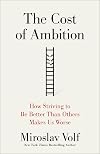
Self-interested ambition seems to fuel society in the West. For instance, politicians try to achieve dominance over the opposition; sports figures try to become a "GOAT" - even when the GOATs change every year! Even religious leaders try to be "the man" (and it's usually a man) despite religion's calls for humility. In 1776, Adam Smith saw self-interested motivations as one of the strengths fueling capitalism. Today's society, by and large, admires strivers over those who take a weaker show more approach. Miroslav Volf, a Christian theologian with a heavy philosophical approach, asks simple questions: Is this good? And is there a better way?
He points out, particularly, how striving to be superior almost always leaves someone else feeling inferior. He instead encourages us to seek excellence over simply becoming the best. Indeed, most of the greatest sports figures who excel way beyond the competition hold this ethic. Look at how swimmer Katie Ledecky tries to shave hundredths of seconds off her time even when no one is near her. She competes with herself, not the person in the other lane. Similarly, coaches tell players to compete to be the best version of themselves instead of simply better than the other side. Is this merely coach-speak, or does this language have some relevance to all our lives?
In this short book, Volf looks at Danish theologian Sören Kierkegaard, author of Paradise Lost John Milton, the first Christian theologian St. Paul, Jesus Christ, and the corpus of the Hebrew Bible to argue for the fallacies of superiority and the innate worth of every human - including when we aren't superior. He ends with 24 theses to suggest a better attitude to take.
This book is aimed towards thought leaders and Christian church leaders. Although it's framed in religious language, its message fits in the public square among philosophical perspectives. Indeed, it's been cited in New York Times editorials, hardly a place within a Christian bubble. I'd suggest business writers should read it, too, to find philosophical support to the idea of servant leadership.
Naked ambition can tear the social fabric apart, and I fear learning of more effects every time I read the newspaper. Volf's counterattack can do something about it, and he strangely enough relies on ancient practices founded in the Christian religion, practices often forgotten by today's religious adherents. Wisely conserving the past's lessons instead of striving for naked power must continue to be a part of our public discourse, and well-articulated voices like Volf's remind us of history's insights. show less
He points out, particularly, how striving to be superior almost always leaves someone else feeling inferior. He instead encourages us to seek excellence over simply becoming the best. Indeed, most of the greatest sports figures who excel way beyond the competition hold this ethic. Look at how swimmer Katie Ledecky tries to shave hundredths of seconds off her time even when no one is near her. She competes with herself, not the person in the other lane. Similarly, coaches tell players to compete to be the best version of themselves instead of simply better than the other side. Is this merely coach-speak, or does this language have some relevance to all our lives?
In this short book, Volf looks at Danish theologian Sören Kierkegaard, author of Paradise Lost John Milton, the first Christian theologian St. Paul, Jesus Christ, and the corpus of the Hebrew Bible to argue for the fallacies of superiority and the innate worth of every human - including when we aren't superior. He ends with 24 theses to suggest a better attitude to take.
This book is aimed towards thought leaders and Christian church leaders. Although it's framed in religious language, its message fits in the public square among philosophical perspectives. Indeed, it's been cited in New York Times editorials, hardly a place within a Christian bubble. I'd suggest business writers should read it, too, to find philosophical support to the idea of servant leadership.
Naked ambition can tear the social fabric apart, and I fear learning of more effects every time I read the newspaper. Volf's counterattack can do something about it, and he strangely enough relies on ancient practices founded in the Christian religion, practices often forgotten by today's religious adherents. Wisely conserving the past's lessons instead of striving for naked power must continue to be a part of our public discourse, and well-articulated voices like Volf's remind us of history's insights. show less
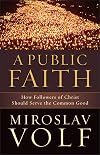
Our Sunday School class chose this book to discuss over the summer, and I led discussions. I found the discussion guide and videos from the Yale Center for Faith & Culture helpful. We discussed the topic of religion in the public square shortly after the 2024 US election, which made moderating conversation challenging. Christian nationalism is ascendant today, a phenomenon only alluded to in Volf's book. In his era, Muslim nationalism was the main threat, but in the following 15 years, show more Christian nationalism has dominated the news in America. I'd like to hear a follow-up from Volf about this book's theses in light of this recent phenomenon. It has been present in American politics for some time, but its dominance is fairly new. Leading discussion among different opinions about Christian nationalists was indeed difficult.
Readers should be aware of Volf's background in the Balkan peninsula, former Yugoslavia. He witnessed religious nationalism go amuck by killing others in a genocide. Surely, this is an abuse of monotheistic religion! Coming from a philosophy background, Volf seeks to reason out how monotheistic religions can disagree without following the totalitarian pattern. He also seeks to understand how democracy - the will of the people - can coexist with religions claiming the exclusive understanding of God. His arguments are sound, but the popular will in America hasn't adopted his perspective, sadly.
This book is a good treatment of a difficult issue. As he suggests early on, readers should prepare to be uncomfortable. Will American Christians be willing to accept not getting their way all the time? That's a question we deal with in 2024, and I'm not sure how it will resolve. I hope Volf's insights get a better hearing, but it's hard to be confident in the triumph of philosophy against today's raw, oppressive power. I'm grateful to have undergone a deep dive in this topic despite all the discomforts it unearthed. show less
Readers should be aware of Volf's background in the Balkan peninsula, former Yugoslavia. He witnessed religious nationalism go amuck by killing others in a genocide. Surely, this is an abuse of monotheistic religion! Coming from a philosophy background, Volf seeks to reason out how monotheistic religions can disagree without following the totalitarian pattern. He also seeks to understand how democracy - the will of the people - can coexist with religions claiming the exclusive understanding of God. His arguments are sound, but the popular will in America hasn't adopted his perspective, sadly.
This book is a good treatment of a difficult issue. As he suggests early on, readers should prepare to be uncomfortable. Will American Christians be willing to accept not getting their way all the time? That's a question we deal with in 2024, and I'm not sure how it will resolve. I hope Volf's insights get a better hearing, but it's hard to be confident in the triumph of philosophy against today's raw, oppressive power. I'm grateful to have undergone a deep dive in this topic despite all the discomforts it unearthed. show less
The Cost of Ambition: How Striving to Be Better Than Others Makes Us Worse (Why Ambition Is at Odds with the Christian Faith) (Theology for the Life of the World) by Miroslav Volf
Summary: Ambition diminishes us while a life of excellence with proper humility ennobles us and enriches our relationships.
It probably starts early. We start comparing ourselves to others. How athletic, or how smart, or how attractive, or thin. Then as we get older we measure superiority by our net worth, how many people are “under” us, by the powerful we have access to. We’re often taught that ambition is a good thing. Theologian Miroslav Volf argues that such striving demeans both us show more and the good after which we competitively strive. It is meaningless–how important will our follower counts be on our deathbeds? Not only that, our ambitions usually focus on only one aspect of our humanness, and that of others. Our efforts to be superior to others ignore both their uniqueness and our own.
Yet we must ask if there is something to these strivings. Volf proposes that instead of superiority, we strive for excellence. Instead of being perceived as superior by others, we can simply strive to be superior, whether it is noticed or not. Excellence answers to our deepest passions as well as the world’s need.
Volf develops his exploration of ambition through the writing of Kierkegaard, Milton, and the Apostle Paul. Kierkegaard celebrate human difference and the glory of our mere humanity. Then he explores Milton’s Satan, his striving of superiority over God, his resentment of the Son, and how he offered the same temptation to Eve. In contrast to Satan, God’s glory consists not in his superiority over his creatures but his seeking of their good.
Then Volf devotes two chapters to the Apostle Paul. Firstly, he notes Paul’s injunction to “outdo one another in showing honor” that reflects the new mind we have in Christ. Secondly, he considers Paul’s question: “What do you have that you did not receive?” He observes how Christ lowered himself to raise us all to glory. For what can we strive that we do not already possess in Christ?
Finally, Volf considers both the central figure of God’s story, and the beginnings of that story. He considers Jesus who did not come to “lord it over” others but to serve. Then he turns back to Israel, and her progenitor, Abraham. Neither was called because of their superiority, but simply because God intended to do good to them and through them. Lastly, Volf summarizes his argument with twenty-four theses that crystallize his critique of ambition and the ennobling character of humble excellence.
It seems that this is a book we might read during through the different seasons of life. In youth, it serves as a warning to alert one of the siren call of ambition. At mid-life, when despite our best efforts, we realize we may have been climbing the wrong ladder, it points the way to Christ’s downward path. Later in life, it reminds us of the intrinsic joy of generativity, of using all one has to bless others. And in the last years, we are reminded that it was all of grace.
Sadly, this is not the journey of some, who conclude their lives in disillusionment and bitterness. There are those who never stop grasping for superiority, with growing resentment for the younger ones who are overtaking one. That is the cost of ambition. Volf helps us ask whether the cost is worth it. And he shows us a better way.
____________________
Disclosure of Material Connection: I received a complimentary copy of this book from the publisher for review. show less
It probably starts early. We start comparing ourselves to others. How athletic, or how smart, or how attractive, or thin. Then as we get older we measure superiority by our net worth, how many people are “under” us, by the powerful we have access to. We’re often taught that ambition is a good thing. Theologian Miroslav Volf argues that such striving demeans both us show more and the good after which we competitively strive. It is meaningless–how important will our follower counts be on our deathbeds? Not only that, our ambitions usually focus on only one aspect of our humanness, and that of others. Our efforts to be superior to others ignore both their uniqueness and our own.
Yet we must ask if there is something to these strivings. Volf proposes that instead of superiority, we strive for excellence. Instead of being perceived as superior by others, we can simply strive to be superior, whether it is noticed or not. Excellence answers to our deepest passions as well as the world’s need.
Volf develops his exploration of ambition through the writing of Kierkegaard, Milton, and the Apostle Paul. Kierkegaard celebrate human difference and the glory of our mere humanity. Then he explores Milton’s Satan, his striving of superiority over God, his resentment of the Son, and how he offered the same temptation to Eve. In contrast to Satan, God’s glory consists not in his superiority over his creatures but his seeking of their good.
Then Volf devotes two chapters to the Apostle Paul. Firstly, he notes Paul’s injunction to “outdo one another in showing honor” that reflects the new mind we have in Christ. Secondly, he considers Paul’s question: “What do you have that you did not receive?” He observes how Christ lowered himself to raise us all to glory. For what can we strive that we do not already possess in Christ?
Finally, Volf considers both the central figure of God’s story, and the beginnings of that story. He considers Jesus who did not come to “lord it over” others but to serve. Then he turns back to Israel, and her progenitor, Abraham. Neither was called because of their superiority, but simply because God intended to do good to them and through them. Lastly, Volf summarizes his argument with twenty-four theses that crystallize his critique of ambition and the ennobling character of humble excellence.
It seems that this is a book we might read during through the different seasons of life. In youth, it serves as a warning to alert one of the siren call of ambition. At mid-life, when despite our best efforts, we realize we may have been climbing the wrong ladder, it points the way to Christ’s downward path. Later in life, it reminds us of the intrinsic joy of generativity, of using all one has to bless others. And in the last years, we are reminded that it was all of grace.
Sadly, this is not the journey of some, who conclude their lives in disillusionment and bitterness. There are those who never stop grasping for superiority, with growing resentment for the younger ones who are overtaking one. That is the cost of ambition. Volf helps us ask whether the cost is worth it. And he shows us a better way.
____________________
Disclosure of Material Connection: I received a complimentary copy of this book from the publisher for review. show less
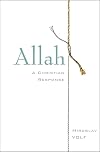
This is a fine statement on the unifying elements between Christianity and Islam. But, here's the thing: comparative religion has a sketchy sketchy track record: it's more at home in the ideal than in the real. I really like Volf's idea that Christians and Muslims worship the same God (though differently), and I like his insistence on non-compulsion in religion, but I wonder if the separation between Christianity and Islam, especially when heightened on the one side by Christian Nationalism show more and on the other side by Islamic fundamentalism, is now too far apart. The best I think we can hope for is local cooperation, in specific circumstances. As for nationwide, whatever the nation? Forget it. show less
Lists
Awards


You May Also Like


Associated Authors
Statistics
- Works
- 47
- Also by
- 11
- Members
- 5,039
- Popularity
- #4,962
- Rating
- 4.0
- Reviews
- 35
- ISBNs
- 85
- Languages
- 7
- Favorited
- 9