
Lesslie Newbigin (1909–1998)
Author of The Gospel in a Pluralist Society
About the Author
Lesslie Newbigin (1909-1998) was an internationally esteemed British theologian, missionary, pastor, apologist, and ecumenical statesman. His long career included serving as a village evangelist in India, as bishop of the Church of South India, as associate general secretary of the World Council of show more Churches, and as a professor and a pastor in England show less
Image credit: Bishop Lesslie Newbigin Photo created by Alastair Cutting
Works by Lesslie Newbigin
Proper Confidence: Faith, Doubt, and Certainty in Christian Discipleship (1995) 489 copies, 5 reviews
The Other Side of 1984: Questions for the Churches (The Risk book series) (1983) 80 copies, 1 review
That all may be one; a South India diary: --the story of an experiment in Christian unity (A Haddam House book) (1952) 9 copies
Trinitarian faith and today's mission (World Council of Churches. Commission on World Mission and Evangelism (1964) 2 copies
Cristo Vive 1 copy
A Faith for This One World? 1 copy
O Segredo Revelado: uma introdução à teologia da missão (Exampleseries Livro 1) (Portuguese Edition) (2019) 1 copy
Tek Kitap Tek Öykü 1 copy
Pecado y salvación 1 copy
Associated Works
The Trinity in a Pluralistic Age: Theological Essays on Culture and Religion (1996) — Contributor — 93 copies, 1 review
Creation, Christ and Culture: Studies in Honour of T. F. Torrance (1976) — Contributor, some editions — 24 copies
Tagged
Common Knowledge
- Canonical name
- Newbigin, Lesslie
- Legal name
- Newbigin, James Edward Lesslie
- Birthdate
- 1909-12-08
- Date of death
- 1998-01-30
- Gender
- male
- Education
- Queen's College, Cambridge (BA|1931)
- Occupations
- missionary
pastor
bishop - Organizations
- Church of South India
Church of Scotland (ordained 1936)
World Council of Churches
United Reform Church - Awards and honors
- Order of the British Empire (Commander, 1974)
- Nationality
- UK
- Birthplace
- Newcastle-upon-Tyne, Northumberland, England, UK
- Place of death
- London, Middlesex, England, UK
- Burial location
- Norwood Cemetery, London, Middlesex, England, UK
- Map Location
- England, UK
Members
Reviews

Towards the end of a long missionary, ecclesiatical, theological (all those interlocking sub-worlds) life Newbigin revisited territory he had visited many times before. But he did so now with a brevity and clarity that he had never attained in his earlier wrestling matches with post-modernity, especially Foolishness to the Greeks and The Gospel in a Pluralist Society. Tackling the Scylla and Charybdis (or perhaps the lovechild of Scylla and Charybdis) of post-modern liberalism and show more fundamentalism, and with a foray into 'the catholic tradition of natural theology' (a title that he uses in a manner different to my own expectation of the label) he argues that the logos of Christ, or the logos-Christ perhaps, must stand as the critic of all alternative bases of theological and philosophical enquiry.
Many years ago I read of the experience of feminist women gasping their amens and shedding their tears as they encountered feminist biblical hermeneutics. There is a sense of 'coming home' for all of us whenever we hear the words of those who speak our language: Newbigin spoke mine. I muttered my amens and came close to shedding my tears as Newbigin steered his course. Although he does not cite Barth there is this clear, ringing Barthian chant that the revelation that is and is in Jesus Christ is the criterion by which all statements are judged. Newbigin said this of course in Foolishness to the Greeks, even in that tender Johannine commentary The Light Has Come, but here he says it one last time, so succinctly. He lays down a hermeneutical gauntlet: post modern liberalism and fundamentalism alike stand challenged if not hoist by their cartesian petard.
My liberal friends and my fundamentalist friends alike will (and do) mutter dismissive imprecations. I, as one who holds to a deep-seated sense of the otherness of God and of Incarnation and of Revelation, I will simply weep my amens. But my life is enriched for a two or three day journey back into Newbigin's deep integrity and godward thought. He will persuade only the persuaded, I suppose, but thank God even for that. show less
Many years ago I read of the experience of feminist women gasping their amens and shedding their tears as they encountered feminist biblical hermeneutics. There is a sense of 'coming home' for all of us whenever we hear the words of those who speak our language: Newbigin spoke mine. I muttered my amens and came close to shedding my tears as Newbigin steered his course. Although he does not cite Barth there is this clear, ringing Barthian chant that the revelation that is and is in Jesus Christ is the criterion by which all statements are judged. Newbigin said this of course in Foolishness to the Greeks, even in that tender Johannine commentary The Light Has Come, but here he says it one last time, so succinctly. He lays down a hermeneutical gauntlet: post modern liberalism and fundamentalism alike stand challenged if not hoist by their cartesian petard.
My liberal friends and my fundamentalist friends alike will (and do) mutter dismissive imprecations. I, as one who holds to a deep-seated sense of the otherness of God and of Incarnation and of Revelation, I will simply weep my amens. But my life is enriched for a two or three day journey back into Newbigin's deep integrity and godward thought. He will persuade only the persuaded, I suppose, but thank God even for that. show less
Proper Confidence is the fruit of a lifetime. Lesslie Newbigin's bio blurb describes him as "an internationally esteemed British missionary, pastor, apologist, theologian, and ecumenical statesman." In this book, published three years before his death, he described his vision of true apologetics. Proper confidence cannot be found by imposing modern or even post-modern methods of inquiry on the question of God. No, we need to question the very worldview that informs our lives to find our way show more home. No doubt, Newbigin's lifetime of cross-cultural experiences gave him the perspective required to criticize and to transcend his own cultural presuppositions.
It's difficult to summarize Newbigin's argument since, at 105 pages, it's already quite dense. Nonetheless, here's what I understand as the core of his book: We find God and our confidence in his reality as we commit to following him. A good analogy is the relationship between husband and wife. You can learn a lot about your spouse by observing him or her from a distance—but you can not truly know the other person. True knowledge of the other only comes in relationship.
Newbigin doesn't waste any words here. Each chapter is pregnant with insight. Our worldviews are so deeply inset, this book is an antidote worth reading and rereading. This was my first foray into Newbigin's corpus. It will not be my last. show less
It's difficult to summarize Newbigin's argument since, at 105 pages, it's already quite dense. Nonetheless, here's what I understand as the core of his book: We find God and our confidence in his reality as we commit to following him. A good analogy is the relationship between husband and wife. You can learn a lot about your spouse by observing him or her from a distance—but you can not truly know the other person. True knowledge of the other only comes in relationship.
Newbigin doesn't waste any words here. Each chapter is pregnant with insight. Our worldviews are so deeply inset, this book is an antidote worth reading and rereading. This was my first foray into Newbigin's corpus. It will not be my last. show less

This little book raises several important questions about the future of Western culture, and where the church fits in. The author believed that - in the UK, at least in the 1980s- the Enlightenment view of science as somehow superior to religion was fast becoming obsolete.
He acknowledged that we did not wish to return to the Dark Ages, and that science and technology have improved our lives in many important ways. Nevertheless, he believed that Christians needed to make a stand not just in show more private but in public life too, so that the emergence of new societal structures would in some way reflect the ethos and morality of Scripture.
A bit dry in places, and now nearly 25 years later it seems a bit dated, though still relevant to many. Probably three-and-a-half stars. show less
He acknowledged that we did not wish to return to the Dark Ages, and that science and technology have improved our lives in many important ways. Nevertheless, he believed that Christians needed to make a stand not just in show more private but in public life too, so that the emergence of new societal structures would in some way reflect the ethos and morality of Scripture.
A bit dry in places, and now nearly 25 years later it seems a bit dated, though still relevant to many. Probably three-and-a-half stars. show less
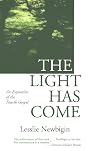
A Short John commentary from the godfather of contemporary missional theology. Newbigin examines Jesus in the fourth gospel, always with an eye for his mission. Some great material in here. It not a technical commentary and students of John would want to augment their reading with something else. But I never look at John's gospel without dipping back in here.
Lists
Awards


You May Also Like


Associated Authors
Statistics
- Works
- 58
- Also by
- 2
- Members
- 5,745
- Popularity
- #4,292
- Rating
- 4.2
- Reviews
- 27
- ISBNs
- 106
- Languages
- 9
- Favorited
- 7