
James K. A. Smith
Author of You Are What You Love: The Spiritual Power of Habit
About the Author
James K. A. Smith (PhD, Villanova University) is professor of philosophy at Calvin College, where he holds the Gary and Henrietta Byker Chair in Applied Reformed Theology and Worldview. He is also the editor of Comment magazine. A popular speaker, he has written many books, including Desiring the show more Kingdom, Imagining the Kingdom, and You Are What You Love. show less
Image credit: Used by permission of Baker Publishing Group, copyright © 2008. All rights to this material are reserved. Materials are not to be distributed to other web locations for retrieval, published(see © info.)
Series
Works by James K. A. Smith
Desiring the Kingdom: Worship, Worldview, and Cultural Formation (Cultural Liturgies) (2009) 1,290 copies, 5 reviews
Who's Afraid of Postmodernism?: Taking Derrida, Lyotard, and Foucault to Church (2006) 629 copies, 5 reviews
On the Road with Saint Augustine: A Real-World Spirituality for Restless Hearts (2019) 512 copies, 4 reviews
How to Inhabit Time: Understanding the Past, Facing the Future, Living Faithfully Now (2022) 246 copies, 4 reviews
Who's Afraid of Relativism?: Community, Contingency, and Creaturehood (The Church and Postmodern Culture) (2014) 180 copies
The Fall of Interpretation: Philosophical Foundations for a Creational Hermeneutic (2000) 164 copies
Radical Orthodoxy and the Reformed Tradition: Creation, Covenant, and Participation (2005) — Editor — 130 copies
Thinking in Tongues: Pentecostal Contributions to Christian Philosophy (Pentecostal Manifestos (PM)) (2010) 111 copies, 2 reviews
The Devil Reads Derrida - and Other Essays on the University, the Church, Politics, and the Arts (2009) 95 copies
After Modernity?: Secularity, Globalization, and the Reenchantment of the World (2008) — Editor — 28 copies
Ortodoxia Radical E A Tradicao Reformada - Criacao Alianca e Participacao (Em Portugues do Brasil) (2019) 4 copies
A queda da interpretacao fundamentos filosoficos para uma hermeneutica criacional (Em Portugues do Brasil) (2019) 4 copies
致年轻加尔文主义者的信——改革宗思想之旅 1 copy
Associated Works
Five Views on the Church and Politics (Counterpoints: Bible and Theology) (2015) — Contributor — 127 copies, 2 reviews
Religion With/Out Religion: The Prayers and Tears of John D. Caputo (2001) — Contributor — 13 copies
The Post-Secular in Question: Religion in Contemporary Society (Social Science Research Council) (2012) — Contributor — 11 copies
The Logic of Incarnation: James K. A. Smith's Critique of Postmodern Religion (2009) — Contributor — 6 copies
Tagged
Common Knowledge
- Other names
- 蘇明思
- Birthdate
- 1970
- Gender
- male
- Education
- Villanova University (PhD)
- Occupations
- Associate Professor, Calvin College
- Organizations
- Cardus, The Colossian Forum
- Nationality
- Canada (birth)
- Birthplace
- Embro, Ontario, Canada
- Places of residence
- Grand Rapids, Michigan, USA
- Associated Place (for map)
- Canada
Members
Reviews
On the Road with Saint Augustine: A Real-World Spirituality for Restless Hearts by James K. A. Smith
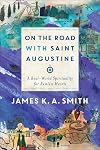
Summary: A “travelogue of the heart” exploring human longings and the heart’s true home.
James K. A. Smith encountered an interesting detour in his doctoral studies in philosophy. Setting out to study Heidegger, he found Heidegger and his contemporaries pointing him back to Saint Augustine and the discovery that the questions and the longings of our time are the very ones Augustine addressed in his time in Confessions, captured most succinctly in his statement “You have made us for show more yourself and our hearts are restless until they find their rest in you.”
He draws on the restlessness of the characters in Kerouac’s On the Road that impelled their travels. He follows Augustine’s route, both in terms of places, and in the longings expressed in Confessions, recounting his own travels on Augustine’s “road trip.” Smith argues that this is an authentic word to our generation, addressing ten longings: freedom, ambition, sex, mothers, friendship, enlightenment, story, justice, fathers, and death. Finally he addresses the possibility of homecoming.
Smith contends that Augustine understood that we “practice our way into freedom” by joining in the practices of Christ’s body in worship and surrender. Augustine admitted that we will do most things with mixed motives but as we are rooted in God’s love ambition is fueled with a different fire. He addresses Augustine’s flawed understanding that only celibacy could remedy promiscuity and yet recognizes that there is a freedom in not being dominated by libido and that marriage may protect us from the excesses and abuses of sexuality while offering us longed-for covenantal relationship.
It seems as each of these longings are explored on Augustine’s journey, there is a kind of transformative turn that Smith observes in Augustine. Enlightenment comes not by scaling intellectual mountains but in humbling oneself. It is in brokenness that we become good fathers.
Many think, as in Kerouac, that “the road is life.” We’ve been told, it’s not about the destination, it’s about the journey. But deep down we do long to arrive home. But, Smith writes:
“You can’t get there from here. But what if someone came to get you? You can’t get to that last thing, but what if it came to you? And what if that thing turned out to be a someone? And what if that someone not only knows where the end of the road is but promises to accompany you the rest of the way, to never leave you or forsake you until you arrive?”
Smith reminds us that God has come to get each of us through the cross of Jesus who has bridged our unbridgeable void.
Reading Smith makes me want to pull out Confessions again. He reminds me that for all our differences across history, we have restless hearts and deep longings in common, and we are “on the road” because we long for home. show less
James K. A. Smith encountered an interesting detour in his doctoral studies in philosophy. Setting out to study Heidegger, he found Heidegger and his contemporaries pointing him back to Saint Augustine and the discovery that the questions and the longings of our time are the very ones Augustine addressed in his time in Confessions, captured most succinctly in his statement “You have made us for show more yourself and our hearts are restless until they find their rest in you.”
He draws on the restlessness of the characters in Kerouac’s On the Road that impelled their travels. He follows Augustine’s route, both in terms of places, and in the longings expressed in Confessions, recounting his own travels on Augustine’s “road trip.” Smith argues that this is an authentic word to our generation, addressing ten longings: freedom, ambition, sex, mothers, friendship, enlightenment, story, justice, fathers, and death. Finally he addresses the possibility of homecoming.
Smith contends that Augustine understood that we “practice our way into freedom” by joining in the practices of Christ’s body in worship and surrender. Augustine admitted that we will do most things with mixed motives but as we are rooted in God’s love ambition is fueled with a different fire. He addresses Augustine’s flawed understanding that only celibacy could remedy promiscuity and yet recognizes that there is a freedom in not being dominated by libido and that marriage may protect us from the excesses and abuses of sexuality while offering us longed-for covenantal relationship.
It seems as each of these longings are explored on Augustine’s journey, there is a kind of transformative turn that Smith observes in Augustine. Enlightenment comes not by scaling intellectual mountains but in humbling oneself. It is in brokenness that we become good fathers.
Many think, as in Kerouac, that “the road is life.” We’ve been told, it’s not about the destination, it’s about the journey. But deep down we do long to arrive home. But, Smith writes:
“You can’t get there from here. But what if someone came to get you? You can’t get to that last thing, but what if it came to you? And what if that thing turned out to be a someone? And what if that someone not only knows where the end of the road is but promises to accompany you the rest of the way, to never leave you or forsake you until you arrive?”
Smith reminds us that God has come to get each of us through the cross of Jesus who has bridged our unbridgeable void.
Reading Smith makes me want to pull out Confessions again. He reminds me that for all our differences across history, we have restless hearts and deep longings in common, and we are “on the road” because we long for home. show less
On the Road with Saint Augustine: A Real-World Spirituality for Restless Hearts by James K. A. Smith
ON THE ROAD WITH SAINT AUGUSTINE: A Real-World Spirituality for Restless Hearts by James K. A. Smith (Brazos Press/Baker Publishing; 2019)
On the Road With Saint Augustine is written by philosopher, theologian, and author James K. A. Smith is the first book of his that I am aware of that is not written for a purely academic audience. And while this newest book is accessible to a broader audience, it is a little challenging in places. This is due mostly to the author's frequent mention of show more philosophers and an assumption of some familiarity with them and their views.
But with that small caveat out of the way, let me say that this book is wonderfully written, and I found myself often contemplating some of the points that Smith throughout the book. Smith melds the idea of a "road trip" to "find oneself," which many readers would be familiar with from novels from folks like Jack Kerouac, and even modern movies like Harold and Maude and Thelma and Louise, with the spiritual journey of Augustine.
Christian readers should mostly be familiar with the man Augustine and his importance. Still, probably many (like myself!) have found it hard to get through his books, The Confessions and The City of God. So, this book serves as a creative and impressive introduction to the life and writings of Augustine. Smith's goal in the book is to show how Augustine was not just a "saint" and a theologian who largely shaped Christianity in the West through his epochal writings. Augustine was a man like many people in our world today --- seeking out meaning and happiness in all the things the world has to offer but always coming away empty-ended. But for those of us who follow Christ, we find --- along with Augustine --- that He alone provides the meaning and value to life that we have been seeking all of our lives. After all, it is Augustine who wrote the famous line: "You have made us for yourself, O Lord, and our heart is restless until it finds its rest in You."
Smith takes essential topics and life issues, like freedom, ambition, sex, friendship, mothers and fathers, and enlightenment, and shows us how to navigate through these things spiritually --- just like Augustine. We moderns often turn up our noses at those who live in earlier times, thinking that they have no real application to our lives today. But through his mastery of Augustine's life and writings, and Smith's impactful way with words, he shows that we in 2019 are no different in the things that really matter from those who lived almost 1500 years ago.
On the Road With Saint Augustine is a book that readers may want to return to regularly, to spark deep thinking and a greater appreciation that our spiritual journeys are challenging, but at the same time, very similar. And in the end, our journeys will be found to be well worth the rocky roads that have been walked upon to reach our true goal --- Jesus Himself. show less
On the Road With Saint Augustine is written by philosopher, theologian, and author James K. A. Smith is the first book of his that I am aware of that is not written for a purely academic audience. And while this newest book is accessible to a broader audience, it is a little challenging in places. This is due mostly to the author's frequent mention of show more philosophers and an assumption of some familiarity with them and their views.
But with that small caveat out of the way, let me say that this book is wonderfully written, and I found myself often contemplating some of the points that Smith throughout the book. Smith melds the idea of a "road trip" to "find oneself," which many readers would be familiar with from novels from folks like Jack Kerouac, and even modern movies like Harold and Maude and Thelma and Louise, with the spiritual journey of Augustine.
Christian readers should mostly be familiar with the man Augustine and his importance. Still, probably many (like myself!) have found it hard to get through his books, The Confessions and The City of God. So, this book serves as a creative and impressive introduction to the life and writings of Augustine. Smith's goal in the book is to show how Augustine was not just a "saint" and a theologian who largely shaped Christianity in the West through his epochal writings. Augustine was a man like many people in our world today --- seeking out meaning and happiness in all the things the world has to offer but always coming away empty-ended. But for those of us who follow Christ, we find --- along with Augustine --- that He alone provides the meaning and value to life that we have been seeking all of our lives. After all, it is Augustine who wrote the famous line: "You have made us for yourself, O Lord, and our heart is restless until it finds its rest in You."
Smith takes essential topics and life issues, like freedom, ambition, sex, friendship, mothers and fathers, and enlightenment, and shows us how to navigate through these things spiritually --- just like Augustine. We moderns often turn up our noses at those who live in earlier times, thinking that they have no real application to our lives today. But through his mastery of Augustine's life and writings, and Smith's impactful way with words, he shows that we in 2019 are no different in the things that really matter from those who lived almost 1500 years ago.
On the Road With Saint Augustine is a book that readers may want to return to regularly, to spark deep thinking and a greater appreciation that our spiritual journeys are challenging, but at the same time, very similar. And in the end, our journeys will be found to be well worth the rocky roads that have been walked upon to reach our true goal --- Jesus Himself. show less
Thinking in Tongues: Pentecostal Contributions to Christian Philosophy (Pentecostal Manifestos (PM)) by James K. A. Smith
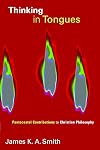
What has Azusa Street to do with Geneva or even Amsterdam? Is it possible to integrate pentecostal and Calvinist or even neocalvinist views? Smith maintains that it is and with this manifesto he tries to do just that.
Reformed charismatic is obviously not an oxymoron. However, most Reformed charismatics tend to be pietist in outlook. Smith writes from a neocalvinist perspective, a perspective that rejects pietism but embraces a transformational perspective on culture and society. Smith taking show more his cue from Alvin Plantinga's seminal paper 'Advice to Christian Philosophers' here issues advice to pentecostal philosophers; advice that comes with more than a neocalvinist assist. Smith makes no claim to being exhaustive or comprehensive but claims to be offering an outline, a manifesto.
I must confess that the Pentecostal/ charismatic perspective sketched by Smith here is one I don't fully recognise - I wish that it were. I left a charismatic house church two decades ago because it was dualistic and had a tendency towards neo-gnosticism; if Smith is correct things have changed over the years. Smith's program[me] for pentecostal philosophy strangely warmed my heart. He identifies five 'key aspects of a pentecostal worldview'; aspects which owe much to neocalvinism:
1. A position of radical openness to God
2. An 'enchanted' theology of creation and culture
3. A nondualistic affirmation of embodiment and materiality
4. Affective, narrative epistemology
5. An eschatological orientation to mission and justice.
To each of these I would shout a loud 'Amen, preach it!' If this is pentecostal philosophy, then give me pentecostal philosophy! Smith has ably shown that a charismatic neocalvinism is a viable option. Pentecostalism is often caricatured by an escapist world-denying mentality, one that stresses the heart over the head, emotions over the rational and is profoundly anti-intellectual. Smith has adequately demonstrated that it need not be.
In chapter 3, the longest in the book, he sketches a pentecostal epistemology, making a good case for understanding it as resonating with a "'postmodern' critique of autonomous reason" (p. 52). It is not antirational, but antirationalist (p. 53). His 'core claim is that 'pentecostal worship constitutes a kind of performative postmodernism, an enacted refusal of rationalism' (p. 59). I love the way he describes a Pentecostal epistemology as being 'more like dance than deduction' (p. 82).
Chapter 4, subtitled 'Science, Spirit, and a Pentecostal ontology', takes a look at a pentecostal contribution to metaphysics. Smith maintains that a pentecostal ontology is one of 'radical openness and thus resistant to closed, immanentist systems of the sort that emerge from reductionistic metaphysical naturalism' (p. 88). He describes it as an 'enchanted naturalism' and contrasts it with reductionalistic naturalism and naive supernaturalism. He views naturalism as a spectrum from the reductiuonistic naturalism of Dan Dennett to the interventionist supernaturalism of naïve pentecostalism, passing through non-reductionistic rationalism of Arthur Peacocke, and Philip Clayton and the enchanted or non-interventionaits supernaturalism advocated here by Smith. This is a rich typology and one that will bring clarity to the discussions on naturalism(s). Smith is arguing for a supernatural materialism that contests the natural/ supernatural distinction. Here he draws, perhaps predictably considering Smith's previous works, on radical orthodox's 'participatory' ontology (p. 100).
The philosophy of religion comes under scrutiny in chapter 4. The contemporary paradigm is that doctrine is prior to worship and that ideas trump practice (p. 111). Pentecostalism challenges this. Chapter 5 is perhaps the most explicitly pentecostal, it takes a look at glossolalia (speaking in tongues) and the challenge with which it confronts the philosophy of language. Smith side steps the theological issues and focuses on the philosophical. This chapter provides a model for how pentecostals can do philosophy.
The book concludes with a heart-felt plea for others to take up the baton and so see, as Smith has stated elsewhere First Things (April 2008), pentecostals at the academic table rather being on the table as a topic of study.
Al Wolters once wrote: 'I believe that neocalvinism, if it remains true to its radical original intuition, can truly embrace the riches of other traditions, even as it shares its own with others.' Smith has done just that with this book.
[First published in Philosophia Reformata 76 (2011): 160-162] show less
Reformed charismatic is obviously not an oxymoron. However, most Reformed charismatics tend to be pietist in outlook. Smith writes from a neocalvinist perspective, a perspective that rejects pietism but embraces a transformational perspective on culture and society. Smith taking show more his cue from Alvin Plantinga's seminal paper 'Advice to Christian Philosophers' here issues advice to pentecostal philosophers; advice that comes with more than a neocalvinist assist. Smith makes no claim to being exhaustive or comprehensive but claims to be offering an outline, a manifesto.
I must confess that the Pentecostal/ charismatic perspective sketched by Smith here is one I don't fully recognise - I wish that it were. I left a charismatic house church two decades ago because it was dualistic and had a tendency towards neo-gnosticism; if Smith is correct things have changed over the years. Smith's program[me] for pentecostal philosophy strangely warmed my heart. He identifies five 'key aspects of a pentecostal worldview'; aspects which owe much to neocalvinism:
1. A position of radical openness to God
2. An 'enchanted' theology of creation and culture
3. A nondualistic affirmation of embodiment and materiality
4. Affective, narrative epistemology
5. An eschatological orientation to mission and justice.
To each of these I would shout a loud 'Amen, preach it!' If this is pentecostal philosophy, then give me pentecostal philosophy! Smith has ably shown that a charismatic neocalvinism is a viable option. Pentecostalism is often caricatured by an escapist world-denying mentality, one that stresses the heart over the head, emotions over the rational and is profoundly anti-intellectual. Smith has adequately demonstrated that it need not be.
In chapter 3, the longest in the book, he sketches a pentecostal epistemology, making a good case for understanding it as resonating with a "'postmodern' critique of autonomous reason" (p. 52). It is not antirational, but antirationalist (p. 53). His 'core claim is that 'pentecostal worship constitutes a kind of performative postmodernism, an enacted refusal of rationalism' (p. 59). I love the way he describes a Pentecostal epistemology as being 'more like dance than deduction' (p. 82).
Chapter 4, subtitled 'Science, Spirit, and a Pentecostal ontology', takes a look at a pentecostal contribution to metaphysics. Smith maintains that a pentecostal ontology is one of 'radical openness and thus resistant to closed, immanentist systems of the sort that emerge from reductionistic metaphysical naturalism' (p. 88). He describes it as an 'enchanted naturalism' and contrasts it with reductionalistic naturalism and naive supernaturalism. He views naturalism as a spectrum from the reductiuonistic naturalism of Dan Dennett to the interventionist supernaturalism of naïve pentecostalism, passing through non-reductionistic rationalism of Arthur Peacocke, and Philip Clayton and the enchanted or non-interventionaits supernaturalism advocated here by Smith. This is a rich typology and one that will bring clarity to the discussions on naturalism(s). Smith is arguing for a supernatural materialism that contests the natural/ supernatural distinction. Here he draws, perhaps predictably considering Smith's previous works, on radical orthodox's 'participatory' ontology (p. 100).
The philosophy of religion comes under scrutiny in chapter 4. The contemporary paradigm is that doctrine is prior to worship and that ideas trump practice (p. 111). Pentecostalism challenges this. Chapter 5 is perhaps the most explicitly pentecostal, it takes a look at glossolalia (speaking in tongues) and the challenge with which it confronts the philosophy of language. Smith side steps the theological issues and focuses on the philosophical. This chapter provides a model for how pentecostals can do philosophy.
The book concludes with a heart-felt plea for others to take up the baton and so see, as Smith has stated elsewhere First Things (April 2008), pentecostals at the academic table rather being on the table as a topic of study.
Al Wolters once wrote: 'I believe that neocalvinism, if it remains true to its radical original intuition, can truly embrace the riches of other traditions, even as it shares its own with others.' Smith has done just that with this book.
[First published in Philosophia Reformata 76 (2011): 160-162] show less
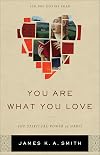
I couldn’t wait for the telos of this book. I found this book to be a tough read although I have enjoyed Smith’s other, purportedly more academic works. This perhaps in part because as much as the idea of this book is to push beyond intellectual frameworks to habit-forming practice, I found the book to be mostly about making an intellectual argument in favor of his mental mode of worship. I found the conceptual arguments to be the strongest (ie, chapter 1) and most engaging, while the show more least engaging were those that were supposed to flesh out his central argument. The irony of failing to articulate the application of an idea in a book about the importance of moving beyond concept to application is not lost on me. Additionally I found the reliance on ancient orthodoxy as the rule/solution to contemporary culture to be somewhat more rigid than I would have expected. There’s a case to be made for orthodox principles engaging with and transforming ones own cultural practices. It seems Smiths case is more about replacing one practice with another that ultimately seemed... unimaginative. show less
Lists
Awards


You May Also Like


Associated Authors
Statistics
- Works
- 40
- Also by
- 8
- Members
- 8,096
- Popularity
- #2,990
- Rating
- 4.1
- Reviews
- 52
- ISBNs
- 96
- Languages
- 5
- Favorited
- 4