
John Howard Yoder (1927–1997)
Author of The Politics of Jesus
About the Author
John Howard Yoder (1927-1997) earned his PhD from the University of Basel and taught theology at the Associated Mennonite Biblical Seminaries and the University of Notre Dame. For nineteen years he served the Mennonite Fellowship in church relations and education. His published books include The show more Politics of Jesus, The Priestly Kingdom, When War Is Unjust, What Would You Do?, and He Came Preaching Peace. show less
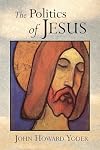
Image credit: Theopedia
Series
Works by John Howard Yoder
Body Politics: Five Practices of the Christian Community Before the Watching World (1992) 281 copies, 3 reviews
The Original Revolution: Essays on Christian Pacifism (Christian Peace Shelf Series) (1972) 177 copies
Pentecostal Pacifism: The Origin, Development, and Rejection of Pacific Belief among the Pentecostals (Pentecostals, Peacemaking, and Social Justice) (1989) — Foreword — 22 copies
If a Violent Person Threateded to Harm a Loved One...WHAT WOULD YOU DO? - A Serious Answer to a Standard Question (1983) 3 copies
Jesus y la Realidad Política 2 copies
Christ and the Powers 2 copies
Reinos en Conflicto 1 copy
Original Revolution, The 1 copy
Jesus and Power 1 copy
A política de Jesus 1 copy
Associated Works
Watch for the Light: Readings for Advent and Christmas (2004) — Contributor — 896 copies, 10 reviews
Evangelicals in the Public Square: Four Formative Voices on Political Thought and Action (2006) — Contributor — 111 copies
Virtues and Practices in the Christian Tradition: Christian Ethics after MacIntyre (1997) — Contributor — 60 copies
The Wisdom of the Cross: Essays in Honor of John Howard Yoder (1999) — Festschrift, some editions; Contributor — 38 copies
Radical Ecumenicity: Pursuing Unity and Continuity after John Howard Yoder (2010) — Contributor — 25 copies
War As Crucifixion Essays on Peace, Violence and 'Just War' from "The Christian Century". (2002) — Contributor — 5 copies
Tagged
Common Knowledge
- Legal name
- Yoder, John Howard
- Other names
- Yoder, John H.
尤達 - Birthdate
- 1927-12-29
- Date of death
- 1997-12-30
- Gender
- male
- Education
- University of Basel (Th.D)
Goshen College - Occupations
- theologian
ethicist - Organizations
- Mennonites
University of Notre Dame - Nationality
- USA
- Birthplace
- Smithville, Ohio, USA
- Places of residence
- Elkhart, Indiana, USA
Basel, Switzerland - Place of death
- South Bend, Indiana, USA
- Associated Place (for map)
- USA
Members
Reviews

One of the great books. John Howard Yoder considers the ethic of Jesus in terms of his claims about the values of the Kingdom, of poverty, nonviolence, of mutual grace; he scrutinises power and how we use it (or, more often, misuse it); and he places the witness of the gospel in the deep line of prophetic inspiration from the Hebrew Scriptures. It is far more than simply an exegesis of the injunction to love our enemies, but, as such, it is an intelligent and measured plea for peace. It show more reminds me a lot of Dietrich Bonhoeffer's 'Cost of Discipleship', which, in a similar way, explores the Beatitudes as a basis for profound metanoia and the radical reordering of our lives towards justice. If a few more people actually lived this way, possibly religious commitment would seem plausible to the kind of world we live in. show less

If you've followed my blog (http://stephenbarkley.com), you'll know that I've summarized and reflected on each of the 12 chapters that make up The Politics of Jesus. Since all the details have been covered, I'll offer a few final thoughts here.
The Politics of Jesus was a landmark book. It was first published in 1972 in a world that didn't take the ethical-social stance of Jesus seriously. In this right-place-at-the-right-time book, Yoder defended his belief that Jesus' teaching has direct show more ethical implications today. The book was updated with additional material in 1994 to review the theological and sociological landscape since the first printing.
The book is 40 year old, and it shows its age. We miss the revolutionary impact today that it had in the 1970s because the main battle has been won. Yoder's passionate defense of Jesus' ethical-social relevance feels almost quaint in an age where that point has become a given. It's akin to hearing arguments for the importance of wearing seat-belts. The war's over.
Even though the main point's commonplace now, the book is still worth reading for the wide variety of angles Yoder takes to support his thesis. When I read Hauerwas I'm amazed at the seemingly random conversion of stand-alone essays into chapters. Now I know where he got that style from! In one chapter, Yoder's summarizing evidence for political relevance of Jesus throughout the Gospel of Luke. A few chapters later, he's delving into the Stoic antecedents for the Haustafeln. This style might excite or terrify you, depending on how your brain's wired.
I have to admit that Yoder stretches the exegetical evidence at times to strengthen his case. In the end, though, we're left with a groundbreaking study on the political relevance of the Messiah. show less
The Politics of Jesus was a landmark book. It was first published in 1972 in a world that didn't take the ethical-social stance of Jesus seriously. In this right-place-at-the-right-time book, Yoder defended his belief that Jesus' teaching has direct show more ethical implications today. The book was updated with additional material in 1994 to review the theological and sociological landscape since the first printing.
The book is 40 year old, and it shows its age. We miss the revolutionary impact today that it had in the 1970s because the main battle has been won. Yoder's passionate defense of Jesus' ethical-social relevance feels almost quaint in an age where that point has become a given. It's akin to hearing arguments for the importance of wearing seat-belts. The war's over.
Even though the main point's commonplace now, the book is still worth reading for the wide variety of angles Yoder takes to support his thesis. When I read Hauerwas I'm amazed at the seemingly random conversion of stand-alone essays into chapters. Now I know where he got that style from! In one chapter, Yoder's summarizing evidence for political relevance of Jesus throughout the Gospel of Luke. A few chapters later, he's delving into the Stoic antecedents for the Haustafeln. This style might excite or terrify you, depending on how your brain's wired.
I have to admit that Yoder stretches the exegetical evidence at times to strengthen his case. In the end, though, we're left with a groundbreaking study on the political relevance of the Messiah. show less

Not every Christian is a pacifist but it is hard to disagree with pacifism on moral grounds. Mostly people point to how impractical pacifism is in the face of real evil. Often people argue against pacifism by pointing to the position's so called Achilles heel, "What if some one attacked your wife/child/family/loved one?"
John Howard Yoder, the late Mennonite theologian wrote this book to answer that question. In part 1 he gives his own reasoned answer to this question. His answer illustrates show more the way this particular question over simplifies the issue and demands a deterministic response (i.e. violence is the only way to stop violence)In part 2 other pacifists give their answer to the question. Part 3 presents anecdotes from various sources of how the non-violent response actually worked to quell violence.
This was a very good and accessible response to the issue from an intelligent pacifist perspective. It is simple and certainly not Yoder's best or most creative work. But it certainly was good. show less
John Howard Yoder, the late Mennonite theologian wrote this book to answer that question. In part 1 he gives his own reasoned answer to this question. His answer illustrates show more the way this particular question over simplifies the issue and demands a deterministic response (i.e. violence is the only way to stop violence)In part 2 other pacifists give their answer to the question. Part 3 presents anecdotes from various sources of how the non-violent response actually worked to quell violence.
This was a very good and accessible response to the issue from an intelligent pacifist perspective. It is simple and certainly not Yoder's best or most creative work. But it certainly was good. show less
This was a book I've been wanting to read for quite a while so I definitely went in with high expectations. As I read through the introduction, I was extremely happy to find out that this would not be a book that simply perpetuated(or supported those who perpetuate) the social justice Jesus. In my opinion this does what many who support this do in providing for a narrow Jesus who has a very one dimensional agenda. Yoder makes it very clear that it will be a thorough study and will not settle show more for simply meeting any agenda.
With that said, however, the book gets off to a pretty slow pace and it is not really into the second half until he really gets into some of the meat and potatoes(or tofu and potatoes...all things to all people). Later on we are brought more fully into the realm of the kingdom that Jesus was bringing and announcing. It wad not what was expected and seemed to disappoint some, yet it was an enlargement of the nature of God.
Additionally in one of the last chapters we see some discussion on justification that is extremely similar to what had put Bishop Wright on the hot-seat in recent months. It was encouraging to see some of the beginning roots of when this analysis of the Reformation's opinion on justification with references to Stendahl and Markus Barth used to make his point. Yoder must not have had the same attention on him as Wright but it is helpful to note that in any fair analysis of the Bible there should never be a closed opinion. I enjoyed this book very much an would enjoy reading more by him in the future. show less
With that said, however, the book gets off to a pretty slow pace and it is not really into the second half until he really gets into some of the meat and potatoes(or tofu and potatoes...all things to all people). Later on we are brought more fully into the realm of the kingdom that Jesus was bringing and announcing. It wad not what was expected and seemed to disappoint some, yet it was an enlargement of the nature of God.
Additionally in one of the last chapters we see some discussion on justification that is extremely similar to what had put Bishop Wright on the hot-seat in recent months. It was encouraging to see some of the beginning roots of when this analysis of the Reformation's opinion on justification with references to Stendahl and Markus Barth used to make his point. Yoder must not have had the same attention on him as Wright but it is helpful to note that in any fair analysis of the Bible there should never be a closed opinion. I enjoyed this book very much an would enjoy reading more by him in the future. show less
Lists
Awards


You May Also Like


Associated Authors
Statistics
- Works
- 70
- Also by
- 9
- Members
- 4,659
- Popularity
- #5,412
- Rating
- 4.2
- Reviews
- 23
- ISBNs
- 110
- Languages
- 7
- Favorited
- 20