

Rowan Williams
Author of Being Christian: Baptism, Bible, Eucharist, Prayer
About the Author
Rowan Williams is Archbishop of Wales.
Image credit: Steve Punter
Works by Rowan Williams
The Wound of Knowledge: Christian Spirituality from the New Testament to St. John of the Cross (1979) 395 copies
The Book of Taliesin: Poems of Warfare and Praise in an Enchanted Britain (2019) — Translator — 132 copies, 1 review
Looking East in Winter: Contemporary Thought and the Eastern Christian Tradition (2021) 55 copies, 1 review
Christian Spirituality: A theological history from the New Testament to Luther and St. John of the Cross (1979) 27 copies
Beginning Now: Peacemaking Theology - A Study Book for Individuals and Groups Pt. 1 (1984) 16 copies
A margin of silence : the Holy Spirit in Russian Orthodox theology = Un marge de silence : l'Esprit Saint dans la théologie orthodoxe russe (2008) 10 copies
Inspiring Service: Interfaith Remarks With Elder Jeffrey R. Holland at Oxford (2019) — Contributor — 4 copies
Understanding and Misunderstanding Negative Theology (The Père Marquette Lecture in Theology) (2021) 3 copies
The Kingdom Is Theirs 3 copies
Celebrating the 100th birthday of William Frank Blissett (b. 11 October 1921) (2021) — Contributor — 2 copies
Inspiring Service: Catholic, Anglican, Methodist and Latter-day Saint Traditions in Dialogue (2020) 2 copies
Det kristne livet 1 copy
Diez Conferencias 1 copy
Thought on the Resurrection 1 copy
The truce of God 1 copy
Speaking Love's Name 1 copy
2004-2005 Anglican Cycle of Prayer: Praying together for all God's people throughout the world 1 copy
Crisis and recovery 1 copy
信為何物 1 copy
On Augustine 1 copy
Associated Works
The History of the Church: From Christ to Constantine (0321) — Foreword, some editions — 5,071 copies, 30 reviews
Free of Charge: Giving and Forgiving in a Culture Stripped of Grace (2005) — Foreword, some editions — 766 copies, 7 reviews
Why Go to Church?: The Drama of the Eucharist (2008) — Foreword, some editions — 251 copies, 4 reviews
The Cambridge Companion to Christian Ethics (2000) — Contributor, some editions — 249 copies, 1 review
The Modern Theologians: An Introduction to Christian Theology Since 1918 (2005) — Contributor, some editions — 217 copies, 1 review
The Blackwell Companion to Christian Ethics (2004) — Afterword, some editions — 185 copies, 1 review
Communion and Otherness: Further Studies in Personhood and the Church (2006) — Foreword — 155 copies, 1 review
Power and Passion: Six Characters in Search of Resurrection (2006) — Foreword, some editions — 111 copies, 1 review
Ancient Faith, Future Mission: Fresh Expressions in the Sacramental Tradition (2009) — Contributor — 102 copies, 1 review
Postmodern Theology: Christian Faith in a Pluralist World (1989) — Contributor — 64 copies, 1 review
Our Sound is Our Wound: Contemplative Listening to a Noisy World -- The Archbishop of Canterbury's Lent Book 2010 (2009) — Foreword, some editions — 52 copies
Barefoot Disciple: Walking the Way of Passionate Humility (2011) — Foreword, some editions — 44 copies
Great Spirits 1000-2000: The Fifty-Two Christians Who Most Influenced Their Millennium (2002) — Contributor — 30 copies, 1 review
The Authority of the Gospel: Explorations in Moral and Political Theology in Honor of Oliver O'Donovan (2015) — Foreword — 21 copies
The Grammar of the Heart: New Essays in Moral Philosophy and Theology (1988) — Contributor — 20 copies, 1 review
Philosophy, Religion and the Spiritual Life (Royal Institute of Philosophy Supplements, Series Number 32) (1992) — Contributor — 15 copies
Encounter Between Eastern Orthodoxy and Radical Orthodoxy: Transfiguring the World Through the Word (2009) — Contributor — 13 copies
Ambassadors of Christ : commemorating 150 years of theological education in Cuddesdon, 1854-2004 (2004) — Foreword — 10 copies
Radical Christian Voices and Practice: Essays in Honour of Christopher Rowland (2012) — Contributor — 9 copies
Portraits of spiritual authority : religious power in early Christianity, Byzantium, and the Christian Orient (1999) — Contributor — 9 copies
Theology and Philosophy: Faith and Reason (Religion and the University) (2012) — Foreword — 8 copies
Christianity and the Disciplines: The Transformation of the University (Religion and the University) (2012) — Foreword — 7 copies
Studia Patristica. Volume XLVI: Tertullian to Tyconius, Egypt before Nicaea, Athanasius and his Opponents (2010) — Contributor — 6 copies
Celsus in his World: Philosophy, Polemic and Religion in the Second Century (2021) — Contributor — 5 copies
Meditations of the heart : the Psalms in Christian thought and practice : essays in honour of Andrew Louth (2011) — Contributor — 4 copies
Painted temples : wallpaintings and rood-screens in Welsh churches, 1200-1800 (2021) — Foreword — 2 copies
Augustine : presbyter factus sum [Collectanea Augustiniana] (1994) — Contributor, some editions — 1 copy
Tagged
Common Knowledge
- Legal name
- Williams, Rowan Douglas
- Other names
- Baron Williams of Oystermouth
- Birthdate
- 1950-06-14
- Gender
- male
- Occupations
- Archbishop of Canterbury
- Organizations
- Church of England
Learned Society of Wales (founding fellow)
T. S. Eliot Society
Peace Mala Youth Project For World Peace
WaveLength Charity
Christian Aid (show all 10)
Anglo-Catholic Christian Socialists (co-founder|1974)
British Academy (fellow|1990)
Royal Society of Literature (fellow|2003)
Privy Council of the United Kingdom - Awards and honors
- Campion Award (2009)
Sitara-e-Pakistan (2012)
Royal Order of Francis I (Knight Grand-Cross, 2004)
Royal Victorian Chain (2012)
Life Peerage (2013)
Order of Friendship (2010) - Relationships
- Williams, Jane Welch (wife)
- Nationality
- UK
- Birthplace
- Ystradgynlais, Swansea, Wales, UK
- Places of residence
- Lambeth, London, England, United Kingdom
- Associated Place (for map)
- UK
Members
Discussions
Archbishop of Canterbury Rowan Williams steps down in Christianity (June 2012)
Reviews
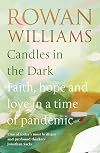
Summary: Weekly meditations by the former Archbishop of Canterbury, written for his parish church from March to September 2020, during the early months of the COVID-19 pandemic.
We all remember when life as we knew it ended as lockdowns and stay at home orders were issued to curb rising COVID infections. For many of us it was around mid-March 2020. On March 26, the day of the Feast of the Annunciation (remembering the appearance of Gabriel to Mary announcing she would bear the Christ child), show more former Archbishop of Canterbury Rowan Williams wrote the first of a series of meditations addressing what it means to live in faith, hope, and love during the pandemic. On that day, he wrote:
“And as we contemplate the coming months, not knowing when we can breathe again, it’s worth thinking about how already the foundations have been laid for whatever new opportunities God has for us on the far side of this crisis. The small actions we take to protect one another, to keep open the channels of love and gift, volunteering, if we’re able, to support someone less mobile or less safe, finding new ways of communicating, even simply meditating on how our society might become more just and secure–all this can be the hidden beginning of something fuller and more honest for us all in the future.”
ROWAN WILLIAMS, PP. 2-3.
Over the coming months, ending September 17, 2020, Williams wrote weekly meditations for his parish church, collected in this compact book. Each are two to four pages in length. He reflects on our anxiety when our usual outlets for productive activity are gone, of treasuring relationships because of the experience of aloneness, the giving of the Holy Spirit that reminds us we are not God, and of seeking justice for those disproportionately affected by the pandemic.
One of my favorites, on the Feast of St. Matthias (May 14) celebrates this apostle whose greatest accomplishment lies in taking the place of Judas Iscariot. Williams emphasizes the hidden heroism he represents of those who faithfully show up. Another, written on August 6 was especially meaningful. Williams notes that this is both the day the first atom bomb was detonated with deadly results over Hiroshima, and the day of the church’s celebration of the transfiguration. In the first we see the dark face of humanity. In the second we see the radiant face of “infinite love of beauty,” the face of God in human flesh and know there is yet hope for us. I was born on August 6 and I feel this contrast, so beautifully articulated by Williams, has framed my life.
His posts do not all address pandemic-specific realities. Many, like the examples noted above, are connected to the church calendar. Others simply address contemporary realities like the reduction of our individuality and dignity before God to algorithms. Another is simply on meditative walking–something some of us have had time for. He writes with a measure of caution about the current trend of tearing down statues, which merely reflect what is true of all of us–people who got much wrong and a few things right. It may be right to remove a statue, but there is no room for smug superiority in doing so.
This is a sparkling collection of writing that reflects not only the pandemic but many of our contemporary concerns. I found myself wondering what Williams would have written during the horrendous wave of infection that came after the close of the book. What would his reflection have been about stubborn variants and vaccines? I hope he has continued writing. The book ends only part way through the journey, offering helpful direction for how we might live as people of faith both in this and more ordinary times. He recognizes this in his epilogue and recalls his opening reflection. He asks if we have grown through the solidarity forced by our common plight.
It is a question worth considering if we believe that the call to trust and follow Christ is to grow in Christ-likeness until the day we see him. We may feel with vaccines and the rescinding of health orders (at least for a time) that this is “over” and we can move on. If we simply want to forget, does it reveal something about the kind of people we have been through this time, with which we are uncomfortable? It is not too late to reflect on how the pandemic has shaped our life of faith, hope, and love, and make course corrections where needed. If we do not consider William’s question, we may find ourselves on a course that takes us away from Christ, and from solidarity with the human community. Williams’ book reminds us there are candles in the dark for those looking for light.
____________________________
Disclosure of Material Connection: I received a complimentary review copy of this book from the publisher in exchange for an honest review. The opinions I have expressed are my own. show less
We all remember when life as we knew it ended as lockdowns and stay at home orders were issued to curb rising COVID infections. For many of us it was around mid-March 2020. On March 26, the day of the Feast of the Annunciation (remembering the appearance of Gabriel to Mary announcing she would bear the Christ child), show more former Archbishop of Canterbury Rowan Williams wrote the first of a series of meditations addressing what it means to live in faith, hope, and love during the pandemic. On that day, he wrote:
“And as we contemplate the coming months, not knowing when we can breathe again, it’s worth thinking about how already the foundations have been laid for whatever new opportunities God has for us on the far side of this crisis. The small actions we take to protect one another, to keep open the channels of love and gift, volunteering, if we’re able, to support someone less mobile or less safe, finding new ways of communicating, even simply meditating on how our society might become more just and secure–all this can be the hidden beginning of something fuller and more honest for us all in the future.”
ROWAN WILLIAMS, PP. 2-3.
Over the coming months, ending September 17, 2020, Williams wrote weekly meditations for his parish church, collected in this compact book. Each are two to four pages in length. He reflects on our anxiety when our usual outlets for productive activity are gone, of treasuring relationships because of the experience of aloneness, the giving of the Holy Spirit that reminds us we are not God, and of seeking justice for those disproportionately affected by the pandemic.
One of my favorites, on the Feast of St. Matthias (May 14) celebrates this apostle whose greatest accomplishment lies in taking the place of Judas Iscariot. Williams emphasizes the hidden heroism he represents of those who faithfully show up. Another, written on August 6 was especially meaningful. Williams notes that this is both the day the first atom bomb was detonated with deadly results over Hiroshima, and the day of the church’s celebration of the transfiguration. In the first we see the dark face of humanity. In the second we see the radiant face of “infinite love of beauty,” the face of God in human flesh and know there is yet hope for us. I was born on August 6 and I feel this contrast, so beautifully articulated by Williams, has framed my life.
His posts do not all address pandemic-specific realities. Many, like the examples noted above, are connected to the church calendar. Others simply address contemporary realities like the reduction of our individuality and dignity before God to algorithms. Another is simply on meditative walking–something some of us have had time for. He writes with a measure of caution about the current trend of tearing down statues, which merely reflect what is true of all of us–people who got much wrong and a few things right. It may be right to remove a statue, but there is no room for smug superiority in doing so.
This is a sparkling collection of writing that reflects not only the pandemic but many of our contemporary concerns. I found myself wondering what Williams would have written during the horrendous wave of infection that came after the close of the book. What would his reflection have been about stubborn variants and vaccines? I hope he has continued writing. The book ends only part way through the journey, offering helpful direction for how we might live as people of faith both in this and more ordinary times. He recognizes this in his epilogue and recalls his opening reflection. He asks if we have grown through the solidarity forced by our common plight.
It is a question worth considering if we believe that the call to trust and follow Christ is to grow in Christ-likeness until the day we see him. We may feel with vaccines and the rescinding of health orders (at least for a time) that this is “over” and we can move on. If we simply want to forget, does it reveal something about the kind of people we have been through this time, with which we are uncomfortable? It is not too late to reflect on how the pandemic has shaped our life of faith, hope, and love, and make course corrections where needed. If we do not consider William’s question, we may find ourselves on a course that takes us away from Christ, and from solidarity with the human community. Williams’ book reminds us there are candles in the dark for those looking for light.
____________________________
Disclosure of Material Connection: I received a complimentary review copy of this book from the publisher in exchange for an honest review. The opinions I have expressed are my own. show less
I can’t remember who recommended this book to me, but I’m sure glad he or she did! It sat on my Amazon wish list for a while until I threw it into the cart on impulse.
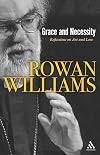
There’s four chapters in this book, which are expanded versions of the Clark Lectures Williams gave in 2005. In the first three chapters, Williams covers Jacques Maritain, David Jones, and Flannery O’Connor respectively. He examines how the later two figures viewed their craft through the lens of Maritain. In the final show more chapter, Williams relates this philosophy of art more closely to theology and draws some conclusions.
This is the sort of book that I know I will read again. Whenever I paused to reconsider a sentence or paragraph, an new insight would jump out at me. In particular, I loved his insistence on the integrity of art. Art-as-propoganda or art-as-emotionalism or art-as-self-expression are compromises that undermine art’s true purpose.
Not only did this book make me want to read more from Williams, it made me want to pursue Maritain and O’Connor as well. This work demands your concentration, but rewards it richly. show less
There’s four chapters in this book, which are expanded versions of the Clark Lectures Williams gave in 2005. In the first three chapters, Williams covers Jacques Maritain, David Jones, and Flannery O’Connor respectively. He examines how the later two figures viewed their craft through the lens of Maritain. In the final show more chapter, Williams relates this philosophy of art more closely to theology and draws some conclusions.
This is the sort of book that I know I will read again. Whenever I paused to reconsider a sentence or paragraph, an new insight would jump out at me. In particular, I loved his insistence on the integrity of art. Art-as-propoganda or art-as-emotionalism or art-as-self-expression are compromises that undermine art’s true purpose.
Not only did this book make me want to read more from Williams, it made me want to pursue Maritain and O’Connor as well. This work demands your concentration, but rewards it richly. show less

A book with some interesting perspectives that fizzles out as it goes on.
"Being Christian" contains bits and pieces throughout its sparse length that did ignite my curiosity and thoughts, but it rarely manages to plant a seed of its own ideas in my head, as I was more reliant on previous learning and experiences to get something worthwhile from the book.
In the chapter on the Bible, it mentions, that the Christian life is a listening life. Listening to God's word, of course. However, I think show more that misses a huge aspect, which I only thought of after talking to a priest. Yes, it's a listening life - but it's listening to people, indirectly and directly. Indirectly as in a person who's lashing out as a symptom of perhaps leading a bad life and needing someone to talk to. Directly as in both people you know, but also strangers, who have the world on their shoulders and need someone to listen to them.
My primary problem with "Being Christian", is that it just contains too much shallow evangelism/faith reductionism. This is not a problem special to this book, and what I mean precisely is the concepts of faith are being reduced to simplistic ideas centered solely around Jesus. Jesus is in you. Jesus is near you. The truth is in Jesus. To me, this neglects the deep and challenging aspects of what faith can be about, and that is what I am seeking. On top of that, it is also a short book which ends up limiting itself and how far it can actually go.
It's worth mentioning that my point of view reading this is from an agnostic position, trying to find my way to some kind of faith. Or just have it make sense, in terms of the pragmatic, emotional and intellectual aspects.
When it comes to getting something out of this book, your mileage will vary from person to person. If you're already a believer, you'll most likely get the most out of it, and even love it. If you're not a believer, however, it's going to be very 50/50. In the end, I don't feel like any of the four aspects of the book were laid out and expanded to a non-believer, and that's a shame. I had much higher expectations from someone who's praised as a great theologian. show less
"Being Christian" contains bits and pieces throughout its sparse length that did ignite my curiosity and thoughts, but it rarely manages to plant a seed of its own ideas in my head, as I was more reliant on previous learning and experiences to get something worthwhile from the book.
In the chapter on the Bible, it mentions, that the Christian life is a listening life. Listening to God's word, of course. However, I think show more that misses a huge aspect, which I only thought of after talking to a priest. Yes, it's a listening life - but it's listening to people, indirectly and directly. Indirectly as in a person who's lashing out as a symptom of perhaps leading a bad life and needing someone to talk to. Directly as in both people you know, but also strangers, who have the world on their shoulders and need someone to listen to them.
My primary problem with "Being Christian", is that it just contains too much shallow evangelism/faith reductionism. This is not a problem special to this book, and what I mean precisely is the concepts of faith are being reduced to simplistic ideas centered solely around Jesus. Jesus is in you. Jesus is near you. The truth is in Jesus. To me, this neglects the deep and challenging aspects of what faith can be about, and that is what I am seeking. On top of that, it is also a short book which ends up limiting itself and how far it can actually go.
It's worth mentioning that my point of view reading this is from an agnostic position, trying to find my way to some kind of faith. Or just have it make sense, in terms of the pragmatic, emotional and intellectual aspects.
When it comes to getting something out of this book, your mileage will vary from person to person. If you're already a believer, you'll most likely get the most out of it, and even love it. If you're not a believer, however, it's going to be very 50/50. In the end, I don't feel like any of the four aspects of the book were laid out and expanded to a non-believer, and that's a shame. I had much higher expectations from someone who's praised as a great theologian. show less

The Lion’s World builds on a series of lectures that Rowan Williams, former Archbishop of Canterbury, gave at Canterbury Cathedral in Holy Week 2011 about the ideas in C.S. Lewis’s writing, especially the Narnia books, that he has found especially meaningful.
After sharing his own experiences with the Narnia books, Williams discusses the books’ critics, who are many. J.R.R. Tolkien, for instance, didn’t like the mixture of mythologies, but Lewis wasn’t interested in creating an show more internally coherent alternate world, as Tolkien did. Nor was he interested in creating a systematic theology in a form palatable to children. If you press the theological questions too hard, you’ll end up in a mess. What’s important are the stories. The theology comes through narrative and imagination, through thinking of what it’s it like to be in the presence of great power and great good, to know you’ve done wrong in the face of such power, to be part of a world that’s bigger on the inside. These are stories about seeing the truth about yourself and being given grace and love even when you don’t deserve it.
As for some of the criticisms regarding depictions of foreigners and of women, Williams doesn’t let Lewis off the hook, but he does put those depictions in context, pointing out that Lewis was a man of his time, and he was drawing upon literary traditions from before his time, with all their flaws. In writing about the much-discussed problem of Susan, Williams notes that Lewis wrote to a reader that he did have hope that Susan would find her way back to Narnia, and he encouraged her to try to write how it would happen. I found the idea of C.S. Lewis encouraging Narnia fanfic back in 1960 to be utterly charming. I wonder if anyone has written that story.
It’s been a long time—probably about eight years–since I’ve read the Narnia books, and I’ve worried that they would lose their luster for me now that my own theology has become more complex and I’ve become more aware of the criticisms of the books. But Williams helps me see that even a jaded adult like me can find a lot of value in a good, imaginative story.
A longer version of this review is available at Shelf Love. show less
After sharing his own experiences with the Narnia books, Williams discusses the books’ critics, who are many. J.R.R. Tolkien, for instance, didn’t like the mixture of mythologies, but Lewis wasn’t interested in creating an show more internally coherent alternate world, as Tolkien did. Nor was he interested in creating a systematic theology in a form palatable to children. If you press the theological questions too hard, you’ll end up in a mess. What’s important are the stories. The theology comes through narrative and imagination, through thinking of what it’s it like to be in the presence of great power and great good, to know you’ve done wrong in the face of such power, to be part of a world that’s bigger on the inside. These are stories about seeing the truth about yourself and being given grace and love even when you don’t deserve it.
As for some of the criticisms regarding depictions of foreigners and of women, Williams doesn’t let Lewis off the hook, but he does put those depictions in context, pointing out that Lewis was a man of his time, and he was drawing upon literary traditions from before his time, with all their flaws. In writing about the much-discussed problem of Susan, Williams notes that Lewis wrote to a reader that he did have hope that Susan would find her way back to Narnia, and he encouraged her to try to write how it would happen. I found the idea of C.S. Lewis encouraging Narnia fanfic back in 1960 to be utterly charming. I wonder if anyone has written that story.
It’s been a long time—probably about eight years–since I’ve read the Narnia books, and I’ve worried that they would lose their luster for me now that my own theology has become more complex and I’ve become more aware of the criticisms of the books. But Williams helps me see that even a jaded adult like me can find a lot of value in a good, imaginative story.
A longer version of this review is available at Shelf Love. show less
 This review was written for LibraryThing Early Reviewers.
Lists
Awards

You May Also Like


Associated Authors
Statistics
- Works
- 110
- Also by
- 66
- Members
- 8,321
- Popularity
- #2,900
- Rating
- 3.9
- Reviews
- 53
- ISBNs
- 270
- Languages
- 7
- Favorited
- 17

