
Desmond Seward (1935–2022)
Author of The Hundred Years War: The English in France, 1337-1453
About the Author
Desmond Seward was born in Paris and educated at Cambridge. He is the author of Richard III, The Last White Rose, The Demon's Brood, and The Warrior King and the Invasion of France. He lives in England.
Works by Desmond Seward
The Wars of the Roses: Through the Lives of Five Men and Women of the Fifteenth Century (1995) 301 copies, 3 reviews
Tagged
Common Knowledge
- Canonical name
- Seward, Desmond
- Birthdate
- 1935-05-22
- Date of death
- 2022-04-03
- Gender
- male
- Education
- Ampleforth College
University of Cambridge (St. Catharine's College) - Occupations
- popular historian
- Organizations
- Association de Lassaye
- Awards and honors
- Knight SMOM (1978)
Knight Constantinian St George (Parma) (2001)
Medal Benemerente (Royal House of Bourbon-Parma) (2003) - Agent
- Andrew Lownie Literary Agency
- Nationality
- UK
- Birthplace
- Paris, France
- Places of residence
- England, UK
- Associated Place (for map)
- UK
Members
Reviews

Recently, scientists discovered Richard III's body. They still have not found his soul.
That is the only possible conclusion we can draw from the ongoing conflicts between anti-Richard and pro-Richard historians ("traditionalists" and "revisionists"). An honest historian has to confess that the data is conflicting. Yes, Richard certainly set aside his nephews on grounds that were flimsy (but at least arguably legal). Yes, they disappeared, and they almost certainly died during Richard's show more watch.
On the other hand, Richard seems to have tried harder than almost any other English monarch to be a good king -- certainly his reign was less oppressive than Henry Tudor's. He seems to have been genuinely religious. Other than the events of his usurpation, he appears to have been a genuinely good man.
So how should we judge Richard? Almost certainly, as in the Biblical example, he was a mix of iron and clay.
Desmond Seward won't even grant the clay, let alone the iron. His Richard seems to be comprised of the sweepings of dungheaps. Seward freely admits that his is the most extreme anti-Richard biography of recent decades. (At least until Alison Weir wrote her novel disguised as a history.) Seward has reached a conclusion, and he will always interpret the data to support that conclusion even when it doesn't.
This is not to say that scholars should not write traditionalist biographies. This is a genuine debate, and there is a real need for good traditionalist examinations of the case. Charles Ross's biography of Richard is a brilliant example. But Ross is fair. Seward is not.
That probably should be enough said. But there is one more thing to think about. The two most traditionalist biographies of the last half century are those by Seward and Weir. And both made their livings not as academic historians but as writers of popular histories. The kind of history, it appears, designed to appeal to those who want fireworks and certainty rather than caution and uncertainty. show less
That is the only possible conclusion we can draw from the ongoing conflicts between anti-Richard and pro-Richard historians ("traditionalists" and "revisionists"). An honest historian has to confess that the data is conflicting. Yes, Richard certainly set aside his nephews on grounds that were flimsy (but at least arguably legal). Yes, they disappeared, and they almost certainly died during Richard's show more watch.
On the other hand, Richard seems to have tried harder than almost any other English monarch to be a good king -- certainly his reign was less oppressive than Henry Tudor's. He seems to have been genuinely religious. Other than the events of his usurpation, he appears to have been a genuinely good man.
So how should we judge Richard? Almost certainly, as in the Biblical example, he was a mix of iron and clay.
Desmond Seward won't even grant the clay, let alone the iron. His Richard seems to be comprised of the sweepings of dungheaps. Seward freely admits that his is the most extreme anti-Richard biography of recent decades. (At least until Alison Weir wrote her novel disguised as a history.) Seward has reached a conclusion, and he will always interpret the data to support that conclusion even when it doesn't.
This is not to say that scholars should not write traditionalist biographies. This is a genuine debate, and there is a real need for good traditionalist examinations of the case. Charles Ross's biography of Richard is a brilliant example. But Ross is fair. Seward is not.
That probably should be enough said. But there is one more thing to think about. The two most traditionalist biographies of the last half century are those by Seward and Weir. And both made their livings not as academic historians but as writers of popular histories. The kind of history, it appears, designed to appeal to those who want fireworks and certainty rather than caution and uncertainty. show less
The Wars of the Roses: Through the Lives of Five Men and Women of the Fifteenth Century by Desmond Seward
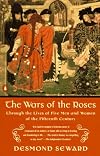
One-sided.
A lot of history books get tarred with that brush, but it is more than usually relevant to Desmond Seward's book about the Wars of the Roses. Covering a civil war almost always brings the danger of tilting toward one side or the other, but Seward's approach makes balance even harder to find.
Seward doesn't really give a history of England from 1455 to 1487; he gives biographies of five characters, trying to use these to tell the story of the Wars.
The problem is, five characters is show more an odd number. That means he will inherently lean more toward one side than the other.
And Seward makes it worse. Three of his characters are Margaret Beaufort, the mother of the future King Henry VII; Cardinal Morton, later Henry's Archbishop of Canterbury; and the Earl of Oxford, who is believed to have been the chief general at the Battle of Bosworth that put Henry on the throne. Not only does that give us three Lancastrians, it gives us three fanatical Lancastrians. Or, rather, one fanatical Lancastrian (Oxford) and two fanatical Tudors.
To represent the other side, the Yorkists, we have William, Lord Hastings, who was King Edward IV's drinking buddy (more or less) and Jane Shore, Edward's mistress. One of whom (Hastings) was executed by King Richard III and the other degraded. So, while Yorkists, they were both enemies of the last Yorkist king.
And Shore was, at most, an infant when the wars began, and several of the others still quite young. It is an inherently biased portrait; we get very little direct information about Richard Duke of York, the father of Edward IV the first Yorkist king. This is made worse by the fact that Seward, as his book on Richard III shows, has a very strong axe to grind. There were plenty of neutrals in the Wars, or characters who changed sides, or characters who were Yorkist and survived. You wouldn't know it from Seward.
All this might be forgivable if the result were easier to follow. But all the bouncing around between characters is very confusing. This history is neither fair nor very interesting.
Desmond Seward has written very good popular histories; I very much enjoyed his book on the Hundred Years' War. But his books on the Wars of the Roses are simply not a good place to learn about perhaps the most complicated political period in English history. show less
A lot of history books get tarred with that brush, but it is more than usually relevant to Desmond Seward's book about the Wars of the Roses. Covering a civil war almost always brings the danger of tilting toward one side or the other, but Seward's approach makes balance even harder to find.
Seward doesn't really give a history of England from 1455 to 1487; he gives biographies of five characters, trying to use these to tell the story of the Wars.
The problem is, five characters is show more an odd number. That means he will inherently lean more toward one side than the other.
And Seward makes it worse. Three of his characters are Margaret Beaufort, the mother of the future King Henry VII; Cardinal Morton, later Henry's Archbishop of Canterbury; and the Earl of Oxford, who is believed to have been the chief general at the Battle of Bosworth that put Henry on the throne. Not only does that give us three Lancastrians, it gives us three fanatical Lancastrians. Or, rather, one fanatical Lancastrian (Oxford) and two fanatical Tudors.
To represent the other side, the Yorkists, we have William, Lord Hastings, who was King Edward IV's drinking buddy (more or less) and Jane Shore, Edward's mistress. One of whom (Hastings) was executed by King Richard III and the other degraded. So, while Yorkists, they were both enemies of the last Yorkist king.
And Shore was, at most, an infant when the wars began, and several of the others still quite young. It is an inherently biased portrait; we get very little direct information about Richard Duke of York, the father of Edward IV the first Yorkist king. This is made worse by the fact that Seward, as his book on Richard III shows, has a very strong axe to grind. There were plenty of neutrals in the Wars, or characters who changed sides, or characters who were Yorkist and survived. You wouldn't know it from Seward.
All this might be forgivable if the result were easier to follow. But all the bouncing around between characters is very confusing. This history is neither fair nor very interesting.
Desmond Seward has written very good popular histories; I very much enjoyed his book on the Hundred Years' War. But his books on the Wars of the Roses are simply not a good place to learn about perhaps the most complicated political period in English history. show less
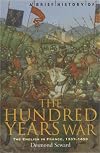
A well-written, though necessarily brief, history of the conflicts known as the 'Hundred Years War'. Seward devotes enough attention to the well-known personalities involved without losing sight of the overall picture. The book is neither hagiographic nor revisionist, and presents the career of many luminaries (Henry V and Joan of Arc in particular) in an unromantic light. Some accounts of lesser-known engagements and other bridging passages can be hard to follow due to the number of named show more participants and the necessary truncation, but over all this is a valuable introduction to an engaging subject. show less
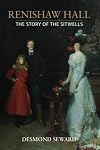
I had never heard of Renishaw Hall or the Sitwell family before reading this book, but now it is on my list of places to visit. It was really fascinating to read about the family as it brought the Hall to life. They are such a colourful family and yes, they were eccentric, but also very kind and generous – offering their hospitality to so many famous visitors - from authors and artists to royalty.
Renishaw Hall meant so much to the Sitwells, despite some of them almost bringing it to wrack show more and ruin, and this was evident in the reporting of the ghosts of dearly departed Sitwells appearing at the front door. Perhaps the most interesting haunting being the Boy in Pink, namely Henry Sacheverell, who drowned in 1726 and is reported to awaken ladies with a kiss - there was even a complaint that one lady visitor was not woken by the ghost.
I really enjoyed reading the snippets of old letters as it gave a real insight into their personalities. I must quote my favourite excerpt from the book, in light of our 21st century recession, following Francis Sitwell's letter to his father in 1720 after the South Sea Bubble burst:
"Well, since so great a Burden is fall'n upon the people, I wish it may light as much as possible on those who are best able to bear it; but more especially on the chief authors of their mischief, I mean those Knavish stock-jobbers by whose artifice people have been thus bubbled to their ruin."
Desmond Seward goes on to say:
"He was not alone in his opinion: one MP advised Parliament that bankers should be tied in sacks filled with snakes, and thrown into the Thames."
I was fascinated to read about Lady Ida who went to prison for fraud in 1915 after falling into debt. I admired her principles when she refused a visitor to the prison as it was someone she wouldn't have received had she been at Renishaw.
I think the most colourful section of the book was the Sacheverell, Edith and Osbert literary circle - cunningly surrounding themselves with acquaintances who wouldn't criticise them and rivalling the famous Bloomsbury set. Perhaps the most famous member of their clique being Evelyn Waugh, although he and Osbert seemed to envy each other.
Desmond Seward successfully brought Renishaw Hall to life in this fascinating book. It was no surprise to learn that he had been a frequent visitor to Renishaw as a guest of the late Sir Reresby Sitwell, as his writing shows great admiration and respect for the Sitwell family.
I received this book from the publisher, Elliott & Thompson, in exchange for an honest review. show less
Renishaw Hall meant so much to the Sitwells, despite some of them almost bringing it to wrack show more and ruin, and this was evident in the reporting of the ghosts of dearly departed Sitwells appearing at the front door. Perhaps the most interesting haunting being the Boy in Pink, namely Henry Sacheverell, who drowned in 1726 and is reported to awaken ladies with a kiss - there was even a complaint that one lady visitor was not woken by the ghost.
I really enjoyed reading the snippets of old letters as it gave a real insight into their personalities. I must quote my favourite excerpt from the book, in light of our 21st century recession, following Francis Sitwell's letter to his father in 1720 after the South Sea Bubble burst:
"Well, since so great a Burden is fall'n upon the people, I wish it may light as much as possible on those who are best able to bear it; but more especially on the chief authors of their mischief, I mean those Knavish stock-jobbers by whose artifice people have been thus bubbled to their ruin."
Desmond Seward goes on to say:
"He was not alone in his opinion: one MP advised Parliament that bankers should be tied in sacks filled with snakes, and thrown into the Thames."
I was fascinated to read about Lady Ida who went to prison for fraud in 1915 after falling into debt. I admired her principles when she refused a visitor to the prison as it was someone she wouldn't have received had she been at Renishaw.
I think the most colourful section of the book was the Sacheverell, Edith and Osbert literary circle - cunningly surrounding themselves with acquaintances who wouldn't criticise them and rivalling the famous Bloomsbury set. Perhaps the most famous member of their clique being Evelyn Waugh, although he and Osbert seemed to envy each other.
Desmond Seward successfully brought Renishaw Hall to life in this fascinating book. It was no surprise to learn that he had been a frequent visitor to Renishaw as a guest of the late Sir Reresby Sitwell, as his writing shows great admiration and respect for the Sitwell family.
I received this book from the publisher, Elliott & Thompson, in exchange for an honest review. show less
Lists
You May Also Like


Associated Authors
Statistics
- Works
- 35
- Members
- 4,486
- Popularity
- #5,584
- Rating
- 3.6
- Reviews
- 55
- ISBNs
- 134
- Languages
- 6
- Favorited
- 6
