
Paul Murray Kendall (1911–1973)
Author of Richard the Third
About the Author
Paul Murray Kendall was Professor of English Literature at the University of Kansas in Lawrence.
Series
Works by Paul Murray Kendall
Richard III, the great debate : Sir Thomas More's History of King Richard III ; Horace Walpole's Historic doubts on the life and reign of King Richard III (1973) 191 copies
Dispatches With Related Documents of Milanese Ambassadors in France and Burgundy, 1450-1483. Vol 2 : 1460-1483 (1971) — Editor — 7 copies
Dispatches With Related Documents of Milanese Ambassadors in France and Burgundy, 1450-1483. Vol 1 : 1450-1460 (1971) — Editor — 6 copies
Dispatches With Related Documents of Milanese Ambassadors in France and Burgundy 1450-1483. Vol 1 : 1450-1460 - Vol 2 : 1460-1483 (1971) — Editor — 2 copies
Associated Works
Tagged
Common Knowledge
- Birthdate
- 1911-03-01
- Date of death
- 1973-11-21
- Gender
- male
- Education
- University of Virginia ( [1932, 1933, 1939])
Frankford High School, Philadelphia, USA - Occupations
- historian
Distinguished Professor of English, Ohio University
biographer - Organizations
- Ohio University
Shakespeare Institute, University of Kansas - Awards and honors
- Marburgh Prize ( [1950])
Honorary Doctorate ( [1970])
Guggenheim Fellowship ( [1957] ∙ [1961])
Ford Foundation Fellowship (1952) - Relationships
- Kendall, Carol (wife)
Kendall, Gillian Murray (daughter)
Orszak, Caroline (daughter) - Short biography
- Professor Kendall was an historian who specialized in the English Renaissance period. He's perhaps best known for his authoritative biography of King Richard III, published in 1955, which helped to rehabilitate the reputation of this much-maligned monarch.
- Nationality
- USA
- Birthplace
- Philadelphia, Pennsylvania, USA
- Places of residence
- Ohio, USA
Virginia, USA
Philadelphia, Pennsylvania, USA - Place of death
- Lawrence, Kansas, Etats-Unis
- Burial location
- Bosworth Field, England, UK (ashes scattered; per Gillian Murray Kendall in introduction to 2002 edition of Richard the Third)
- Map Location
- USA
Members
Reviews

Paul Murray Kendall's Richard the Third is a readable biographical introduction of the last Plantagenet King of England that for many only comes to mind as the sinister hunchback of Shakespeare. Even though over 50 years worth of research has outdated some of Kendall's evidence, his overall body of work gives the reader a truer glimpse of Richard the man than from Richard the arch villain. From the outset, Kendall informs his reader of personal interpretations he has made from evidence show more through the use of starred (*) references within the text with explanations in the Notes after the main body of text. Kendall does tackle the death of the Princes in the first Appendix as he feels a discussion within the text itself would not be proper, which given the subject seems to be the correct course. Although Kendall believes that Richard was not responsible for the death of his nephews, in fact believing the evidence points to the Duke of Buckingham as instigator if not actual culprit, but Kendall does acknowledge that Richard might have in some way acquiesced and ultimately believed he was at fault through taking the throne. In the second appendix Kendall gives a historiography surrounding Richard of over the centuries until the publication of his book, which he hopes to be a moderate addition instead of "revisionist." Although the writing and pace are a little dated, Kendall's book is a fine introduction to Richard the man. show less
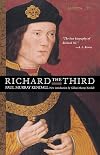
Paul Murray Kendall, the author of this biography of Richard III, one of the most controversial English kings, carefully and painstakingly constructs Richard’s life and times through contemporary fifteenth-century sources, resolutely attempting to thrust away the “Tudor tradition” once and for all.
Necessarily, it takes a long while to get through a volume so heavy with facts and references, especially considering Kendall backs up nearly all of his points with lengthy endnotes. These show more are welcome and flesh out every aspect of Kendall’s thought processes as he attempts to show us the man who has been so maligned. What emerges is a picture of an honest, well-intentioned man, perhaps too eager to seize a throne, let down by nearly all of his contemporaries. As Duke of Gloucester, Richard won the allegiance of the North, a task which no one had yet managed since William the Conqueror, if not before. He stood by his brother and his brother’s children, for the most part. As King, Richard forgave many of his enemies, bestowed annuities on helpless people, and passed laws entirely for the betterment of society. He did not ask Parliament for a tax despite facing two rebellions, and in general focused largely on increasing the well-being of the poor. He even compares Richard to Henry VII, and Henry comes out the worse for it.
The matter of the Princes in the Tower also comes into play, as do Richard’s motives for dethroning his nephew Edward V. In each case, Kendall addresses the matter logically and with plenty of evidence from the sources he has consulted. Richard comes out of all this possibly guilty, but understandably so, especially in the latter case. Kendall doesn’t believe that Richard killed the princes, and neither do I, though my opinion has been formed for some time now.
Kendall’s writing is at times overly flowery and it’s fairly obvious that this book is over fifty years old. That doesn’t negate its virtues, but it does make for occasionally slow reading, especially compared to current popular biographies. This is very easy to read compared to the original sources, of course. One must also keep in mind that other evidence has been discovered in the years since Kendall’s biography; nevertheless this one remains a cornerstone in the case for Richard III and should be read as such.
I particularly enjoyed the excerpts from Richard’s letters displaying characteristics of his that Kendall wanted to show. I’ve read several medieval biographies at this point and the glimpse into the subjects’ minds is fascinating. Richard’s mind is no less, and it is in these letters that we can feel closest to the king who was betrayed by so many people and even by his own generous policies.
With this biography, Kendall tries, and succeeds, at building a picture of Richard III that is not marred by Tudor legend, a picture of a man and not a monster. He goes through each source and attempts to extract what is true and what is false. I can’t say if he has the whole truth, because I don’t think anyone ever will, but he does a remarkably convincing job.
http://chikune.com/blog/?p=3 show less
Necessarily, it takes a long while to get through a volume so heavy with facts and references, especially considering Kendall backs up nearly all of his points with lengthy endnotes. These show more are welcome and flesh out every aspect of Kendall’s thought processes as he attempts to show us the man who has been so maligned. What emerges is a picture of an honest, well-intentioned man, perhaps too eager to seize a throne, let down by nearly all of his contemporaries. As Duke of Gloucester, Richard won the allegiance of the North, a task which no one had yet managed since William the Conqueror, if not before. He stood by his brother and his brother’s children, for the most part. As King, Richard forgave many of his enemies, bestowed annuities on helpless people, and passed laws entirely for the betterment of society. He did not ask Parliament for a tax despite facing two rebellions, and in general focused largely on increasing the well-being of the poor. He even compares Richard to Henry VII, and Henry comes out the worse for it.
The matter of the Princes in the Tower also comes into play, as do Richard’s motives for dethroning his nephew Edward V. In each case, Kendall addresses the matter logically and with plenty of evidence from the sources he has consulted. Richard comes out of all this possibly guilty, but understandably so, especially in the latter case. Kendall doesn’t believe that Richard killed the princes, and neither do I, though my opinion has been formed for some time now.
Kendall’s writing is at times overly flowery and it’s fairly obvious that this book is over fifty years old. That doesn’t negate its virtues, but it does make for occasionally slow reading, especially compared to current popular biographies. This is very easy to read compared to the original sources, of course. One must also keep in mind that other evidence has been discovered in the years since Kendall’s biography; nevertheless this one remains a cornerstone in the case for Richard III and should be read as such.
I particularly enjoyed the excerpts from Richard’s letters displaying characteristics of his that Kendall wanted to show. I’ve read several medieval biographies at this point and the glimpse into the subjects’ minds is fascinating. Richard’s mind is no less, and it is in these letters that we can feel closest to the king who was betrayed by so many people and even by his own generous policies.
With this biography, Kendall tries, and succeeds, at building a picture of Richard III that is not marred by Tudor legend, a picture of a man and not a monster. He goes through each source and attempts to extract what is true and what is false. I can’t say if he has the whole truth, because I don’t think anyone ever will, but he does a remarkably convincing job.
http://chikune.com/blog/?p=3 show less
Richard III has been enshrined as one of the must-read Monarchical biographies. Mr. Kendall's treatment has been satisfactory to me, and I must remark that the Shakespeare treatment , is a work I read about five times. Like Edward II, Richard suffers from his spectacular dethronement in the interests of the development of England as we know it. He could well, if he had managed the battle of Bosworth better, have set his mark on the Tudor period as well as Henry VII did.

3243. The Yorkist Age / Daily Life during the Wars of the Roses, by Paul Kendall Murray (read 12 Sept 1999). This is a 1962 book. I read Murray's bios of Richard III in Dec 1963 and of Louis XI in June of 1971. This book was not nearly as absorbing, but it did not turn out to be too bad. His final chapter on the events of the Wars of the Roses has the thesis that they were devastating only for the nobility and that ordinary people were not greatly affected.
Awards


You May Also Like


Associated Authors
Statistics
- Works
- 13
- Also by
- 2
- Members
- 1,538
- Popularity
- #16,740
- Rating
- 4.0
- Reviews
- 14
- ISBNs
- 48
- Languages
- 3
- Favorited
- 1

