
John Polkinghorne (1930–2021)
Author of Quantum Theory: A Very Short Introduction
About the Author
John Polkinghorne, K.B.E., F.R.S., is past president and now fellow of Queens' College, Cambridge, and Canon Theologian of Liverpool, England. (Bowker Author Biography)
Image credit: Photo by Jack1956, July 2007
Works by John Polkinghorne
Questions of Truth: Fifty-one Responses to Questions About God, Science, and Belief (2009) 114 copies, 2 reviews
The End of the World and the Ends of God: Science and Theology on Eschatology (Theology for the 21st Century) (2000) — Editor; Contributor — 66 copies
The Trinity and an Entangled World: Relationality in Physical Science and Theology (2010) — Editor — 55 copies
God and the Scientist: Exploring the Work of John Polkinghorne (2012) — Honoree; Contributor — 9 copies
Sir John Polkinghorne 1 copy
Searching for Truth 1 copy
Opening Windows onto Reality 1 copy
La fe de un físico 1 copy
Associated Works
The Life of Meaning: Reflections on Faith, Doubt, and Repairing the World (2007) — Contributor — 132 copies, 5 reviews
Christianity and the Soul of the University: Faith as a Foundation for Intellectual Community (2006) — Contributor — 63 copies
The Spirit in Creation and New Creation: Science and Theology in Western and Orthodox Realms (2012) — Contributor — 13 copies
Christian Thought in the Twenty-First Century: Agenda for the Future (2012) — Contributor — 2 copies
Tagged
Common Knowledge
- Canonical name
- Polkinghorne, John
- Legal name
- Polkinghorne, John Charlton
- Birthdate
- 1930-10-16
- Date of death
- 2021-03-09
- Gender
- male
- Education
- Trinity College, Cambridge (BA ∙ 1952 ∙ MA ∙ 1956 ∙ Ph.D ∙ 1955 ∙ Sc.D ∙ 1974)
Westcott House, Cambridge
Elmhurst Grammar School
The Perse School, Cambridge, England, UK - Occupations
- theoretical physicist
theologian
priest - Organizations
- California Institute of Technology
University of Edinburgh
University of Cambridge (Trinity College)
Church of England (ordained 1982) - Awards and honors
- Templeton Prize (2002)
Order of the British Empire (Knight Commander, 1997)
Royal Society (Fellow, 1974) - Nationality
- UK
- Birthplace
- Weston-super-Mare, Somerset, England, UK
- Places of residence
- Weston-Super-Mare, Somerset, England, UK
Cambridge, Cambridgeshire, England, UK - Place of death
- Cambridge, Cambridgeshire, England, UK
- Map Location
- England, UK
Members
Reviews
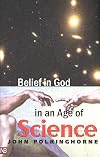
Religious belief and science are often put at odds with each other in contemporary society and popular culture. One needs only to listen to fundamentalist preachers or read newspapers about anti-vaccine protestors to think that these groups are forever at odds. Further, the histories of religious wars and persecutions turn many educated, reality-based citizens off of the religious path. To this situation, Polkinghorne offers a detente by suggesting that the two fields are cousins in their show more common search for truth and the unity of all knowledge. Now knighted, he is an eminent physicist and theologian at Cambridge University and offered these thoughts as part of a prestigious lecture series at Yale University in 1998.
Polkinghorne seeks to establish a common philosophy that he calls “critical realism” to unite these two disciplines. He acknowledges that not all religious discussion resides under this intellectual umbrella, such as those who make religious reflection a solely personal matter. Nonetheless, frequently citing Polyani’s Personal Knowledge and other recent scientist authors, he finds much in common with these disciplines. Indeed, he cites the development of Christian doctrines like Chalcedonian Christology and the Trinity in the first five centuries of the Common Era as similar to scientific reflection and debate about atoms and quantum theory in the twentieth century.
Especially in the mainstream press, many present caricatures that science stands up to short-sighted religious doctrines. Polkinghorne shows, at least at the highest levels, that these presentations fall short when tested against reality. Going back to Newton (himself devout), there exists nothing inherently adversarial in science to religion. They share a common interest in understanding the true nature of things. Perhaps some difficulty lies in that both disciplines require high and lengthy standards of training. One cannot fully surmount either.
In these five lectures, Polkinghorne calls for increased interdisciplinary dialogue between science and religion. Given the amount of interest in this topic by recent physicists, he particularly identifies biologists, social scientists, and theologians as needed in this common venture. The mathematics endemic in physics often make it a starting point in the search for beauty, but these other disciplines can contribute through their end-point of alleviating human suffering. Both science and theology are niche fields that often take practitioners away from commercial business, but they have too much in common to eschew each other. This short book reminds us of their mutual reliance as they seek ultimate knowledge. show less
Polkinghorne seeks to establish a common philosophy that he calls “critical realism” to unite these two disciplines. He acknowledges that not all religious discussion resides under this intellectual umbrella, such as those who make religious reflection a solely personal matter. Nonetheless, frequently citing Polyani’s Personal Knowledge and other recent scientist authors, he finds much in common with these disciplines. Indeed, he cites the development of Christian doctrines like Chalcedonian Christology and the Trinity in the first five centuries of the Common Era as similar to scientific reflection and debate about atoms and quantum theory in the twentieth century.
Especially in the mainstream press, many present caricatures that science stands up to short-sighted religious doctrines. Polkinghorne shows, at least at the highest levels, that these presentations fall short when tested against reality. Going back to Newton (himself devout), there exists nothing inherently adversarial in science to religion. They share a common interest in understanding the true nature of things. Perhaps some difficulty lies in that both disciplines require high and lengthy standards of training. One cannot fully surmount either.
In these five lectures, Polkinghorne calls for increased interdisciplinary dialogue between science and religion. Given the amount of interest in this topic by recent physicists, he particularly identifies biologists, social scientists, and theologians as needed in this common venture. The mathematics endemic in physics often make it a starting point in the search for beauty, but these other disciplines can contribute through their end-point of alleviating human suffering. Both science and theology are niche fields that often take practitioners away from commercial business, but they have too much in common to eschew each other. This short book reminds us of their mutual reliance as they seek ultimate knowledge. show less
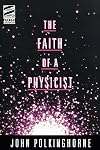
John Polkinghorne is a respected professor of physics at Cambridge University who became an Anglican priest. The President Emeritus of Queen’s College, he is well-known for his understanding of common terrain between science and religion. This book contains the text of the 1993-94 Gifford Lectures and describes his theological belief system. This belief system roughly aligns with Christian orthodoxy. This text explains how he studiously came to these beliefs as he explains why he eschewed show more other beliefs.
This book is more of a Credo (Latin for “I believe”) and less of an exploration of science. He does discuss a few points of science in detail, but the main logical thread proceeds as an examination of his confessional faith, in line with Christianity’s Nicene Creed. True to his scientific demeanor, his is not a blind faith; rather, he rigorously explains, in a bottom-up fashion, how he came to embrace this viewpoint.
Many theological expositions are top-down and explain the universe from a series of principles or from a specific narrative. Of course, such pre-packaged (and pompous) propositions are automatically suspect for those of us rigorously educated in the sciences, which reflexively doubt authority. Instead, Polkinghorne examines how and why orthodox beliefs came to be historically and how and why he came to embrace them personally. He is primarily concerned with matters of truth and knowledge, not with evangelization or popular appeal.
As one with a bottom-up view of the world, I appreciate his words. I almost became a pastor, too, but shied away from the broad, all-encompassing systems of faith that I found in seminaries. I do not embrace doubt as a formal method; rather, I embrace it as a reflexive necessity, like breathing. Scientific views of Christianity resonate deeply with me, and like Polkinghorne, I appreciate knowledge-based approaches to religious faiths rather than experience-laden ones.
This book has obvious value to Christians who lean scientific and scientists who lean Christian. Because it takes a more confessional form, I’m not sure it has great value to religious people who aren’t Christian. Further, I’m not sure it can have much appeal for Christians who don’t appreciate good science – that is, most of the Christian fold. There’s not a lot here that’ll preach to the public more than a “See, scientists can be Christian, too!” Like the rest of Polkinghorne’s work, this writing represents a sensitive mind and a compassionate heart that seeks truth. It might not convince many on either side of the religion-science conversations, but it finds a meandering middle where Polkinghorne built his career. show less
This book is more of a Credo (Latin for “I believe”) and less of an exploration of science. He does discuss a few points of science in detail, but the main logical thread proceeds as an examination of his confessional faith, in line with Christianity’s Nicene Creed. True to his scientific demeanor, his is not a blind faith; rather, he rigorously explains, in a bottom-up fashion, how he came to embrace this viewpoint.
Many theological expositions are top-down and explain the universe from a series of principles or from a specific narrative. Of course, such pre-packaged (and pompous) propositions are automatically suspect for those of us rigorously educated in the sciences, which reflexively doubt authority. Instead, Polkinghorne examines how and why orthodox beliefs came to be historically and how and why he came to embrace them personally. He is primarily concerned with matters of truth and knowledge, not with evangelization or popular appeal.
As one with a bottom-up view of the world, I appreciate his words. I almost became a pastor, too, but shied away from the broad, all-encompassing systems of faith that I found in seminaries. I do not embrace doubt as a formal method; rather, I embrace it as a reflexive necessity, like breathing. Scientific views of Christianity resonate deeply with me, and like Polkinghorne, I appreciate knowledge-based approaches to religious faiths rather than experience-laden ones.
This book has obvious value to Christians who lean scientific and scientists who lean Christian. Because it takes a more confessional form, I’m not sure it has great value to religious people who aren’t Christian. Further, I’m not sure it can have much appeal for Christians who don’t appreciate good science – that is, most of the Christian fold. There’s not a lot here that’ll preach to the public more than a “See, scientists can be Christian, too!” Like the rest of Polkinghorne’s work, this writing represents a sensitive mind and a compassionate heart that seeks truth. It might not convince many on either side of the religion-science conversations, but it finds a meandering middle where Polkinghorne built his career. show less
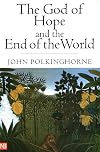
This short book dealing with eschatology is nothing short of amazing. This book is a more accessible reading of some of the discussions and ideas that circulated during the Center of Theological Inquiry's Eschatology Project. This was a interdisciplinary group of scholars - scientists, biblical scholars and theologians - whose task was to reconsider, in the light of modern knowledge, the expression of Christian eschatological hope concerning the end of the world and the fulfillment of the show more divine purpose for creation. John Polkinghorne is himself a theologian and a scientist and this book will appeal to anyone familiar with the writings of Jurgen Moltmann and Miroslov Volf. If you are a theologian who takes the findings of modern science seriously while at the same time holding to the Christian hope of resurrection you will find this book incredibly informative. His chapter on Personhood and the Soul was worth it alone. He begins with scientific and cultural approaches to eschatology, then moves to biblical evidence, and finally ties it all together with theology. Wonderful book! show less
Questions of Truth: Fifty-one Responses to Questions About God, Science, and Belief by John Polkinghorne
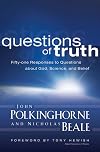
John Polkinghorne is a Cambridge physicist who decided, mid-career, to become an Anglican priest. Like a good scientist working out a theory, he worked out how his orthodox Christian beliefs were essentially compatible with modern physics. He has won international acclaim and awards for his insights about religion and science. Especially central to his contributions is the idea that both disciplines require a certain amount of belief and faith. This book, compiled with his collaborator show more Beale, explains in short form his approach to religion and science.
This book is organized around 51 questions about seven topics, including God, the universe, evolution, and religion. The writing is quite dense and carefully considered. Along with Polkinghorne’s other works, this book provides a concise introduction to how modern science and religion can be viewed as essentially compatible. It reads almost like a catechism about the integration of science and religion.
Central to Polkinghorne’s insights is the idea of the “anthropic principle” where the universe requires some degree of fine-tuning to support human life. He sees an opening for a divine agent. He also moves the conversation on from the framework of a purely mechanistic universe. Through quantum science – referred to consistently in this work – science has moved on past a mechanical/deterministic philosophy. He invites religion to do the same by finding God in the details of quantum atomic arrangements.
Polkinghorne’s writings are not for the faint of heart. They require a certain knowledge of physics as a prerequisite, and many religiously inclined individuals will simply not possess this. That said, it does describe the scientific theories behind Polkinghorne’s beliefs, and the motivated reader can slow down to gather knowledge. The integration of science and religion is an important topic that, due to a high degree of requisite education, few can speak knowledgeably about. This book is an significant contribution to that discussion. If faith is to have a place in the minds of the modern intelligentsia, works like this must be a key part of that discussion. show less
This book is organized around 51 questions about seven topics, including God, the universe, evolution, and religion. The writing is quite dense and carefully considered. Along with Polkinghorne’s other works, this book provides a concise introduction to how modern science and religion can be viewed as essentially compatible. It reads almost like a catechism about the integration of science and religion.
Central to Polkinghorne’s insights is the idea of the “anthropic principle” where the universe requires some degree of fine-tuning to support human life. He sees an opening for a divine agent. He also moves the conversation on from the framework of a purely mechanistic universe. Through quantum science – referred to consistently in this work – science has moved on past a mechanical/deterministic philosophy. He invites religion to do the same by finding God in the details of quantum atomic arrangements.
Polkinghorne’s writings are not for the faint of heart. They require a certain knowledge of physics as a prerequisite, and many religiously inclined individuals will simply not possess this. That said, it does describe the scientific theories behind Polkinghorne’s beliefs, and the motivated reader can slow down to gather knowledge. The integration of science and religion is an important topic that, due to a high degree of requisite education, few can speak knowledgeably about. This book is an significant contribution to that discussion. If faith is to have a place in the minds of the modern intelligentsia, works like this must be a key part of that discussion. show less
Lists
Awards

You May Also Like


Associated Authors
Statistics
- Works
- 49
- Also by
- 15
- Members
- 4,304
- Popularity
- #5,830
- Rating
- 3.6
- Reviews
- 20
- ISBNs
- 157
- Languages
- 12
- Favorited
- 6