
Francis S. Collins
Author of The Language of God: A Scientist Presents Evidence for Belief
About the Author
Francis S. Collins, M.D., Ph.D., is a pioneer gene hunter. He spent fifteen years as director of the National Human Genome Research Institute, where he led the international Human Genome Project to a successful completion. For his revolutionary contributions to genetic research he was awarded the show more Presidential Medal of Freedom in 2007, and the National Medal of Science in 2009. He is the Director of the National Institutes of Health. show less
Disambiguation Notice:
Do not combine Francis Collins and Francis S. Collins. They are different authors.
Image credit: Maggie Bartlett
Works by Francis S. Collins
Associated Works
The Life of Meaning: Reflections on Faith, Doubt, and Repairing the World (2007) — Contributor — 132 copies, 5 reviews
Fresh Air with Terry Gross: Faith, Reason, and Doubt: Interviews on Religion (2008) — Contributor — 9 copies, 1 review
Tagged
Common Knowledge
- Legal name
- Collins, Francis Sellers
- Birthdate
- 1950-04-15
- Gender
- male
- Education
- University of Virginia (BS|Chemistry|1970)
Yale University (PhD|Chemistry|1974)
University of North Carolina (MD|1977) - Occupations
- chemist
geneticist
physician - Organizations
- Human Genome Project
National Institutes of Health
March of Dimes - Awards and honors
- Presidential Medal of Freedom, 2007
National Medal of Science, 2008
Albany Medical Center Prize, 2010 - Agent
- Gail Ross
- Nationality
- USA
- Birthplace
- Staunton, Virginia, USA
- Places of residence
- Staunton, Virginia, USA
New Haven, Connecticut, USA
Chapel Hill, North Carolina, USA - Disambiguation notice
- Do not combine Francis Collins and Francis S. Collins. They are different authors.
- Associated Place (for map)
- USA
Members
Reviews
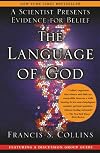
The author, Francis Sellers Collins, is an American physician-geneticist who discovered the genes associated with a number of diseases and led the Human Genome Project. He is director of the National Institutes of Health in Bethesda, Maryland. Despite the subtitle of this book, Collins presents little in the way of actual evidence for belief in God; rather, he asserts the somewhat less ambitious argument that science and religion are not incompatible and that belief in God is not necessarily show more irrational.
His principal reason for believing that God exists is the prevalence of what he calls the “Moral Law.” Collins asserts, “the concept of right and wrong appears to be universal among all members of the human species (though its application may result in wildly different outcomes).” Collins borrows the concept and the vocabulary of the Moral Law from C. S. Lewis, but idea strongly resembles what Aquinas called “natural law.” Interestingly, Aquinas did not assert that natural law implied the existence of God; rather, he saw natural law as a natural (naturally) consequence of people living together in society. Collins, on the other hand, finds his Moral Law exceedingly difficult to account for as a result of evolution, and hence in need of some extra-scientific (supernatural?) explanation.
[Here Collins elides over the huge field of scientific study into evolutionary biological altruism; that is, the phenomenon of individual organisms behaving in a way that benefits others of its group, at a cost to themselves. By behaving thusly, the altruistic organism reduces the number of offspring it is likely to produce itself, but boosts the number that other similar organisms are likely to produce. Yet somehow, this trait is reproduced continually. As the Stanford Encyclopedia of Philosophy points out, altruistic behavior is common throughout the animal kingdom,]
Collins also argues that modern cosmology points toward something like the Creator described in Genesis. He states: “The Big Bang cries out for a divine explanation. It forces the conclusion that nature had a defined beginning. I cannot see how nature could have created itself. Only a supernatural force that is outside of space and time could have done that.”
He does not seem to be aware that David Hume showed that the concept of ‘cause’ is an empirical one that does not necessarily apply to the process of bringing something into existence ex nihilo.
Collins also argues that the anthropic principle points to God’s existence. The anthropic principle observes that human life could have evolved only in a particular type of universe. The principle states that 15 constants of nature, such as the speed of light and the force of gravity, seem to be fine tuned to allow man’s presence on earth in the universe in that human life could not have evolved if any one of those constants differed even by a small amount. Although Collins recognizes, that “no scientific observation can reach the level of absolute proof of the existence of God,” he still finds that “ for those willing to consider a theistic perspective, the Anthropic Principle certainly provides an interesting argument in favor of a Creator.”
Collins is a biologist, and he is most comfortable in dealing with how the theory of evolution affects belief in God. Interestingly, he uses his understanding of genetics and evolution to refute two common arguments for God’s existence.
The first, which was famously articulated by William Paley in 1802, is the argument from design. Collins asserts that developments in paleontology, molecular biology, and genomics can account for the complexity of life without an appeal to a designer.
A second, related, argument is that the formation of the macro-molecules DNA and RNA, and hence life, could not have arisen spontaneously without violating the Second Law of thermodynamics. Collins responds:
“But this betrays a misunderstanding of the full meaning of the Second Law: order can certainly increase in some part of the system…but that will require an input of energy….In the case of the origin of life, the closed system is essentially the whole universe, energy is available from the sun, and so the local increase in order that would be represented by the first random assembly of macro-molecules would in no way violate this law.”
Collins does not discuss another concept that contravenes the argument from design. Emergence theory adds a whole new dimension to the questions of what can and cannot arise “spontaneously.” Complex systems self organize; the resulting entity has properties its parts do not have on their own, but that emerge only from their interaction.
Collins goes into substantial detail to explain the molecular and genetic mechanisms of evolution in order to assuage the fears of believers that modern science makes God unnecessary. However, in the end he relies on the Moral Law rather than science, design, emergence, or complexity to discover God:
“The comparison of chimp and human [DNA] sequences…does not tell us what it means to be human. In my view, DNA sequence alone, even if accompanied by a vast trove of data on biological function, will never explain certain special human attributes, such as the knowledge of the Moral Law and the universal search for God.”
Collins goes further than merely making an argument for God’s existence—he even asserts that the Bible, at least Genesis, can be read allegorically in a manner consistent with modern scientific thought. I can’t resist being a bit captious in criticizing his biblical exegesis. He says Genesis “implies that God always [emphasis added] existed.” Rather, Genesis implies that god existed before the rest of the universe, but that is not necessarily “always.” Collins also (like Augustine) interprets the act of God in Genesis to be creation ex nihilo. But the actual language is ambiguous: it can be interpreted to assert that God started with a pre-existing “formless void” in which “darkness covered the face of the deep” and that God sent a wind “over the face of the [pre-existing] waters.” But in the end, recognizing that Genesis should not be read literally, Collins concludes:
“Despite twenty-five centuries of debate, it is fair to say that no human knows what the meaning of Genesis 1 and 2 was precisely intended to be.”
Amen.
It may also be fair to say, as both historians and theologians have, that the writers of the Bible were a diverse group who were no more “authorities” on God than Collins is, and who had a political and cultural agenda they were pursuing that structured the stories they canonized.
Collins cites the example of the Galileo controversy as a cautionary tale for believers to avoid attacking scientific findings on the basis of religious beliefs. In that, he follows in the footstep of Augustine who warned in the fifth century:
“If [nonbelievers] find a Christian mistaken in a field which they themselves know well and hear him maintaining his foolish opinions about our books, how are they going to believe these books and matters concerning the resurrection of the dead, the hope of eternal life, and the kingdom of heaven, when they think their pages are full of falsehoods on facts which they themselves have learned from experience in the light of reason?”
Collins has a great deal of trust in the scientific method’s ability to discover some kinds of truth, but he does not fear that science will disprove or obviate religion. He says, “If God is outside of nature, then science can neither prove nor disprove His existence.” On the other hand, he acknowledges that “rational argument can never conclusively prove the existence of God.” His principal message in writing this book is that in the absence of proof either way, “serious thinkers from Augustine to Aquinas to C. S. Lewis have demonstrated that a belief in god is intensely plausible.” Ultimately, he rests his own belief on what he calls mankind’s “universal search for God.”
But is that yearning a “universal search for ‘God’”, or is it in fact a universal desire to understand death and calamity, with many cultures analogizing from human patterns of organization that there must be a powerful being “somewhere” who is overseeing the whole business?
Furthermore, there is, in addition to the desire to understand these issues, the desire to control them. If there is in fact a powerful being, mightn’t one pray to such a being to alter the course of events? This doesn’t seem to me so much a search for “God” that establishes its truth (because everybody believes it? - that hardly constitutes proof), as an appeal to wishful thinking.
This is a thoughtful book by a thoughtful man who is also a distinguished scientist. Nevertheless, his belief in God rests on a perception that what he calls the Moral Law and the search for God are shared by all men. My perception is that not all men share that yearning. Cf., America’s president from 2017 to 2021 and millions of others. With that observation, I must conclude that Collins’s belief rests on pretty shaky grounds.
(JAB) show less
His principal reason for believing that God exists is the prevalence of what he calls the “Moral Law.” Collins asserts, “the concept of right and wrong appears to be universal among all members of the human species (though its application may result in wildly different outcomes).” Collins borrows the concept and the vocabulary of the Moral Law from C. S. Lewis, but idea strongly resembles what Aquinas called “natural law.” Interestingly, Aquinas did not assert that natural law implied the existence of God; rather, he saw natural law as a natural (naturally) consequence of people living together in society. Collins, on the other hand, finds his Moral Law exceedingly difficult to account for as a result of evolution, and hence in need of some extra-scientific (supernatural?) explanation.
[Here Collins elides over the huge field of scientific study into evolutionary biological altruism; that is, the phenomenon of individual organisms behaving in a way that benefits others of its group, at a cost to themselves. By behaving thusly, the altruistic organism reduces the number of offspring it is likely to produce itself, but boosts the number that other similar organisms are likely to produce. Yet somehow, this trait is reproduced continually. As the Stanford Encyclopedia of Philosophy points out, altruistic behavior is common throughout the animal kingdom,]
Collins also argues that modern cosmology points toward something like the Creator described in Genesis. He states: “The Big Bang cries out for a divine explanation. It forces the conclusion that nature had a defined beginning. I cannot see how nature could have created itself. Only a supernatural force that is outside of space and time could have done that.”
He does not seem to be aware that David Hume showed that the concept of ‘cause’ is an empirical one that does not necessarily apply to the process of bringing something into existence ex nihilo.
Collins also argues that the anthropic principle points to God’s existence. The anthropic principle observes that human life could have evolved only in a particular type of universe. The principle states that 15 constants of nature, such as the speed of light and the force of gravity, seem to be fine tuned to allow man’s presence on earth in the universe in that human life could not have evolved if any one of those constants differed even by a small amount. Although Collins recognizes, that “no scientific observation can reach the level of absolute proof of the existence of God,” he still finds that “ for those willing to consider a theistic perspective, the Anthropic Principle certainly provides an interesting argument in favor of a Creator.”
Collins is a biologist, and he is most comfortable in dealing with how the theory of evolution affects belief in God. Interestingly, he uses his understanding of genetics and evolution to refute two common arguments for God’s existence.
The first, which was famously articulated by William Paley in 1802, is the argument from design. Collins asserts that developments in paleontology, molecular biology, and genomics can account for the complexity of life without an appeal to a designer.
A second, related, argument is that the formation of the macro-molecules DNA and RNA, and hence life, could not have arisen spontaneously without violating the Second Law of thermodynamics. Collins responds:
“But this betrays a misunderstanding of the full meaning of the Second Law: order can certainly increase in some part of the system…but that will require an input of energy….In the case of the origin of life, the closed system is essentially the whole universe, energy is available from the sun, and so the local increase in order that would be represented by the first random assembly of macro-molecules would in no way violate this law.”
Collins does not discuss another concept that contravenes the argument from design. Emergence theory adds a whole new dimension to the questions of what can and cannot arise “spontaneously.” Complex systems self organize; the resulting entity has properties its parts do not have on their own, but that emerge only from their interaction.
Collins goes into substantial detail to explain the molecular and genetic mechanisms of evolution in order to assuage the fears of believers that modern science makes God unnecessary. However, in the end he relies on the Moral Law rather than science, design, emergence, or complexity to discover God:
“The comparison of chimp and human [DNA] sequences…does not tell us what it means to be human. In my view, DNA sequence alone, even if accompanied by a vast trove of data on biological function, will never explain certain special human attributes, such as the knowledge of the Moral Law and the universal search for God.”
Collins goes further than merely making an argument for God’s existence—he even asserts that the Bible, at least Genesis, can be read allegorically in a manner consistent with modern scientific thought. I can’t resist being a bit captious in criticizing his biblical exegesis. He says Genesis “implies that God always [emphasis added] existed.” Rather, Genesis implies that god existed before the rest of the universe, but that is not necessarily “always.” Collins also (like Augustine) interprets the act of God in Genesis to be creation ex nihilo. But the actual language is ambiguous: it can be interpreted to assert that God started with a pre-existing “formless void” in which “darkness covered the face of the deep” and that God sent a wind “over the face of the [pre-existing] waters.” But in the end, recognizing that Genesis should not be read literally, Collins concludes:
“Despite twenty-five centuries of debate, it is fair to say that no human knows what the meaning of Genesis 1 and 2 was precisely intended to be.”
Amen.
It may also be fair to say, as both historians and theologians have, that the writers of the Bible were a diverse group who were no more “authorities” on God than Collins is, and who had a political and cultural agenda they were pursuing that structured the stories they canonized.
Collins cites the example of the Galileo controversy as a cautionary tale for believers to avoid attacking scientific findings on the basis of religious beliefs. In that, he follows in the footstep of Augustine who warned in the fifth century:
“If [nonbelievers] find a Christian mistaken in a field which they themselves know well and hear him maintaining his foolish opinions about our books, how are they going to believe these books and matters concerning the resurrection of the dead, the hope of eternal life, and the kingdom of heaven, when they think their pages are full of falsehoods on facts which they themselves have learned from experience in the light of reason?”
Collins has a great deal of trust in the scientific method’s ability to discover some kinds of truth, but he does not fear that science will disprove or obviate religion. He says, “If God is outside of nature, then science can neither prove nor disprove His existence.” On the other hand, he acknowledges that “rational argument can never conclusively prove the existence of God.” His principal message in writing this book is that in the absence of proof either way, “serious thinkers from Augustine to Aquinas to C. S. Lewis have demonstrated that a belief in god is intensely plausible.” Ultimately, he rests his own belief on what he calls mankind’s “universal search for God.”
But is that yearning a “universal search for ‘God’”, or is it in fact a universal desire to understand death and calamity, with many cultures analogizing from human patterns of organization that there must be a powerful being “somewhere” who is overseeing the whole business?
Furthermore, there is, in addition to the desire to understand these issues, the desire to control them. If there is in fact a powerful being, mightn’t one pray to such a being to alter the course of events? This doesn’t seem to me so much a search for “God” that establishes its truth (because everybody believes it? - that hardly constitutes proof), as an appeal to wishful thinking.
This is a thoughtful book by a thoughtful man who is also a distinguished scientist. Nevertheless, his belief in God rests on a perception that what he calls the Moral Law and the search for God are shared by all men. My perception is that not all men share that yearning. Cf., America’s president from 2017 to 2021 and millions of others. With that observation, I must conclude that Collins’s belief rests on pretty shaky grounds.
(JAB) show less
My employer (Vanderbilt University Medical Center) is the world's leader in implementing the ideas around personalized medicine, so I picked up this audiobook to educate me on what's going on around me while I drove to and from work. In it, I found interesting stories from patients combined with weighty data from the human genome.
Collins maintains a warm bedside manner as well as a writer as he does as a researcher, NIH leader, and physician. His homespun manner makes his writing relatable show more and engaging. It is obvious that he cares about patients as the center of all his work - a nice trait for a driven, big-time researcher to have.
The science described in this book continued trends I sensed while I was a medical student. The question of who-has-what-genes will likely guide science for the better part of my life. Collins engages these questions with the latest (as of the time of his writing) science has to offer. Genetics is indeed a fun field to follow.
Genetics opens up a whole host of research and ethical questions that is currently engaging us as a society. Is gene therapy (which surely is coming) ethical? To what extent do genomics play God? And to what extent are our genes reflections on our experience as much as our heredity? Is religion going to play the role of being merely against technology or will it sublimate itself to aid healing? What will the medical clinic look like in 2050? Also, what will the birth process (and the electronic medical record) look like in 2050?
Collins' book is a good primer to these issues. Listening to it has been a joy for the past couple of weeks. show less
Collins maintains a warm bedside manner as well as a writer as he does as a researcher, NIH leader, and physician. His homespun manner makes his writing relatable show more and engaging. It is obvious that he cares about patients as the center of all his work - a nice trait for a driven, big-time researcher to have.
The science described in this book continued trends I sensed while I was a medical student. The question of who-has-what-genes will likely guide science for the better part of my life. Collins engages these questions with the latest (as of the time of his writing) science has to offer. Genetics is indeed a fun field to follow.
Genetics opens up a whole host of research and ethical questions that is currently engaging us as a society. Is gene therapy (which surely is coming) ethical? To what extent do genomics play God? And to what extent are our genes reflections on our experience as much as our heredity? Is religion going to play the role of being merely against technology or will it sublimate itself to aid healing? What will the medical clinic look like in 2050? Also, what will the birth process (and the electronic medical record) look like in 2050?
Collins' book is a good primer to these issues. Listening to it has been a joy for the past couple of weeks. show less
A fascinating discussion about the ability of a passionate believer and practitioner of science to also be a passionate believer in God and his journey from agnostic to atheist to theist. Dr. Collins addresses the similarities in multiple cultures and religions regarding ethics. Most of the discussion was about the acceptance of evolution, as described by Darwin, as being perfectly consistent with a belief in a God who is present in our lives. This is termed "theistic" evolution. The show more strongest part of the argument for God's participation in our development is the Moral Law, which appears to be given only to Man, not to other forms of life. Although this God-given attribute is often broken by religious and nonreligious people alike, he states this shows our lack of perfection and knowledge, not the absence of God.
Dr. Collins also discusses various parts of the Bible — some if it being historical and some of it (e.g., Genesis) being allegorical. As a Christian, he is naturally drawn to the New Testament and makes an argument for the resurrection of Jesus. Not being a Christian myself, I did not quite understand that part, but it was still very interesting.
At the end of the book, he has a section on bioethics. While interesting, there are many topics he didn’t discuss. He was careful not to weigh in on the question of whether life begins at conception and the debate about abortion. Because I would like to know the views of one of our top scientists and self-proclaimed theists, I was disappointed but perhaps that is really an entire book in itself. For that the book lost half a star, but it is obviously still a very worthwhile and fascinating read. show less
Dr. Collins also discusses various parts of the Bible — some if it being historical and some of it (e.g., Genesis) being allegorical. As a Christian, he is naturally drawn to the New Testament and makes an argument for the resurrection of Jesus. Not being a Christian myself, I did not quite understand that part, but it was still very interesting.
At the end of the book, he has a section on bioethics. While interesting, there are many topics he didn’t discuss. He was careful not to weigh in on the question of whether life begins at conception and the debate about abortion. Because I would like to know the views of one of our top scientists and self-proclaimed theists, I was disappointed but perhaps that is really an entire book in itself. For that the book lost half a star, but it is obviously still a very worthwhile and fascinating read. show less
Does science necessarily undermine faith in God? Or could it actually support faith? Beyond the flashpoint debates over the teaching of evolution, or stem-cell research, most of us struggle with contradictions concerning life's ultimate question. We know that accidents happen, but we believe we are on earth for a reason. Until now, most scientists have argued that science and faith occupy distinct arenas. Francis Collins, a former atheist as a science student who converted to faith as he show more became a doctor, is about to change that. Collins's faith in God has been confirmed and enhanced by the revolutionary discoveries in biology that he has helped to oversee. He has absorbed the arguments for atheism of many scientists and pundits, and he can refute them. Darwinian evolution occurs, yet, as he explains, it cannot fully explain human nature - evolution can and must be directed by God. He offers an inspiring tour of the human genome to show the miraculous nature of God's instruction book. show less
Lists
Awards


You May Also Like


Associated Authors
Statistics
- Works
- 8
- Also by
- 2
- Members
- 3,314
- Popularity
- #7,720
- Rating
- 3.8
- Reviews
- 64
- ISBNs
- 54
- Languages
- 14


