
William A. Dembski
Author of Intelligent Design: The Bridge Between Science & Theology
About the Author
William Dembski tiene un Ph.D. en matematicas de la Universidad de Chicago y un Ph.D. en filosofia de la Universidad de Illinois en Chicago
Image credit: Photo by Wesley R. Elsberry.
Works by William A. Dembski
The Design Revolution: Answering the Toughest Questions About Intelligent Design (2004) 323 copies, 1 review
Evidence for God: 50 Arguments for Faith from the Bible, History, Philosophy, and Science (2010) — Editor; Contributor — 212 copies, 1 review
Uncommon Dissent: Intellectuals Who Find Darwinism Unconvincing (2004) — Editor — 168 copies, 1 review
Understanding Intelligent Design: Everything You Need to Know in Plain Language (ConversantLife.com®) (2008) 136 copies
The Design of Life: Discovering Signs of Intelligence in Biological Systems (2008) 71 copies, 1 review
Associated Works
To Everyone an Answer: A Case for the Christian Worldview (2004) — Contributor — 389 copies, 1 review
Are We Spiritual Machines? Ray Kurzweil vs. the Critics of Strong A.I. (2002) — Contributor — 108 copies
How Blind Is the Watchmaker?: Nature's Design & the Limits of Naturalistic Science (1998) — Foreword, some editions — 83 copies
Tagged
Common Knowledge
- Legal name
- Dembski, William Albert
- Other names
- Dembski, Bill
- Birthdate
- 1960-07-18
- Gender
- male
- Education
- University of Chicago (PhD|Mathematics)
University of Illinois at Chicago (PhD|Philosophy)
Princeton Theological Seminary (MDiv|Theology) - Organizations
- Discovery Institute
Baylor University
Southwestern Baptist Theological Seminary - Nationality
- USA
- Associated Place (for map)
- USA
Members
Reviews
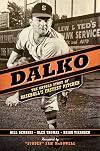
Legends can be hype or they can be real. Steve Dalkowski qualifies as a rea honest-to-goodnessl legend in baseball. “Steve Dalkowski” in baseball terms means one thing — an unearthly fastball, faster (maybe) than anybody else ever threw a baseball.
I was a Baltimore Orioles fan in the sixties when the Steve Dalkowski legend was alive and kicking in the Orioles’ minor league system. I only knew he was a pitcher who threw harder than any other pitcher. Batters and other pitchers who saw show more him or hit against him, and also saw or hit against the others — Sandy Koufax, Sam McDowell, Bob Feller, even Nolan Ryan and Randy Johnson in more recent years — said without hesitation, “Dalkowski was faster.”
The problem of course was getting the ball over the plate. Or that was the first problem anyway. Even in high school, walking 10 or more batters in a fame was routine. So was striking out 15 or 20.
The Orioles signed him to a contract when he graduated high school, and assigned him to a minor league team in Kingsport, in the Appalachian League. Dalkowski was almost unhittable — 3.2 hits per nine innings that year. 17.6 strikeouts per nine innings. And 18.7 walks. More than 2 walks per inning! It all added up to an unhittable pitcher with one win for the year and eight losses.
He had so much promise. If he could just get the ball over the plate. Dalkowski pitched in the 1950s and 1960s before radar guns or other reliable means for measuring speed. He may have been throwing as high as 110 miles per hour, according to some, or he may have been throwing a pokey 100 or so.
And the ball moved. He threw a four-seam fastball with an almost unnaturally smooth, easy delivery that ignited the ball out of his hand with so much backspin, batters and catchers swore it rose as it neared home plate. Some rose so high they flew over the catcher, over the umpire, and off the backstop or even into the stands on the fly.
The three authors did their homework to write this book. They have game by game accounts of Dalkowski’s career, starting in high school (and including even his football-playing days there). They researched records, interviewed friends and former teammates, Dalkowski’s ex-wife Linda Moore, and just about anybody who might be able to shed light on Dalkowski’s legend.
Dalkowski never did tame his fastball. Pitching coaches worked with him, teammates encouraged him, but nothing solved the problem. Others, like Koufax, solved their control problems, but Dalkowski never did.
Dalkowski never made it to the major leagues. On the brink of making the Orioles’ Major League roster, in 1963, he hurt his elbow. Although he recovered well enough to pitch, maybe not throwing as hard as he once did, he never did get there.
Off the field, Dalkowski, as chronicled by the authors, was as uncontrolled as on it. He started drinking consistently and eventually heavily in his mid-teens. Alcoholism didn’t destroy his baseball career, but it sure didn’t help. In fact, the final straw was an off-field incident — one of many involving drunken behavior.
The final third or so of the book traces Dalkowski through his post-baseball life. It’s not pretty. Everybody wanted him to succeed. Everyone testifies that he was an honest, sincere, nice guy (with few exceptions when alcohol took over). We know he won’t succeed in baseball — we know that form his absence from the record books. But we want at least some ease and grace in the life that came after baseball.
But we won’t find it. He sank. Alcoholism, poverty, failed marriage. Dalkowski tried for years to find another chance in baseball. He hung around ballparks when he could get there, recontacting old teammates and friends. But he made what living he could however he could as long as he could before things would go wrong. He spent time as a farmworker, a welder’s assistant in oil fields, . . . He even panhandled from his old teammates during his visits to ballparks. And sometimes he found himself on a work gang, working off time for alcohol-related jailings.
His last years were more heartening. Former teammates and friends, and his hometown of New Britain, Connecticut, rescued Dalkowski, even honored his legendary achievements, and gave him a home in an assisted living facility.
The authors did a great job. This is not an easy story to document. There are no videos of Dalkowski pitching, no measurements of how fast he threw — it’s all grunt work, finding the people, interviewing them, searching small town newspaper archives. This had to be a labor of love. show less
I was a Baltimore Orioles fan in the sixties when the Steve Dalkowski legend was alive and kicking in the Orioles’ minor league system. I only knew he was a pitcher who threw harder than any other pitcher. Batters and other pitchers who saw show more him or hit against him, and also saw or hit against the others — Sandy Koufax, Sam McDowell, Bob Feller, even Nolan Ryan and Randy Johnson in more recent years — said without hesitation, “Dalkowski was faster.”
The problem of course was getting the ball over the plate. Or that was the first problem anyway. Even in high school, walking 10 or more batters in a fame was routine. So was striking out 15 or 20.
The Orioles signed him to a contract when he graduated high school, and assigned him to a minor league team in Kingsport, in the Appalachian League. Dalkowski was almost unhittable — 3.2 hits per nine innings that year. 17.6 strikeouts per nine innings. And 18.7 walks. More than 2 walks per inning! It all added up to an unhittable pitcher with one win for the year and eight losses.
He had so much promise. If he could just get the ball over the plate. Dalkowski pitched in the 1950s and 1960s before radar guns or other reliable means for measuring speed. He may have been throwing as high as 110 miles per hour, according to some, or he may have been throwing a pokey 100 or so.
And the ball moved. He threw a four-seam fastball with an almost unnaturally smooth, easy delivery that ignited the ball out of his hand with so much backspin, batters and catchers swore it rose as it neared home plate. Some rose so high they flew over the catcher, over the umpire, and off the backstop or even into the stands on the fly.
The three authors did their homework to write this book. They have game by game accounts of Dalkowski’s career, starting in high school (and including even his football-playing days there). They researched records, interviewed friends and former teammates, Dalkowski’s ex-wife Linda Moore, and just about anybody who might be able to shed light on Dalkowski’s legend.
Dalkowski never did tame his fastball. Pitching coaches worked with him, teammates encouraged him, but nothing solved the problem. Others, like Koufax, solved their control problems, but Dalkowski never did.
Dalkowski never made it to the major leagues. On the brink of making the Orioles’ Major League roster, in 1963, he hurt his elbow. Although he recovered well enough to pitch, maybe not throwing as hard as he once did, he never did get there.
Off the field, Dalkowski, as chronicled by the authors, was as uncontrolled as on it. He started drinking consistently and eventually heavily in his mid-teens. Alcoholism didn’t destroy his baseball career, but it sure didn’t help. In fact, the final straw was an off-field incident — one of many involving drunken behavior.
The final third or so of the book traces Dalkowski through his post-baseball life. It’s not pretty. Everybody wanted him to succeed. Everyone testifies that he was an honest, sincere, nice guy (with few exceptions when alcohol took over). We know he won’t succeed in baseball — we know that form his absence from the record books. But we want at least some ease and grace in the life that came after baseball.
But we won’t find it. He sank. Alcoholism, poverty, failed marriage. Dalkowski tried for years to find another chance in baseball. He hung around ballparks when he could get there, recontacting old teammates and friends. But he made what living he could however he could as long as he could before things would go wrong. He spent time as a farmworker, a welder’s assistant in oil fields, . . . He even panhandled from his old teammates during his visits to ballparks. And sometimes he found himself on a work gang, working off time for alcohol-related jailings.
His last years were more heartening. Former teammates and friends, and his hometown of New Britain, Connecticut, rescued Dalkowski, even honored his legendary achievements, and gave him a home in an assisted living facility.
The authors did a great job. This is not an easy story to document. There are no videos of Dalkowski pitching, no measurements of how fast he threw — it’s all grunt work, finding the people, interviewing them, searching small town newspaper archives. This had to be a labor of love. show less
This is a book for which I have been waiting since I first noticed Steve Dalkowski's stats in the 1962 edition pf the Sporting News Baseball Guide. Steve is one of those extraordinary individuals whose story becomes legend and about whom a constellation of myths revolves. There is also much of an inescapable Shakespearian doom about him, an erratic genius of unparalleled promise who comes close to touching the star but in the end falls away into the void.
Week written and well show more documented(with a few minor factual errors which have nothing to do with the protagonist), this book was both worth the wait and a must-read for any true baseball fan. show less
Week written and well show more documented(with a few minor factual errors which have nothing to do with the protagonist), this book was both worth the wait and a must-read for any true baseball fan. show less

William Dembski’s book Intelligent Design is his attempt to make the theory of Intelligent Design a plausible option in modern science. The backbone of his theory rests on Complex Specified Information being found in nature in such highly complex elements such as the stages of blood clotting, that Dembski thinks natural selection does not have an adequate explanation for. While Dembski does not commit the usual God of the Gaps fallacy, I think his theory lies in the same vein. 19th century show more liberal theology was guilty of a God of the Gaps approach in their validation of science, but leaving God’s design and activity for those areas that science had not explained. Of course as science made progress the space for God’s activity was all but eliminated. Dembski on the other hand isn’t attributing God’s design to the unknown, but to the extremely complex and well studied portions of creation that natural selection does not explain. Other scientists disagree that natural selection cannot explain these things in what seems to turn into an argument over imagination. What Dembski finds inconceivable some scientists find they can imagine quite easily. In this sense I think he still makes a God of the Gaps mistake despite his own argument against such a critique.
But my main argument with Dembski is not his science, it is his theology. This book is obviously not a strictly scientific book written to the scientific community. It was written to a general audience, and is packed with his theological insights on the matter of intelligent design. If Intelligent Design was merely Dembski’s way of seeking the truth about design, I would have far less qualms with his work. However it is obvious throughout that this is meant to be a proof of divine intervention, and therefore of God. Dembski makes it clear that intelligent design theory does not conclude the God of Christianity. Paul Tillich has important words for such proof-of-God attempts:
Arguments for the existence of God presuppose the loss of the certainty of God. That which I have to prove by argument has no immediate reality for me. Its reality is mediated for me by some other reality about which I cannot be in doubt, so that this other reality is nearer to me than the reality of God… A God who has been proved is neither near enough to us nor far enough away from us. He is not far enough, because of the very attempt we have made to prove Him. He is not near enough, because nearer things are presupposed by which the knowledge of Him is mediated.
That is to say that by accepting Dembski’s argument for God, or Intelligent Design we presuppose that God is not certain, but Intelligent Design is. And in the end Intelligent Design is more real to us than God. If at any level Dembski is trying to win converts to Christianity I think he does a great disservice by basing the invitation in a cognitive theoretical realm. The danger is that Christians converted by Dembski’s theory will live their Christian life in such a realm; a cognitive agreement to the idea of God rather than an embodied Christian life.
All this is assuming that the reader would be convinced of the Christian God. More likely the person would (if convinced) just attach intelligent design to their preexisting notion of the almighty. Dembski himself admits that his theory is compatible with any religious idea of God. But what is puzzling to me is his chapter Science & Theology in Mutual Support. In this chapter he speaks of the importance of Christ and Christology in science and goes so far as to say “Christ is indispensable to any scientific theory, even if its practitioners don’t have a clue about him…. the conceptual soundness of the theory can in the end only be located in ChristâÂ? (210). I just donâÂÂt understand how his theory of intelligent design can be so unattached to Christianity and then have him make this statement that all science is sound only in Christ. I think that DembskiâÂÂs book has merit as he seeks the truth about design, but as far as he applies it to theology I think he runs off course. His argument does not necessarily lead the reader to the Christian God as he might like. And his last chapter about Theology and Science in Mutual Support confuse the notion that intelligent design is not inherently Christian. show less
But my main argument with Dembski is not his science, it is his theology. This book is obviously not a strictly scientific book written to the scientific community. It was written to a general audience, and is packed with his theological insights on the matter of intelligent design. If Intelligent Design was merely Dembski’s way of seeking the truth about design, I would have far less qualms with his work. However it is obvious throughout that this is meant to be a proof of divine intervention, and therefore of God. Dembski makes it clear that intelligent design theory does not conclude the God of Christianity. Paul Tillich has important words for such proof-of-God attempts:
Arguments for the existence of God presuppose the loss of the certainty of God. That which I have to prove by argument has no immediate reality for me. Its reality is mediated for me by some other reality about which I cannot be in doubt, so that this other reality is nearer to me than the reality of God… A God who has been proved is neither near enough to us nor far enough away from us. He is not far enough, because of the very attempt we have made to prove Him. He is not near enough, because nearer things are presupposed by which the knowledge of Him is mediated.
That is to say that by accepting Dembski’s argument for God, or Intelligent Design we presuppose that God is not certain, but Intelligent Design is. And in the end Intelligent Design is more real to us than God. If at any level Dembski is trying to win converts to Christianity I think he does a great disservice by basing the invitation in a cognitive theoretical realm. The danger is that Christians converted by Dembski’s theory will live their Christian life in such a realm; a cognitive agreement to the idea of God rather than an embodied Christian life.
All this is assuming that the reader would be convinced of the Christian God. More likely the person would (if convinced) just attach intelligent design to their preexisting notion of the almighty. Dembski himself admits that his theory is compatible with any religious idea of God. But what is puzzling to me is his chapter Science & Theology in Mutual Support. In this chapter he speaks of the importance of Christ and Christology in science and goes so far as to say “Christ is indispensable to any scientific theory, even if its practitioners don’t have a clue about him…. the conceptual soundness of the theory can in the end only be located in ChristâÂ? (210). I just donâÂÂt understand how his theory of intelligent design can be so unattached to Christianity and then have him make this statement that all science is sound only in Christ. I think that DembskiâÂÂs book has merit as he seeks the truth about design, but as far as he applies it to theology I think he runs off course. His argument does not necessarily lead the reader to the Christian God as he might like. And his last chapter about Theology and Science in Mutual Support confuse the notion that intelligent design is not inherently Christian. show less
DALKO, by William A. Dembski, Alex Thomas, Brian Vikander, is the biography of Steve Dalkowski, a career minor league pitcher who is remembered by anyone he met for his astounding fastball. What is almost as astounding is that he could never make it to the majors, partly from his own demons, partly unfortunate luck, and partly from no one understanding how to mold such a unique talent into a major league star.
The writers have done as excellent job of researching man who is hard to research. show more His interviews are sparse and minimal in content and there is little or no film of Dalkowski pitching ever. Even the managers and catchers he worked with have conflicting views on his pitching speed, his control, even his work ethic. The legendary stories of Dalkowski are captivatingly picked through and the writers attempt to divide truth from fiction. In the end, the writers clearly wish they had uncovered more concrete information, but that seems to be Steve Dalkowski in a nutshell; everyone has a story, but the true legend of the "fastest pitcher ever" will never be grounded in complete factuality.
A quick, fun baseball read for those of us that can never get enough great baseball history, DALKO is a book to embrace, enjoy, and charge the reader with finding their own true thoughts about the "fastest pitcher ever".
Thank you to Influence Publishers, William A. Dembski, Alex Thomas, Brian Vikander, and Netgalley for a copy of this book in exchange for an honest review! show less
The writers have done as excellent job of researching man who is hard to research. show more His interviews are sparse and minimal in content and there is little or no film of Dalkowski pitching ever. Even the managers and catchers he worked with have conflicting views on his pitching speed, his control, even his work ethic. The legendary stories of Dalkowski are captivatingly picked through and the writers attempt to divide truth from fiction. In the end, the writers clearly wish they had uncovered more concrete information, but that seems to be Steve Dalkowski in a nutshell; everyone has a story, but the true legend of the "fastest pitcher ever" will never be grounded in complete factuality.
A quick, fun baseball read for those of us that can never get enough great baseball history, DALKO is a book to embrace, enjoy, and charge the reader with finding their own true thoughts about the "fastest pitcher ever".
Thank you to Influence Publishers, William A. Dembski, Alex Thomas, Brian Vikander, and Netgalley for a copy of this book in exchange for an honest review! show less
Lists
Awards

You May Also Like


Associated Authors
Statistics
- Works
- 27
- Also by
- 4
- Members
- 2,975
- Popularity
- #8,575
- Rating
- 3.4
- Reviews
- 11
- ISBNs
- 76
- Languages
- 4
- Favorited
- 2