
Michael R. Licona
Author of The Resurrection of Jesus: A New Historiographical Approach
About the Author
Michael R. Licona (Ph.D. cand., University of Pretoria) is director of apologetics evangelism at the North American Mission Board of the Southern Baptist Convention
Image credit: Used by permission of Baker Publishing Group, copyright © 2008. All rights to this material are reserved. Materials are not to be distributed to other web locations for retrieval, published(see © info.)
Works by Michael R. Licona
Evidence for God: 50 Arguments for Faith from the Bible, History, Philosophy, and Science (2010) — Editor; Contributor — 214 copies, 1 review
Why Are There Differences in the Gospels?: What We Can Learn from Ancient Biography (2016) 77 copies
Behold, I Stand At the Door and Knock: What to Say to Mormons and Jehovah's Witnesses When They Knock on Your Door (1998) 4 copies
Did Jesus rise from the dead 1 copy
Exploring the DaVinci Code 1 copy
Associated Works
Tagged
Common Knowledge
- Gender
- male
Members
Reviews
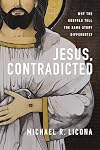
Summary: Addresses the discrepancies in gospel accounts drawing upon the conventions of ancient biography.
One of the challenges that comes with reading the gospels closely is that we notice discrepancies in the accounts. Not in the major facts but in the details. It is enough, though, that it raises questions about the reliability of the gospel accounts. And some of the efforts to “harmonize” the accounts just seem forced. In Jesus, Contradicted, Michael R. Licona, meets these objections show more head on without resorting to forced harmonization.
Matthew, Mark, and Luke raise a number of these questions. Most scholars believe Matthew and Luke used much of the material in Mark. Part of what is called “the Synoptic Problem” arises from the discrepancies between the very similar accounts. Some is grammatical, with Matthew and Luke improving on Mark’s rough grammar (does our doctrine of inspiration allow for that?). Licona goes into all of this, inviting us, first of all, to allow for the variations that often occur in eyewitness accounts.
More than this, Licona’s main argument is that we should not base our case for gospel reliability on modern historical accuracy. Rather, we should assess the gospels for what they are: first century biographies. Such biographies permitted the biographer greater freedom in reporting. While they did not invent events, they may not meet standards of exactitude required in a legal deposition. Wording may vary and minor details in an account may vary and yet the biography is accepted as true, especially if other accounts broadly confirm what is written.
Furthermore, biographers used various compositional devices that contribute to variation including paraphrasing and editing, compression displacement, transferal, conflation, simplification, and spotlighting. Licona discusses these various devices and where they may have been employed in gospel accounts.
But this may be troubling for some who hold to a commitment to the inerrancy of scripture. Licona observes that often, this view results in preconceptions of what scripture must be like that lead to the efforts in forced harmonization. Rather, he argues that “our view of scripture should be consistent with what we observe in scripture.” In other words, scripture rather than some standard external to it ought determine our understanding of its inspiration and trustworthiness. Licona takes several chapters ar the end of this work to elaborate this idea. He contrasts what he calls traditional inerrancy with flexible inerrancy. In his apologetic work, he reports that his approach has helped people return to faith who had turned away because traditional approaches to inerrancy had proven unsustainable.
I believe Licona makes an important contribution not only to our apologetic work around discrepancies in scripture. This will be helpful to many raising questions as they begin reading the gospels. And he offers a robust response to the “new atheist” who belittle the scriptures. But this is not all. He moves our discussion of inspiration and inerrancy beyond abstract terminology to the data of scripture itself. Instead of trying to conform scripture to the Procrustean bed of traditional inerrancy, he proposes a bed that follows the contours of the scriptures.
Furthermore, Licona presents this material in a highly readable form, reflecting experiences of presenting the material to the front office staff of a sports team and an adult Sunday School. This is a great text for teachers, apologists, and anyone who has not found satisfying responses to discrepancies in scripture.
_____________
Disclosure of Material Connection: I received a complimentary copy of this book from the publisher for review. show less
One of the challenges that comes with reading the gospels closely is that we notice discrepancies in the accounts. Not in the major facts but in the details. It is enough, though, that it raises questions about the reliability of the gospel accounts. And some of the efforts to “harmonize” the accounts just seem forced. In Jesus, Contradicted, Michael R. Licona, meets these objections show more head on without resorting to forced harmonization.
Matthew, Mark, and Luke raise a number of these questions. Most scholars believe Matthew and Luke used much of the material in Mark. Part of what is called “the Synoptic Problem” arises from the discrepancies between the very similar accounts. Some is grammatical, with Matthew and Luke improving on Mark’s rough grammar (does our doctrine of inspiration allow for that?). Licona goes into all of this, inviting us, first of all, to allow for the variations that often occur in eyewitness accounts.
More than this, Licona’s main argument is that we should not base our case for gospel reliability on modern historical accuracy. Rather, we should assess the gospels for what they are: first century biographies. Such biographies permitted the biographer greater freedom in reporting. While they did not invent events, they may not meet standards of exactitude required in a legal deposition. Wording may vary and minor details in an account may vary and yet the biography is accepted as true, especially if other accounts broadly confirm what is written.
Furthermore, biographers used various compositional devices that contribute to variation including paraphrasing and editing, compression displacement, transferal, conflation, simplification, and spotlighting. Licona discusses these various devices and where they may have been employed in gospel accounts.
But this may be troubling for some who hold to a commitment to the inerrancy of scripture. Licona observes that often, this view results in preconceptions of what scripture must be like that lead to the efforts in forced harmonization. Rather, he argues that “our view of scripture should be consistent with what we observe in scripture.” In other words, scripture rather than some standard external to it ought determine our understanding of its inspiration and trustworthiness. Licona takes several chapters ar the end of this work to elaborate this idea. He contrasts what he calls traditional inerrancy with flexible inerrancy. In his apologetic work, he reports that his approach has helped people return to faith who had turned away because traditional approaches to inerrancy had proven unsustainable.
I believe Licona makes an important contribution not only to our apologetic work around discrepancies in scripture. This will be helpful to many raising questions as they begin reading the gospels. And he offers a robust response to the “new atheist” who belittle the scriptures. But this is not all. He moves our discussion of inspiration and inerrancy beyond abstract terminology to the data of scripture itself. Instead of trying to conform scripture to the Procrustean bed of traditional inerrancy, he proposes a bed that follows the contours of the scriptures.
Furthermore, Licona presents this material in a highly readable form, reflecting experiences of presenting the material to the front office staff of a sports team and an adult Sunday School. This is a great text for teachers, apologists, and anyone who has not found satisfying responses to discrepancies in scripture.
_____________
Disclosure of Material Connection: I received a complimentary copy of this book from the publisher for review. show less
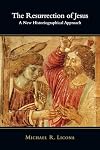
Michael Licona presents bedrock evidence for the resurrection with an approach that is objective, academic, tactful, and thorough in The Resurrection of Jesus. It begins with some excellent objective-thinking exercises such as transcending historical horizons, defining truth in history and understanding the burden of proof. Form there, Licona explores the numerous historical sources, both Christian and non, that preserve the resurrection accounts. Licona meticulously dissects each source show more with such strict criterion for authenticity and concludes with an arduously-achieved rating of how well the historical details were preserved. This investigation is proceeded by an equally rigorous series of exercises to establish historical bedrock evidence in the case of the resurrection that is accepted by both Christian and skeptic scholars. The unpacking of heavy topics such as the minimal facts and 1 Corinthians 15 creed lays the groundwork for yet another series of thorough investigations—but this time, Licona holds the microscope up to the scholars’ most popular competing hypotheses of the resurrection. A five-category assessment of each competing hypothesis is given and each are weighed against one other and ultimately against the resurrection hypothesis itself. A detailed, organized final summation of the case is given at the conclusion of the book, along with an overabundance of scholarly sources and topics for reference.
The Resurrection of Jesus simply oozes with objectivity in its approach to the subject. It is worth the investment for its exceptional collection of scholarly reference materials alone. Licona has done an outstanding job extracting the top arguments from the top scholars on both sides of the resurrection debate. No stone is left unturned, and no piece of evidence is left unaccountable to the highest standards of proof. While Licona’s seemingly harsh process of assigning a “highest-possible” rating for evidence dismisses much of what most Christians would faithfully believe to be absolute truth, the same objective process also dismisses the evidence provided in the counterarguments—almost completely—to ultimately show the vast gaps in plausibility between both sides. This book may present challenges for a non-academic audience as there is a wealth of systematic assessment practices and a multitude of arguments and sources covered in over seven hundred pages—which also sacrifices a smooth flow throughout. However, Licona does a great job summarizing each section and subsection throughout, allowing ease of reference time and time again. Also, the demand of the reading is indicative of the weightiness of the topic. It challenges anyone within their world view to properly assess the evidence behind their thinking and ultimately hold the light up to their foundational beliefs. I give this book the highest-possible rating! show less
The Resurrection of Jesus simply oozes with objectivity in its approach to the subject. It is worth the investment for its exceptional collection of scholarly reference materials alone. Licona has done an outstanding job extracting the top arguments from the top scholars on both sides of the resurrection debate. No stone is left unturned, and no piece of evidence is left unaccountable to the highest standards of proof. While Licona’s seemingly harsh process of assigning a “highest-possible” rating for evidence dismisses much of what most Christians would faithfully believe to be absolute truth, the same objective process also dismisses the evidence provided in the counterarguments—almost completely—to ultimately show the vast gaps in plausibility between both sides. This book may present challenges for a non-academic audience as there is a wealth of systematic assessment practices and a multitude of arguments and sources covered in over seven hundred pages—which also sacrifices a smooth flow throughout. However, Licona does a great job summarizing each section and subsection throughout, allowing ease of reference time and time again. Also, the demand of the reading is indicative of the weightiness of the topic. It challenges anyone within their world view to properly assess the evidence behind their thinking and ultimately hold the light up to their foundational beliefs. I give this book the highest-possible rating! show less
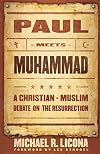
An interesting concept. In this case a little more technological as the means of presenting Paul and Muhammads' arguments is as if they are able to be there in person via some new technology but the concept as a whole, to have 2 (or a few) people from history debate one another is not original. Nonetheless, to have the Apostle Paul interact with Muhammad is valuable. Paul, is on the hot seat as it were to "prove" the resurrection of Jesus. Muhammad has the easier task of presenting an show more argument to cast doubt on that fact of history. As a Christian, I believe that Paul takes the day as he goes to the writings of others in history to show how the most reasonable, most likely case, is that Jesus did truly die, was buried and was then resurrected and was seen by multiple eyewitnesses. The arguments that Muhammad presents, in my opinion, were nothing more than a rehash of historic Islamic doctrine with suppositions in the place of agreed upon historical facts. His reconstruction of the events of that first Easter weekend are, to my mind, fanciful and unconvincing.
The book itself is well written and well organized in a mock discussion/debate format with a moderator and the 2 debaters. The framework device of the holographic presentation of the 2 primaries is not too obtrusive and only slightly off-putting. Nonetheless, Licona is well placed to present these arguments with his background in theology and history. Possibly the Muslim side of the debate could have been strengthened had a Muslim scholar had more input into the Islamic ways of thinking...although it appears that Licona did make use of a former Muslim's insights. Well worth reading. This book will give you food for thought. show less
The book itself is well written and well organized in a mock discussion/debate format with a moderator and the 2 debaters. The framework device of the holographic presentation of the 2 primaries is not too obtrusive and only slightly off-putting. Nonetheless, Licona is well placed to present these arguments with his background in theology and history. Possibly the Muslim side of the debate could have been strengthened had a Muslim scholar had more input into the Islamic ways of thinking...although it appears that Licona did make use of a former Muslim's insights. Well worth reading. This book will give you food for thought. show less
Evidence for God: 50 Arguments for Faith from the Bible, History, Philosophy, and Science by William A. Dembski
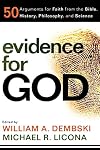
Fascinating book but not exactly what the title led me to believe. However, extremely valuable as the list of scholars who contributed are among the most credible one could find. The variety of topics is also very valuable; from philosophy, including proofs for the existence of God, to methodology, to scientific depictions of Intelligent Design to historical research into the resurrection and the reliability of Scripture, each section brings scholarly precision to bear on the relevant show more questions. Even the footnotes(!) are valuable and of interest. This is a kind of reference text for future use. show less
You May Also Like


Associated Authors
Statistics
- Works
- 15
- Also by
- 1
- Members
- 774
- Popularity
- #32,870
- Rating
- 4.4
- Reviews
- 6
- ISBNs
- 17
- Languages
- 1