
Paul Copan
Author of Is God a Moral Monster?: Making Sense of the Old Testament God
About the Author
Paul Copan is the Pledger Family Chair of Philosophy and Ethics at Palm Beach Atlantic University, Florida. He has written and edited dozens of books in the area of philosophy of religion, apologetics, and theology, including Is God a Moral Monster? Making Sense of the Old Testament God and An show more Introduction to Biblical Ethics, which he wrote with Robertson McQuilkin. show less
Image credit: Used by permission of Baker Publishing Group, copyright © 2008. All rights to this material are reserved. Materials are not to be distributed to other web locations for retrieval, published(see © info.)
Works by Paul Copan
That's Just Your Interpretation: Responding to Skeptics Who Challenge Your Faith (2001) 288 copies, 3 reviews
Will the Real Jesus Please Stand Up?: A Debate between William Lane Craig and John Dominic Crossan (1995) 277 copies, 3 reviews
Jesus' Resurrection: Fact or Figment? A Debate Between William Lane Craig and Gerd Lüdemann (2000) 198 copies, 3 reviews
Contending with Christianity's Critics: Answering New Atheists and Other Objectors (2009) 198 copies
Did God Really Command Genocide?: Coming to Terms with the Justice of God (2014) 191 copies, 2 reviews
Creation Out of Nothing: A Biblical, Philosophical, and Scientific Exploration (2004) 154 copies, 2 reviews
How Do You Know You're Not Wrong?: Responding to Objections That Leave Christians Speechless (2005) 154 copies
The Gospel in the Marketplace of Ideas: Paul's Mars Hill Experience for Our Pluralistic World (2014) 71 copies, 1 review
Transformed into the Same Image: Constructive Investigations into the Doctrine of Deification (2024) 47 copies
Is everything really relative?: Examining the assumptions of relativism and the culture of truth decay (RZIM critical questions series) (1999) 37 copies
War, Peace, and Violence: Four Christian Views (Spectrum Multiview Book Series) (2022) — Editor — 35 copies
The Kalam Cosmological Argument, Volume 1: Philosophical Arguments for the Finitude of the Past (Bloomsbury Studies in Philosophy of Religion) (2017) 12 copies
The Kalam Cosmological Argument, Volume 2: Scientific Evidence for the Beginning of the Universe (Bloomsbury Studies in Philosophy of Religion) (2017) 9 copies
Paul Copan 1 copy
Associated Works
To Everyone an Answer: A Case for the Christian Worldview (2004) — Contributor — 389 copies, 1 review
Evidence for God: 50 Arguments for Faith from the Bible, History, Philosophy, and Science (2010) — Contributor — 212 copies, 1 review
The New Mormon Challenge: Responding to the Latest Defenses of a Fast-Growing Movement (2002) — Contributor — 144 copies, 1 review
The Routledge Companion to Philosophy of Religion (2007) — Editor, some editions; Contributor, some editions — 33 copies
Tagged
Common Knowledge
- Birthdate
- 1962-09-26
- Gender
- male
- Organizations
- Palm Beach Atlantic University
Members
Reviews
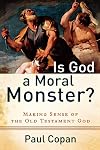
Paul Copan responds to the New Atheist stance that the God of the Old Testament is a “moral monster.” I agreed with only about half of Copan’s conclusions, but his book was well-written, informative, and fun to read.
Copan begins by attempting to make sense of the story of Abraham sacrificing Isaac. I loved the short discussion comparing the two times that God called Abraham: The first time to come to the promised land, the second time to sacrifice his son. Because of similar language, show more Copan argues that Abraham “couldn’t have missed the connection being made … God is clearly reminding him of his promise of blessing in Genesis 12 even while he’s being commanded to do what seems to be utterly opposed to that promise.” Outside of this, though, the Abraham/Isaac story is one of those sections of Copan’s book that just didn’t work for me. It doesn’t seem to matter how it’s explained to me, as soon as someone tries to pull this story down from the level of mythology and make me imagine it to be a true story that really happened, I start to feel queasy. I’d have a few choice words for God if he told me to kill my son. If Copan doesn’t mind, I’ll continue to classify this Bible passage as “storied theology,” where it’s much more palatable.
Copan spends several chapters talking about Israel’s slavery laws, and this section is superb. Was this law ideal? Certainly not. But there are three points I’d like to bring out here:
[1] We are discussing the Law of God, not what actually transpired among imperfect people. Yep, they kept slaves against the rules. The law was not faithfully followed.
[2] Copan points out again and again that Israel’s laws were a great improvement over the surrounding nations. God held Israel to a higher standard.
[3] Although this point gets little press time in the book, as the law evolved, it became more and more humane. Compare, for example, the Book of the Covenant, quoted by the Elohist in Exodus 21, with the Priesthood writings in Leviticus 19, and finally with the Deuteronomist’s instructions in Deut 22.
Yes, the Old Testament law seems archaic and brutal by today’s standards. Yet it’s clear Israel was learning and was trying to become Godly. Perhaps slowly approaching the standard God had in mind. Buy the book and, if you read nothing else, study chapters 11-14.
Next, Copan tackles what I feel are the most troublesome issues; genocide and ethnic cleansing. Particularly, the conquest of Canaan. Copan points out (rightly) that the Bible’s claims of utter annihilation are highly exaggerated, and that archaeological evidence hints that no such mass conquest took place. For the most part, Israel peacefully settled into Canaan without warfare and without driving out its inhabitants. But whether or not the conquest really happened, the fact remains that the Word of God graphically describes these holy wars in quite unholy terms, and claims that God commanded this inhumanity. Read, for example, Numbers 31:17-18, where God gives instruction regarding Midianite captives: “Now kill all the boys. And kill every woman who has slept with a man, but save for yourselves every girl who has never slept with a man.” Copan tries to soften the command, explaining that the non-virgin women were seducing Israel’s men and the boys would grow up to become warriors, but nothing can soften that one.
Copan presents a word game at this point. Moses commanded the armies to “utterly destroy” the Canaanites and not to “leave alive anything that breathes.” Joshua didn’t do this; we have lots of evidence of Canaanite people remaining afterward. Yet if you read Joshua 11:12, it says Joshua did as he was told; he utterly destroyed them as Moses commanded. Ergo, since Joshua didn’t kill ‘em all, but the Word of God says he did what he was told, then we can apparently consider Moses’ original command as hyperbole…the rhetoric of war. God didn’t really sanction genocide.
Well, whatever. Copan’s next attempt to justify this evil by reminding us that God is the author of life and has a rightful claim on it falls flat for me. If any kids were killed, they would go straight to heaven anyway, he says. The danger of that kind of thinking hardly needs discussion!
Though well-researched and thought-provoking, I finished the book with the feeling that Copan tried his best to tackle an impossible topic. I think it’s a four-star attempt and a fun book; I can’t judge the loser of a debate merely because he was given an indefensible position, right? show less
Copan begins by attempting to make sense of the story of Abraham sacrificing Isaac. I loved the short discussion comparing the two times that God called Abraham: The first time to come to the promised land, the second time to sacrifice his son. Because of similar language, show more Copan argues that Abraham “couldn’t have missed the connection being made … God is clearly reminding him of his promise of blessing in Genesis 12 even while he’s being commanded to do what seems to be utterly opposed to that promise.” Outside of this, though, the Abraham/Isaac story is one of those sections of Copan’s book that just didn’t work for me. It doesn’t seem to matter how it’s explained to me, as soon as someone tries to pull this story down from the level of mythology and make me imagine it to be a true story that really happened, I start to feel queasy. I’d have a few choice words for God if he told me to kill my son. If Copan doesn’t mind, I’ll continue to classify this Bible passage as “storied theology,” where it’s much more palatable.
Copan spends several chapters talking about Israel’s slavery laws, and this section is superb. Was this law ideal? Certainly not. But there are three points I’d like to bring out here:
[1] We are discussing the Law of God, not what actually transpired among imperfect people. Yep, they kept slaves against the rules. The law was not faithfully followed.
[2] Copan points out again and again that Israel’s laws were a great improvement over the surrounding nations. God held Israel to a higher standard.
[3] Although this point gets little press time in the book, as the law evolved, it became more and more humane. Compare, for example, the Book of the Covenant, quoted by the Elohist in Exodus 21, with the Priesthood writings in Leviticus 19, and finally with the Deuteronomist’s instructions in Deut 22.
Yes, the Old Testament law seems archaic and brutal by today’s standards. Yet it’s clear Israel was learning and was trying to become Godly. Perhaps slowly approaching the standard God had in mind. Buy the book and, if you read nothing else, study chapters 11-14.
Next, Copan tackles what I feel are the most troublesome issues; genocide and ethnic cleansing. Particularly, the conquest of Canaan. Copan points out (rightly) that the Bible’s claims of utter annihilation are highly exaggerated, and that archaeological evidence hints that no such mass conquest took place. For the most part, Israel peacefully settled into Canaan without warfare and without driving out its inhabitants. But whether or not the conquest really happened, the fact remains that the Word of God graphically describes these holy wars in quite unholy terms, and claims that God commanded this inhumanity. Read, for example, Numbers 31:17-18, where God gives instruction regarding Midianite captives: “Now kill all the boys. And kill every woman who has slept with a man, but save for yourselves every girl who has never slept with a man.” Copan tries to soften the command, explaining that the non-virgin women were seducing Israel’s men and the boys would grow up to become warriors, but nothing can soften that one.
Copan presents a word game at this point. Moses commanded the armies to “utterly destroy” the Canaanites and not to “leave alive anything that breathes.” Joshua didn’t do this; we have lots of evidence of Canaanite people remaining afterward. Yet if you read Joshua 11:12, it says Joshua did as he was told; he utterly destroyed them as Moses commanded. Ergo, since Joshua didn’t kill ‘em all, but the Word of God says he did what he was told, then we can apparently consider Moses’ original command as hyperbole…the rhetoric of war. God didn’t really sanction genocide.
Well, whatever. Copan’s next attempt to justify this evil by reminding us that God is the author of life and has a rightful claim on it falls flat for me. If any kids were killed, they would go straight to heaven anyway, he says. The danger of that kind of thinking hardly needs discussion!
Though well-researched and thought-provoking, I finished the book with the feeling that Copan tried his best to tackle an impossible topic. I think it’s a four-star attempt and a fun book; I can’t judge the loser of a debate merely because he was given an indefensible position, right? show less
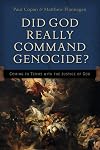
The titular question of this book is one I have asked in many different forms when I have read the old testament stories of conquest and war. As a believer, these passages cause me great internal conflict. How do I reconcile the loving message of Jesus with the apparent genocide described in Joshua and other old testament books? Is the conquest described there any different that the genocide of the Native Americans on this continent?
The authors present a detailed, through and sometimes dense show more answer to multiple aspects of this question. The most encouraging part of the book to me is its very existence. The authors are more conservative than me, but they respect scripture and the questions it raises. I am relieved to know I am not alone in struggling with these questions in my faith. I am glad the authors consider these questions important enough to bring intense intellectual prowess, historical research, and theological scholarship to bear.
Their final answer to the question is "No." I cannot do their book-length argument justice in this review, but I will try to provide a summary. The Canaanites were not innocent, and the evil they perpetuated was so vile and unrepentant for centuries, that God issued a unique exemption to the normal prohibition against killing innocent people. God's goal for his people was not the extermination of the Canaanites but driving them out of the land. Indeed, they were not exterminated as is evident from continuing conflict later in the Old Testament. God's justice was not partial; when the Israelites turned away from him for centuries, he drove them out of the land just as he did the Canaanites. Even this line of argument raises many uncomfortable questions, which the authors address with thoroughness and depth.
Their answers are not perfect; for example, they sometimes split the hair between what God commanded and what his leaders (e.g. Moses) commanded a little to thinly for me. However, reading this book has given me confidence that God welcomes these questions and has answers.
I think two chapters in the final part of the book (on Jihad and Just War) do not fit with the core message and are more distracting than helpful. The book's greatest strength is is depth and focus on Christians dealing with a difficult portion of our scriptures. Branching out into Islam subverts this strength and could be seen as a tu quoque fallacy. Just war is an extremely important and fascinating topic, but trying to address it in a single chapter gives it short shrift and does not fit well with the rest of the book. I think the book would have been better served by replacing these two chapters with chapters about the genocide of Native Americans and other atrocities committed in the name of the church (some are briefly mentioned).
Even after reading this book, some of the stories of the conquest still make me uncomfortable, and I think that is as it should be. Right or not, such violence should not be treated lightly.
Overall, this book has significantly eroded an important stumbling block to my faith, and I recommend it for anyone who wants to take the Bible seriously but struggles with what appears to be God commanding genocide. show less
The authors present a detailed, through and sometimes dense show more answer to multiple aspects of this question. The most encouraging part of the book to me is its very existence. The authors are more conservative than me, but they respect scripture and the questions it raises. I am relieved to know I am not alone in struggling with these questions in my faith. I am glad the authors consider these questions important enough to bring intense intellectual prowess, historical research, and theological scholarship to bear.
Their final answer to the question is "No." I cannot do their book-length argument justice in this review, but I will try to provide a summary. The Canaanites were not innocent, and the evil they perpetuated was so vile and unrepentant for centuries, that God issued a unique exemption to the normal prohibition against killing innocent people. God's goal for his people was not the extermination of the Canaanites but driving them out of the land. Indeed, they were not exterminated as is evident from continuing conflict later in the Old Testament. God's justice was not partial; when the Israelites turned away from him for centuries, he drove them out of the land just as he did the Canaanites. Even this line of argument raises many uncomfortable questions, which the authors address with thoroughness and depth.
Their answers are not perfect; for example, they sometimes split the hair between what God commanded and what his leaders (e.g. Moses) commanded a little to thinly for me. However, reading this book has given me confidence that God welcomes these questions and has answers.
I think two chapters in the final part of the book (on Jihad and Just War) do not fit with the core message and are more distracting than helpful. The book's greatest strength is is depth and focus on Christians dealing with a difficult portion of our scriptures. Branching out into Islam subverts this strength and could be seen as a tu quoque fallacy. Just war is an extremely important and fascinating topic, but trying to address it in a single chapter gives it short shrift and does not fit well with the rest of the book. I think the book would have been better served by replacing these two chapters with chapters about the genocide of Native Americans and other atrocities committed in the name of the church (some are briefly mentioned).
Even after reading this book, some of the stories of the conquest still make me uncomfortable, and I think that is as it should be. Right or not, such violence should not be treated lightly.
Overall, this book has significantly eroded an important stumbling block to my faith, and I recommend it for anyone who wants to take the Bible seriously but struggles with what appears to be God commanding genocide. show less
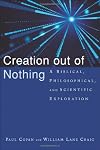
Creatio ex nihilo (creation out of nothing) is an important doctrine that has come under fire in recent decades from theologians such as Gerhard May and scientist-theologians such as Ian Barbour. May contends that creation ex nihilo is biblically ambiguous and that it was a second-century response to Gnostic ideas; Barbour rejects it in favour of an absolute dependence of the universe on God.
It is in response to these ideas that Copan and Craig have teamed up to write this inter-disciplinary show more book. They show that creation out of nothing is biblical, and scientifically and philosophically grounded. They don’t explore the rich theological implications of creatio ex nihilo but do show that there is a very strong cumulative case for the doctrine and contra May it is a thoroughly biblical one.
The first three chapters explore the Old Testament, the New Testament and much of the extra-biblical evidence. At times these chapters read like a rich mosaic of commentators, but the conclusion in each one is that creation out of nothing is not a second-century invention; it is implicit in both testaments as well as explicit in the Jewish and early Christian writings.
The second half of the book (chapters 4-8) deals with scientific and philosophical arguments. Chapter 5 exposes the error that many – such as Barbour – make in conflating conservation and creation: ‘Creation is distinct from conservation in that creation does not presuppose a patient entity but involves God’s bringing something into being’ (165).
Chapter 5 explores the problem of the creation of abstract objects such as mathematics concepts. They examine three possible solutions: absolute creationism (which seems to be anything but absolute!), fictionalism and conceptualism. They conclude that much creative work is being done and still remains to be done on this issue; hence, they are not prepared to pronounce judgment over which solution is the most plausible. (I’m tempted to say none of the three they mention!)
The impossibility of an infinite past is explored in Chapter 6. Chapter 7 examines two broad lines of scientific evidence that the universe is not eternal and that it had an origin a finite time ago. The first of these evidences is the expansion of the universe and the standard big bang model of creation; the second, thermodynamics.
The final chapter examines naturalistic alternatives to creation ex nihilo; namely, that the universe created itself and that the universe sprung into existence uncaused out of nothing. Here they ably show the fallacious nature of these arguments.
One need not agree with all their arguments, but Copan and Craig have provided an excellent, inter-disciplinary and timely cumulative case for creatio ex nihilo. show less
It is in response to these ideas that Copan and Craig have teamed up to write this inter-disciplinary show more book. They show that creation out of nothing is biblical, and scientifically and philosophically grounded. They don’t explore the rich theological implications of creatio ex nihilo but do show that there is a very strong cumulative case for the doctrine and contra May it is a thoroughly biblical one.
The first three chapters explore the Old Testament, the New Testament and much of the extra-biblical evidence. At times these chapters read like a rich mosaic of commentators, but the conclusion in each one is that creation out of nothing is not a second-century invention; it is implicit in both testaments as well as explicit in the Jewish and early Christian writings.
The second half of the book (chapters 4-8) deals with scientific and philosophical arguments. Chapter 5 exposes the error that many – such as Barbour – make in conflating conservation and creation: ‘Creation is distinct from conservation in that creation does not presuppose a patient entity but involves God’s bringing something into being’ (165).
Chapter 5 explores the problem of the creation of abstract objects such as mathematics concepts. They examine three possible solutions: absolute creationism (which seems to be anything but absolute!), fictionalism and conceptualism. They conclude that much creative work is being done and still remains to be done on this issue; hence, they are not prepared to pronounce judgment over which solution is the most plausible. (I’m tempted to say none of the three they mention!)
The impossibility of an infinite past is explored in Chapter 6. Chapter 7 examines two broad lines of scientific evidence that the universe is not eternal and that it had an origin a finite time ago. The first of these evidences is the expansion of the universe and the standard big bang model of creation; the second, thermodynamics.
The final chapter examines naturalistic alternatives to creation ex nihilo; namely, that the universe created itself and that the universe sprung into existence uncaused out of nothing. Here they ably show the fallacious nature of these arguments.
One need not agree with all their arguments, but Copan and Craig have provided an excellent, inter-disciplinary and timely cumulative case for creatio ex nihilo. show less
Within our modern cultural bubble, we are guided by the current rules of our society. Had we been born outside of the West or several millennia prior, we would most certainly speak and think differently. When it comes to understanding ancient people groups in history we tend to forget that values, customs, and the economy would had looked drastically unfamiliar to us. For the Semitic people living during the time of the Torah, they too were the result of their cultural bubble and those of show more their regional neighbors.
Because Christianity (in my view) has influenced the world over the last two millennia, it is challenging to reconcile the actions of this ancient people group in the Near East. However, the author Paul Copan in his book, “Is God A Moral Monster?: Making Sense of the Old Testament God” reminds his 21st Century readers in an objective way, the world in which the ancient Israelites find themselves. While their global economic and cultural structure was their reality, the God of Abraham worked within their unprincipled system. Their God worked within His volunteered restraint of His free-willed creatures, all the while revolutionizing how people approached Him vs. other/false spirits, issues of forced labor, the role of women in society, and more.
Whether you are a bible student or you take an interest in the subject matter, Copan applies proper hermeneutics when deciphering between descriptive text and proscriptive elements within the framework of the ancient Israelites. Good read! show less
Because Christianity (in my view) has influenced the world over the last two millennia, it is challenging to reconcile the actions of this ancient people group in the Near East. However, the author Paul Copan in his book, “Is God A Moral Monster?: Making Sense of the Old Testament God” reminds his 21st Century readers in an objective way, the world in which the ancient Israelites find themselves. While their global economic and cultural structure was their reality, the God of Abraham worked within their unprincipled system. Their God worked within His volunteered restraint of His free-willed creatures, all the while revolutionizing how people approached Him vs. other/false spirits, issues of forced labor, the role of women in society, and more.
Whether you are a bible student or you take an interest in the subject matter, Copan applies proper hermeneutics when deciphering between descriptive text and proscriptive elements within the framework of the ancient Israelites. Good read! show less
Lists
You May Also Like


Associated Authors
Statistics
- Works
- 44
- Also by
- 5
- Members
- 4,332
- Popularity
- #5,787
- Rating
- 3.8
- Reviews
- 36
- ISBNs
- 91
- Languages
- 6