
J. P. Moreland
Author of Love Your God with All Your Mind: The Role of Reason in the Life of the Soul
About the Author
J. P. Moreland is distinguished professor of philosophy at Talbot School of Theology and director of Eidos Christian Center. With degrees in philosophy, theology, and chemistry, Dr. Moreland has taught theology and philosophy at several schools throughout the United States. The author of numerous show more books, he has also served with Cru, planted two churches, and spoken at hundreds of college campuses and churches. Moreland has been recognized by The Best Schools as one of the 50 most influential living philosophers in the world. show less
Works by J. P. Moreland
Love Your God with All Your Mind: The Role of Reason in the Life of the Soul (1997) 1,510 copies, 11 reviews
Jesus Under Fire: Modern Scholarship Reinvents the Historical Jesus (1995) — Editor — 613 copies, 1 review
Kingdom Triangle: Recover the Christian Mind, Renovate the Soul, Restore the Spirit's Power (2007) 311 copies, 1 review
Philosophy Made Slightly Less Difficult: A Beginner's Guide to Life's Big Questions (2005) 283 copies, 1 review
The Lost Virtue of Happiness: Discovering the Disciplines of the Good Life (2006) 168 copies, 3 reviews
The Blackwell Companion to Natural Theology (2009) — Editor; Contributor; Editor — 159 copies, 1 review
Finding Quiet: My Story of Overcoming Anxiety and the Practices that Brought Peace (2018) 131 copies, 2 reviews
Christian Perspectives on Being Human: A Multidisciplinary Approach to Integration (1993) — Editor; Contributor — 54 copies
Consciousness and the Existence of God: A Theistic Argument (Routledge Studies in the Philosophy of Religion) (2008) 33 copies, 1 review
A Simple Guide to Experience Miracles: Instruction and Inspiration for Living Supernaturally in Christ (2021) 33 copies
The Recalcitrant Imago Dei: Human Persons and the Failure of Naturalism (Veritas) (2009) 26 copies, 1 review
Bible & the Future 1 copy
What is The Soul 1 copy
Tres puntos de vista sobre la creación y la evolución (Puntos de Vista Serie) (Spanish Edition) (2009) 1 copy
Answering the Skeptic 1 copy
Yêu Chúa Với Cả Tâm Trí 1 copy
The Case for Christianity 1 copy
Associated Works
The Case for Christ: A Journalist's Personal Investigation of the Evidence for Jesus (1998) — Contributor, some editions — 10,503 copies, 97 reviews
An Introduction To Theological Research: A Guide for College and Seminary Students (1982) — Foreword — 178 copies, 2 reviews
The New Mormon Challenge: Responding to the Latest Defenses of a Fast-Growing Movement (2002) — Contributor — 143 copies, 1 review
How to Be an Atheist: Why Many Skeptics Aren't Skeptical Enough (2016) — Foreword — 138 copies, 3 reviews
Oxford Readings in Philosophical Theology: Volume 1: Trinity, Incarnation, and Atonement (2009) — Contributor — 35 copies
Tagged
Common Knowledge
- Birthdate
- 1948
- Gender
- male
- Education
- Dallas Theological Seminary (ThM)
University of Southern California (PhD) - Organizations
- Talbot School of Theology at Biola University
Members
Reviews
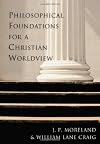
In this large volume (626 pages if we aren't counting the 'suggestions for further reading') Dr. William Lane Craig and Dr. J.P. Moreland spend some time educating Christians in key philosophical areas. Using John Wesley's expectations of a pastor as well as recognizing the current state of anti-intellectualism is many religious circles, Craig and Moreland push you to broaden your mind to these topics.
It is hefty, both in density of the book and the ideas in it, but it is worthwhile. You show more will start off with being introduced into philosophy, this includes a general overview of sound argument forms and why philosophy can be useful for religious folks.
They go through many topics such as Postmodernism, Epistemology, Skepticism, Dualism, Ontology and a ton of other topics.
For the few people concerned about Craig's possible model of the Trinity using reformed trinitarianism, social trinitarianism and using Apollonarius' ideas for reference, Craig doesn't commit the cardinal sin of trinitarianism heresy, despite what discernment blog you might have read that says otherwise. (9 times out of 10, objectors haven't even read the book or have it in their possession, yet still call it the primary object of their critique.)
Overall, Craig and Moreland have succeeded in my mind with this book, there is so much to say about these topics and this works as a good overview and introduction to them. I recommend it to everyone. Challenge yourself to really understand these subjects and if you aren't religious, read and mediate on the possibility that religion, in particular Christianity, can be a reasonable journey. show less
It is hefty, both in density of the book and the ideas in it, but it is worthwhile. You show more will start off with being introduced into philosophy, this includes a general overview of sound argument forms and why philosophy can be useful for religious folks.
They go through many topics such as Postmodernism, Epistemology, Skepticism, Dualism, Ontology and a ton of other topics.
For the few people concerned about Craig's possible model of the Trinity using reformed trinitarianism, social trinitarianism and using Apollonarius' ideas for reference, Craig doesn't commit the cardinal sin of trinitarianism heresy, despite what discernment blog you might have read that says otherwise. (9 times out of 10, objectors haven't even read the book or have it in their possession, yet still call it the primary object of their critique.)
Overall, Craig and Moreland have succeeded in my mind with this book, there is so much to say about these topics and this works as a good overview and introduction to them. I recommend it to everyone. Challenge yourself to really understand these subjects and if you aren't religious, read and mediate on the possibility that religion, in particular Christianity, can be a reasonable journey. show less
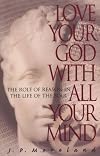
This author is phenomenal! The book is well structured, practical, personal, and unapologetic-ally direct in the stating of the author's position of exactly what an intellectual Christian mind should encompass. With such a scholarly talent, the author presents a view of what the Christian mind used to be, what it has become, and how it can be fixed on a corporate level for the body of Christ as well as for the individual. He gives just enough information to unlock a dry-heaved relishing for show more more that jolts one forward into a new world of possibilities, while standing beneath, above, and behind each sentence as a silent coach with pom-poms aggressively cheering and steering in the way to go. I don't agree with every spec of his writings, but am absolutely floored with a jaw-dropping fervent appreciation, sitting on the edge of my seat reading as he states his case, presents corresponding arguments and without reproach clearly places his stance on the subject. Mooreland challenges the Evangelical to exercise the mind "like a muscle" and doesn't fail to include learning incorporated from all aspects of life.
The book is separated into four parts that divide into ten chapters along with two appendices. Part One: Why the mind matters in Christianity sketches the importance of the mind in Christian thinking, how the mind essential to true worship, and many biblical references are offered to support. A secular view of the mind is corresponded with the now distorted historical view. Part Two: How to develop a Mature Christian Mind, weaves into play the philosophical notions of the structure of the soul, the poisons of the "empty mind", how the mind is fed, and the importance of grammar used in communicating what the mind fathoms. Part Three: What a mature Christian mind looks like, covers such instances of evangelism to apologetics, worshipping and fellowshipping to choosing a vocation and using correct Christian views in your actual vocation in order to be an effective Christian. Part Four: Guaranteeing a future for the Christian mind, in a style like Paul's brings practical application to all that was previously presented.
One impressive tool given in the book is the author's varied listed of suggestive readings that is sub-categorized. It's twenty-five pages long!!! I'm motivated, challenged, and personally convicted to expand my reading as never before. This book is definitely a must read, even if you are not an evangelical. show less
The book is separated into four parts that divide into ten chapters along with two appendices. Part One: Why the mind matters in Christianity sketches the importance of the mind in Christian thinking, how the mind essential to true worship, and many biblical references are offered to support. A secular view of the mind is corresponded with the now distorted historical view. Part Two: How to develop a Mature Christian Mind, weaves into play the philosophical notions of the structure of the soul, the poisons of the "empty mind", how the mind is fed, and the importance of grammar used in communicating what the mind fathoms. Part Three: What a mature Christian mind looks like, covers such instances of evangelism to apologetics, worshipping and fellowshipping to choosing a vocation and using correct Christian views in your actual vocation in order to be an effective Christian. Part Four: Guaranteeing a future for the Christian mind, in a style like Paul's brings practical application to all that was previously presented.
One impressive tool given in the book is the author's varied listed of suggestive readings that is sub-categorized. It's twenty-five pages long!!! I'm motivated, challenged, and personally convicted to expand my reading as never before. This book is definitely a must read, even if you are not an evangelical. show less
This was a book read for the Cave to the Cross Apologetics podcast. It was there that we went through chapter-by-chapter discussing the contents of the book.
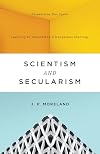
In this book, J. P. Moreland, who has been a stalwart Christian philosopher and apologist for years, brings out the warning to strict adhearance to scientism, which - and atheists if you are listening this time - is not science but a byproduct of secular naturalism carried out in science. Moreland discusses two different aspects after show more defining scientism (the belief that only things in the realm of science provide the only genuine knowledge of reality). He discusses the incoherent and untrue nature of the assertion. He also talks about how even science itself must adhere to a philosophy first tenant to be able to be justified. While Moreland is more in the evidentialists or classical apologetic camp there is a lot of overlap he has here with presuppositionalism. He's at home asking for those who hold to methodological naturalism to apply their standard to itself and to be able to justify their use of their standard and of science. Within those main avenues, Moreland has a great chapter of the byproducts of scientism as seen in the academies, the schools, and in culture. Fitting right at home with rants about government school education is the removal of virtue from the classroom and of education and it being regulated to the extracurricular activities. Someone needs to let the football coaches they were supposed to be teaching people good character while hoping they don't get CTE.
Where the book gets a little week is not in the substance but in the style, as in the layout of the book. Moreland's ending of the book talks about areas where scientism doesn't have good explanations for things like origins or consciousness or morality. All good things to bring up but these were left for the back of the book. Also in the back in looking at how Christianity should be integrated with science. This made the form seem more like begging a place at the table rather than demanding a place as being usurped from the position that it gave for those to sit in the seats of the universities Christianity formed, the scientific revolution Christianity inspired, and the classical education that we've been treading on that led to the Western Civilization that those in the ivory towers can piere down upon the faithful and spit.
Moreland still remains an amazing Christian philosopher and this was a good read and a great book to sit down with a mentor and go over on a little-known podcast and have a good discussion. Final Grade - B+ show less
In this book, J. P. Moreland, who has been a stalwart Christian philosopher and apologist for years, brings out the warning to strict adhearance to scientism, which - and atheists if you are listening this time - is not science but a byproduct of secular naturalism carried out in science. Moreland discusses two different aspects after show more defining scientism (the belief that only things in the realm of science provide the only genuine knowledge of reality). He discusses the incoherent and untrue nature of the assertion. He also talks about how even science itself must adhere to a philosophy first tenant to be able to be justified. While Moreland is more in the evidentialists or classical apologetic camp there is a lot of overlap he has here with presuppositionalism. He's at home asking for those who hold to methodological naturalism to apply their standard to itself and to be able to justify their use of their standard and of science. Within those main avenues, Moreland has a great chapter of the byproducts of scientism as seen in the academies, the schools, and in culture. Fitting right at home with rants about government school education is the removal of virtue from the classroom and of education and it being regulated to the extracurricular activities. Someone needs to let the football coaches they were supposed to be teaching people good character while hoping they don't get CTE.
Where the book gets a little week is not in the substance but in the style, as in the layout of the book. Moreland's ending of the book talks about areas where scientism doesn't have good explanations for things like origins or consciousness or morality. All good things to bring up but these were left for the back of the book. Also in the back in looking at how Christianity should be integrated with science. This made the form seem more like begging a place at the table rather than demanding a place as being usurped from the position that it gave for those to sit in the seats of the universities Christianity formed, the scientific revolution Christianity inspired, and the classical education that we've been treading on that led to the Western Civilization that those in the ivory towers can piere down upon the faithful and spit.
Moreland still remains an amazing Christian philosopher and this was a good read and a great book to sit down with a mentor and go over on a little-known podcast and have a good discussion. Final Grade - B+ show less
Finding Quiet: My Story of Overcoming Anxiety and the Practices that Brought Peace by J. P. Moreland
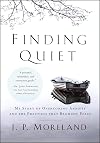
This was a very interesting read. Although I (thankfully) do not suffer from anxiety or depression in any clinical sense, I read the book primarily to familiarize myself with how a scholar and sufferer like Dr. Moreland has learned to manage his own state in this regard. I appreciated the emphasis on a holistic approach - incorporating spiritual, physical and psychological approaches. Dr. Moreland rightfully allows for medications to address physical imbalances. I liked his distinction show more between practices that are anti-biblical vs. extra-biblical. Just because a practice or methodology is extra-biblical does not mean it is sinful and contrary to the teachings of Scripture. show less
Lists
Awards


You May Also Like


Associated Authors
Statistics
- Works
- 48
- Also by
- 8
- Members
- 7,570
- Popularity
- #3,225
- Rating
- 3.9
- Reviews
- 39
- ISBNs
- 129
- Languages
- 5
- Favorited
- 12
