Theologically, this book is a straight up mess.
Story wise, it's a....straight up mess.
You can tell what's coming within the first 20 pages and it is filled with fake deep theology. Not a fan.
Story wise, it's a....straight up mess.
You can tell what's coming within the first 20 pages and it is filled with fake deep theology. Not a fan.
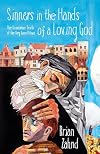
“Sinners in The Hands of a Loving God” the provocative re-writing of the title of Jonathan Edwards famous sermon “Sinners in the Hands of an Angry Blog” is a book written by Brian Zahnd. I saw this particular book at my local library, the title caught my attention and after the initial eye roll, I checked it out.
The first thing I noticed was the Rachel Held Evans and Sarah Bessey reviewed the book favorly. Sarah Bessey being the author of the book “Jesus Feminist” and Rachel Held Evans being someone I responded to already when she said that Calvinism made her cry. So, it was no surprise that her review and praise would be featured in a seemingly anti-calvinist book.
The next thing you will find is that the foreword was written by Wm. Paul Young, who wrote the Shack and Lies we Believe about God, in which he admits to being a universalist. These associations mentioned below do not make Zahnd automatically wrong, but I think I could reasonably assume how the book was going to go based on who likes his work. (1 Corinthians 15:33)
Young goes on to figure out the great question of why Edwards could paint such beautiful pictures of God such as in his work “Charity and its fruits” but portray a vindictive God in his sermon. Young went on to blame this sermon on Edwards personal issues, such as being ostracized by his own congregation (due to his insistence on fencing the Lord’s table) and his advocacy for the indigenous tribal people, specifically the native show more americans.
It’s a foreword, so I don’t expect Young to interact on a deeper level than what he did say, however, it seems a bit disingenuous to not acknowledge that there are plenty of christians who argue that God can be just and wrathful and loving at the same time, God isn’t limited to one attribute.
In the first paragraph, Zahnd recounts the time about his little arts and crafts project, where he used photocopies of Edwards sermon and made his own little booklet complete with highlights and all. That actually sounds pretty cool to me, I may copy his idea and do that myself someday. However, he ends the paragraph by referring to those as his “ANGRY GOD days” in comparison to his “Loving Father” days apparently. I suspected that I would encounter this false dichotomy often throughout this book.
On page 3 his made a statement that made me want to facepalm:
“If Edwards could scare people into repentance , maybe I could too. Evangelism by Terrorism. Conversion by coercion.”
This is not only a pitiful exaggeration but it misunderstands the sermon entirely. Edwards was not in the pulpit with a scary mask on trying to scare the unbelief out of people, he was merely telling people of the reality of what scripture teaches. HIs imagery was vivid and poetic, that is probably why it resonated in the mind more than your average matter-of-fact sermon. To compare poetic language that is simply restating truths of the Bible to “terrorism” is absurd, there is no comparison. As far as coercion, the sermon is just words, Mr. Zahnd, no one was forcing anyone to anything. They willingly attended the service, they willingly heard the words and they willingly reacted the way they did.
Zahnd then insults the literary nature of Edwards writing by finding it strange that Edwards sermon is taught in schools as a good example of descriptive writing. Here’s the thing, even if you don’t agree with the method of preaching or the doctrine Edwards is defending, it would be far from reasonable to deny that his writing was anything short of descriptive.
Zahnd then quotes Edwards famous spider portion of the sermon, but doesn’t understand the disconnect when he makes snide remarks such as it making God into some “sadistic juvenile”. If Zahnd would have read Edwards observations on Spiders, he would realize that Edwards found their intricate webs as evidence of their design by God and that he thought they were a beautiful creation. This isn’t some “you’re like a bug, gross!” childhood insult, it actually has a double meaning. Today, we commonly have people who like and people who dislike. Spiders are commonly disliked but some people like them. What makes spiders worthy of dislike? Well, they scare people. So, as an analogy, you’re appeal that Edwards scared people into the kingdom would be equivalent to you calling him a spider. Edwards is using this same type of analogy when he compares us to spiders. Not that we scare God obviously, but that our sin is as repugnant to God as someone who hates spiders.
On Page 4, Zahnd questions whether God abhors sinners (Hey, Zahnd read Psalm 11, Proverbs 15, Romans 3, Romans 9, or Revelation 2 sometime) and scoffs at the idea of an eternal hell calling it “God’s torture chamber” and “the eternal auschwitz”. Besides being a disgusting comparison, the major difference is that we are all guilty before God (Romans 3:23) and the Jewish people were innocent against the depraved behavior of the concentration camps. You should probably apologize to people affected by the holocaust for comparing some mere words about Hell you disagree with to such a horrific event.
On Page 5, Zahnd refers to Edwards sermon as a “Horror-genre sermon” which I find funny but also kind of agree with because the reality of Hell is horrific but also because horror is my favorite genre, so it makes sense why I like it. (besides the fact that it is merely teaching biblical truth.)
Zahnd shows a misunderstanding when it views sermons like the one Edwards famously preached as a way to “scare someone into the altar call” perhaps not realizing that Charles Finney popularized the altar call and that Edwards would have been against such emotional manipulation. (Even though I’m sure you will accuse him of it for writing the sermon.)
Zahnd consistently repeats the false dichotomy that a God who desires to show his just wrath can’t also be a loving God. This limiting concept is due to Zahnd’s apprently over antrhompizing the emotions of God as if they were filled with the faults that humans have with them. It reeks of greek mythology level of reasoning, where a God can only have one feature, “The goddess of wisdom” or “the god of war.” In page 18, he reviews some biblical passages that are very clear that God is wrathful or displaying wrath and chocks them up to metaphor. How convient that somethign thtat would contridct your entire premise for the book is a metaphor.
On page 34-35, Zahnd gives a nod to his master, Marcion, in disparaging the old testament and seeking to run away from any idea that God had commanded the slaying of the cannaites and used the example of Jesus not reading the vengeful part of Isaiah’s text, the implication he gives is that Jesus was different and that God’s intention wasn’t vengence.
Veenence is mine saith the Lord
Vegenence is wrong, saith the Zahnd”
Zahnd tries to deny that he is anything like Marcion on page 60, but he ends his defense of himself by admitting that “I don’t regard the old testament as the perfect revelation of God” though earlier he says he believes its the word of God, I wonder how its the word of God and also not a perfect revelation from God? Inquiring minds would like to know.
Chapter 4 in his work can be summed up as “hey this thing happened in the Old Testament” “But man, God is love!”
Pg. 101 Zahnd attempts to critque Calvin’s view of the cross, but he ends up Roger Olsoning it and just calling God a moral monster for pouring out his wrath on Jesus in our place. (Because that totally didn’t happen, right?) He says “Punishing the innocent in order to forgive the guilty is montrous logic” Well, Jesus is innocent, we are guilty, what exactly happened on the cross, Zahnd? What was in that cup that Jesus prayed that he wouldn’t have to drink?
On Page 145, Zahnd denies that those who reject Christ will go to hell, because his feelings or whatever.
In the final paragraph, on page 207, Zahnd attempts to use Edwards words against him. That every tree that does not bear fruit will be axed down. He tries to reverse it and say that the tree of Edwards preaching, a.k.a. The “poisionious tree of angry-God theology” is now gone from his life in favor of being in the hands of a loving God. He started with the false dichtomy and ended with it, I congrulate him on his consistency to this fallacious premise.
In reality, God is love, God desires to show his wrath and God is not a moral monster. I will not pretend that there are easy answers to these questions, but what Zahnd presents is emotion over fact, false dichotomies and snide jabs at people who actually believe things in the Old testament aren’t just all metaphors when it contradicts “muh love” theology.
Constructive critcism is supposed to say something nice about something too. So, Zahnd, the cover was nice. show less
The first thing I noticed was the Rachel Held Evans and Sarah Bessey reviewed the book favorly. Sarah Bessey being the author of the book “Jesus Feminist” and Rachel Held Evans being someone I responded to already when she said that Calvinism made her cry. So, it was no surprise that her review and praise would be featured in a seemingly anti-calvinist book.
The next thing you will find is that the foreword was written by Wm. Paul Young, who wrote the Shack and Lies we Believe about God, in which he admits to being a universalist. These associations mentioned below do not make Zahnd automatically wrong, but I think I could reasonably assume how the book was going to go based on who likes his work. (1 Corinthians 15:33)
Young goes on to figure out the great question of why Edwards could paint such beautiful pictures of God such as in his work “Charity and its fruits” but portray a vindictive God in his sermon. Young went on to blame this sermon on Edwards personal issues, such as being ostracized by his own congregation (due to his insistence on fencing the Lord’s table) and his advocacy for the indigenous tribal people, specifically the native show more americans.
It’s a foreword, so I don’t expect Young to interact on a deeper level than what he did say, however, it seems a bit disingenuous to not acknowledge that there are plenty of christians who argue that God can be just and wrathful and loving at the same time, God isn’t limited to one attribute.
In the first paragraph, Zahnd recounts the time about his little arts and crafts project, where he used photocopies of Edwards sermon and made his own little booklet complete with highlights and all. That actually sounds pretty cool to me, I may copy his idea and do that myself someday. However, he ends the paragraph by referring to those as his “ANGRY GOD days” in comparison to his “Loving Father” days apparently. I suspected that I would encounter this false dichotomy often throughout this book.
On page 3 his made a statement that made me want to facepalm:
“If Edwards could scare people into repentance , maybe I could too. Evangelism by Terrorism. Conversion by coercion.”
This is not only a pitiful exaggeration but it misunderstands the sermon entirely. Edwards was not in the pulpit with a scary mask on trying to scare the unbelief out of people, he was merely telling people of the reality of what scripture teaches. HIs imagery was vivid and poetic, that is probably why it resonated in the mind more than your average matter-of-fact sermon. To compare poetic language that is simply restating truths of the Bible to “terrorism” is absurd, there is no comparison. As far as coercion, the sermon is just words, Mr. Zahnd, no one was forcing anyone to anything. They willingly attended the service, they willingly heard the words and they willingly reacted the way they did.
Zahnd then insults the literary nature of Edwards writing by finding it strange that Edwards sermon is taught in schools as a good example of descriptive writing. Here’s the thing, even if you don’t agree with the method of preaching or the doctrine Edwards is defending, it would be far from reasonable to deny that his writing was anything short of descriptive.
Zahnd then quotes Edwards famous spider portion of the sermon, but doesn’t understand the disconnect when he makes snide remarks such as it making God into some “sadistic juvenile”. If Zahnd would have read Edwards observations on Spiders, he would realize that Edwards found their intricate webs as evidence of their design by God and that he thought they were a beautiful creation. This isn’t some “you’re like a bug, gross!” childhood insult, it actually has a double meaning. Today, we commonly have people who like and people who dislike. Spiders are commonly disliked but some people like them. What makes spiders worthy of dislike? Well, they scare people. So, as an analogy, you’re appeal that Edwards scared people into the kingdom would be equivalent to you calling him a spider. Edwards is using this same type of analogy when he compares us to spiders. Not that we scare God obviously, but that our sin is as repugnant to God as someone who hates spiders.
On Page 4, Zahnd questions whether God abhors sinners (Hey, Zahnd read Psalm 11, Proverbs 15, Romans 3, Romans 9, or Revelation 2 sometime) and scoffs at the idea of an eternal hell calling it “God’s torture chamber” and “the eternal auschwitz”. Besides being a disgusting comparison, the major difference is that we are all guilty before God (Romans 3:23) and the Jewish people were innocent against the depraved behavior of the concentration camps. You should probably apologize to people affected by the holocaust for comparing some mere words about Hell you disagree with to such a horrific event.
On Page 5, Zahnd refers to Edwards sermon as a “Horror-genre sermon” which I find funny but also kind of agree with because the reality of Hell is horrific but also because horror is my favorite genre, so it makes sense why I like it. (besides the fact that it is merely teaching biblical truth.)
Zahnd shows a misunderstanding when it views sermons like the one Edwards famously preached as a way to “scare someone into the altar call” perhaps not realizing that Charles Finney popularized the altar call and that Edwards would have been against such emotional manipulation. (Even though I’m sure you will accuse him of it for writing the sermon.)
Zahnd consistently repeats the false dichotomy that a God who desires to show his just wrath can’t also be a loving God. This limiting concept is due to Zahnd’s apprently over antrhompizing the emotions of God as if they were filled with the faults that humans have with them. It reeks of greek mythology level of reasoning, where a God can only have one feature, “The goddess of wisdom” or “the god of war.” In page 18, he reviews some biblical passages that are very clear that God is wrathful or displaying wrath and chocks them up to metaphor. How convient that somethign thtat would contridct your entire premise for the book is a metaphor.
On page 34-35, Zahnd gives a nod to his master, Marcion, in disparaging the old testament and seeking to run away from any idea that God had commanded the slaying of the cannaites and used the example of Jesus not reading the vengeful part of Isaiah’s text, the implication he gives is that Jesus was different and that God’s intention wasn’t vengence.
Veenence is mine saith the Lord
Vegenence is wrong, saith the Zahnd”
Zahnd tries to deny that he is anything like Marcion on page 60, but he ends his defense of himself by admitting that “I don’t regard the old testament as the perfect revelation of God” though earlier he says he believes its the word of God, I wonder how its the word of God and also not a perfect revelation from God? Inquiring minds would like to know.
Chapter 4 in his work can be summed up as “hey this thing happened in the Old Testament” “But man, God is love!”
Pg. 101 Zahnd attempts to critque Calvin’s view of the cross, but he ends up Roger Olsoning it and just calling God a moral monster for pouring out his wrath on Jesus in our place. (Because that totally didn’t happen, right?) He says “Punishing the innocent in order to forgive the guilty is montrous logic” Well, Jesus is innocent, we are guilty, what exactly happened on the cross, Zahnd? What was in that cup that Jesus prayed that he wouldn’t have to drink?
On Page 145, Zahnd denies that those who reject Christ will go to hell, because his feelings or whatever.
In the final paragraph, on page 207, Zahnd attempts to use Edwards words against him. That every tree that does not bear fruit will be axed down. He tries to reverse it and say that the tree of Edwards preaching, a.k.a. The “poisionious tree of angry-God theology” is now gone from his life in favor of being in the hands of a loving God. He started with the false dichtomy and ended with it, I congrulate him on his consistency to this fallacious premise.
In reality, God is love, God desires to show his wrath and God is not a moral monster. I will not pretend that there are easy answers to these questions, but what Zahnd presents is emotion over fact, false dichotomies and snide jabs at people who actually believe things in the Old testament aren’t just all metaphors when it contradicts “muh love” theology.
Constructive critcism is supposed to say something nice about something too. So, Zahnd, the cover was nice. show less
This book is just under 200 pages but it is packed full of information and thought-provoking pages. Koch, a neuroscientist takes you on the journey of discovering what consciousness could be, Koch seems very aware of the disputes between scientists, philosophers, and theologians on this important topic.
I really enjoyed reading it and was surprised it was so accessible, don't be afraid of the title, you will be able to follow this even if you are googling "romantic reductionist" right now.
I really enjoyed reading it and was surprised it was so accessible, don't be afraid of the title, you will be able to follow this even if you are googling "romantic reductionist" right now.
In this short volume (94 pages) Schaeffer takes you on a journey through both the old and new testaments to show you that God really does like art and that the cases if which art is destroyed are due to people worshipping the art.
When humans are being creative they’re doing something that God does, God is the creator of all things and can create out of nothing, Schaeffer argues, but man still creates, he just uses existing things and tweaks them.
Schaeffer also takes us through the idea of representing your worldview in your art and tells us that everybody does it, whether they’re conscious of it or not. Art has a message and that message will stem from how that person views the world.
I think I got more of out this particular volume after my second reading, so I encourage and recommend that you read this book more than once.
When humans are being creative they’re doing something that God does, God is the creator of all things and can create out of nothing, Schaeffer argues, but man still creates, he just uses existing things and tweaks them.
Schaeffer also takes us through the idea of representing your worldview in your art and tells us that everybody does it, whether they’re conscious of it or not. Art has a message and that message will stem from how that person views the world.
I think I got more of out this particular volume after my second reading, so I encourage and recommend that you read this book more than once.
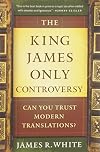
In this work, James White seeks to counter some of the claims of the more Cultic KJV-only folk, which is why White distinguishes the types of KJV-only proponents in the beginning of the book. White gives a good overview on textual criticism that is accessible to the lay person but also is deep enough to take down popular level KJV-only arguments (there aren’t any scholarly arguments for KJV-onlyism, at least not the type he’s trying to debunk.) Oftentimes, TR-onlyist scholars take personal issues with some of White’s arguments in favor of the Nestle-Åland text, but that’s another issue.The focus of the book is that Cultic KJV-onlyism, an ideological disease that has the symptoms of
You must hear/read from the KJV to be saved.
The KJV is the only Bible for the English speaking people
The KJV is 100 percent perfect and where it differs from the original languages the KJV is correct.
The KJV was re-inspired in 1611, making it better than the Hebrew and Greek we have today (though they would say the KJV is on par with the actual original autographs that the biblical writers wrote themselves.)
The King James is a beautiful translation and you can use it to the exclusion of all others, but don’t make it a salvation issue with your fellow Christians.
You must hear/read from the KJV to be saved.
The KJV is the only Bible for the English speaking people
The KJV is 100 percent perfect and where it differs from the original languages the KJV is correct.
The KJV was re-inspired in 1611, making it better than the Hebrew and Greek we have today (though they would say the KJV is on par with the actual original autographs that the biblical writers wrote themselves.)
The King James is a beautiful translation and you can use it to the exclusion of all others, but don’t make it a salvation issue with your fellow Christians.
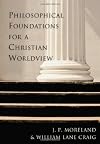
In this large volume (626 pages if we aren't counting the 'suggestions for further reading') Dr. William Lane Craig and Dr. J.P. Moreland spend some time educating Christians in key philosophical areas. Using John Wesley's expectations of a pastor as well as recognizing the current state of anti-intellectualism is many religious circles, Craig and Moreland push you to broaden your mind to these topics.
It is hefty, both in density of the book and the ideas in it, but it is worthwhile. You will start off with being introduced into philosophy, this includes a general overview of sound argument forms and why philosophy can be useful for religious folks.
They go through many topics such as Postmodernism, Epistemology, Skepticism, Dualism, Ontology and a ton of other topics.
For the few people concerned about Craig's possible model of the Trinity using reformed trinitarianism, social trinitarianism and using Apollonarius' ideas for reference, Craig doesn't commit the cardinal sin of trinitarianism heresy, despite what discernment blog you might have read that says otherwise. (9 times out of 10, objectors haven't even read the book or have it in their possession, yet still call it the primary object of their critique.)
Overall, Craig and Moreland have succeeded in my mind with this book, there is so much to say about these topics and this works as a good overview and introduction to them. I recommend it to everyone. Challenge yourself to really understand these subjects and if show more you aren't religious, read and mediate on the possibility that religion, in particular Christianity, can be a reasonable journey. show less
It is hefty, both in density of the book and the ideas in it, but it is worthwhile. You will start off with being introduced into philosophy, this includes a general overview of sound argument forms and why philosophy can be useful for religious folks.
They go through many topics such as Postmodernism, Epistemology, Skepticism, Dualism, Ontology and a ton of other topics.
For the few people concerned about Craig's possible model of the Trinity using reformed trinitarianism, social trinitarianism and using Apollonarius' ideas for reference, Craig doesn't commit the cardinal sin of trinitarianism heresy, despite what discernment blog you might have read that says otherwise. (9 times out of 10, objectors haven't even read the book or have it in their possession, yet still call it the primary object of their critique.)
Overall, Craig and Moreland have succeeded in my mind with this book, there is so much to say about these topics and this works as a good overview and introduction to them. I recommend it to everyone. Challenge yourself to really understand these subjects and if show more you aren't religious, read and mediate on the possibility that religion, in particular Christianity, can be a reasonable journey. show less
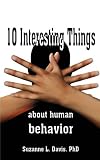
Suzanne L. Davis is not only educated and informed, but she is also hilarious. The examples she uses in the book to prove her point about the concepts of behavior in psychology are weird and out there, which is what makes them funny. (Like painting your nails in an airplane.)
The book is short and ends rather abruptly, which confirms my suspicions that Davis would be an excellent Twitter user.
She says a lot in these 56 pages, but you're left wanting more.
The book is short and ends rather abruptly, which confirms my suspicions that Davis would be an excellent Twitter user.
She says a lot in these 56 pages, but you're left wanting more.