
David Rieff
Author of Swimming in a Sea of Death: A Son's Memoir
About the Author
David Rieff is the author of Swimming in a Sea of Death; At the Point of a Gun; A Bed for the Night: Humanitarianism in Crisis; and Slaughterhouse: Bosnia and the Failure of the West. He lives in New York City.
Image credit: Red Diaz / Duende Publishing
Works by David Rieff
Going to Miami: Exiles, Tourists and Refugees in the New America (Florida Sand Dollar Books) (1987) 34 copies, 2 reviews
El oprobio del hambre: Alimentos, justicia y dinero en el siglo XXI (Pensamiento) (Spanish Edition) (2016) 2 copies
Associated Works
What Orwell Didn't Know: Propaganda and the New Face of American Politics (2007) — Contributor — 133 copies, 1 review
Tagged
Common Knowledge
- Birthdate
- 1952-09-28
- Gender
- male
- Relationships
- Rieff, Philip (father)
Sontag, Susan (mother)
Kaplan, Lawrence (colleague #1) - Nationality
- USA
- Birthplace
- Boston, Massachusetts, USA
- Associated Place (for map)
- Massachusetts, USA
Members
Reviews
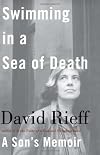
He needed more distance before trying to write about this. He's still too close, too devastated, too guilty. While it may have been therapeutic for him, I can't imagine Susan Sontag wanting these images of her suffering and intransigent clinging to the last shards of her life to define her now. It was well-written, but too perseverative and ruminative to be truly good literature. Harsh, but true for me.
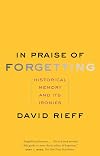
This slim volume by David Rieff has provided me with much food for thought. As I write this review, I am still digesting the material.
Some people believe his writing is pretentious, and this may be true. However, books like this are challenging to write. David Rieff prompted me to rethink my concepts of history. What is history? How do we remember it? Who creates these memories? Do they change, and how do they change?
Why does history leave the world of academics and inhabit the world of show more politicians?
Maybe we should forget. Maybe we should remember. How should we remember history?
David Rieff has written a thought-provoking book, which deserves to be read. show less
Some people believe his writing is pretentious, and this may be true. However, books like this are challenging to write. David Rieff prompted me to rethink my concepts of history. What is history? How do we remember it? Who creates these memories? Do they change, and how do they change?
Why does history leave the world of academics and inhabit the world of show more politicians?
Maybe we should forget. Maybe we should remember. How should we remember history?
David Rieff has written a thought-provoking book, which deserves to be read. show less

Pulling no punches, Rieff has written a damning insight into the current humanitarian care industry (and it has become an industry) has lost its way in the modern day. While showing great admiration for people who believe they are doing the right thing, Rieff exposes the problems with the current methods and thinking behind humanitarian intervention and aid, especially the loss of neutrality and the growth of advocacy for military intervention.
This is a fascinating book, and one that should show more be read by those who hold beliefs on either side of the humanitarian intervention debate. While this reader came to this book in the context of studying International Security, including the issue of humanitarian intervention, it would be of interest to anyone who has thought about the continuing humanitarian crises throughout the world and what should be done about them. Occasionally Rieff comes across as hyperbolic, and he almost loses the reader's sympathies, but he has the facts and experiences to back up what he is saying. Covering a breadth of organizations, situations and viewpoints, this is a powerful book that at the very least will make you think next time you hear calls for peacekeepers to intervene or are asked to donate to one of the multitude of relief organizations at work today. show less
This is a fascinating book, and one that should show more be read by those who hold beliefs on either side of the humanitarian intervention debate. While this reader came to this book in the context of studying International Security, including the issue of humanitarian intervention, it would be of interest to anyone who has thought about the continuing humanitarian crises throughout the world and what should be done about them. Occasionally Rieff comes across as hyperbolic, and he almost loses the reader's sympathies, but he has the facts and experiences to back up what he is saying. Covering a breadth of organizations, situations and viewpoints, this is a powerful book that at the very least will make you think next time you hear calls for peacekeepers to intervene or are asked to donate to one of the multitude of relief organizations at work today. show less

I could echo what Stephen Nimer or Jerome Groopman or Fred Appelbaum said, though I certainly must have gotten a good bit wrong.
A fairly random sentence from Swimming in a sea of death. A son's memoir, the book in which David Rieff describes the final nine months of Susan Sontag's, his mother, suffering and death from cancer.
Very little is said about Susan Sontag. She is the object of this journalistic report about her death. Instead of a throng of anonymous doctors around the bed, the show more author names them, all. The result is a dry and dull description, full of people who do not really matter.
Susan Sontag's journals, which are now being published, with the first of three volumes having appeared, is very careful about disclosing personal details about herself. It is very unlikely she would have approved of this type of memoir.
Swimming in a sea of death brings Susan Sontag down to the level of mortals. It shows that in death, we are all equal. The memoir is a gruesome read, that shows us that doctors are, in fact, still powerless in the face of many forms of cancer. show less
A fairly random sentence from Swimming in a sea of death. A son's memoir, the book in which David Rieff describes the final nine months of Susan Sontag's, his mother, suffering and death from cancer.
Very little is said about Susan Sontag. She is the object of this journalistic report about her death. Instead of a throng of anonymous doctors around the bed, the show more author names them, all. The result is a dry and dull description, full of people who do not really matter.
Susan Sontag's journals, which are now being published, with the first of three volumes having appeared, is very careful about disclosing personal details about herself. It is very unlikely she would have approved of this type of memoir.
Swimming in a sea of death brings Susan Sontag down to the level of mortals. It shows that in death, we are all equal. The memoir is a gruesome read, that shows us that doctors are, in fact, still powerless in the face of many forms of cancer. show less
Lists
Deathreads (1)
Awards


You May Also Like


Associated Authors
Statistics
- Works
- 22
- Also by
- 9
- Members
- 908
- Popularity
- #28,240
- Rating
- 3.7
- Reviews
- 11
- ISBNs
- 76
- Languages
- 7