
William Shawcross
Author of Queen Elizabeth the Queen Mother
About the Author
William Shawcross (born 28 May 1946, in Sussex, England) is a widely renowned writer and broadcaster. Shawcross was educated at Eton College and University College, Oxford. His articles have appeared in the Sunday Times, the Sunday Telegraph, the Washington Post and the Sydney Morning Herald. In show more 1995 he wrote and presented the three-part BBC television series Monarchy and in 2002, to tie-in with the Queen¿s Golden Jubilee, he again wrote and presented a landmark four-part BBC television series, Queen and Country, a revealing and intimate portrait of the Queen, and an absorbing study of the changing face of monarchy and of Britain during the past half-century. He lives in London and Cornwall. (Bowker Author Biography) show less
Works by William Shawcross
Deliver Us from Evil: Peacekeepers, Warlords and a World of Endless Conflict (2000) — Director — 227 copies, 2 reviews
Counting One's Blessings: The Selected Letters of Queen Elizabeth the Queen Mother (2012) 129 copies, 7 reviews
Justice and the Enemy: Nuremberg, 9/11, and the Trial of Khalid Sheikh Mohammed (2012) 40 copies, 3 reviews
Associated Works
Tagged
Common Knowledge
- Legal name
- Shawcross, William Hartley Hume
- Birthdate
- 1946-05-28
- Gender
- male
- Education
- University of Oxford (University College)
- Occupations
- journalist
- Organizations
- The Sunday Times
- Awards and honors
- Royal Victorian Order (Commander, 2011)
- Relationships
- Shawcross, Hartley (Père)
Winifred Mather, Joan (Mère)
Warner, Marina (Ex-épouse, 19 72)
Levin, Michal E. (Ex-épouse, 19 81
Polizzi, Olga (Epouse, 19 93)
Shawcross, Conrad (Fils) - Nationality
- UK
- Birthplace
- Sussex, England, UK
- Map Location
- England, UK
Members
Reviews
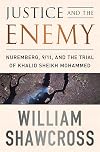
In the conclusion of Justice and the Enemy, William Shawcross writes "in an age when anti-Americanism is so easy, so fashionable, and so widespread, it needs repeating: America's commitment and sacrifices have, since the beginning of the twentieth century, been essential to the world's ability to resist nihilism." To anyone who recalls Shawcross's breakthrough book, Sideshow, in which he makes the case that the illegal bombing of Cambodia under Nixon and Kissinger lead directly to the show more triumph of the Khmer Rouge and the subsequent genocide, that sentence might seem rather startling. What the two books have in common, however, is a rigorous attention to the facts; a clear commitment to follow where the evidence and the logic leads, rather than beginning a discussion with opinions, formed out of principles or pre-conceived ideas.
Shawcross sets this book in the context of the Nuremberg trials, at which his father, Hartley Shawcross, was the chief British prosecutor. Being familiar with the thinking behind those legal proceedings and the principles that they embodied probably helped him shape ideas about what is possible and desirable in a new century and a new kind of war. This war, unlike those that dominated the landscape when the Geneva Convention was written, is one in which the combatants don't wear uniforms, don't declare war, won't negotiate for peace, won't surrender and won't respect legal proceedings of any kind -- including those that human rights activists want to see protect those combatants. (Certainly, it helped him evaluate arguments by those who say they want those jailed in Guantanamo to have the same rights as those Nazis tried in Nuremberg.) The question of what we do in a world whose rules have been shaped in a world dominated by nation states and when those rules were shaped in the expectation that they would apply to state actors, when non-state entities like al-Qaeda are the combatants, is one that is likely to dominate international affairs for at least the rest of this century -- after all it took from 1648 (the Treaty of Westphalia, acknowledging the nation state as the basic entity of diplomacy and warfare) until the early 20th century to codify the Geneva Conventions.
His argument boils down to this: since Nuremberg, we have faced two separate transformations, one in the nature of our legal system, with the rise of human rights; the other in the nature of war. In the post 9/11 environment, the two have clashed. He argues -- and provides a lot of support for his argument -- that by the standards and principles that governed Nuremberg, we're providing a lot more in the way of rights to combatants who, in contrast even to the Nazis, show little to no awareness of or respect for human rights. (Can one imagine even a Nazi kidnapping an 8 year old girl of their own ethnicity, strapping a bomb to her body and sending her into a crowd of police and civilians with orders to blow herself up, as happened in Pakistan?)
There are things that I think Shawcross overlooks here, notably the long-term fallout from such things as the stupidity of the invasion of Iraq and the extensive use of drones in Pakistan, but it's hard to quarrel with his logic. This is probably one of those books that everyone should read, regardless of their political beliefs, but in this polarized world, I suspect that won't happen. Shawcross is much more accepting of "enhanced interrogation" technicques than I am -- it may have worked in the case of Khalid Sheikh Mohammed, but it won't in the case of every "enemy combattant" and the damage we do by using it also can't be underestimated -- but he's right to point out the difficulties we have making an objective evaluation. We can never know what would have happened had KSM not been waterboarded, and produced a piece of intelligence that ultimately led to Osama bin Laden's hideout, for instance.
What I appreciate about Shawcross is that he understands ambivalence and grey areas; his opinions are based on facts and logical chains of thought, rather than preconceived views, in strong contrast to those of the likes of Fox News or publications like Harper's, which has developed such a tendency to put its agenda ahead of its evidence I can no longer read much of what it writes. Even if you don't share the author's conclusions or opinions, you can see how he reached them. In a world where people increasingly insist that we respect their opinions because they have opinions (forget about whether they are based on facts or weird theories) and where they only listen to those whose opinions they know they share, Shawcross is a breath of fresh air.
Provocative? Sure. But as the debate about Iran and what to do about Syria (which aren't distinct...) bubble away in the background, this is an interesting book to read. Shawcross is no dogmatic ideologue, and yet he's willing to wrestle with some of the favorite issues of both right and left. I've rated this 4.3 stars, rounding up to 4.5 rather than down to 4 stars. show less
Shawcross sets this book in the context of the Nuremberg trials, at which his father, Hartley Shawcross, was the chief British prosecutor. Being familiar with the thinking behind those legal proceedings and the principles that they embodied probably helped him shape ideas about what is possible and desirable in a new century and a new kind of war. This war, unlike those that dominated the landscape when the Geneva Convention was written, is one in which the combatants don't wear uniforms, don't declare war, won't negotiate for peace, won't surrender and won't respect legal proceedings of any kind -- including those that human rights activists want to see protect those combatants. (Certainly, it helped him evaluate arguments by those who say they want those jailed in Guantanamo to have the same rights as those Nazis tried in Nuremberg.) The question of what we do in a world whose rules have been shaped in a world dominated by nation states and when those rules were shaped in the expectation that they would apply to state actors, when non-state entities like al-Qaeda are the combatants, is one that is likely to dominate international affairs for at least the rest of this century -- after all it took from 1648 (the Treaty of Westphalia, acknowledging the nation state as the basic entity of diplomacy and warfare) until the early 20th century to codify the Geneva Conventions.
His argument boils down to this: since Nuremberg, we have faced two separate transformations, one in the nature of our legal system, with the rise of human rights; the other in the nature of war. In the post 9/11 environment, the two have clashed. He argues -- and provides a lot of support for his argument -- that by the standards and principles that governed Nuremberg, we're providing a lot more in the way of rights to combatants who, in contrast even to the Nazis, show little to no awareness of or respect for human rights. (Can one imagine even a Nazi kidnapping an 8 year old girl of their own ethnicity, strapping a bomb to her body and sending her into a crowd of police and civilians with orders to blow herself up, as happened in Pakistan?)
There are things that I think Shawcross overlooks here, notably the long-term fallout from such things as the stupidity of the invasion of Iraq and the extensive use of drones in Pakistan, but it's hard to quarrel with his logic. This is probably one of those books that everyone should read, regardless of their political beliefs, but in this polarized world, I suspect that won't happen. Shawcross is much more accepting of "enhanced interrogation" technicques than I am -- it may have worked in the case of Khalid Sheikh Mohammed, but it won't in the case of every "enemy combattant" and the damage we do by using it also can't be underestimated -- but he's right to point out the difficulties we have making an objective evaluation. We can never know what would have happened had KSM not been waterboarded, and produced a piece of intelligence that ultimately led to Osama bin Laden's hideout, for instance.
What I appreciate about Shawcross is that he understands ambivalence and grey areas; his opinions are based on facts and logical chains of thought, rather than preconceived views, in strong contrast to those of the likes of Fox News or publications like Harper's, which has developed such a tendency to put its agenda ahead of its evidence I can no longer read much of what it writes. Even if you don't share the author's conclusions or opinions, you can see how he reached them. In a world where people increasingly insist that we respect their opinions because they have opinions (forget about whether they are based on facts or weird theories) and where they only listen to those whose opinions they know they share, Shawcross is a breath of fresh air.
Provocative? Sure. But as the debate about Iran and what to do about Syria (which aren't distinct...) bubble away in the background, this is an interesting book to read. Shawcross is no dogmatic ideologue, and yet he's willing to wrestle with some of the favorite issues of both right and left. I've rated this 4.3 stars, rounding up to 4.5 rather than down to 4 stars. show less
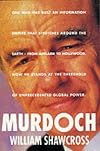
This is biography as it should be written. There is no attempt to ensure that the reader either loves or hates Rupert Murdoch. William Shawcross does his best to describe Murdoch's life in factual terms.
It is a consideration that I cannot see the eponymous hero returning, were he to write a biography. Rupert Murdoch is one of those people that I really do not understand: he truly seems to believe that his ownership of vast swathes of the world's media matters. In one sense, he is right, of show more course: Murdoch's empire has dragged the West down to levels of ignorance that are hard to believe: crass TV shows featuring young men and women reviling each other in crude sexual terms being just one example. As such, he has defined an era but, in the pages of history, will he merit a footnote? What has his life achieved? Pots of money but an inability to convince himself that he has worth.
You may have guessed, that I am not a fan. So, did the book just reinforce my prejudices? No. I had to admit to agreeing with Murdoch's desire for equality of opportunity, not outcome, although, I differ in that I want a safety net for those who don't shine. I also had to admire the way in which he would accept criticism: perhaps not from his employees, but he does not try to gag adverse remarks from his peers.
This book was written long before the latest sleaze allegations against the News of the World and, by association, Murdoch himself. it does, however, make it easier to believe that Rupert Murdoch may not have had direct knowledge of the way in which his satellites behaved. Murdoch does seem to rule by the old adage of giving people enough rope.... This book takes Murdoch up to, and just through, the near collapse of his empire in the early 1990's. In some ways, it is hard to accept that a company could become so vast whilst operating, almost exclusively, upon a day to day basis. There are numerous stories of Murdoch making instant decisions to launch a new title, or acquire a certain company with little thought as to the long term effect.
Murdoch is painted not so much as an evil man, as an amoral one. he seems to have no concept of educating the masses, genuinely believing that to give the people what they want is the be all and end all of his job. Murdoch was (and perhaps, still is) a king maker. His newspapers helped Margaret Thatcher, in the UK, and Reagan in America to obtain, and retain, power. He does not feel the need to do this honestly but, does not exploit the power for personal gain either. The company is all. show less
It is a consideration that I cannot see the eponymous hero returning, were he to write a biography. Rupert Murdoch is one of those people that I really do not understand: he truly seems to believe that his ownership of vast swathes of the world's media matters. In one sense, he is right, of show more course: Murdoch's empire has dragged the West down to levels of ignorance that are hard to believe: crass TV shows featuring young men and women reviling each other in crude sexual terms being just one example. As such, he has defined an era but, in the pages of history, will he merit a footnote? What has his life achieved? Pots of money but an inability to convince himself that he has worth.
You may have guessed, that I am not a fan. So, did the book just reinforce my prejudices? No. I had to admit to agreeing with Murdoch's desire for equality of opportunity, not outcome, although, I differ in that I want a safety net for those who don't shine. I also had to admire the way in which he would accept criticism: perhaps not from his employees, but he does not try to gag adverse remarks from his peers.
This book was written long before the latest sleaze allegations against the News of the World and, by association, Murdoch himself. it does, however, make it easier to believe that Rupert Murdoch may not have had direct knowledge of the way in which his satellites behaved. Murdoch does seem to rule by the old adage of giving people enough rope.... This book takes Murdoch up to, and just through, the near collapse of his empire in the early 1990's. In some ways, it is hard to accept that a company could become so vast whilst operating, almost exclusively, upon a day to day basis. There are numerous stories of Murdoch making instant decisions to launch a new title, or acquire a certain company with little thought as to the long term effect.
Murdoch is painted not so much as an evil man, as an amoral one. he seems to have no concept of educating the masses, genuinely believing that to give the people what they want is the be all and end all of his job. Murdoch was (and perhaps, still is) a king maker. His newspapers helped Margaret Thatcher, in the UK, and Reagan in America to obtain, and retain, power. He does not feel the need to do this honestly but, does not exploit the power for personal gain either. The company is all. show less
Counting One's Blessings: The Selected Letters of Queen Elizabeth the Queen Mother by William Shawcross
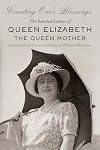
I adored the first two sections of this collection of letters...from the high-spirited, affectionate missives of Elizabeth Bowes-Lyon as a child to her mother, governess and friends; and later the jolly escapades of a young woman going out into society, after living through the horrors of WW1; and finally accepting the proposal of Bertie. Apart from her participation in a Big Game Hunt, I defy anyone not to be captivated with her personality.
I felt after that this collection could have done show more with a lot of pruning. As the Abdication results in them taking the throne, as the War breaks out...it felt like a lot of the letters could have been whittled out. SO MANY thank you letters to people you've never heard of; endless very similar letters to Lilibet (now the Queen), thanking her for a lovely weekend visiting. Many letters to racehorse trainers debating the finer points of an animal's performance.
It also felt like major events didn't seem to get a mention (despite the huge coveage of non-events.) The first thing that struck me was the death of her father. After her constant letters to her mother - and then her death- there's no mention of Father for many years. I thought he must have died too...and then suddenly he gets a brief acknowledgement in a letter. Similarly, after YEARS of writing regular, dutiful, apparently affectionate letters to her mother-in-law, Queen Mary, the death is not mentioned in any letter to anyone.
These are 'selected' letters, and we can never know if letters actually exist on these topics. Certainly this is a pretty anodyne read, the Queen Mother almost unfailingly positive, warm and effusive. The editor does tell us that she didn't commit anything to paper which might be misused, so this (well,the latter half) isn't entirely a stroll through her life - what she actually thought about royal disasters is never revealed.
620 pages was definitely enough. Not unenjoyable, but will be passing it on to a charity shop. show less
I felt after that this collection could have done show more with a lot of pruning. As the Abdication results in them taking the throne, as the War breaks out...it felt like a lot of the letters could have been whittled out. SO MANY thank you letters to people you've never heard of; endless very similar letters to Lilibet (now the Queen), thanking her for a lovely weekend visiting. Many letters to racehorse trainers debating the finer points of an animal's performance.
It also felt like major events didn't seem to get a mention (despite the huge coveage of non-events.) The first thing that struck me was the death of her father. After her constant letters to her mother - and then her death- there's no mention of Father for many years. I thought he must have died too...and then suddenly he gets a brief acknowledgement in a letter. Similarly, after YEARS of writing regular, dutiful, apparently affectionate letters to her mother-in-law, Queen Mary, the death is not mentioned in any letter to anyone.
These are 'selected' letters, and we can never know if letters actually exist on these topics. Certainly this is a pretty anodyne read, the Queen Mother almost unfailingly positive, warm and effusive. The editor does tell us that she didn't commit anything to paper which might be misused, so this (well,the latter half) isn't entirely a stroll through her life - what she actually thought about royal disasters is never revealed.
620 pages was definitely enough. Not unenjoyable, but will be passing it on to a charity shop. show less
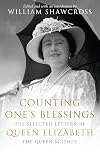
Apparently whenever Queen Elizabeth the Queen Mother (1900-2004) arrived at Claridge’s Hotel for afternoon tea the band would strike up The Teddy Bear’s Picnic and this is really the leitmotif of this volume of selected letters – entertaining, affectionate and full of fun. She was famously discrete; as she told Queen Mary ‘since I married I have made a strict rule never to discuss anything of Family matters with my own relations’, and there are noticeable gaps in the show more correspondence. There is only the briefest mention of resources: ‘I am going to spend my Marland Oil (when it goes up) in doing several things’. She was an astute in her assessment of King George V’s ‘Monarchical temper’. Even in the 1920s she despaired of press intrusion (‘How beastly the papers are – nothing but lies!) and she could not conceal her antipathy to political opponents: ‘I am extremely anti-Labour.’ There are glimpses of the Abdication Crisis and the toll it took on both Queen Elizabeth and King George VI but she felt ‘Inadequate, but unfrightened’, as she told Osbert Sitwell, and they both prayed ‘most sincerely that we shall not fail our country’, as she confessed to the Archbishop of Canterbury. There is also a delightful susceptibility to dashing men throughout her life. On the way to Glamis, in 1915, ‘Two most beautiful sailors were also travelling in the same corridor. [...] Rather amusing what?’ In 1958 she was taken with Australian cowboys: ‘Very tall, with long legs encased in tight trousers, blue eyes, a drawl & a Stetson – they are too charming for words’.
William Shawcross’s selection itself is discrete but fascinating, especially mixing the letters with her wartime broadcasts. As her life progresses the sense of fun increases, mixed with foreign tours and racing interests. On one friend’s death she wrote ‘How wonderful to have lived a life ... spreading gaiety & kindness around you, & goodness & courage as well.’ She could have been writing of herself. Early in her royal life, she apologised to a friend as ‘my pen rushes along these little lines leaving sad drivel for you to read I fear.’ No one picking up this rather weighty volume would agree. show less
William Shawcross’s selection itself is discrete but fascinating, especially mixing the letters with her wartime broadcasts. As her life progresses the sense of fun increases, mixed with foreign tours and racing interests. On one friend’s death she wrote ‘How wonderful to have lived a life ... spreading gaiety & kindness around you, & goodness & courage as well.’ She could have been writing of herself. Early in her royal life, she apologised to a friend as ‘my pen rushes along these little lines leaving sad drivel for you to read I fear.’ No one picking up this rather weighty volume would agree. show less
Lists
Awards


You May Also Like


Associated Authors
Statistics
- Works
- 18
- Also by
- 1
- Members
- 2,078
- Popularity
- #12,364
- Rating
- 3.8
- Reviews
- 29
- ISBNs
- 93
- Languages
- 6
