
Sarah Bradford (1) (1938–)
Author of Lucrezia Borgia: Life, Love, and Death in Renaissance Italy
For other authors named Sarah Bradford, see the disambiguation page.
About the Author
Sarah Bradford is a historian & biographer. She is the best-selling author of several biographies including "Disraeli," selected as a "New York Times" Notable Book of the Year; "George VI," "Prince Grace," & "The New York Times" bestseller "Elizabeth." (Bowker Author Biography)
Image credit: Sarah Bradford, October, 2000 at The Carlyle Hotel in New York City
Works by Sarah Bradford
Associated Works
Tagged
Common Knowledge
- Canonical name
- Bradford, Sarah
- Legal name
- Bradford, Sarah Mary Malet
- Birthdate
- 1938-09-03
- Gender
- female
- Education
- St. Mary's Convent, Shaftesbury, Dorset, England, UK
University of Oxford (Lady Margaret Hall ∙ History) - Occupations
- historian
biographer - Organizations
- Christie's
- Relationships
- William Maxwell David Ward, 8th Viscount Bangor (husband)
- Nationality
- UK
- Birthplace
- Bournemouth, Dorset, England, UK
- Places of residence
- London, England, UK
- Associated Place (for map)
- England, UK
Members
Reviews
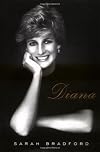
Thirteen years after her untimely death, Diana, Princess of Wales still polarises opinions. Was she a beautiful, innocent humanitarian driven to her death by hostile forces beyond her control? Or was she a manipulative deceiver, using the media to her advantage and thus, unwittingly, unleashing a monster that would eventually destroy her? Almost everyone has their own view on this vexed question but, as Sarah Bradford attempts to demonstrate in this admirably balanced biography, the truth show more probably lies somewhere between the two extremes.
Bradford has gone to great lengths, I suspect, to get a fair overview of her subject. She's consulted Diana's friends and supporters, and she's also sought the views of those who were less impressed by her. She examines every period of Diana's life, from her troubled childhood to her all-too-brief days as a carefree girl-about-town, her horribly ill-judged marriage, her divorce, and her last months as a single lady. On the way we learn about a complicated woman who could certainly be manipulative, untruthful, inconsiderate and temperamental - but also a woman possessed of a genuine compassion and humanity, someone who people almost could not help but love.
And yet ... somehow, after reading this, I feel like I understand Diana less than ever. It's a feature of many personalities, of course, that the more closely they are scrutinised the less clear they become, but I suppose I was hoping to somehow arrive at a sharper picture of the Princess. It's true that Bradford displays an almost encyclopaedic knowledge of the actual events in Diana's life, but the personality underlying those events always remains somewhat mysterious. Perhaps, indeed, that's why Diana is an icon: she keeps us guessing.
My own opinion, after reading this? A sometimes difficult woman who was ultimately more sinned against than sinning. A guess, of course - I don't know for sure. We probably never will. However, if you want to try to uncover the truth for yourself, this book would be a good place to start. show less
Bradford has gone to great lengths, I suspect, to get a fair overview of her subject. She's consulted Diana's friends and supporters, and she's also sought the views of those who were less impressed by her. She examines every period of Diana's life, from her troubled childhood to her all-too-brief days as a carefree girl-about-town, her horribly ill-judged marriage, her divorce, and her last months as a single lady. On the way we learn about a complicated woman who could certainly be manipulative, untruthful, inconsiderate and temperamental - but also a woman possessed of a genuine compassion and humanity, someone who people almost could not help but love.
And yet ... somehow, after reading this, I feel like I understand Diana less than ever. It's a feature of many personalities, of course, that the more closely they are scrutinised the less clear they become, but I suppose I was hoping to somehow arrive at a sharper picture of the Princess. It's true that Bradford displays an almost encyclopaedic knowledge of the actual events in Diana's life, but the personality underlying those events always remains somewhat mysterious. Perhaps, indeed, that's why Diana is an icon: she keeps us guessing.
My own opinion, after reading this? A sometimes difficult woman who was ultimately more sinned against than sinning. A guess, of course - I don't know for sure. We probably never will. However, if you want to try to uncover the truth for yourself, this book would be a good place to start. show less
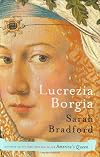
You can’t get very deep into a history of the Borgia family without thinking “Mario Puzo should have written this book.” (Apparently Puzo thought so, too, because he was working on a Borgia novel when he died). The Borgias have always been convenient villains for novels, plays, operas and movies about the Italian Renaissance, and certainly Lucrezia’s older brother Cesare (supposedly the model for Machiavelli’s The Prince) and her father Rodrigo were nasty pieces of work. However, show more Lucrezia herself seems more villainized than villainess.
Lucrezia (b. 1480) was the sixth of nine illegitimate offspring of Rodrigo Borgia. It was not, of course, unusual for men to have illegitimate children at that time, although the fact that her father was a Cardinal and later (1492) bought his way into being Pope Alexander VI did cause some minor comment. (The previous Pope, Innocent VIII, had sixteen children, so nine was probably not seen as excessive). Her father quickly used her as a political tool; she was betrothed at 10 and again at 11 to minor Spanish nobles, but after Rodrigo became Pope he began aiming higher. She was married at 13 to Giovanni Sforza, Count of Pessaro; however, the Pope quickly decided that the Sforzas were not sufficiently important for an alliance and annulled the wedding on the grounds of nonconsumation. (Giovanni was highly insulted by this and offered to perform with any woman of the Pope’s choice in front of a Papal legate, but this was rejected). While waiting for her next marriage (to Alfonso d’Aragona, Duke of Bisceglie and member of the royal family of Naples) she became involved in one of the situations that tarnished her reputation; she apparently had an illegitimate son of her own. The father of this child was variously reputed to be a Papal officer, Pedro Calderon; or her brother Cesare; or her father the Pope. Calderon was unable to confirm or deny the rumor, since he had meanwhile died in a tragic accident after going swimming in the Tiber inside a sack with his wrists tied to his ankles. This apparently didn’t bother Alfonso, since he married Lucrezia anyway; however, Alfonso somehow got on the bad side of Cesare and was ambushed by bandits on the Vatican steps. Alfonso turned out to be handier with a rapier than the bandits expected, and although badly wounded, managed to drive them off. He was carried to a room in the Vatican and seemed to be recovering, when one of Cesare’s lieutenants showed up with a warrant for Alfonso’s arrest. Lucrezia, faithfully at her husband’s bedside, ran off to get the Pope; unfortunately, when she returned with him only a few minutes later Alfonso had fallen out of bed, all his wounds had reopened, and he’d bled to death. This gave the Pope an opportunity to set up another marriage, this time to Alfonso Este, heir to the Duchy of Ferrara. Lucrezia initially demurred, complaining that her husbands were very unlucky, but the wedding eventually came off and Lucrezia spent the rest of her life as Duchess of Ferrara. She and Alfonso apparently got along well enough, since they had seven children, four of which survived; however Lucrezia was constantly sickly (possibly because Alfonso, who had a taste for coarse prostitutes, gave her syphilis) and died in childbirth in 1519.
So where did Lucrezia’s reputation as a seductress and murderess come from? All her contemporaries, even the ones that hated her, described her as beautiful and graceful; none ever accused her of murder or even cruelty (although, admittedly you had to be pretty vicious to qualify as “cruel” in Renaissance Italy; one of the favorite spectator sports in Ferrara was watching blindfolded men attempt to beat a pig to death). The accusation of incest was made repeatedly by many, including her ex-husband Giovanni Sforza; and Lucrezia did seem quite devoted to Cesare, even after he killed her second husband (when Cesare died in a minor battle she was inconsolable and her ladies reported she repeated his name all night). She may have engaged in some extramarital dalliances while Duchess of Ferrara; candidates include the poet Pietro Bembo, the poet Ercole Strozzi, and Francesco Gonzaga, Duke of Mantua. There’s no evidence that any of these went beyond “courtly love”, although Strozzi did turn up deceased on a street corner in Ferrara from twenty-nine stab wounds, possibly a subtle hint from the Duke that he had gone a little too far with the Duchess.
Of the two biographies, Sarah Bradford’s is the most recent. Bradford includes a handy map of Italy, genealogical charts of the Borgia, Este, and d’Aragona families, and pictures of the main characters. Bradford previously wrote a biography of Cesare Borgia, and he and other members of the Borgia family besides Lucrezia figure prominently in her book. Unfortunately, like most historical figures of the Renaissance, contemporary documentation for Lucrezia is sparse. Lucrezia was sort of the Princess Diana of her time, and much that was written about her concerned the way she dressed, the jewelry she wore, and the ladies-in-waiting she picked. Thus Bradford is often reduced to whole paragraphs describing Lucrezia’s costume:
“Lucrezia wore a robe of drawn gold garnished with crimson satin with sleeves in the Castilian style and a cloak slashed with mulberry satin lined with sable, and a necklace of large pearls with a pendant spinel, pierced with a pendant pear-shaped pearl.”
Some of Lucrezia’s letters are extant, but they are mostly straightforward reports to the Duke while he was away campaigning, without much personal material. Bradford limits her speculation about Lucrezia’s personal feelings, emotions, etc., which makes for correct history but dull reading.
The biography by Maria Bellonci is older, originally written in Italian in 1939 and translated to English in 1953. Since the original was published at the high tide of Mussolini’s Italy, I was curious to see if there were any concessions to Fascist ideology. I couldn’t find any, other than some minor bits about the “national characteristics” of the French, Italians, and Spaniards; perhaps there was more that was edited out for the English edition. Unlike Bradford, Bellonci is not above speculating about Lucrezia’s emotions, attitudes and motives, and likes to use “romance novel” language while doing so. Consider, for example, Bradford’s description of Lucrezia’s death:
“Lucrezia died that night “at the fifth hour” just over two months past her thirty-ninth birthday”
And now Bellonci’s
“Perhaps with that magic chime, coming from such a remote past, a human eternity, there came serenity; perhaps her terrors dissolved and gave place to an infinite weariness, like peace. The moment had come when fear was over. … And she gave a sigh, as she had sighed when told it was time to leave.”
Like Bradford, Bellonci also resorts to elaborate descriptions of Lucrezia’s outfits, but her language makes them more readable; her entire book is more readable than Bradford’s but her interpolations are so great that it’s almost a historical novel rather than a history. The two books together provide a pretty good “look and feel” for Renaissance Italy; both authors do the best they can with their approaches. show less
Lucrezia (b. 1480) was the sixth of nine illegitimate offspring of Rodrigo Borgia. It was not, of course, unusual for men to have illegitimate children at that time, although the fact that her father was a Cardinal and later (1492) bought his way into being Pope Alexander VI did cause some minor comment. (The previous Pope, Innocent VIII, had sixteen children, so nine was probably not seen as excessive). Her father quickly used her as a political tool; she was betrothed at 10 and again at 11 to minor Spanish nobles, but after Rodrigo became Pope he began aiming higher. She was married at 13 to Giovanni Sforza, Count of Pessaro; however, the Pope quickly decided that the Sforzas were not sufficiently important for an alliance and annulled the wedding on the grounds of nonconsumation. (Giovanni was highly insulted by this and offered to perform with any woman of the Pope’s choice in front of a Papal legate, but this was rejected). While waiting for her next marriage (to Alfonso d’Aragona, Duke of Bisceglie and member of the royal family of Naples) she became involved in one of the situations that tarnished her reputation; she apparently had an illegitimate son of her own. The father of this child was variously reputed to be a Papal officer, Pedro Calderon; or her brother Cesare; or her father the Pope. Calderon was unable to confirm or deny the rumor, since he had meanwhile died in a tragic accident after going swimming in the Tiber inside a sack with his wrists tied to his ankles. This apparently didn’t bother Alfonso, since he married Lucrezia anyway; however, Alfonso somehow got on the bad side of Cesare and was ambushed by bandits on the Vatican steps. Alfonso turned out to be handier with a rapier than the bandits expected, and although badly wounded, managed to drive them off. He was carried to a room in the Vatican and seemed to be recovering, when one of Cesare’s lieutenants showed up with a warrant for Alfonso’s arrest. Lucrezia, faithfully at her husband’s bedside, ran off to get the Pope; unfortunately, when she returned with him only a few minutes later Alfonso had fallen out of bed, all his wounds had reopened, and he’d bled to death. This gave the Pope an opportunity to set up another marriage, this time to Alfonso Este, heir to the Duchy of Ferrara. Lucrezia initially demurred, complaining that her husbands were very unlucky, but the wedding eventually came off and Lucrezia spent the rest of her life as Duchess of Ferrara. She and Alfonso apparently got along well enough, since they had seven children, four of which survived; however Lucrezia was constantly sickly (possibly because Alfonso, who had a taste for coarse prostitutes, gave her syphilis) and died in childbirth in 1519.
So where did Lucrezia’s reputation as a seductress and murderess come from? All her contemporaries, even the ones that hated her, described her as beautiful and graceful; none ever accused her of murder or even cruelty (although, admittedly you had to be pretty vicious to qualify as “cruel” in Renaissance Italy; one of the favorite spectator sports in Ferrara was watching blindfolded men attempt to beat a pig to death). The accusation of incest was made repeatedly by many, including her ex-husband Giovanni Sforza; and Lucrezia did seem quite devoted to Cesare, even after he killed her second husband (when Cesare died in a minor battle she was inconsolable and her ladies reported she repeated his name all night). She may have engaged in some extramarital dalliances while Duchess of Ferrara; candidates include the poet Pietro Bembo, the poet Ercole Strozzi, and Francesco Gonzaga, Duke of Mantua. There’s no evidence that any of these went beyond “courtly love”, although Strozzi did turn up deceased on a street corner in Ferrara from twenty-nine stab wounds, possibly a subtle hint from the Duke that he had gone a little too far with the Duchess.
Of the two biographies, Sarah Bradford’s is the most recent. Bradford includes a handy map of Italy, genealogical charts of the Borgia, Este, and d’Aragona families, and pictures of the main characters. Bradford previously wrote a biography of Cesare Borgia, and he and other members of the Borgia family besides Lucrezia figure prominently in her book. Unfortunately, like most historical figures of the Renaissance, contemporary documentation for Lucrezia is sparse. Lucrezia was sort of the Princess Diana of her time, and much that was written about her concerned the way she dressed, the jewelry she wore, and the ladies-in-waiting she picked. Thus Bradford is often reduced to whole paragraphs describing Lucrezia’s costume:
“Lucrezia wore a robe of drawn gold garnished with crimson satin with sleeves in the Castilian style and a cloak slashed with mulberry satin lined with sable, and a necklace of large pearls with a pendant spinel, pierced with a pendant pear-shaped pearl.”
Some of Lucrezia’s letters are extant, but they are mostly straightforward reports to the Duke while he was away campaigning, without much personal material. Bradford limits her speculation about Lucrezia’s personal feelings, emotions, etc., which makes for correct history but dull reading.
The biography by Maria Bellonci is older, originally written in Italian in 1939 and translated to English in 1953. Since the original was published at the high tide of Mussolini’s Italy, I was curious to see if there were any concessions to Fascist ideology. I couldn’t find any, other than some minor bits about the “national characteristics” of the French, Italians, and Spaniards; perhaps there was more that was edited out for the English edition. Unlike Bradford, Bellonci is not above speculating about Lucrezia’s emotions, attitudes and motives, and likes to use “romance novel” language while doing so. Consider, for example, Bradford’s description of Lucrezia’s death:
“Lucrezia died that night “at the fifth hour” just over two months past her thirty-ninth birthday”
And now Bellonci’s
“Perhaps with that magic chime, coming from such a remote past, a human eternity, there came serenity; perhaps her terrors dissolved and gave place to an infinite weariness, like peace. The moment had come when fear was over. … And she gave a sigh, as she had sighed when told it was time to leave.”
Like Bradford, Bellonci also resorts to elaborate descriptions of Lucrezia’s outfits, but her language makes them more readable; her entire book is more readable than Bradford’s but her interpolations are so great that it’s almost a historical novel rather than a history. The two books together provide a pretty good “look and feel” for Renaissance Italy; both authors do the best they can with their approaches. show less
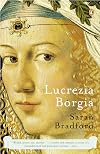
A pretty fun read on a controversial historical figure. The prose could get a bit speculative/purpley at times, but overall I felt it was decently balanced, and like any well-written biography, it contains some pretty cool trivia about life and politics in Lucrezia's time so you get a better idea of the choices and limitations Lucrezia had.
Quotations from letters and firsthand accounts also help to illustrate the historicity of this book.
Quotations from letters and firsthand accounts also help to illustrate the historicity of this book.
Long vilified as a murderess, conspirator and partner to incest, Lucrezia Borgia was overdue for a reappraisal by a serious historian able to blast past the stereotypes. Sarah Bradford does exactly that by dint of meticulous research revealing the fascinating if turbulent life of the daughter of Pope Alexander VI. Used by her father to advance his political ambitions, Lucrezia endured an early marriage that was annulled under questionable circumstances, the brutal murder of her second show more husband, and the destruction of her own reputation at the hands of her family’s enemies. She emerged from all that as a woman of strength and grace, finding a degree of stability and even contentment in a third marriage that made her Duchess of Ferrera. Bradford brings Lucrezia and her world vividly to life, in the process raising provocative questions about the need to re-evaluate the role of women in general throughout history. show less
Lists
Awards


You May Also Like


Associated Authors
Statistics
- Works
- 14
- Also by
- 2
- Members
- 2,669
- Popularity
- #9,616
- Rating
- 3.5
- Reviews
- 32
- ISBNs
- 190
- Languages
- 9


