

Michael Ignatieff
Author of Isaiah Berlin: A Life
About the Author
Michael Ignatieff, born in Toronto in 1947. But at the age of 11, Ignatieff was sent to Toronto to attend Upper Canada College as a boarder in 1959. At UCC, Ignatieff was elected a school prefect as Head of Wedd's House, was the captain of the varsity soccer team, and served as editor-in-chief of show more the school's yearbook. As well, Ignatieff volunteered for the Liberal Party during the 1965 federal election by canvassing the York South riding. He resumed his work for the Liberal Party in 1968, as a national youth organizer and party delegate for the Pierre Elliott Trudeau party leadership campaign. He then went on to continue his education at the University of Toronto and Harvard and Cambridge universities. In 1976, Ignatieff completed his Ph.D in History at Harvard University. He was granted a Cambridge M.A. by incorporation in 1978 on taking up a fellowship at King's College there. Michael Ignatieff has written television programs for the BBC, novels, and works of nonfiction. He has also authored essays and reviews for several publications including The New York Times. From 1990-93, he wrote a weekly column on international affairs for The Observer. His family memoir, The Russian Album, received Canada's Governor General Award in 1988. His second novel, Scar Tissue, was short-listed for the Booker Prize in 1993. Other nonfiction works include A Just Measure of Pain, the Penitentiary in the Industrial Revolution and the Warrior's Honor: Ethic War and the Modern Conscience. (Bowker Author Biography) show less
Series
Works by Michael Ignatieff
Just Measure of Pain: The Penitentiary in the Industrial Revolution 1750-1850 (Peregrine Books) (1978) 64 copies
Wealth and Virtue: The Shaping of Political Economy in the Scottish Enlightenment (1983) — Editor — 22 copies
Troost - Als licht in donkere tijden 3 copies
Getting Iraq Wrong (Article) 1 copy
Los derechos humanos como politica e idolatria/ Human Rights as Politics and Idolatry (Estado y Sociedad/ State and Society) (2003) 1 copy
Magnum Degrees 1 copy
Associated Works
The Hedgehog and the Fox: An Essay on Tolstoy's View of History (1953) — Foreword, some editions; Foreword, some editions — 846 copies, 7 reviews
Torture: Does It Make Us Safer? Is It Ever OK? A Human Rights Perspective (2005) — Contributor — 48 copies, 1 review
Human Rights in the World Community: Issues and Action (Pennsylvania Studies in Human Rights) (1989) — Contributor — 35 copies
Tagged
Common Knowledge
- Legal name
- Ignatieff, Michael Grant
- Birthdate
- 1947-05-12
- Gender
- male
- Education
- Upper Canada College
University of Toronto (BA | 1969 | Trinity College)
University of Oxford
Harvard University (Ph.D | History) - Occupations
- historian
university professor
politician - Organizations
- University of British Columbia
King's College, Cambridge
Harvard University
Liberal Party of Canada
Canadian Parliament
The Globe and Mail - Awards and honors
- Privy Council
CM
Princess of Asturias Award for Social Sciences 2024 (Spanish: Premios Princesa de Asturias, Asturian: Premios Princesa d'Asturies)) - Relationships
- Berlin, Isaiah (teacher)
Ignatieff, George (father)
Grant, George M. (great-grandfather)
Grant, William Lawson (grandfather)
Grant, George Parkin (uncle) - Nationality
- Canada
- Birthplace
- Toronto, Ontario, Canada
- Places of residence
- Ottawa, Ontario, Canada
Toronto, Ontario, Canada
Cambridge, Massachusetts, USA - Associated Place (for map)
- Ontario, Canada
Members
Reviews
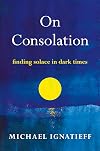
I confess as a hospital/hospice chaplain, that I did not expect this book about Consolation to be consoling! I thought I would just pick through it quickly and try not to add to my own day's burdens. What a surprise to discover a rich unfolding of resources for healing drawn from history -- from the models of men and women who suffered and searched for hope. The Author, a highly-educated politician and scholar, joins us to those searches. He exposes a beautiful and powerful Tradition of our show more finest people consoling themselves and others.
Many historians have compiled biographies of the "giants" upon whose shoulders we cling. Few have so consistently explored a theme of suffering. Ignatieff does this with many credits to "the women" who have been at the scene. Thus we view layers and echoes of mental, physical and emotional struggles. Ignatieff did marry a feminist, and here we see the inclusion of at least credits to the women who enabled, in so many cases, the writers of the past.
By walking us through the lives of writers who searched for consolation, Ignatieff gives concrete examples of their successes and failures. As for the women, even where actual women were not available to them in their suffering, Boethius and Dante created powerful images of succoring and alluring women, and perhaps found some consolation in writing. Dante was so inspired by the "imagined" Muse--Wisdom--of Boethius, that in the same ruin of Ravenna 800 years later, and in the middle of a Pandemic, Dante consoled himself by writing The Inferno.
As we gaze in horror upon a collapsing world, Ignatieff offers practical models of Consolation. Never failing to include everyone, this politician uses religious language in referring to "the calling of politics". He summons leaders, and all who suffer, to assume responsibility to guide frightened men and women into the future. [195]
The models of consolation are drawn from some twenty individuals, starting with the anonymous author or authors of the oldest book of the Bible, Book of Job. Before there was holiness and justification, there was naked Theodicy sitting in ashes of anger and agony.
Ignatieff traces the search for consolation across our narrative traditions -- from the Hebrew (Book of Job, Psalms), Greek (Plato, Stoics), Roman (Cicero, Aurelius), and Christian (Paul, Augustine). He then moves us seamlessly into the terroir of imagination in the writings of Boethius, Dante, Montaigne, Hume, Condorcet, Karl Marx, Lincoln, and Max Weber. After the annihilating horrors of WWII, he again moves us to the "consolations of witness" by poets Anna Akhmatova and Czeslaw Milosz, Shoah survivor Primo Levi, and Miklos Radnoti.
Albert Camus experienced the spread of fascism in parallel with an actual plague, the 1941 typhus epidemic in his homeland, Algeria. With an increasing focus, Camus began studying the accounts of previous plagues. He witnessed the fall of republics and the rise of fascism. He saw the cruelty of thugs as a virulent contagion killing the good and beautiful. As a witness, "He knew he had to find a way to capture what it felt like to live in a time without hope, without narrative, without prospects of escape." Today too, Ignatieff calls us to find our narratives. It is no longer tenable to treat life under the pandemic contagion of idiots as "normal". In the dialogues of Camus, he exposes "fake news".
Indeed his fury over "fake" consolation enables him to actively join the resistance to fascist occupation. [219]
A thread of moral questioning runs through this work. It makes me see that the spectacle of who is choosing to aid, abet, or apologize and cover for greed and cruelty is all around us. Ignatieff uses questions like a teacher. And continuing to use models, he concludes with Vaclav Havel, and Cicely Saunders.
Doctor Saunders is the founder of the Hospice movement which creates space for dignified death. She devoted fifty years of her life to identifying the components of "a Good Death": Relief from pain, peace and quiet, access or presence of loved ones, and the prospect of an end to suffering. Oxygen administered through a plastic nose tube is perhaps not one of the elements of a Good Death. What exactly is our Science prolonging? show less
Many historians have compiled biographies of the "giants" upon whose shoulders we cling. Few have so consistently explored a theme of suffering. Ignatieff does this with many credits to "the women" who have been at the scene. Thus we view layers and echoes of mental, physical and emotional struggles. Ignatieff did marry a feminist, and here we see the inclusion of at least credits to the women who enabled, in so many cases, the writers of the past.
By walking us through the lives of writers who searched for consolation, Ignatieff gives concrete examples of their successes and failures. As for the women, even where actual women were not available to them in their suffering, Boethius and Dante created powerful images of succoring and alluring women, and perhaps found some consolation in writing. Dante was so inspired by the "imagined" Muse--Wisdom--of Boethius, that in the same ruin of Ravenna 800 years later, and in the middle of a Pandemic, Dante consoled himself by writing The Inferno.
As we gaze in horror upon a collapsing world, Ignatieff offers practical models of Consolation. Never failing to include everyone, this politician uses religious language in referring to "the calling of politics". He summons leaders, and all who suffer, to assume responsibility to guide frightened men and women into the future. [195]
The models of consolation are drawn from some twenty individuals, starting with the anonymous author or authors of the oldest book of the Bible, Book of Job. Before there was holiness and justification, there was naked Theodicy sitting in ashes of anger and agony.
Ignatieff traces the search for consolation across our narrative traditions -- from the Hebrew (Book of Job, Psalms), Greek (Plato, Stoics), Roman (Cicero, Aurelius), and Christian (Paul, Augustine). He then moves us seamlessly into the terroir of imagination in the writings of Boethius, Dante, Montaigne, Hume, Condorcet, Karl Marx, Lincoln, and Max Weber. After the annihilating horrors of WWII, he again moves us to the "consolations of witness" by poets Anna Akhmatova and Czeslaw Milosz, Shoah survivor Primo Levi, and Miklos Radnoti.
Albert Camus experienced the spread of fascism in parallel with an actual plague, the 1941 typhus epidemic in his homeland, Algeria. With an increasing focus, Camus began studying the accounts of previous plagues. He witnessed the fall of republics and the rise of fascism. He saw the cruelty of thugs as a virulent contagion killing the good and beautiful. As a witness, "He knew he had to find a way to capture what it felt like to live in a time without hope, without narrative, without prospects of escape." Today too, Ignatieff calls us to find our narratives. It is no longer tenable to treat life under the pandemic contagion of idiots as "normal". In the dialogues of Camus, he exposes "fake news".
Indeed his fury over "fake" consolation enables him to actively join the resistance to fascist occupation. [219]
A thread of moral questioning runs through this work. It makes me see that the spectacle of who is choosing to aid, abet, or apologize and cover for greed and cruelty is all around us. Ignatieff uses questions like a teacher. And continuing to use models, he concludes with Vaclav Havel, and Cicely Saunders.
Doctor Saunders is the founder of the Hospice movement which creates space for dignified death. She devoted fifty years of her life to identifying the components of "a Good Death": Relief from pain, peace and quiet, access or presence of loved ones, and the prospect of an end to suffering. Oxygen administered through a plastic nose tube is perhaps not one of the elements of a Good Death. What exactly is our Science prolonging? show less
 This review was written for LibraryThing Early Reviewers.
Summary: On how significant figures through the ages have found comfort amid tragedy and hard times, enabling them to press on with hope and equanimity.
Finding consolation, the solace that enables us to face tragedy and not relent nor give way to despair, has not been a theoretical exercise in the past pandemic years. Many of us have grieved the untimely deaths of friends and loved ones, and the rancorous discord of our public health debates, while healthcare workers dealt with multiple show more deaths every day during the peak of the pandemic.
In On Consolation, Michael Ignatieff, novelist, columnist, sometime politician, and historian of ideas, explores how people through the ages have found solace when faced with the worst life can throw at one–war, plague, tragic deaths. Ignatieff writes his book particularly with those in mind who reject the comfort offered by traditional religion. How do those who do not embrace a religious faith find consolation? He would contend that many have and that we may find help from them.
He begins with Job and the Psalms of lament. These do not offer answers for Ignatieff, but model the “doubt that is intrinsic to belief” and their preservation affirms that we are not the first to ask these questions. He then turns to Paul, contending that when Paul, as an aging man realized he may not live to see the return of the Messiah, turned to love as the sign of what the God he does not see is like (even though the text Ignatieff cites is one of Paul’s earliest letters, written at a time he was bidding people to be watchful for Messiah’s return). I think Ignatieff misinterprets Paul, though noting the theme of love that remains is an important observation, and one that runs through all Paul’s letters.
He explores the great conflict in Cicero’s loss of his daughter between the self-command of Stoicism that did not allow the show of emotion and his deep grief. Consolation comes from one’s male peers for that self-command. And sadly, men have been holding back their tears since. For Marcus Aurelius, consolation came from fulfilling his duties, even amid loneliness and loss. Boethius, facing execution contemplates his death and his fear of how it would come and finds consolation in his writing, both in the knowing of himself and the contemplation of God that enabled him to endure. And he hoped that he would be remembered, and he is.
In Goya’s The Burial of the Count of Orgaz, Ignatieff identifies our longing for timelessness in the elongated figures of Goya. Montaigne points us in the other direction. We find consolation in our love of life, the succession of pleasures, pains, and indignities of our embodied existence that signals we are yet alive. For David Hume, consolation came in the form of an unsent letter as death approached, summing up his life and that he had been true to his ambitions.
Condorcet, facing his own death in the French revolution, found hope in the idea of historical progress and the progressive perfectibility of man. Marx was similar in some ways, envisioning a utopia beyond capitalism, and a materialist grasp of life in which consolation was no longer necessary if a just world order can be attained. Lincoln found consolation in the humility that renounced vengeance for reconciliation, drawing upon a store of biblical wisdom.
For Mahler, he worked out consolation in his music, supremely perhaps in the Kindertotenleider, adapting five Ruckert poems and the lieder style, to trace a journey of coming to acceptance of the death of a child. For Weber, consolation took the form of finding meaning with one’s calling, in a world without God, where calling may only arise from within the self. For several, Akhmatova, Levi, and Radnoti, consolation as survivors of the Holocaust came in the form of faithful witness. Camus wrestled with what it was to live outside the grace that offers final consolation, concluding that living with the grace that accompanies another at life’s extremities is the consolation afforded us.
The final individual focused on is Cicely Saunders, who founded the modern hospice movement. Her consolation was the compassion that relentlessly sought to create the conditions physically, socially, psychologically, and spiritually. Her watchword was that of Christ in Gethsemane: “Watch with me” and she created a setting where one could reflect on the shape of one’s live among their loved ones. She helped people find closure and console those from whom they would soon be parted.
This book might have been called “the varieties of consolation” and what this suggests to me is that in a world where transcendent belief has waned, consolation is something each must find for oneself, and often it is within the contours of one’s particular life, experience, and, especially, relationships. The book offers the consolation that whatever we experience, whatever we ask, we are not the first, which may be some comfort. Ignatieff argues in the end that it is not in doctrine but in people that we find consolation:
“It is not doctrines that console us in the end, but people: their example, their singularity, their courage and steadfastness, their being with us when we need them most. In dark times, nothing so abstract as faith in History, Progress, Salvation, or Revolution will do us much good. These are doctrines. It is people we need, people whose examples show us what it means to go on, to keep going, despite everything.”
IGNATIEFF, P. 259.
I think there is much in what Ignatieff says. “Presence” that walks with one in the hardest times, sometimes the “presences” of those who have gone before, are deep sources of consolation. Yet there is something that Ignatieff, in his “age of unbelief” fails to account for, I believe. That is faith incarnated in believing people. Ignatieff speaks of how the dying console others. This happened on a visit to my grandmother in the last weeks of her painful death from cancer. Through the pain, she spoke of her faith in life everlasting. I’m sure my love meant something to her but her embodied faith has touched my life and my view of dying to this day, 57 years later. Faith ceased being an abstraction for me that day. Ignatieff has written with eloquence of the consolation found apart from transcendent belief, a vital concern in our day. Perhaps for those who find consolation in our doctrines as well as our community, writing a similar work may be a timely contribution to the discussion Ignatieff has initiated so well.
____________________________
Disclosure of Material Connection: I received a complimentary review copy of this book from the publisher via LibraryThing’s Early Reviewer Program in exchange for an honest review. The opinions I have expressed are my own. show less
Finding consolation, the solace that enables us to face tragedy and not relent nor give way to despair, has not been a theoretical exercise in the past pandemic years. Many of us have grieved the untimely deaths of friends and loved ones, and the rancorous discord of our public health debates, while healthcare workers dealt with multiple show more deaths every day during the peak of the pandemic.
In On Consolation, Michael Ignatieff, novelist, columnist, sometime politician, and historian of ideas, explores how people through the ages have found solace when faced with the worst life can throw at one–war, plague, tragic deaths. Ignatieff writes his book particularly with those in mind who reject the comfort offered by traditional religion. How do those who do not embrace a religious faith find consolation? He would contend that many have and that we may find help from them.
He begins with Job and the Psalms of lament. These do not offer answers for Ignatieff, but model the “doubt that is intrinsic to belief” and their preservation affirms that we are not the first to ask these questions. He then turns to Paul, contending that when Paul, as an aging man realized he may not live to see the return of the Messiah, turned to love as the sign of what the God he does not see is like (even though the text Ignatieff cites is one of Paul’s earliest letters, written at a time he was bidding people to be watchful for Messiah’s return). I think Ignatieff misinterprets Paul, though noting the theme of love that remains is an important observation, and one that runs through all Paul’s letters.
He explores the great conflict in Cicero’s loss of his daughter between the self-command of Stoicism that did not allow the show of emotion and his deep grief. Consolation comes from one’s male peers for that self-command. And sadly, men have been holding back their tears since. For Marcus Aurelius, consolation came from fulfilling his duties, even amid loneliness and loss. Boethius, facing execution contemplates his death and his fear of how it would come and finds consolation in his writing, both in the knowing of himself and the contemplation of God that enabled him to endure. And he hoped that he would be remembered, and he is.
In Goya’s The Burial of the Count of Orgaz, Ignatieff identifies our longing for timelessness in the elongated figures of Goya. Montaigne points us in the other direction. We find consolation in our love of life, the succession of pleasures, pains, and indignities of our embodied existence that signals we are yet alive. For David Hume, consolation came in the form of an unsent letter as death approached, summing up his life and that he had been true to his ambitions.
Condorcet, facing his own death in the French revolution, found hope in the idea of historical progress and the progressive perfectibility of man. Marx was similar in some ways, envisioning a utopia beyond capitalism, and a materialist grasp of life in which consolation was no longer necessary if a just world order can be attained. Lincoln found consolation in the humility that renounced vengeance for reconciliation, drawing upon a store of biblical wisdom.
For Mahler, he worked out consolation in his music, supremely perhaps in the Kindertotenleider, adapting five Ruckert poems and the lieder style, to trace a journey of coming to acceptance of the death of a child. For Weber, consolation took the form of finding meaning with one’s calling, in a world without God, where calling may only arise from within the self. For several, Akhmatova, Levi, and Radnoti, consolation as survivors of the Holocaust came in the form of faithful witness. Camus wrestled with what it was to live outside the grace that offers final consolation, concluding that living with the grace that accompanies another at life’s extremities is the consolation afforded us.
The final individual focused on is Cicely Saunders, who founded the modern hospice movement. Her consolation was the compassion that relentlessly sought to create the conditions physically, socially, psychologically, and spiritually. Her watchword was that of Christ in Gethsemane: “Watch with me” and she created a setting where one could reflect on the shape of one’s live among their loved ones. She helped people find closure and console those from whom they would soon be parted.
This book might have been called “the varieties of consolation” and what this suggests to me is that in a world where transcendent belief has waned, consolation is something each must find for oneself, and often it is within the contours of one’s particular life, experience, and, especially, relationships. The book offers the consolation that whatever we experience, whatever we ask, we are not the first, which may be some comfort. Ignatieff argues in the end that it is not in doctrine but in people that we find consolation:
“It is not doctrines that console us in the end, but people: their example, their singularity, their courage and steadfastness, their being with us when we need them most. In dark times, nothing so abstract as faith in History, Progress, Salvation, or Revolution will do us much good. These are doctrines. It is people we need, people whose examples show us what it means to go on, to keep going, despite everything.”
IGNATIEFF, P. 259.
I think there is much in what Ignatieff says. “Presence” that walks with one in the hardest times, sometimes the “presences” of those who have gone before, are deep sources of consolation. Yet there is something that Ignatieff, in his “age of unbelief” fails to account for, I believe. That is faith incarnated in believing people. Ignatieff speaks of how the dying console others. This happened on a visit to my grandmother in the last weeks of her painful death from cancer. Through the pain, she spoke of her faith in life everlasting. I’m sure my love meant something to her but her embodied faith has touched my life and my view of dying to this day, 57 years later. Faith ceased being an abstraction for me that day. Ignatieff has written with eloquence of the consolation found apart from transcendent belief, a vital concern in our day. Perhaps for those who find consolation in our doctrines as well as our community, writing a similar work may be a timely contribution to the discussion Ignatieff has initiated so well.
____________________________
Disclosure of Material Connection: I received a complimentary review copy of this book from the publisher via LibraryThing’s Early Reviewer Program in exchange for an honest review. The opinions I have expressed are my own. show less
This review was written for LibraryThing Early Reviewers.This is not a work of rigorous scholarship but a personal take on the literature of consolation in the West and the lives of some of its creators. It is an imaginative attempt to find in those lives the elements that led to the production of enduring texts on this theme. Ignatieff is perceptive enough about the times we live in to see how all these prior attempts, whether religious or secular, from St. Paul to Marx, are inadequate to address our contemporary malaise. In fact, he notes their show more highly qualified nature even for some of men who articulated them.
His approach is "old school," not based in any type of critical theory, and thus will not please anyone who requires such an approach to textual scholarship. Every claim, of course, is contestable, and one almost wishes he had personalized his approach further and openly admitted the act of imagination involved in presenting the writers' lives as he does. Personally, I would have found an anthology approach, with more extended segments of the primary texts and shorter biographical musings more valuable.
The most moving and revelatory section I found, was the one about Cicely Saunders, the initiator of the modern hospice care system. Here was consolation in its most practical, material form. After millennia of men in the West trying with limited success to console themselves about the evils of society and the pain in their own lives by positing of way of being, a system of thought, a transcendent power, a theory of human evolution, etc., Saunders focused attention on the immediate physical and psychological needs of the most disposable of all persons - the dying. Perhaps it is true that a society can be judged by how it deals with death; if so her efforts demonstrate a greater heroism than those of doctors who simply wish to keep bodies alive at all costs, or political or military leaders who win wars by consigning millions of people to deaths without dignity or comfort.
In the end, I found little consolation "On Consolation." A catalogue of horrors that shows no sign of ending, Western civilization appears functionally irredeemable to me through the lens of these texts. But compassionate care for the dying, which is not limited to a single culture or tradition, offers at least the knowledge that consolation for the most irremediable of situations is available, and it needs no textual explication, just the willingness to act. show less
His approach is "old school," not based in any type of critical theory, and thus will not please anyone who requires such an approach to textual scholarship. Every claim, of course, is contestable, and one almost wishes he had personalized his approach further and openly admitted the act of imagination involved in presenting the writers' lives as he does. Personally, I would have found an anthology approach, with more extended segments of the primary texts and shorter biographical musings more valuable.
The most moving and revelatory section I found, was the one about Cicely Saunders, the initiator of the modern hospice care system. Here was consolation in its most practical, material form. After millennia of men in the West trying with limited success to console themselves about the evils of society and the pain in their own lives by positing of way of being, a system of thought, a transcendent power, a theory of human evolution, etc., Saunders focused attention on the immediate physical and psychological needs of the most disposable of all persons - the dying. Perhaps it is true that a society can be judged by how it deals with death; if so her efforts demonstrate a greater heroism than those of doctors who simply wish to keep bodies alive at all costs, or political or military leaders who win wars by consigning millions of people to deaths without dignity or comfort.
In the end, I found little consolation "On Consolation." A catalogue of horrors that shows no sign of ending, Western civilization appears functionally irredeemable to me through the lens of these texts. But compassionate care for the dying, which is not limited to a single culture or tradition, offers at least the knowledge that consolation for the most irremediable of situations is available, and it needs no textual explication, just the willingness to act. show less
This review was written for LibraryThing Early Reviewers.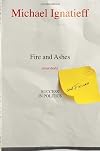
In 2004, Liberal party insiders convinced Michael Ignatieff to return to Canada, after working abroad for decades, to run for office. And, eventually, to run for party leader and Prime Minister.
Preposterous? Maybe. Maybe not. In this book, Mr. Ignatieff recounts his experience running for a seat in Parliament, to become leader of the Party, and (as leader) to become Prime Minister. I credit him with trying to put forward a balanced perspective of what he did well and not so well. He gives us show more a glimpse into the heart and mind of a political leader, as well as a flavour of the back rooms and community halls of campaigning.
As a long time professor, Mr. Ignatieff does get a bit academic at times, recounting the views of political philosophers through the ages -- but he does manage to put them in a modern context. He also assesses not only what happened to him personally, but also the context and longer-term implications for our political system of negative advertising, perpetual campaigning and how citizens' views of leaders continues to evolve.
Worth reading if you are a political junkie and/or interested in our democratic processes. show less
Preposterous? Maybe. Maybe not. In this book, Mr. Ignatieff recounts his experience running for a seat in Parliament, to become leader of the Party, and (as leader) to become Prime Minister. I credit him with trying to put forward a balanced perspective of what he did well and not so well. He gives us show more a glimpse into the heart and mind of a political leader, as well as a flavour of the back rooms and community halls of campaigning.
As a long time professor, Mr. Ignatieff does get a bit academic at times, recounting the views of political philosophers through the ages -- but he does manage to put them in a modern context. He also assesses not only what happened to him personally, but also the context and longer-term implications for our political system of negative advertising, perpetual campaigning and how citizens' views of leaders continues to evolve.
Worth reading if you are a political junkie and/or interested in our democratic processes. show less
Lists
Awards


You May Also Like


Associated Authors
Statistics
- Works
- 52
- Also by
- 15
- Members
- 3,306
- Popularity
- #7,739
- Rating
- 3.7
- Reviews
- 53
- ISBNs
- 254
- Languages
- 12
- Favorited
- 2
