
Michael Walzer
Author of Just and Unjust Wars
About the Author
Michael Walzer is professor emeritus of social science at the Institute for Advanced Study, Princeton, NJ, and the author of many widely heralded books, including Spheres of Injustice, Exodus and Revolution, and The Company of Critics. He lives in Princeton and New York.
Series
Works by Michael Walzer
The Revolution of the Saints: A Study in the Origins of Radical Politics (1965) 184 copies, 1 review
The Company of Critics: Social Criticism and Political Commitment in the Twentieth Century (2001) — Author — 116 copies, 2 reviews
Political Action: A Practical Guide to Movement Politics (New York Review Books Classics) (1971) 38 copies, 1 review
Law, Politics, and Morality in Judaism (Ethikon Series in Comparative Ethics) (2006) — Editor — 19 copies
Έξοδος και Επανάσταση 1 copy
Στη σκιά του Θεού 1 copy
Sfere di ingiustizia 1 copy
Dissent, Fall '95 1 copy
Dissent: Spring 2009 1 copy
Associated Works
Tagged
Common Knowledge
- Canonical name
- Walzer, Michael
- Legal name
- Walzer, Michael Laban
- Birthdate
- 1935-03-03
- Gender
- male
- Education
- Harvard University (Ph.D|1961 - Government)
University of Cambridge
Brandeis University (BA|1956 - History) - Occupations
- political theorist
professor
author
editor - Organizations
- Institute for Advanced Study, Princeton, New Jersey, USA
Harvard University
Princeton University
Dissent (editor) - Awards and honors
- British Academy (Corresponding Fellow, 2016)
Spinoza Lens (2008)
American Philosophical Society (1990)
American Academy of Arts & Sciences (1971) - Relationships
- Leavitt, Judith Walzer (sister)
- Short biography
- As a professor, author, editor, and lecturer, Michael Walzer has addressed a wide variety of topics in political theory and moral philosophy: political obligation, just and unjust war, nationalism and ethnicity, economic justice and the welfare state. His books (among them Just and Unjust Wars, Spheres of Justice, The Company of Critics, Thick and Thin: Moral Argument at Home and Abroad, On Toleration, and Politics and Passion) and essays have played a part in the revival of practical, issue-focused ethics and in the development of a pluralist approach to political and moral life. Walzer is a contributing editor for The New Republic and co-editor of Dissent, now in its 59th year. His articles and interviews appear frequently in the world’s foremost newspapers and journals. He is currently working on a series of lectures and then a book dealing with the successes and failures of “national liberation”--and also on the third volume of The Jewish Political Tradition, a comprehensive collaborative project focused on the history of Jewish political thought. His most recent book is In God’s Shadow: Politics in the Hebrew Bible (Yale University Press, 2012).
https://www.sss.ias.edu/faculty/walzer... - Nationality
- USA
- Birthplace
- New York, New York, USA
- Places of residence
- New York, New York, USA
- Associated Place (for map)
- New York, New York, USA
Members
Reviews
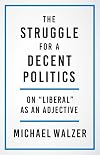
What does—or should—it mean to be a liberal? According to political philosopher Michael Walzer, it’s best to think of the term “liberal” as an adjective—one that qualifies an independent commitment—and not as a noun, which signifies the commitment itself. In other words, if you were to describe yourself as a liberal, Walzer would respond by saying, “liberal what?”
You might, for example, describe yourself as a liberal democrat, liberal socialist, or liberal nationalist. The show more adjective “liberal” in all of these cases describes the quality and characteristics of your commitments. What this “liberal” qualification entails—and how this understanding of the term leads to a more decent and sustainable politics—is the subject of Walzer’s latest book.
What, then, should the term “liberal” signify, ideally? To Walzer, it seems, the term is essentially a constraint on the extremism our commitments often drift towards. For example, our commitments to democracy can quickly turn into tyrannical majority rule, just as our commitments to socialism can turn into calls for radicalized centralized planning and forced equality. A “liberal” democrat, on the other hand—while recognizing the importance of majority rule—will also stress, and be constrained by, the rights of minority groups (as outlined in the Constitution and elsewhere), as well as reject violence and promote pluralism and peaceful dissent.
In the same way, a “liberal” socialist (or social democrat or “progressive capitalist,” as they are alternatively called) will be committed to the ideal of equality while also rejecting violent revolution and totalitarian state planning, in addition to recognizing the benefits of free trade and markets while placing limits on inequality (but not eliminating it). A liberal socialist, then, recognizes trade-offs, respects competing perspectives, and avoids extremism, authoritarianism, and violence.
It’s clear that, to Walzer, the term “liberal” stands in opposition to extremism, and signifies a commitment to tolerance, peaceful debate, open-mindedness, pluralism, democracy, and incremental progress, along with a rejection of violence, dogma, and radicalism in any form. This means that you can’t be, for example, a “liberal racist”—as the terms stand in direct opposition to each other—but you can be a “liberal Democrat,” or even a “liberal Republican,” although these days, the latter is quite rare.
What would a “liberal Republican” look like, by the way? Well, they would likely maintain most of their social and economic conservative views, however they would do so within a framework that respects the Constitution, democratic institutions, pluralism, and minority rights, while recognizing the rights of opposing parties to exist, disagree, and rotate through office based on the outcomes of free elections (yes, you can stop laughing now). These are rare breeds indeed, yet they do exist (and should be commended).
Overall, this way of thinking about liberalism, I think, is well-advised, and can help differentiate the individuals on the left that in fact promote “illiberal” ways of thinking (principally through violence, dogma, censorship, and intolerance of competing views). In fact, it seems to be the case that, as an individual drifts farther to the extremes of the left, they begin to resemble in thought and action their counterparts to the far-right.
One thing to keep in mind is that, as Walzer points out, being “liberal” in his suggested sense doesn’t mean that liberals should always adopt centrist positions. Socialists, for example, can advocate for various levels of redistribution within a capitalist system, and in some cases, the redistribution schemes proposed can be fairly extreme. But they only become “illiberal” when they resort to calls for violence or the dogmatic suppression of competing views. Liberal socialists, on the other hand, would instead advocate for peaceful democratic debate while protecting civil rights—even if short-term political gains are less than what might be considered ideal. In the long-term, I don’t think anything more ambitious—especially in a pluralist society—is possible.
One source of criticism regarding Walzer’s conception of liberalism is the dangers of excessive toleration. Critics would be correct to point out that, oftentimes, the primary beneficiaries of liberal toleration are illiberal actors that are keen on taking down the very system that allows them to flourish. To put it another way, we can ask the following question: How are we to balance free speech and democratic rule with illiberal movements that seek to harm minorities or weaken democratic institutions themselves?
True to form, Walzer recommends a liberal compromise by suggesting, for example, that we encourage free speech but not as an absolute right (hate speech and bigotry excluded), and that we respect majority rule but not when it comes to attacking individual rights or democratic institutions themselves. The balance can be tricky, and Walzer never pretends otherwise, but being a liberal also means learning to live with ambiguity and compromise in the face of difficult trade-offs. There is simply no other way, at least not without sacrificing the values you’re supposed to be protecting.
Which brings us to, I think, Walzer’s ultimate point: namely, that constant vigilance against illiberal forces is simply the price we have to pay for a peaceful, working democracy, if we want to preserve it. And I can’t imagine that we would be better off without it. show less
You might, for example, describe yourself as a liberal democrat, liberal socialist, or liberal nationalist. The show more adjective “liberal” in all of these cases describes the quality and characteristics of your commitments. What this “liberal” qualification entails—and how this understanding of the term leads to a more decent and sustainable politics—is the subject of Walzer’s latest book.
What, then, should the term “liberal” signify, ideally? To Walzer, it seems, the term is essentially a constraint on the extremism our commitments often drift towards. For example, our commitments to democracy can quickly turn into tyrannical majority rule, just as our commitments to socialism can turn into calls for radicalized centralized planning and forced equality. A “liberal” democrat, on the other hand—while recognizing the importance of majority rule—will also stress, and be constrained by, the rights of minority groups (as outlined in the Constitution and elsewhere), as well as reject violence and promote pluralism and peaceful dissent.
In the same way, a “liberal” socialist (or social democrat or “progressive capitalist,” as they are alternatively called) will be committed to the ideal of equality while also rejecting violent revolution and totalitarian state planning, in addition to recognizing the benefits of free trade and markets while placing limits on inequality (but not eliminating it). A liberal socialist, then, recognizes trade-offs, respects competing perspectives, and avoids extremism, authoritarianism, and violence.
It’s clear that, to Walzer, the term “liberal” stands in opposition to extremism, and signifies a commitment to tolerance, peaceful debate, open-mindedness, pluralism, democracy, and incremental progress, along with a rejection of violence, dogma, and radicalism in any form. This means that you can’t be, for example, a “liberal racist”—as the terms stand in direct opposition to each other—but you can be a “liberal Democrat,” or even a “liberal Republican,” although these days, the latter is quite rare.
What would a “liberal Republican” look like, by the way? Well, they would likely maintain most of their social and economic conservative views, however they would do so within a framework that respects the Constitution, democratic institutions, pluralism, and minority rights, while recognizing the rights of opposing parties to exist, disagree, and rotate through office based on the outcomes of free elections (yes, you can stop laughing now). These are rare breeds indeed, yet they do exist (and should be commended).
Overall, this way of thinking about liberalism, I think, is well-advised, and can help differentiate the individuals on the left that in fact promote “illiberal” ways of thinking (principally through violence, dogma, censorship, and intolerance of competing views). In fact, it seems to be the case that, as an individual drifts farther to the extremes of the left, they begin to resemble in thought and action their counterparts to the far-right.
One thing to keep in mind is that, as Walzer points out, being “liberal” in his suggested sense doesn’t mean that liberals should always adopt centrist positions. Socialists, for example, can advocate for various levels of redistribution within a capitalist system, and in some cases, the redistribution schemes proposed can be fairly extreme. But they only become “illiberal” when they resort to calls for violence or the dogmatic suppression of competing views. Liberal socialists, on the other hand, would instead advocate for peaceful democratic debate while protecting civil rights—even if short-term political gains are less than what might be considered ideal. In the long-term, I don’t think anything more ambitious—especially in a pluralist society—is possible.
One source of criticism regarding Walzer’s conception of liberalism is the dangers of excessive toleration. Critics would be correct to point out that, oftentimes, the primary beneficiaries of liberal toleration are illiberal actors that are keen on taking down the very system that allows them to flourish. To put it another way, we can ask the following question: How are we to balance free speech and democratic rule with illiberal movements that seek to harm minorities or weaken democratic institutions themselves?
True to form, Walzer recommends a liberal compromise by suggesting, for example, that we encourage free speech but not as an absolute right (hate speech and bigotry excluded), and that we respect majority rule but not when it comes to attacking individual rights or democratic institutions themselves. The balance can be tricky, and Walzer never pretends otherwise, but being a liberal also means learning to live with ambiguity and compromise in the face of difficult trade-offs. There is simply no other way, at least not without sacrificing the values you’re supposed to be protecting.
Which brings us to, I think, Walzer’s ultimate point: namely, that constant vigilance against illiberal forces is simply the price we have to pay for a peaceful, working democracy, if we want to preserve it. And I can’t imagine that we would be better off without it. show less
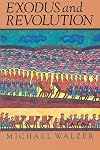
This is more a long essay than a short book. Walzer sees the Exodus narrative as both the historical origin of revolutionary ideologies in 'the West', and also provides a formal account of the structure of the narrative and how it is paradigmatic of a certain type of politics. These are deep waters, but Walzer keeps things light and readable, letting those who have ears hear the deeper implications of his text. His optimistic take on Zionism seems optimistic today. Overall, a good gateway show more text to get people interested in this topic deeper into sources and arguments. Well-written and constructed. It's hard to explore big themes in a short book without being reductive, but Walzer succeeds here. show less
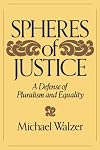
I've wanted to read this book for a long time, but overall I was somewhat disappointed. It is much more an assertion than an argument, and certainly not the "defense of pluralism and equality" promised in the subtitle.
The basic problem is with the 'boundaries' between the spheres. According to Walzer, 'tyranny' is any transgression of one sphere into the realm of another (e.g. the influence of wealth on politics). However, the boundaries between these spheres are constructs, "vulnerable to show more shifts in social meaning." So, crossing the line is illegitimate, but where the line is drawn is, in effect, arbitrary. While Walzer recognizes this problem, he doesn't go far enough in solving it. In fact, it undermines his entire thesis.
A hypothetically stronger case could have been made by grounding the spheres and their boundaries in some way. Walzer seems to be under the impression that this would be an illegitimate universalization, implying that his theory was applicable to all societies at all times. That would of course not work (e.g. given that pluralism is also essential, etc.). But he could have offered some sort of performative or conditional grounds, i.e. 'If a society works in such and such a way, or has such and such features, then the boundary between sphere x and sphere y is this.' Instead of giving even this limited sort of definition, he simply takes them as (historical) givens. However, philosophically speaking, this leaves the ground of his argument arbitrary and dogmatic.
Thus, one might be able to use Walzer's theory to make historical judgments on matters of justice, but not in any critical or productive way. In other words, using Walzer's theory, one could say "We think that was just" but not "In order to be just, we should do this." It is a justice for moral spectators, not moral agents.
Well, back to the drawing board.... show less
The basic problem is with the 'boundaries' between the spheres. According to Walzer, 'tyranny' is any transgression of one sphere into the realm of another (e.g. the influence of wealth on politics). However, the boundaries between these spheres are constructs, "vulnerable to show more shifts in social meaning." So, crossing the line is illegitimate, but where the line is drawn is, in effect, arbitrary. While Walzer recognizes this problem, he doesn't go far enough in solving it. In fact, it undermines his entire thesis.
A hypothetically stronger case could have been made by grounding the spheres and their boundaries in some way. Walzer seems to be under the impression that this would be an illegitimate universalization, implying that his theory was applicable to all societies at all times. That would of course not work (e.g. given that pluralism is also essential, etc.). But he could have offered some sort of performative or conditional grounds, i.e. 'If a society works in such and such a way, or has such and such features, then the boundary between sphere x and sphere y is this.' Instead of giving even this limited sort of definition, he simply takes them as (historical) givens. However, philosophically speaking, this leaves the ground of his argument arbitrary and dogmatic.
Thus, one might be able to use Walzer's theory to make historical judgments on matters of justice, but not in any critical or productive way. In other words, using Walzer's theory, one could say "We think that was just" but not "In order to be just, we should do this." It is a justice for moral spectators, not moral agents.
Well, back to the drawing board.... show less
Another reviewer has written an excellent, critical review of this book, from a (more or less) historian's perspective. But the book does have some excellent qualities, and it's worth mentioning them as well: it is extremely readable; it is enjoyable to think with; it makes reading Exodus (and the following books) even more fascinating. As a work of scholarship on Exodus, it is probably not all that great. As a work tracing the rhetoric and thought-forms of revolutionary politics in early show more modern Europe, it is enjoyable and convincing. As an essay that prompts engagement with the text under question, it is wonderful. show less
Lists
Awards


You May Also Like


Associated Authors
Statistics
- Works
- 61
- Also by
- 2
- Members
- 3,708
- Popularity
- #6,831
- Rating
- 3.9
- Reviews
- 29
- ISBNs
- 198
- Languages
- 14
- Favorited
- 8


