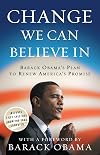
A nice basic review of Obama's campaign platform. The book also includes a collection of some of his major speeches (the most recent being his July 2008 speech in Berlin). One could most certainly find all of these writings, word for word, somewhere on the internet, but it's nice to have them collected in one physical volume.
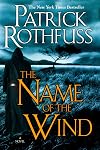
When I was a kid, I read fantasy books constantly. For years, my parents attic was filled with crates of them. But over time, I lost interest. There's only so many times one can go back for seconds at [b:The Lord of the Rings|34|The Fellowship of the Ring (The Lord of the Rings, Part 1)|J.R.R. Tolkien|http://photo.goodreads.com/books/1156043001s/34.jpg|3204327] buffet, and I, personally, was stuffed.
So it was with some reluctance that I returned to the genre to read The Name of the Wind. And I'm very glad I did.
First, to get it out of the way, I have a couple criticisms. First: the length. I don't think the plot really justifies 700 pages. Rothfuss could have told the essence of the same story in half the pages. Because of the length, the plot winds up feeling scattered. And the end just trails off. The Name of the Wind isn't strictly speaking a 700 page novel; it's the first part of what is in all likelihood a 2100 page novel.
A few judicious slashes of the old red pen could also solved the second problem: a number weaknesses in the prose. To explain what I mean by weakness, take for example the author's frequent use of the construction 'if this was a story', 'this sort of thing only happens in stories' and so on. The main problem with these sorts of meta-comments is that, in addition to being cliche, they function as a sort of backhanded apology. The author knows better, knows he's about to write something weak, but writes it anway. However, if you know enough to know show more its weak, why not just cut it in the first place? I can think of a few other problems like this (e.g. weak dialog in places), but I'm not going to list them all here.
What makes these scattered weaknesses all the more glaring are the great strengths of the rest of the novel. Genre writing is based on a set of cliches--the genre's 'conventions'. Great genre writing operates within these conventions, but twists them into something original. Rothfuss is a master of this. Take for example, the episode with the dragon toward the end. All the cliches are present: dragon, hero, treasure, etc. But none of them are standard: the dragon's a herbivore, the hero has a motive quite other than 'dragons are bad', and, rather the treasure functioning as a reward, the hero has to sacrifice the treasure in order to slay it. Another episode that really impressed me was the protagonist on the roof toward the middle (I won't spoil the details, but suffice it to say, I laughed out loud.)
I thought the framing device also worked well. At first glance, it appears to be just an excuse to use the first person. But the further I read, the more I realized how Rothfuss was using the 'interludes' as an element in pacing out the plot. It could have been just a gimmick, but its refreshing that the author knows how to use it.
But my favorite part had to be Rothfuss's solution to the exposition problem. Typically, fantasy and science fiction novels are weighted down with exposition. Since you can't simply assume the reader knows what your particular 'Middle Earth: the Latest Sequel' is like, the old wizard (or whoever) has to lecture on it in tedious, encyclopedic detail. Rothfuss's solution is elegantly simple: don't explain ANYTHING. Rather than lecturing on how his world works, the characters all talk as if everyone was already familiar with these sort of details. And of course, they would be. Nevertheless, the reader is never left confused at to what's going on. Striking that balance is an art itself. In addition, Rothfuss uses a series of concrete songs, traditions, superstitions, practices, etc. to establish and texture his world. The end result is rather than a fantasy world that seems designed top-down by some God-Nerd, it's a fantasy world that seems built from the bottom-up, an articulated world that believable people could live in.
Overall, I would definitely recommend this book to anyone who ever liked fantasy novels. But I would warn anyone less familiar with the genre that there's a good chance they might miss the point of what exactly Rothfuss accomplishes here--it's less a fanstay novel than a deconstruction of it.
But fittingly, this review has gone on too long... show less
So it was with some reluctance that I returned to the genre to read The Name of the Wind. And I'm very glad I did.
First, to get it out of the way, I have a couple criticisms. First: the length. I don't think the plot really justifies 700 pages. Rothfuss could have told the essence of the same story in half the pages. Because of the length, the plot winds up feeling scattered. And the end just trails off. The Name of the Wind isn't strictly speaking a 700 page novel; it's the first part of what is in all likelihood a 2100 page novel.
A few judicious slashes of the old red pen could also solved the second problem: a number weaknesses in the prose. To explain what I mean by weakness, take for example the author's frequent use of the construction 'if this was a story', 'this sort of thing only happens in stories' and so on. The main problem with these sorts of meta-comments is that, in addition to being cliche, they function as a sort of backhanded apology. The author knows better, knows he's about to write something weak, but writes it anway. However, if you know enough to know show more its weak, why not just cut it in the first place? I can think of a few other problems like this (e.g. weak dialog in places), but I'm not going to list them all here.
What makes these scattered weaknesses all the more glaring are the great strengths of the rest of the novel. Genre writing is based on a set of cliches--the genre's 'conventions'. Great genre writing operates within these conventions, but twists them into something original. Rothfuss is a master of this. Take for example, the episode with the dragon toward the end. All the cliches are present: dragon, hero, treasure, etc. But none of them are standard: the dragon's a herbivore, the hero has a motive quite other than 'dragons are bad', and, rather the treasure functioning as a reward, the hero has to sacrifice the treasure in order to slay it. Another episode that really impressed me was the protagonist on the roof toward the middle (I won't spoil the details, but suffice it to say, I laughed out loud.)
I thought the framing device also worked well. At first glance, it appears to be just an excuse to use the first person. But the further I read, the more I realized how Rothfuss was using the 'interludes' as an element in pacing out the plot. It could have been just a gimmick, but its refreshing that the author knows how to use it.
But my favorite part had to be Rothfuss's solution to the exposition problem. Typically, fantasy and science fiction novels are weighted down with exposition. Since you can't simply assume the reader knows what your particular 'Middle Earth: the Latest Sequel' is like, the old wizard (or whoever) has to lecture on it in tedious, encyclopedic detail. Rothfuss's solution is elegantly simple: don't explain ANYTHING. Rather than lecturing on how his world works, the characters all talk as if everyone was already familiar with these sort of details. And of course, they would be. Nevertheless, the reader is never left confused at to what's going on. Striking that balance is an art itself. In addition, Rothfuss uses a series of concrete songs, traditions, superstitions, practices, etc. to establish and texture his world. The end result is rather than a fantasy world that seems designed top-down by some God-Nerd, it's a fantasy world that seems built from the bottom-up, an articulated world that believable people could live in.
Overall, I would definitely recommend this book to anyone who ever liked fantasy novels. But I would warn anyone less familiar with the genre that there's a good chance they might miss the point of what exactly Rothfuss accomplishes here--it's less a fanstay novel than a deconstruction of it.
But fittingly, this review has gone on too long... show less
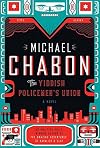
Overall, this was a well-executed noir detective story. The alternate history backdrop was exceedingly well done; the exposition of it was extremely subtle and never distracting. My only problem with it was the ending (which I won't discuss in detail--with a detective story, that would be just plain mean). Both in terms of plot and theme, then ending was trite, naively romantic, and too-quick. This was all the more disappointing insofar as it stood in stark contrast to the quality of the rest of the book.
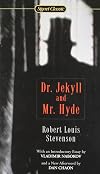
A familiar plot with a surprisingly complex narrative structure in the original. I'm glad I finally got around to it.
A strange experience. I had the impression that this was well-written, but it lacked almost all of the features which would typically warrant such a label. For example, there's not a single memorable sentence in the whole book. This quite remarkable, since it means there's (also) nothing memorably bad. It's as if Collins was able to (deliberately or not) purge any trace of style from her work.
The novel is pure plot. There's no character motivation that is not explained, usually up front. Very little is described or explained about the setting, except where it's relevant to the action. The obvious theme of economic justice is not explored in any way other than narrowly, as a motivating force for the protagonist. For me, it was interesting to read as if it were experimental. 'What would happen to if you wrote a novel and stripped away everything but the plot?'
Of course, it's not really an experimental novel. And maybe it's a common phenomenon, and I just haven't read a book like it lately. At times, the writing seemed almost mercenary. For example, early on Collins mistakenly refers to a group of arrows as a 'sheath' (rather than 'sheaf'). Now, this is just the quibbliest of quibbles, but it stuck with me. Was it just sloppy copy-editing or sloppy research? If the latter, how could you make a mistake like that? The protagonist's distinguishing characteristic is 'good with a bow and arrow'. Surely, I thought, someone might have at least googled something about 'archery' show more before press time. The best answer I could think of was that the people responsible said 'oh, it's a young adult novel...kids won't notice that kind of thing...it won't affect sales, so why spend any time on it.' At the same time, I always figured that 'young adult' meant something more than 'like for adults, but sloppier'.
No way of knowing, really. Maybe it was just an honest mistake. But those sorts of quibbles, combined with the 'pure plot' structure, continually gave me the impression of a book written not from the heart, but the wallet. Perhaps, in my old age, I've developed some sort of mental block that prevents me from enjoying (by all accounts) enjoyable commercial trash. Maybe it's just the old fashioned 'if you don't give a crap, why should I'?
Still interesting for the pure plot thing though (hence the three stars instead of two). show less
The novel is pure plot. There's no character motivation that is not explained, usually up front. Very little is described or explained about the setting, except where it's relevant to the action. The obvious theme of economic justice is not explored in any way other than narrowly, as a motivating force for the protagonist. For me, it was interesting to read as if it were experimental. 'What would happen to if you wrote a novel and stripped away everything but the plot?'
Of course, it's not really an experimental novel. And maybe it's a common phenomenon, and I just haven't read a book like it lately. At times, the writing seemed almost mercenary. For example, early on Collins mistakenly refers to a group of arrows as a 'sheath' (rather than 'sheaf'). Now, this is just the quibbliest of quibbles, but it stuck with me. Was it just sloppy copy-editing or sloppy research? If the latter, how could you make a mistake like that? The protagonist's distinguishing characteristic is 'good with a bow and arrow'. Surely, I thought, someone might have at least googled something about 'archery' show more before press time. The best answer I could think of was that the people responsible said 'oh, it's a young adult novel...kids won't notice that kind of thing...it won't affect sales, so why spend any time on it.' At the same time, I always figured that 'young adult' meant something more than 'like for adults, but sloppier'.
No way of knowing, really. Maybe it was just an honest mistake. But those sorts of quibbles, combined with the 'pure plot' structure, continually gave me the impression of a book written not from the heart, but the wallet. Perhaps, in my old age, I've developed some sort of mental block that prevents me from enjoying (by all accounts) enjoyable commercial trash. Maybe it's just the old fashioned 'if you don't give a crap, why should I'?
Still interesting for the pure plot thing though (hence the three stars instead of two). show less
This the second 'Young Adult' book I've read this week. The two couldn't be more different.
In the place of didactically lecturing to his poor young readers about Things They Should Know, Stevenson created a much more ambiguous and engaging story. Long John Silver's characterization in particular, as a 'sympathetic villain' makes this book much more interesting for adult readers as well. This ambiguity is often noted by commentators.
It could just be due to my contemporary perspective, but sometimes it seemed as if there was a deeper ambiguity at work. There seemed to me to be little difference between the 'gentlemen' and the pirates. Both groups are after treasure and both are willing to kill without remorse to get it. The only character who expresses any regret at killing is Jim Hawkins. I especially liked how Stevenson captures this. When recounting how he killed Israel Hands, Hawkins uses the following passive construction:
"In the horrid pain and surprise of the moment--I scarce can say it was by my own volition, and I am sure it was without conscious aim--both my pistols went off, and both escaped out of my hands. They did not fall alone; with a choked cry, the coxswain loosed his grasp upon the shrouds, and plunged head first into the water."
Not 'I fired' or 'I shot him' but rather 'they just went off'. One pistol going off could have been an accident; both going off must be deliberate. It elegantly, indirectly suggests that Hawkins feels remorse or something like show more it.(There are other incidents which capture Hawkins's humanity as well, i.e. his promise to spare Silver.)
In addition to this thematic complexity, there is the fact that as a work of 'genre fiction', Treasure Island is simply very well-crafted. The key to an adventure story is plot, the key to that is pacing. Each chapter is a sort of 'micro-story' leading into the next, drawing the reader forward. It's strength on this point could just be an artifact of the original 19th century 'serial' publication, but I don't think so that's the whole reason. Personally, I found the structure much more engaging in Stevenson than in, say, Dickens. I'm not at the moment sure why that is.
I also found the book interesting from a historical perspective. Treasure Island is of course the origin of a host of genre cliches: buried treasure, X marks the spot, peg legs, parrots, and so on. On the other hand, I was surprised, for a pirate story, in fact the pirate story, how little swordplay there was. I blame Errol Flynn. show less
In the place of didactically lecturing to his poor young readers about Things They Should Know, Stevenson created a much more ambiguous and engaging story. Long John Silver's characterization in particular, as a 'sympathetic villain' makes this book much more interesting for adult readers as well. This ambiguity is often noted by commentators.
It could just be due to my contemporary perspective, but sometimes it seemed as if there was a deeper ambiguity at work. There seemed to me to be little difference between the 'gentlemen' and the pirates. Both groups are after treasure and both are willing to kill without remorse to get it. The only character who expresses any regret at killing is Jim Hawkins. I especially liked how Stevenson captures this. When recounting how he killed Israel Hands, Hawkins uses the following passive construction:
"In the horrid pain and surprise of the moment--I scarce can say it was by my own volition, and I am sure it was without conscious aim--both my pistols went off, and both escaped out of my hands. They did not fall alone; with a choked cry, the coxswain loosed his grasp upon the shrouds, and plunged head first into the water."
Not 'I fired' or 'I shot him' but rather 'they just went off'. One pistol going off could have been an accident; both going off must be deliberate. It elegantly, indirectly suggests that Hawkins feels remorse or something like show more it.(There are other incidents which capture Hawkins's humanity as well, i.e. his promise to spare Silver.)
In addition to this thematic complexity, there is the fact that as a work of 'genre fiction', Treasure Island is simply very well-crafted. The key to an adventure story is plot, the key to that is pacing. Each chapter is a sort of 'micro-story' leading into the next, drawing the reader forward. It's strength on this point could just be an artifact of the original 19th century 'serial' publication, but I don't think so that's the whole reason. Personally, I found the structure much more engaging in Stevenson than in, say, Dickens. I'm not at the moment sure why that is.
I also found the book interesting from a historical perspective. Treasure Island is of course the origin of a host of genre cliches: buried treasure, X marks the spot, peg legs, parrots, and so on. On the other hand, I was surprised, for a pirate story, in fact the pirate story, how little swordplay there was. I blame Errol Flynn. show less
This was a surprisingly interesting book. It was an odd combination of personal anecdotes and policy proposals. Odd, for me, because, when I read about politics, I am used to more abstract, academic fare. The anecdotes lend a certain weight to the proposals. You don't just learn what Obama's political positions are, but also why he holds those positions. It's also quite well written.
This adds a similar weight to his (better-known) speeches as well. For example, when Obama talks about bipartisanship, he really means it. Having read this book, I can see how they are those lines in his speeches are not just (for him) empty platitudes. He seems to really mean them, because in the book, he gives not just the position but an argument for the position and specific, concrete reasons for it, on both a policy level and a personal level. The time and effort he puts into his arguments here (and, in my opinion, their effectiveness) strongly suggest that he's completely sincere.
His sincerity (on the issue of bipartisanship) is further supported by a recent news story I read where he asked Congressional Democrats to make further compromises on a stimulus bill, in order to get more Republican votes, even though the Democrats already had enough votes to win. I get the impression that a lot of people have heard him speak, but few have yet taken what he's said seriously. Had Democrats on the Hill complaining bothered to read his book, they might not have been surprised.
I was struck by show more how often he used variations on the phrase 'a new consensus'. If you take his arguments seriously, then this would mean that, for Obama, compromise is not a means, it's an end. That is, he's not a centrist is the mold of Bill Clinton, willing to compromise in order to achieve and stay in power and maybe do some good in the meantime. Obama, on the other hand, presents compromise as a goal with value in itself.
Compromise is itself a virtue in two senses. First, more generally, compromise is what democracy is all about, the very process itself. To dismiss it as merely a means to an end is to dismiss democracy itself in the same way. Second, compromise is a virtue for the sake of progressive causes as well. Changes and improvements achieved by compromise--a compromise that takes the form of a 'new consensus'--have the capacity to have vastly more impact and staying power. Why simply change a law (when the next time the other guys are in power they'll just change it back), when you can change peoples minds (the common consensus) instead. This isn't just pie-in-the-sky naivete, but a political strategy for lasting, effective change. By way of precedent, FDR didn't just enact the reforms of the New Deal, he was able to forge a common consensus between Democrats and moderate Republicans that lasted (at least) 50 years. Johnson did the same thing with the Voting Rights Act. The point isn't that everyone has to agree and sing songs around the campfire, but only that enough people agree for long enough that the reform in question becomes a basic assumption for future political discourse.
It will be fascinating to see if he will be able to get it to work.
Anyone interested in American politics would benefit from this book. Whether you agree with his goals or not, this book goes a long way to explaining his strategies and motives. show less
This adds a similar weight to his (better-known) speeches as well. For example, when Obama talks about bipartisanship, he really means it. Having read this book, I can see how they are those lines in his speeches are not just (for him) empty platitudes. He seems to really mean them, because in the book, he gives not just the position but an argument for the position and specific, concrete reasons for it, on both a policy level and a personal level. The time and effort he puts into his arguments here (and, in my opinion, their effectiveness) strongly suggest that he's completely sincere.
His sincerity (on the issue of bipartisanship) is further supported by a recent news story I read where he asked Congressional Democrats to make further compromises on a stimulus bill, in order to get more Republican votes, even though the Democrats already had enough votes to win. I get the impression that a lot of people have heard him speak, but few have yet taken what he's said seriously. Had Democrats on the Hill complaining bothered to read his book, they might not have been surprised.
I was struck by show more how often he used variations on the phrase 'a new consensus'. If you take his arguments seriously, then this would mean that, for Obama, compromise is not a means, it's an end. That is, he's not a centrist is the mold of Bill Clinton, willing to compromise in order to achieve and stay in power and maybe do some good in the meantime. Obama, on the other hand, presents compromise as a goal with value in itself.
Compromise is itself a virtue in two senses. First, more generally, compromise is what democracy is all about, the very process itself. To dismiss it as merely a means to an end is to dismiss democracy itself in the same way. Second, compromise is a virtue for the sake of progressive causes as well. Changes and improvements achieved by compromise--a compromise that takes the form of a 'new consensus'--have the capacity to have vastly more impact and staying power. Why simply change a law (when the next time the other guys are in power they'll just change it back), when you can change peoples minds (the common consensus) instead. This isn't just pie-in-the-sky naivete, but a political strategy for lasting, effective change. By way of precedent, FDR didn't just enact the reforms of the New Deal, he was able to forge a common consensus between Democrats and moderate Republicans that lasted (at least) 50 years. Johnson did the same thing with the Voting Rights Act. The point isn't that everyone has to agree and sing songs around the campfire, but only that enough people agree for long enough that the reform in question becomes a basic assumption for future political discourse.
It will be fascinating to see if he will be able to get it to work.
Anyone interested in American politics would benefit from this book. Whether you agree with his goals or not, this book goes a long way to explaining his strategies and motives. show less
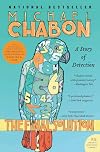
Without the double spacing and illustrations, it'd be more of a short story that a novella. But well worth the time.
In contrast to The Yiddish Policemen's Union, the end of this mystery works extremely well. All the layers come together in a way that I found very satisfying. I'm afraid I can't be more specific, based on the principle that while normally I don't care about giving away plot, giving away the end of a good mystery is cruel.
I can't help but notice, however, that if Chabon were not a Pulitzer Prize winner, this book would be considered little more than Arthur Conan Doyle fanfic. But in the genre hierarchy, fanfic is even lower than the standard genres, insofar as it is parasitic upon them. That this story is in fact fanfic (say that three times fast) does not change the fact that it is also good, one more reason the hierarchy itself is nonsense.
In contrast to The Yiddish Policemen's Union, the end of this mystery works extremely well. All the layers come together in a way that I found very satisfying. I'm afraid I can't be more specific, based on the principle that while normally I don't care about giving away plot, giving away the end of a good mystery is cruel.
I can't help but notice, however, that if Chabon were not a Pulitzer Prize winner, this book would be considered little more than Arthur Conan Doyle fanfic. But in the genre hierarchy, fanfic is even lower than the standard genres, insofar as it is parasitic upon them. That this story is in fact fanfic (say that three times fast) does not change the fact that it is also good, one more reason the hierarchy itself is nonsense.
Economics Explained: Everything You Need to Know About How the Economy Works and Where It's Going by Robert L. Heilbroner
An OK introductory text, but nothing special. I probably could have gotten the same information from Wikipedia. Although, in this case, the authors were nice enough to organize it for me...
In many cases, the term "Young Adult" can serve as a warning label--"ATTENTION: This Book is Simplistic and Didactic. May cause irritation."
Very Far Away From Anywhere Else seemed, at first glance, very much in that mold. But as I read further, I realized two things. First, the simplicity is somewhat deceptive. While it is almost entirely written in simple declarative sentences and filled with very basic observations, the structure becomes more complicated as it progresses. Seemingly banal plot points start to tie together, and by the end the work as a whole is greater than the sum of its parts. The more I thought about it, the more I realized that's a good structure for a Young Adult novel to have. Young young adults get a simple story, older Young adults get something more.
So then I thought maybe the problem was that I'm not a Young Adult. One could easily retitle this book "Teenage Angst: Theory and Practice". Frequently, my response was something along the lines of 'tell me something I don't know'. I read Catcher in the Rye (et al) a long time ago. I remember, very distinctly, what being a teenager was like.
But of course, I had forgotten one thing: teenagers don't know what being a teenager is like. When you're that age, the experiences you later realize are ubiquitous and cliche are all new and fresh cut. The callouses, the scar tissue, haven't formed yet. They've happened to thousands of people before you and will happen to thousands more, but, very importantly, show more you don't realize that yet. The particular pain of that time of life is, in effect, the realization, the first awareness, of the pain itself. I had forgotten, and this book reminded me. So that's the second thing.
I wish I had read this book when I was younger. I would probably have remembered it fondly. But for now, I would only recommend it Young Adults, to those who remember what it was like to be a Young Adult, or those who feel the need to be reminded. show less
Very Far Away From Anywhere Else seemed, at first glance, very much in that mold. But as I read further, I realized two things. First, the simplicity is somewhat deceptive. While it is almost entirely written in simple declarative sentences and filled with very basic observations, the structure becomes more complicated as it progresses. Seemingly banal plot points start to tie together, and by the end the work as a whole is greater than the sum of its parts. The more I thought about it, the more I realized that's a good structure for a Young Adult novel to have. Young young adults get a simple story, older Young adults get something more.
So then I thought maybe the problem was that I'm not a Young Adult. One could easily retitle this book "Teenage Angst: Theory and Practice". Frequently, my response was something along the lines of 'tell me something I don't know'. I read Catcher in the Rye (et al) a long time ago. I remember, very distinctly, what being a teenager was like.
But of course, I had forgotten one thing: teenagers don't know what being a teenager is like. When you're that age, the experiences you later realize are ubiquitous and cliche are all new and fresh cut. The callouses, the scar tissue, haven't formed yet. They've happened to thousands of people before you and will happen to thousands more, but, very importantly, show more you don't realize that yet. The particular pain of that time of life is, in effect, the realization, the first awareness, of the pain itself. I had forgotten, and this book reminded me. So that's the second thing.
I wish I had read this book when I was younger. I would probably have remembered it fondly. But for now, I would only recommend it Young Adults, to those who remember what it was like to be a Young Adult, or those who feel the need to be reminded. show less
I've wanted to read this book for a long time, but overall I was somewhat disappointed. It is much more an assertion than an argument, and certainly not the "defense of pluralism and equality" promised in the subtitle.
The basic problem is with the 'boundaries' between the spheres. According to Walzer, 'tyranny' is any transgression of one sphere into the realm of another (e.g. the influence of wealth on politics). However, the boundaries between these spheres are constructs, "vulnerable to shifts in social meaning." So, crossing the line is illegitimate, but where the line is drawn is, in effect, arbitrary. While Walzer recognizes this problem, he doesn't go far enough in solving it. In fact, it undermines his entire thesis.
A hypothetically stronger case could have been made by grounding the spheres and their boundaries in some way. Walzer seems to be under the impression that this would be an illegitimate universalization, implying that his theory was applicable to all societies at all times. That would of course not work (e.g. given that pluralism is also essential, etc.). But he could have offered some sort of performative or conditional grounds, i.e. 'If a society works in such and such a way, or has such and such features, then the boundary between sphere x and sphere y is this.' Instead of giving even this limited sort of definition, he simply takes them as (historical) givens. However, philosophically speaking, this leaves the ground of his argument arbitrary and show more dogmatic.
Thus, one might be able to use Walzer's theory to make historical judgments on matters of justice, but not in any critical or productive way. In other words, using Walzer's theory, one could say "We think that was just" but not "In order to be just, we should do this." It is a justice for moral spectators, not moral agents.
Well, back to the drawing board.... show less
The basic problem is with the 'boundaries' between the spheres. According to Walzer, 'tyranny' is any transgression of one sphere into the realm of another (e.g. the influence of wealth on politics). However, the boundaries between these spheres are constructs, "vulnerable to shifts in social meaning." So, crossing the line is illegitimate, but where the line is drawn is, in effect, arbitrary. While Walzer recognizes this problem, he doesn't go far enough in solving it. In fact, it undermines his entire thesis.
A hypothetically stronger case could have been made by grounding the spheres and their boundaries in some way. Walzer seems to be under the impression that this would be an illegitimate universalization, implying that his theory was applicable to all societies at all times. That would of course not work (e.g. given that pluralism is also essential, etc.). But he could have offered some sort of performative or conditional grounds, i.e. 'If a society works in such and such a way, or has such and such features, then the boundary between sphere x and sphere y is this.' Instead of giving even this limited sort of definition, he simply takes them as (historical) givens. However, philosophically speaking, this leaves the ground of his argument arbitrary and show more dogmatic.
Thus, one might be able to use Walzer's theory to make historical judgments on matters of justice, but not in any critical or productive way. In other words, using Walzer's theory, one could say "We think that was just" but not "In order to be just, we should do this." It is a justice for moral spectators, not moral agents.
Well, back to the drawing board.... show less
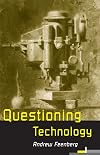
An excellent introduction to the topic, as well as being a thoroughly convincing argument in its own right.
The author had a slight tendency toward sociologist jargonspeak, but I also had the impression it was less of a problem here than with some of his colleagues.
It made me want to learn more about the issue, which is also good.
The author had a slight tendency toward sociologist jargonspeak, but I also had the impression it was less of a problem here than with some of his colleagues.
It made me want to learn more about the issue, which is also good.
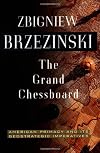
Very interesting but at the same time fundamentally flawed. It was interesting and valuable in the way it synthesizes realism with liberal internationalism, i.e. a sort of cleverly presented pragmatic idealism that could appeal to both realists and idealists alike. It was flawed insofar as the shares the traditional presupposition of the state-centric Westphalian order as a necessary condition of international relations, rather than a historical contingent one. This leads to an almost inevitable blindness to the role and impact of non-state actors. Brzezinski does the best he can under the constraint of those assumptions, and the breadth of his long term thinking on the subject will probably be the best way to transition beyond them.
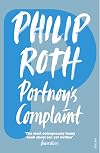
I suppose this was supposed to be ironic or tragic, but neither seems to apply. Portnoy's condescension towards (other) self-absorbed people might considered irony were it not for the relentless, autobiographical sincerity of the text and it tone And tragic? Well, there is an irresolvable conflict, and Roth does make the connection explicitly (i.e., the Oedipal bit). But, I wonder, is a tragedy still a tragedy if that conflict is in no way unique or otherwise unusual? The problem presented is so tediously, mundanely, bourgeois, there is conflict without catharsis, or at least, none that I experienced.
It might have worked better in that sense if the text had been able to manage any insight into its female characters. But the 'irony' of Portnoy's self-absorption is never taken that far. Whether Roth lacked such insight, or had it but just didn't care enough to express it, I couldn't say. That Portnoy is an utterly unsympathetic asshole probably doesn't help in that regard; any empathy left is too well-hidden, if there is any at all.
It might have worked better in that sense if the text had been able to manage any insight into its female characters. But the 'irony' of Portnoy's self-absorption is never taken that far. Whether Roth lacked such insight, or had it but just didn't care enough to express it, I couldn't say. That Portnoy is an utterly unsympathetic asshole probably doesn't help in that regard; any empathy left is too well-hidden, if there is any at all.
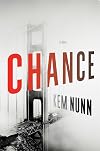
I really enjoyed this. The plot seems like a very conventional, classic noir. But there was something about its execution that made it seem fresh. I don't have much else to add at the moment. Feeling a bit feverish. But I just wanted to go on the record as having like it.
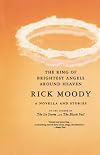
I once heard the bit Hemingway supposedly wrote about Miller, something about writing about a blowjob as if he invented it. Moody doesn't remind me of Miller, but he reminds me of this line.
Anyway, Moody's noted sympathy for freaks, weirdos and other lost souls would ring truer if he didn't write as if he had discovered them. At every moment it reads as a Christopher Columbus style discovery. Kerouac's menagerie is left standing there holding their Roman candles with a look on their faces that says hey kid so what.
To be fair, this is hardly bad. To be accurate, there is better. If you like Moody, then try Denis Johnson.
Perhaps im being unfair. Maybe it's simply the fact of Moody's sincerity that evokes repetition, an echo of an echo of. We've heard it all before, but because it is for so long that we have been lost.
Anyway, Moody's noted sympathy for freaks, weirdos and other lost souls would ring truer if he didn't write as if he had discovered them. At every moment it reads as a Christopher Columbus style discovery. Kerouac's menagerie is left standing there holding their Roman candles with a look on their faces that says hey kid so what.
To be fair, this is hardly bad. To be accurate, there is better. If you like Moody, then try Denis Johnson.
Perhaps im being unfair. Maybe it's simply the fact of Moody's sincerity that evokes repetition, an echo of an echo of. We've heard it all before, but because it is for so long that we have been lost.
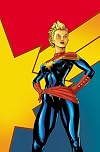
Here, the writing was much better. Great tag line. But the artwork was weak and made the action sequences hard to follow. I just need to find a book where DeConnick's writing 'clicks' with the artwork.
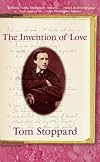
I've read it twice. I saw it performed once, on Broadway of all places. I would read it a thousand times, and then a hundred more.
I read this 4 years ago. I just read it again. My opinion has evolved. It's late and I'm too tired to explain why, but it's a neglected masterpiece.
I don't have the energy to finish many books these days. I don't know why. Something broken inside of me. But comics? I can read. I can finish. The obvious answer would be that I can finish them because they are silly & dumb. But that can't be right, because I can't finish the dumb ones.
I can still finish the great ones, though. The ones that speak with that quasi-cinematic vocabulary. The comics that are frozen films, with light and sound replaced by drawings and text. Moving without moving, speaking in silence, and all the rest.
I suppose it's a kind of childhood magic. The sort of thing that seems so strange as an adult thinking now which was perfectly ordinary back then.
It's not nostalgia. The comics I liked back then, overwhelmingly, tend to disappoint me now. It's more that the juxtaposition of the way I see now and the way I saw then creates it's own aesthetic effect, a kind of anti-nostalgia.
A moment of freedom from the past? A new past? I don't know. I don't know why this works for me now, while so little else does, but it does. And I am grateful.
I don't have the energy to finish many books these days. I don't know why. Something broken inside of me. But comics? I can read. I can finish. The obvious answer would be that I can finish them because they are silly & dumb. But that can't be right, because I can't finish the dumb ones.
I can still finish the great ones, though. The ones that speak with that quasi-cinematic vocabulary. The comics that are frozen films, with light and sound replaced by drawings and text. Moving without moving, speaking in silence, and all the rest.
I suppose it's a kind of childhood magic. The sort of thing that seems so strange as an adult thinking now which was perfectly ordinary back then.
It's not nostalgia. The comics I liked back then, overwhelmingly, tend to disappoint me now. It's more that the juxtaposition of the way I see now and the way I saw then creates it's own aesthetic effect, a kind of anti-nostalgia.
A moment of freedom from the past? A new past? I don't know. I don't know why this works for me now, while so little else does, but it does. And I am grateful.
An interesting book. I would have thought it impossible to portray a sadist sympathetically. But Thompson comes very close. The ending, though, (no suppliers) doesn't work. Really doesn't work. To the point I felt it 'spoiled' what came before. Oddly, the Winterbottom film works much better. This is one of those rare occasions when the movie is better than the book.
I wish this was better. I had heard good things, and was interested, but... uh. The story could have happened without the protagonist even being there. The dialogue somehow gets basic idioms wrong ('got off on the wrong footing'?), but maybe that's just a lazy editor. The artwork was very good though, and the story, while generic, was enjoyable. I'll keep looking.
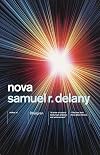
More historically interesting than enjoyable. Its influence on later works is obvious. If you skipped the copyright page, you might think it was written 15 years later, in the early 80s. But the exposition is pure old school SF garbage and the dialogue is affected and tedious. It's not even well plotted--the climax feels like an afterthought. This might have worked somewhere else, but in a 'quest' story like this, it doesn't. There are. a few nice turns of phrase, but that's it. Recommended for diehard SF fans only, those interested to see where the ideas they love come from. But perhaps better to start elsewhere. If Delaney has written a good book, this one isn't it.
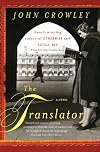
A beautiful book. Sad in many places, but neither pathetic or tragic. Eleagic, maybe? The protagonist suffers three or four great losses, but these loses aren't just some stuff that happens (pathetic), nor are they unavoidably impossible situations (tragic). Instead, these losses are transformed into something else. It's not sacrifice or redemption, where the losses serve some greater good or purpose: this, I think, would cheapen or demean them here. Instead, they are I don't know transformed maybe, into something beautiful. An elegy. An elegy to the death of poetry, that does not restore poetry to life, but transforms it, translates it, into another form of language: something certainly not the same, but for that no less beautiful.
BLABLABLA. These are just my thinking out loud first impressions. Not really a review of course. My recommendation: read it now, and then later, read it again.
BLABLABLA. These are just my thinking out loud first impressions. Not really a review of course. My recommendation: read it now, and then later, read it again.
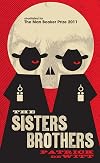
This is a great book. It's a highly original combination of disparate and usually unassociated elements. For example, this is a western that is more dialogue than action. It conveys the right feel in the dialogue without resorting to dialect (e.g. it sounds like a western, even though words like "y'all", "reckon", "sumthin", do not appear). It's all done with syntax; this stylistic approach alone is worth the price of admission.
Primarily, though, it is very, very funny. Note all the mileage the author gets out of something as simply as Eli's toothbrush. And the humor is drawn out of sitcom-style one liners, but folded and layered into the plot and characters. Wit as memory plus timing.
It's also sad and moving, filled with just the right amount of cathartic semi-tragedy. I can't go into too much detail without giving things away, but look for example in the way Eli's personality is reflected in his relationship to and description of various animals throughout the story.
Overall, it's originality defies easy comparison, and in fact making many look quite silly. It's two men on the open road, as a western. It's two men on a journey meeting colorful characters, as a picaresque. It's two men trying to find another, like a mystery. It's two men who are family that redefine their relationship, as one might find in any random bit of melodrama or lit-fiction ephemera. Any one comparison tends to leave out all the others. The Sisters brothers are Tom and Huck as grownups who can show more spell. Vincent and Jules in the old west. Vlamidir and Estragon on a mission to hunt down Godot. Fuckhead and Georgie with guns (the two main characters from Denis Johnson's 'Emergency'). Charlie and Eli and like all these duos, and none.
Lastly, it's a beautifully written book that's also an easy, relaxing read. There's no need to puzzle out what's going on, it's structured in super-short chapters which are perfect for the bus, dentist's office, or other stolen moments in your day. There are a few bits of graphic violence, but these are much more likely to be mentioned in brief than depicted in gory detail. I highly recommend everyone I know read this book immediately! show less
Primarily, though, it is very, very funny. Note all the mileage the author gets out of something as simply as Eli's toothbrush. And the humor is drawn out of sitcom-style one liners, but folded and layered into the plot and characters. Wit as memory plus timing.
It's also sad and moving, filled with just the right amount of cathartic semi-tragedy. I can't go into too much detail without giving things away, but look for example in the way Eli's personality is reflected in his relationship to and description of various animals throughout the story.
Overall, it's originality defies easy comparison, and in fact making many look quite silly. It's two men on the open road, as a western. It's two men on a journey meeting colorful characters, as a picaresque. It's two men trying to find another, like a mystery. It's two men who are family that redefine their relationship, as one might find in any random bit of melodrama or lit-fiction ephemera. Any one comparison tends to leave out all the others. The Sisters brothers are Tom and Huck as grownups who can show more spell. Vincent and Jules in the old west. Vlamidir and Estragon on a mission to hunt down Godot. Fuckhead and Georgie with guns (the two main characters from Denis Johnson's 'Emergency'). Charlie and Eli and like all these duos, and none.
Lastly, it's a beautifully written book that's also an easy, relaxing read. There's no need to puzzle out what's going on, it's structured in super-short chapters which are perfect for the bus, dentist's office, or other stolen moments in your day. There are a few bits of graphic violence, but these are much more likely to be mentioned in brief than depicted in gory detail. I highly recommend everyone I know read this book immediately! show less
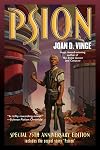
There was a time I really would have enjoyed a book like this. That time is past. One might say I 'outgrew' this kind of thing, but that would not be accurate, at least not in my case. It feels more like I have lost something, an imaginative capacity that allowed me to access what made these novels good, to me, then.
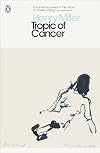
A couple of interesting passages scattered on top of a pile of garbage. Worth reading for historical interest, maybe. The author attempts to produce a work 'free' of traditional limitations, but seems to have no insight into the fact that his 'no rules' approach produces no freedom, just another set of rules. This problem is most obvious in the passages where Miller expresses things like condescension and disgust. If there are 'no rules', then how could one make such judgments? It's an infantile error to make, and a tedious one to read.