
John Ralston Saul
Author of Voltaire's Bastards: The Dictatorship of Reason in the West
About the Author
John Ralston Saul is an award-winning essayist and novelist and the president of PEN International. He holds a PhD from King's College London. His books are available in thirty-one countries and have been translated into twenty-three languages. He is the recipient of Chile's Pablo Neruda Medal, show more Canada's Governor General's Award and Italy's Premio Letterario Internazionale, among others. He is a Chevalier de l'Ordre des Arts et des Lettres de France. He lives in Toronto. show less
Image credit: Sophie Boussols (France)
Works by John Ralston Saul
Associated Works
Tagged
Common Knowledge
- Birthdate
- 1947-06-19
- Gender
- male
- Education
- McGill University
King's College, London (PhD) - Occupations
- novelist
essayist - Awards and honors
- Chevalier in the Ordre des Arts et des Lettres of France (1996)
Companion in the Order of Canada (1999)
Governor General's Literary Award for Non-Fiction (1996) - Agent
- Robin Straus Agency
- Relationships
- Clarkson, Adrienne (wife)
- Nationality
- Canada
- Birthplace
- Ottawa, Ontario, Canada
- Places of residence
- Alberta, Canada
Manitoba, Canada
Oakville, Ontario, Canada - Associated Place (for map)
- Canada
Members
Reviews

In his long and well constructed book John Ralston Saul does much more than critique the rise of reason in Western society. It is a fulsome history of Western society itself, running the gamut of every element that may hold some vestige of power in the Western world today—defence, government and business being obvious examples, but also including art, literature and society in general. Apportioning blame across the system, Saul fires off salvos inditing everyone and everything, but in such show more a well argued way that you find yourself nodding along in agreement rather than shaking your head in bewilderment.
The heart of the argument that underpins this book is that Western society has developed (or maybe devolved) into a lifeless machine, unwilling to reward creativity and that we are now in the grip of rampant bureaucratisation and mediocrity. Saul argues his case well, with his words reading more like an informed if passionate defence, rather than a rant. While the reader may not agree with everything Saul has to say, or even much of it, this is a book of a rare breed—one that presents its arguments well, with clarity and wry humour, while simultaneously informing and challenging the reader. If you read one book this year in attempt to understand why society is the way it is, make it this book. show less
The heart of the argument that underpins this book is that Western society has developed (or maybe devolved) into a lifeless machine, unwilling to reward creativity and that we are now in the grip of rampant bureaucratisation and mediocrity. Saul argues his case well, with his words reading more like an informed if passionate defence, rather than a rant. While the reader may not agree with everything Saul has to say, or even much of it, this is a book of a rare breed—one that presents its arguments well, with clarity and wry humour, while simultaneously informing and challenging the reader. If you read one book this year in attempt to understand why society is the way it is, make it this book. show less
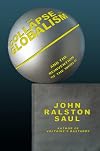
This book rambles on a bit but the soup contains many tasty nutritious elements. The overall flavor is clear and consistent. Curiously, a key ingredient is exactly the point that, hmmm, stews are more nutritious than steaks, something like that. A steak is this clear powerful structure, neatly carved. This is Fukuyama's End of History. Once one has the beef on the plate, the goal has been won so any sort of process or evolution or path has ended. But beef makes the whole planet sick. This show more dream of finality is deluded.
So Saul's book is not some grand totalizing structure that provides all the answers before anybody manages to ask them. It kicks around a pile of points. Where do we go with all these ingredients?
For sure... I had to double-check the publication date a few times. 2005! Saul brings up Senator Barack Obama as an example of a new kind of political figure with a vision that goes beyond a simple formula. My own theory would be that Obama unfortunately proved that leadership is not enough, that management is crucially important too. But perhaps the Washington DC environment is impossibly toxic.
Anyway the whole book is remarkably prescient - Trump, Brexit - and Saul gives us a vision of positive nationalism, contrasting it with the negative nationalism that is so much in the driver's seat these days. How can Saul's vision get any kind of finger hold?
I've been writing my Senators and will continue to do so. I would like to see a post-industrial military force, where soldiers learn languages and cultures from around the world, become effective partners around the world, where we build our own national strength by making other nations stronger.
On immigration - really, what a blessing, that so many hard-working people come to our country! If somebody has demonstrated their value to our society, as a neighbor, a member of society, a worker, etc. - doesn't our nation get stronger by welcoming such people to stay as citizens? Sure, deport the criminals and the sociopaths. If such a new path to citizenship encourages even more immigration... doesn't that make us even stronger? show less
So Saul's book is not some grand totalizing structure that provides all the answers before anybody manages to ask them. It kicks around a pile of points. Where do we go with all these ingredients?
For sure... I had to double-check the publication date a few times. 2005! Saul brings up Senator Barack Obama as an example of a new kind of political figure with a vision that goes beyond a simple formula. My own theory would be that Obama unfortunately proved that leadership is not enough, that management is crucially important too. But perhaps the Washington DC environment is impossibly toxic.
Anyway the whole book is remarkably prescient - Trump, Brexit - and Saul gives us a vision of positive nationalism, contrasting it with the negative nationalism that is so much in the driver's seat these days. How can Saul's vision get any kind of finger hold?
I've been writing my Senators and will continue to do so. I would like to see a post-industrial military force, where soldiers learn languages and cultures from around the world, become effective partners around the world, where we build our own national strength by making other nations stronger.
On immigration - really, what a blessing, that so many hard-working people come to our country! If somebody has demonstrated their value to our society, as a neighbor, a member of society, a worker, etc. - doesn't our nation get stronger by welcoming such people to stay as citizens? Sure, deport the criminals and the sociopaths. If such a new path to citizenship encourages even more immigration... doesn't that make us even stronger? show less
A massive book (although physically the paperback looks deceptively compact), all of 640 pages of closely reasoned academic text. This is because the author roams with gusto over an incredible range of subjects: in the end, some of it looks like showing off his erudition. The books starts off somewhat unpromisingly with an argument against (as far as I can recollect) the use of reason in practical matters. The present day rationalists he calls Voltaire's bastards, probably because it was show more Voltaire,before anyone else, who was instrumental in destroying the vestiges of royal license, the divine right of kings, and the rule of reason; but his latter-day intellectual descendents have turned reason into an instrument of political and financial power, exploiting the masses and amassing unreasonable amounts of wealth. Perhaps his best chapters are those dealing with the current neo-liberal or neo-conservative economic doctrines, as advanced by the Chicago school, pushed by the Reagan-Thatcher axis and the unholy nexus of international financial organisations like the IMF and World Bank, and so on. Another section that really spoke to me was his masterly description and analysis of the compulsions of the professional class, who have surrendered their freedom to criticize as a price for their survival to a comfortable old age on the wealth hey are enabled to save by the rule of law and social stability of financial and legal systems. Thus the modern day professional, or rationalist, has withdrawn from public life and is content to build an island refuge of their own.
However, some of the chapters do not seem to belong together, especially the one on art and literature. Perhaps the book would have been more effective if it had been divided into two slimmer volumes. At the end of the day, the very style of the book itself seems to be at odds with its basic hypothesis, as the author obviously loves, and practices, the rational process of thinking himself, rather than, say, an appeal to emotion or national spirit (jingoism). Merely repeating a tag line ("and all these ills were because of the elevation of the rational spirit") at the end of each section does not really prove his thesis that reason, or the rational spirit, has been the root of all that is wrong with our world after the last two-three centuries of the Enlightenment, just because here re people who, while styling themselves intellectuals, use the system for their personal or class profit. I am sure the author himself would be the last person to suggest a return to the arbitrary rule of divines or kings, however enlightened, or rule by vigilante citizens as against the law enforced by professionally trained police and magistrates. The seed of the idea is intriguing, but the case against reason has not been proved. But the reader is made to slog through a small mountain for this little result. show less
However, some of the chapters do not seem to belong together, especially the one on art and literature. Perhaps the book would have been more effective if it had been divided into two slimmer volumes. At the end of the day, the very style of the book itself seems to be at odds with its basic hypothesis, as the author obviously loves, and practices, the rational process of thinking himself, rather than, say, an appeal to emotion or national spirit (jingoism). Merely repeating a tag line ("and all these ills were because of the elevation of the rational spirit") at the end of each section does not really prove his thesis that reason, or the rational spirit, has been the root of all that is wrong with our world after the last two-three centuries of the Enlightenment, just because here re people who, while styling themselves intellectuals, use the system for their personal or class profit. I am sure the author himself would be the last person to suggest a return to the arbitrary rule of divines or kings, however enlightened, or rule by vigilante citizens as against the law enforced by professionally trained police and magistrates. The seed of the idea is intriguing, but the case against reason has not been proved. But the reader is made to slog through a small mountain for this little result. show less
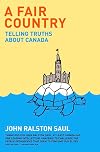
I think this book should be required reading for all new Canadians. Not least because John Ralston Saul says such nice things about new immigrants. And because it makes such a lot of sense. It gets very political in the middle, but the historical perspective on how Canada was forged out of the Aboriginal approach to welcoming the 'other' is absolutely fascinating and I was nodding my head all the way through the early chapters. This man knows his history and has a clear vision of how it can show more be incorporated in a national vision for the future. Which is unfortunately a lot more than can be said for most of the current crop of leaders of the county. show less
Lists
Awards


You May Also Like


Associated Authors
Statistics
- Works
- 23
- Also by
- 1
- Members
- 3,790
- Popularity
- #6,686
- Rating
- 3.7
- Reviews
- 41
- ISBNs
- 158
- Languages
- 8
- Favorited
- 11