
Naomi Klein
Author of No Logo
About the Author
Naomi Klein was born in Montreal, Canada on May 8, 1970. She attended the University of Toronto and began writing there for the student newspaper, The Varsity. Klein was offered a series of editorial jobs in newspapers and magazines and this prevented her from getting a final degree from the show more university. She worked for The Toronto Globe and Mail and This Magazine. She is an author and social activist, who is known for her political analyses and criticism of corporate globalization. Her books include No Logo: Taking Aim at the Brand Bullies, Fences and Windows: Dispatches from the Front Lines of the Globalization Debate, and The Shock Doctrine: The Rise of Disaster Capitalism. She received the 2014 Hilary Weston Writers' Trust Prize for Nonfiction for This Changes Everything: Capitalism vs. the Climate. (Bowker Author Biography) show less
Image credit: Naomi Kline/photo by Kourosh Keshiri
Works by Naomi Klein
No Is Not Enough: Resisting Trump's Shock Politics and Winning the World We Need (2017) 1,033 copies, 26 reviews
Fences and Windows: Dispatches from the Front Lines of the Globalization Debate (2002) 825 copies, 10 reviews
How to Change Everything: The Young Human's Guide to Protecting the Planet and Each Other (2021) 140 copies, 5 reviews
Israel: Boycott, Divest, Sanction 3 copies
Blank is Beautiful [essay] 1 copy
Addicted to Risk {TED Talk} 1 copy
Associated Works
Everything You Know Is Wrong: The Disinformation Guide to Secrets and Lies (2002) — Contributor — 1,028 copies, 6 reviews
Let My People Go Surfing: The Education of a Reluctant Businessman (2005) — Foreword, some editions — 787 copies, 16 reviews
All We Can Save: Truth, Courage, and Solutions for the Climate Crisis (2020) — Contributor — 469 copies, 12 reviews
The Checkbook and the Cruise Missile: Conversations with Arundhati Roy (2003) — Foreword, some editions — 141 copies, 4 reviews
Ya Basta! Ten Years of the Zapatista Uprising (2004) — Foreword, some editions — 119 copies, 1 review
Wrestling with Zion: Progressive Jewish-American Responses to the Israeli-Palestinian Conflict (2003) — Contributor — 84 copies, 1 review
The Reconciliation Manifesto: Recovering the Land, Rebuilding the Economy (2017) — Preface, some editions — 65 copies
Sin Patrón: Stories from Argentina's Worker-Run Factories (2004) — Foreword, some editions — 55 copies
People-First Economics: Making a Clean Start for Jobs, Justice, and Climate (2010) — Contributor — 47 copies
The Anti-Inauguration: Building Resistance in the Trump Era (2016) — Contributor — 33 copies, 1 review
The Goldstone Report: The Legacy of the Landmark Investigation of the Gaza Conflict (2011) — Introduction — 29 copies
Will the Flower Slip Through the Asphalt? Writers Respond to Capitalist Climate Change (2017) — Contributor — 20 copies
The Possibility of Hope [2007 film] — Anti-Globalization Activist — 3 copies
Tagged
Common Knowledge
- Canonical name
- Klein, Naomi
- Birthdate
- 1970-05-08
- Gender
- female
- Education
- University of Toronto (dropped out)
- Occupations
- journalist
activist
professor - Organizations
- The Nation
In These Times
The Globe and Mail
This Magazine
The Guardian
University of British Columbia - Awards and honors
- Sydney Peace Prize (2016)
Hilary Weston Writers' Trust Prize for Nonfiction (2014)
Warwick Prize for Writing (2009) - Relationships
- Lewis, Avi (spouse)
Klein, Seth (brother) - Nationality
- Canada
- Birthplace
- Montreal, Quebec, Canada
- Places of residence
- Montréal, Québec, Canada
Vancouver, British Columbia, Canada - Associated Place (for map)
- Canada
Members
Reviews

Here's dynamite, too often reduced (as I have seen within certain circles...) to an anti-capitalist manifesto. It's a real pity, because the interest of the book isn't in its stance against, for instance, globalisation (if it's there at all!) but in its devastating criticism of the politics and 'visions' offered to us by some of our biggest brands (for, corporate have become like modern day prophets: they have 'visions' of better worlds for us all...).
Cleverly divided into four parts ('No show more Space', 'No Choice', 'No Jobs', 'No Logo') this book unravels the rapacious perversities of certain companies, so predatory that they are threatening. Nike, McDonald, and Shell, especially, are taking more than a hit in here!
'No Space' is a quick brush-up over brand culture's history, or, how companies, beyond their logos, came to sell us 'life styles'. A brand is far more indeed than a label patched on a product, but, in our consumerist societies, supposedly the reflect of a whole philosophy and way of being! Tell me what you consume (Nike or Reebok? McDo' or Burger King?) and I'll tell you who you are. This, in any case, is what such companies want us to believe, targeting especially the youth through shameless means to try and sell them their worlds (e.g. in some countries, some of these pesters have actually invaded schools...!). Just look around: these brands are absolutely everywhere... The invasion of our spaces is such, in fact, that it has toxic consequences on many different levels.
'No Choice' shows how such powerful corporates endanger our civil liberties. 'No Job' goes further, demonstrating that, since marketing and advertising have become more important than the products in themselves, these companies came to outsource their manufacturing to developing countries, with the consequences we have, sadly, all become too familiar with -from the gig economy in the Western world, to human exploitation and a discarding of human rights in the Third World...
Thankfully, awareness on a global scale has been emerging, and, across the world, various political and even artistical movements appeared which have been battling against such profitable totalitarianisms. They are the subject of 'No Logo', the last chapter concluding it all.
Here's an excellent book, then, which contributes to a debate about our consumerist, rapacious, predatory societies and their toxicity. Of course, unless we go off the grid, we can't escape such corporate capitalism and its poison! Let's face it: as consumers ourselves, we're all complicit. Yet, it doesn't mean that we shouldn't exert critical thinking, and try, even as little as we can, to do our best to be discerning when consuming. 'Tell me what you buy and I'll tell you who you are' is not that bogus an approach, after all. The time, in any case, surely has come to align our wallets with more than needed better values. This book, at least, acts as a powerful reminder that, at grassroot levels, all may not be lost. Recommended! show less
Cleverly divided into four parts ('No show more Space', 'No Choice', 'No Jobs', 'No Logo') this book unravels the rapacious perversities of certain companies, so predatory that they are threatening. Nike, McDonald, and Shell, especially, are taking more than a hit in here!
'No Space' is a quick brush-up over brand culture's history, or, how companies, beyond their logos, came to sell us 'life styles'. A brand is far more indeed than a label patched on a product, but, in our consumerist societies, supposedly the reflect of a whole philosophy and way of being! Tell me what you consume (Nike or Reebok? McDo' or Burger King?) and I'll tell you who you are. This, in any case, is what such companies want us to believe, targeting especially the youth through shameless means to try and sell them their worlds (e.g. in some countries, some of these pesters have actually invaded schools...!). Just look around: these brands are absolutely everywhere... The invasion of our spaces is such, in fact, that it has toxic consequences on many different levels.
'No Choice' shows how such powerful corporates endanger our civil liberties. 'No Job' goes further, demonstrating that, since marketing and advertising have become more important than the products in themselves, these companies came to outsource their manufacturing to developing countries, with the consequences we have, sadly, all become too familiar with -from the gig economy in the Western world, to human exploitation and a discarding of human rights in the Third World...
Thankfully, awareness on a global scale has been emerging, and, across the world, various political and even artistical movements appeared which have been battling against such profitable totalitarianisms. They are the subject of 'No Logo', the last chapter concluding it all.
Here's an excellent book, then, which contributes to a debate about our consumerist, rapacious, predatory societies and their toxicity. Of course, unless we go off the grid, we can't escape such corporate capitalism and its poison! Let's face it: as consumers ourselves, we're all complicit. Yet, it doesn't mean that we shouldn't exert critical thinking, and try, even as little as we can, to do our best to be discerning when consuming. 'Tell me what you buy and I'll tell you who you are' is not that bogus an approach, after all. The time, in any case, surely has come to align our wallets with more than needed better values. This book, at least, acts as a powerful reminder that, at grassroot levels, all may not be lost. Recommended! show less
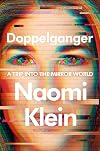
Klein is an engaging writer who radiates honesty and emotional openness, so I kept going even though it seemed to be little more than a collection of random thoughts about this weird age we're in where at least half the population (or more) seems to have lost its grip on reality. Starting off with the strange way that she, Naomi Klein, was for a period consistently and frustratingly confused with reality-challenged nutcase Naomi Wolf — once a respected feminist and cultural analyst, now a show more frequent guest on Steve Bannon's podcast and worldview ally of RFK Jr. — is a great hook, but it only goes so far. Fortunately, the last two sections of the book make up for the excessive discursiveness of the first two or three. The chapters on how we all, left and right, tend to see Nazis in our ideological enemies, and on the psychological aspects of modern anti-Semitism are brilliant and make convincing points I've never heard before. If you can stand reading about today's dystopian political scene at all, this is worth your time. I feel wiser for reading it. show less
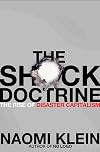
A public policy book belonging to the horror genre, Naomi Klein’s The Shock Doctrine is an impassioned chronicle of greedy, violent misbehavior. Her purpose is to publicize and dissect the “Chicago School experiment,” by which she means the economic “shock” therapy promulgated and supported by the school of economic thought that she associates most with 1976 Nobel laureate Milton Friedman. She sums up her thesis by writing that “the entire thirty-year history of the Chicago show more School experiment has been one of mass corruption and corporatist collusion between security states and large corporations.” No pulling punches there.
I read Friedman’s Free to Choose long ago. It was an easy introduction to his notions and influenced my thinking. That title, Free to Choose, represents a colossal irony if we accept Klein’s accusations of the way freedom and citizen welfare are sacrificed to achieve national economic and political transformation through the principles and prescriptions she attributes to the Chicago School. But, should we accept her accusations?
Four prominent demands of the Chicago School are as follows:
(1) Privatization of public enterprises and resources;
(2) Economic deregulation;
(3) Tax cuts;
(4) Deep cuts in government spending.
While people should debate the merits of these demands, I do not see anything inherently immoral about them if the efforts to implement them are done peaceably with consent.
However, as implemented in nations such as Indonesia, Chile, Argentina, Bolivia, Brazil, South Africa, China, Poland, Russia, Sri Lanka, and elsewhere, Klein’s version of the Chicago School’s Friedmanomics takes on the garb of some kind of ghoulish Freakishnomics. Her intent is to show that in these countries it meant all or some of the following:
(1) Overthrow of the ruling government, often by violence, even when that government was legally elected by voters in accord with their country’s constitution;
(2) Capture and torture of opponents or presumed opponents;
(3) Terrorist acts against the citizenry, including murder;
(4) Enrichment of the richest classes of the nation, with some high bureaucrats also becoming plutocrats themselves;
(5) Foreign takeover of profitable businesses and gaining of the right to exploit the nation’s natural resources;
(6) Impoverishment of workers;
(7) Discontinuation or diminishment of many social services;
(8) “Debt bomb” detonation to conquer the willfulness of governments resisting Chicago School policies.
All these actions, among other lapses of polite behavior, to be carried out in the interest of multinational corporations.
How about that for an eight-fold path? Feeling the Zen?
This isn’t a program citizens of conscience normally ask their leaders to pursue, so there’s one other crucial element: Sell it as an absolute necessity to the preserving of freedom, peace, prosperity, and security. But also, if doable, skimp on the selling and establish the package by coercive force brought with such speed and rude brutality that it will seem a reckoning brought forth by the gods. SHOCK, baby!
Why, one might as well revert to Aristotle’s contention in the Politics that “hunting ought to be practiced—not only against animals, but also against human beings who are intended by nature to be ruled by others and refuse to obey that intention—because war of this order is naturally just.” Klein might say that’s exactly what has happened.
The question becomes how fair and correct her account is. For example, her reports of better economic outcomes in some countries with “managed” economies come across as supported by cherry-picked data, a common fault of those engaged in political persuasion. Suppose she has done this? Is it enough to justify rejecting her outrage and accepting the shocking eight-fold path she describes? Do her misjudgments about leaders such as Hugo Chavez wholly invalidate the critique?
Prior political inclinations will do much to color how one responds to this book. It’s not perfect. Ambitious books, passionately argued, aren’t. To some readers it will feel like a defamation, which reaches its height in Klein’s account of the war in Iraq. It attempts to revolutionize some of our most confidently (complacently?) held ideas about U.S. and corporate behavior throughout the world. If you are ill-disposed to accepting Klein’s biases or theses, focusing on the acts she describes and asking, “IS THIS WHAT I’D WANT ANOTHER NATION TO DO TO MY OWN COUNTRY?” can still make The Shock Doctrine an informative, dynamic, even necessary reading experience. show less
I read Friedman’s Free to Choose long ago. It was an easy introduction to his notions and influenced my thinking. That title, Free to Choose, represents a colossal irony if we accept Klein’s accusations of the way freedom and citizen welfare are sacrificed to achieve national economic and political transformation through the principles and prescriptions she attributes to the Chicago School. But, should we accept her accusations?
Four prominent demands of the Chicago School are as follows:
(1) Privatization of public enterprises and resources;
(2) Economic deregulation;
(3) Tax cuts;
(4) Deep cuts in government spending.
While people should debate the merits of these demands, I do not see anything inherently immoral about them if the efforts to implement them are done peaceably with consent.
However, as implemented in nations such as Indonesia, Chile, Argentina, Bolivia, Brazil, South Africa, China, Poland, Russia, Sri Lanka, and elsewhere, Klein’s version of the Chicago School’s Friedmanomics takes on the garb of some kind of ghoulish Freakishnomics. Her intent is to show that in these countries it meant all or some of the following:
(1) Overthrow of the ruling government, often by violence, even when that government was legally elected by voters in accord with their country’s constitution;
(2) Capture and torture of opponents or presumed opponents;
(3) Terrorist acts against the citizenry, including murder;
(4) Enrichment of the richest classes of the nation, with some high bureaucrats also becoming plutocrats themselves;
(5) Foreign takeover of profitable businesses and gaining of the right to exploit the nation’s natural resources;
(6) Impoverishment of workers;
(7) Discontinuation or diminishment of many social services;
(8) “Debt bomb” detonation to conquer the willfulness of governments resisting Chicago School policies.
All these actions, among other lapses of polite behavior, to be carried out in the interest of multinational corporations.
How about that for an eight-fold path? Feeling the Zen?
This isn’t a program citizens of conscience normally ask their leaders to pursue, so there’s one other crucial element: Sell it as an absolute necessity to the preserving of freedom, peace, prosperity, and security. But also, if doable, skimp on the selling and establish the package by coercive force brought with such speed and rude brutality that it will seem a reckoning brought forth by the gods. SHOCK, baby!
Why, one might as well revert to Aristotle’s contention in the Politics that “hunting ought to be practiced—not only against animals, but also against human beings who are intended by nature to be ruled by others and refuse to obey that intention—because war of this order is naturally just.” Klein might say that’s exactly what has happened.
The question becomes how fair and correct her account is. For example, her reports of better economic outcomes in some countries with “managed” economies come across as supported by cherry-picked data, a common fault of those engaged in political persuasion. Suppose she has done this? Is it enough to justify rejecting her outrage and accepting the shocking eight-fold path she describes? Do her misjudgments about leaders such as Hugo Chavez wholly invalidate the critique?
Prior political inclinations will do much to color how one responds to this book. It’s not perfect. Ambitious books, passionately argued, aren’t. To some readers it will feel like a defamation, which reaches its height in Klein’s account of the war in Iraq. It attempts to revolutionize some of our most confidently (complacently?) held ideas about U.S. and corporate behavior throughout the world. If you are ill-disposed to accepting Klein’s biases or theses, focusing on the acts she describes and asking, “IS THIS WHAT I’D WANT ANOTHER NATION TO DO TO MY OWN COUNTRY?” can still make The Shock Doctrine an informative, dynamic, even necessary reading experience. show less
This book starts with Canadian author Naomi Klein discussing her personal problem of being routinely confused with an American author who is now a high-profile conspiracy theorist. They share a first name. It quickly becomes apparent that the book is much more global in intent. In becoming obsessed with her doppelgänger, Klein has observed how information (and disinformation) spreads, particularly through social media and other online sources. The book attempts to explain why conspiracy show more theories have become rampant in our society, and how difficult it is to curtail them.
It helps the reader understand how several factions on the left and far right have come together through shared fears. She calls this new alliance “diagonalization.” Klein examines not only personal and political differences but also points out that the information age is leading to the development of a post-truth “mirror world” where reality is warped. It is almost as if Klein is “thinking out loud” as she explores a wide range of topics such as COVID-19 and its controversies, big pharma, health and wellness, the celebrity culture, self-branding, monetization of the internet, privacy, women’s issues, climate change, clickbait, Capitalism, Fascism, racism, narcissism, individualism, autism, Anti-Semitism, ethics, cults of personality, doppelgängers in literature, and much more.
The most positive aspect for me is to move toward an understanding of how we have gotten so far off track as a society with respect to critical thinking skills. I think one of the most telling aspects of how short our attention spans have become is the fact that people do not even take the time to read someone’s last name – after all, there are way more than two authors named Naomi in the world. At the very least, it has justified my own personal protest of one to stay off mass social media. show less
It helps the reader understand how several factions on the left and far right have come together through shared fears. She calls this new alliance “diagonalization.” Klein examines not only personal and political differences but also points out that the information age is leading to the development of a post-truth “mirror world” where reality is warped. It is almost as if Klein is “thinking out loud” as she explores a wide range of topics such as COVID-19 and its controversies, big pharma, health and wellness, the celebrity culture, self-branding, monetization of the internet, privacy, women’s issues, climate change, clickbait, Capitalism, Fascism, racism, narcissism, individualism, autism, Anti-Semitism, ethics, cults of personality, doppelgängers in literature, and much more.
The most positive aspect for me is to move toward an understanding of how we have gotten so far off track as a society with respect to critical thinking skills. I think one of the most telling aspects of how short our attention spans have become is the fact that people do not even take the time to read someone’s last name – after all, there are way more than two authors named Naomi in the world. At the very least, it has justified my own personal protest of one to stay off mass social media. show less
Lists
Female Author (1)
Economics (1)
Reading LIst (1)
Best Audiobooks (1)
Five star books (1)
Climate Change (1)
Climate Change (1)
Unread books (1)
Non-Fiction (2)
My List (2)
Science: Earth (2)
Climate Change (2)
el (1)
Review 2 (1)
2023 (1)
Read This Next (1)
Blue Books (1)
Awards


You May Also Like


Associated Authors
Statistics
- Works
- 22
- Also by
- 26
- Members
- 20,490
- Popularity
- #1,058
- Rating
- 3.9
- Reviews
- 358
- ISBNs
- 400
- Languages
- 24
- Favorited
- 39

